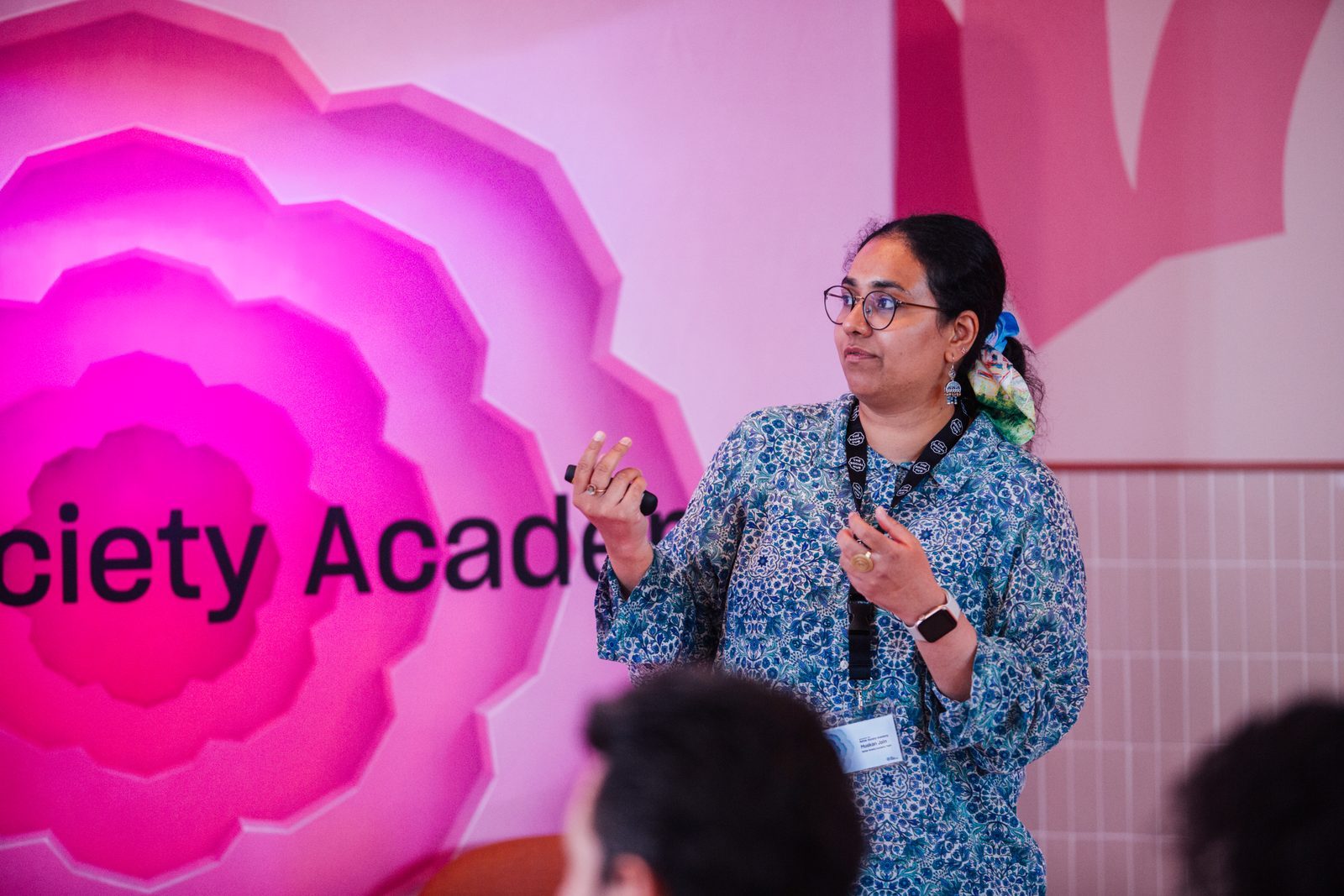
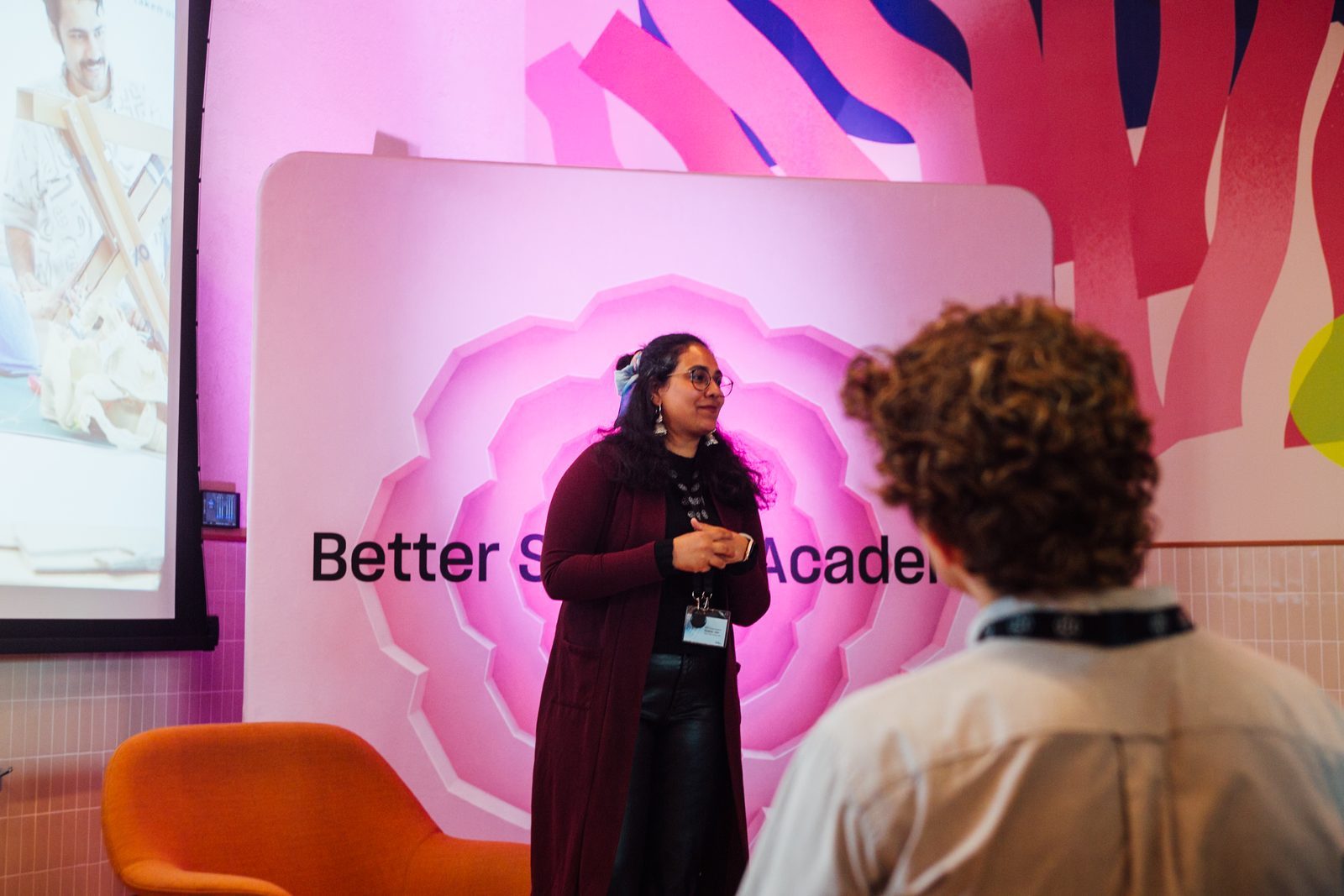
Better Society Academy · Rome Masterclass
Co-facilitator
Co-begeleider
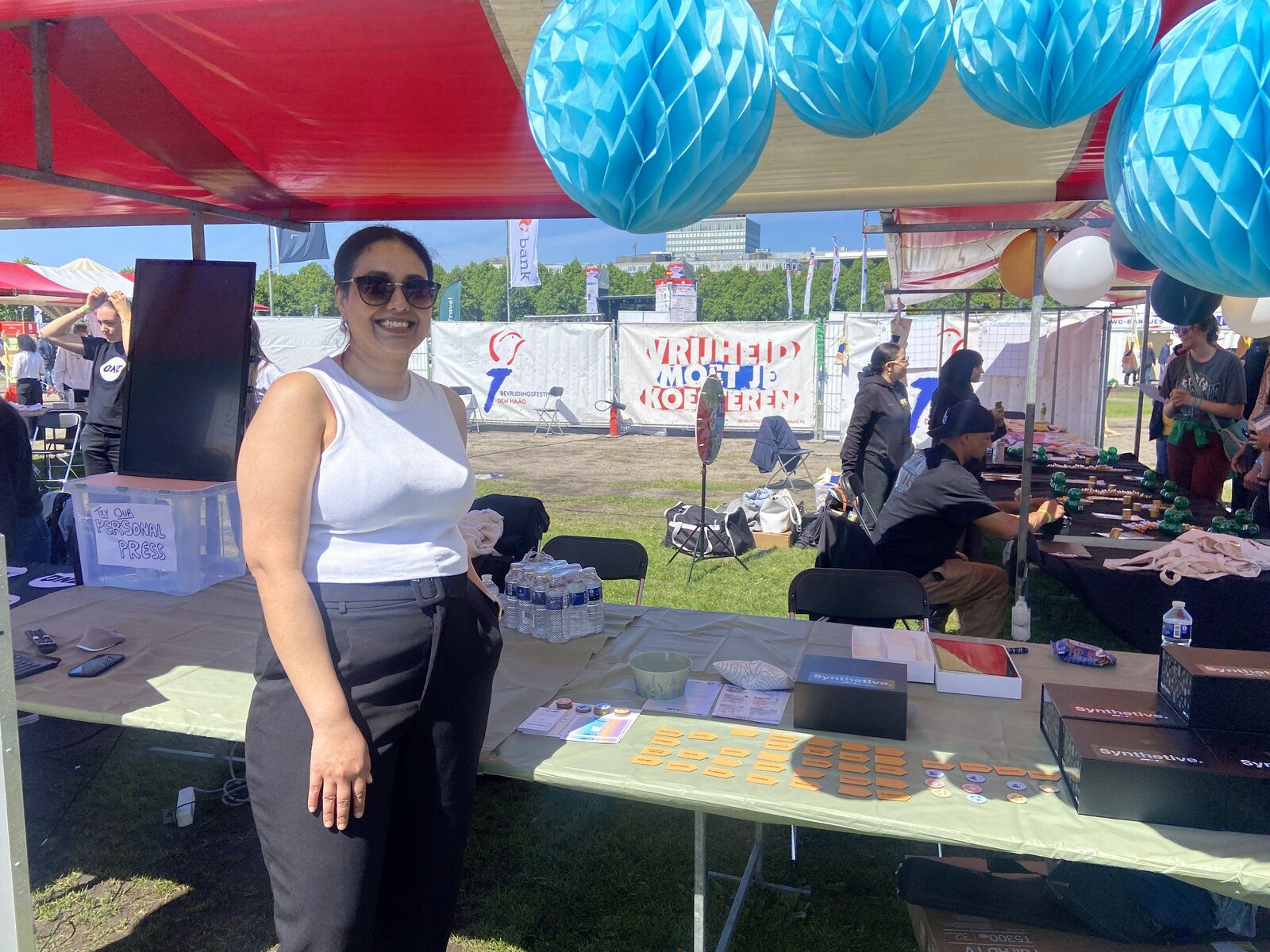
Product Designer · Conference Speaker · 8 yrs
Productontwerper · Spreker · 8 jaar
Workshop at Society 5.0 · 2024·Masterclass in Rome · 2026
Workshop bij Society 5.0 · 2024·Masterclass in Rome · 2026
Product & UX designer and facilitator — turning deep research, thoughtful user flows, and usability testing into digital products that create real value for people and businesses.
Product- & UX-ontwerper en begeleider — diepgaand onderzoek, doordachte user flows en usability testing omzetten in digitale producten die echte waarde creëren voor mensen en bedrijven.









Trained at NID Ahmedabad, with an MSc in Digital Design from Amsterdam University of Applied Sciences — 8+ years designing digital products for education, media, AI, and smart home systems.
My practice blends rigorous craft with human-centred research — interaction design, visual systems, motion, and facilitation, with a focus on accessibility and ethics. I’ve led design at Havells India, Infosys Digital, KATHA, and the Digital Society School.
Opgeleid aan het National Institute of Design, Ahmedabad, met een MSc Digital Design van de Hogeschool van Amsterdam — 8+ jaar ervaring in het ontwerpen van digitale producten voor onderwijs, media, AI en smart home systemen.
Mijn aanpak combineert vakmanschap met mensgericht onderzoek — interactieontwerp, visuele systemen, motion en facilitatie, met focus op toegankelijkheid en ethiek. Ik heb design geleid bij Havells India, Infosys Digital, KATHA en de Digital Society School.
End-to-end product work across research, systems, and interaction — click any card to open the full case study.
End-to-end productwerk over onderzoek, systemen en interactie heen — klik op een kaart om de volledige case study te openen.
Digital Sustainability Benchmark
Digitale Duurzaamheid Benchmark
A benchmarking tool that helps design agencies evaluate and improve their digital sustainability — one project at a time. Built with Faraday Digital Agency.
Een benchmarking-tool die designbureaus helpt hun digitale duurzaamheid te evalueren en verbeteren — project voor project. Gebouwd samen met Faraday Digital Agency.
Havells Sync App — Audit & Redesign Recommendations
A full audit of the Havells Sync app — identifying visual and interaction gaps, benchmarking against 2023 product standards, and translating findings into ten prioritised redesign recommendations.
Een volledige audit van de Havells Sync app — visuele en interactiegaten identificeren, vergelijken met de productstandaarden van 2023 en de bevindingen vertalen naar tien geprioriteerde herontwerp-aanbevelingen.
Havells WellTech
Consumer research, market sizing, persona development, and a 3-phase go-to-market strategy for Havells entry into the ₹27,500 Cr home healthcare market.
Consumentenonderzoek, marktbepaling, personaontwikkeling en een 3-fasen go-to-market strategie voor Havells’ entree in de Indiase home-healthcaremarkt van ₹27.500 crore.
Memory Ball
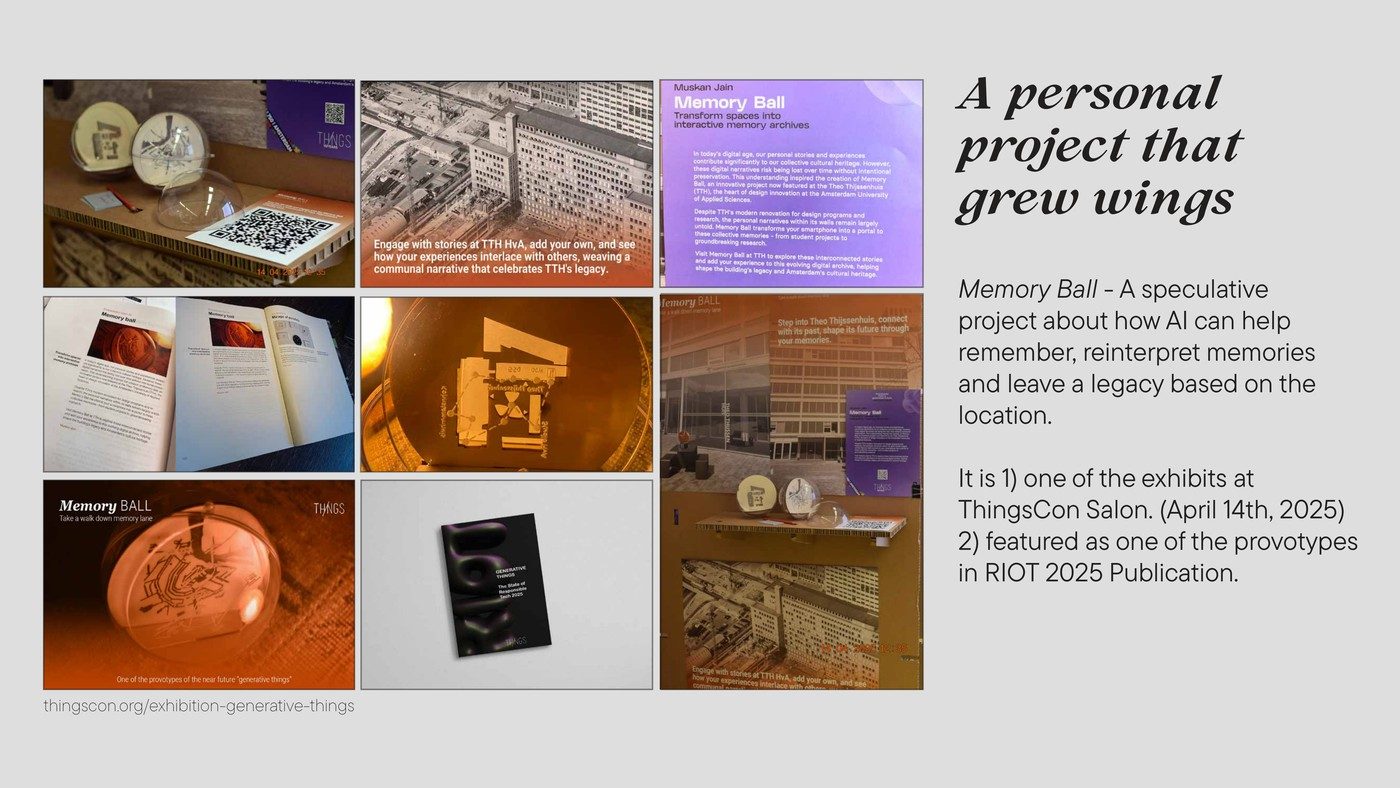
A physical installation + web app that lets visitors at the Theo Thijssenhuis (HvA) discover, contribute, and connect collective memories across time — triggered by a proximity-sensing bronze sphere.
Een fysieke installatie + web-app waarmee bezoekers van het Theo Thijssenhuis (HvA) collectieve herinneringen door de tijd heen kunnen ontdekken, delen en verbinden — geactiveerd door een bronzen bol met nabijheidssensor.
Feelscape — A 3D Storybook
Feelscape — Een 3D Verhalenboek
A tactile + audio map for visually impaired children (ages 4–6) — a 25×25 cm 3D landscape with spatialised sound triggered by touch, designed to teach real-world concepts without Braille.
Een tactiele audio-kaart voor visueel beperkte kinderen (4–6 jaar) — een 25×25 cm groot 3D-landschap met ruimtelijk geluid dat geactiveerd wordt door aanraking, ontworpen om concepten uit de echte wereld te leren zonder Braille.
“I do all my work by storyboard, so as I draw the storyboard, the world gets more and more complex…”
— Hayao Miyazaki
Why storyboarding matters in B2B product development
Waarom storyboarding belangrijk is in B2B-productontwikkeling
5 reasons I used storyboarding across 3 years of product work at Havells — from visualising new concepts to mapping user personas in a customer-centric design studio.
5 redenen waarom ik storyboarding gebruikte tijdens 3 jaar productwerk bij Havells — van het visualiseren van nieuwe concepten tot het in kaart brengen van user personas in een klantgerichte designstudio.
TripGoGo — Brand & Design System
Building the visual language for a travel platform from the ground up — colour, typography, and UI components.
Een visuele taal opbouwen voor een reisplatform vanaf nul — kleur, typografie en UI-componenten.
Iconography for Havells
Iconografie voor Havells
Setting a unified icon design language across five Havells sub-brands — from a cross-product audit and competitive benchmarking to an anatomy framework grounded in Havells brand values.
Een uniforme icoondesigntaal opzetten voor vijf Havells sub-merken — van een cross-product audit en concurrentiebenchmarking tot een framework voor icoonanatomie geworteld in de merkwaarden van Havells.
Crabtree Smart Home Illustrations
Product illustrations and animations for three Crabtree devices — 4-channel switch, curtain controller, and Adonia smart geyser — building a unified visual language across the Crabtree app.
Productillustraties en animaties voor drie Crabtree-apparaten — 4-kanaals schakelaar, gordijnregelaar en Adonia slimme geiser — een uniforme visuele taal opbouwen door de hele Crabtree app heen.
Havells Enviro Konnect
App icon design, splash illustration, and UI icons for Havells' solar panel registration app — from pencil concept to Play Store launch.
App-icoondesign, splash-illustratie en UI-iconen voor de zonnepaneel-registratie-app van Havells — van potloodschets tot Play Store-launch.
Crabtree iSense — Monoblock Touch Switch
A hardware design system — icon vocabulary, Pantone colour tokens, and a full SKU matrix for a smart home switch series.
Een hardware-designsystem — icoonvocabulaire, Pantone-kleurtokens en een complete SKU-matrix voor een serie slimme schakelaars.
Synthetive — AI Boardgame for Media Makers
A card-based game helping media professionals co-create responsibly with generative AI. Go HvA Public Choice Award 2024.
Een kaartspel dat mediaprofessionals helpt om verantwoord samen te creëren met generatieve AI. Winnaar Go HvA Public Choice Award 2024.
Synthetive: Election Edition
An interactive boardgame exploring the (ir)responsible use of AI in political campaigns. Presented at VPRO Medialab, Society 5.0, and MozFest 2024.
Een interactief bordspel dat het (on)verantwoorde gebruik van AI in politieke campagnes verkent. Gepresenteerd bij VPRO Medialab, Society 5.0 en MozFest 2024.
Ramco ERP — The Next Frontier
Ramco ERP — De Volgende Grens
60-second LED screen animation for Ramco ERP User Meet 2025. From 30-scene storyboard to final render — enterprise motion at scale.
LED-schermanimatie van 60 seconden voor Ramco ERP User Meet 2025. Van storyboard met 30 scènes tot eindrender — enterprise motion design op schaal.
Speaking & Facilitation
Spreken & Begeleiden
Talks, workshops, and facilitation across design, AI, and responsible technology — Amsterdam and beyond.
Lezingen, workshops en begeleiding over design, AI en verantwoorde technologie — in Amsterdam en daarbuiten.
Better Society Academy · Rome Masterclass
Co-facilitator
Co-begeleider
Better Society Academy · Rome Masterclass
Speaker
Spreker
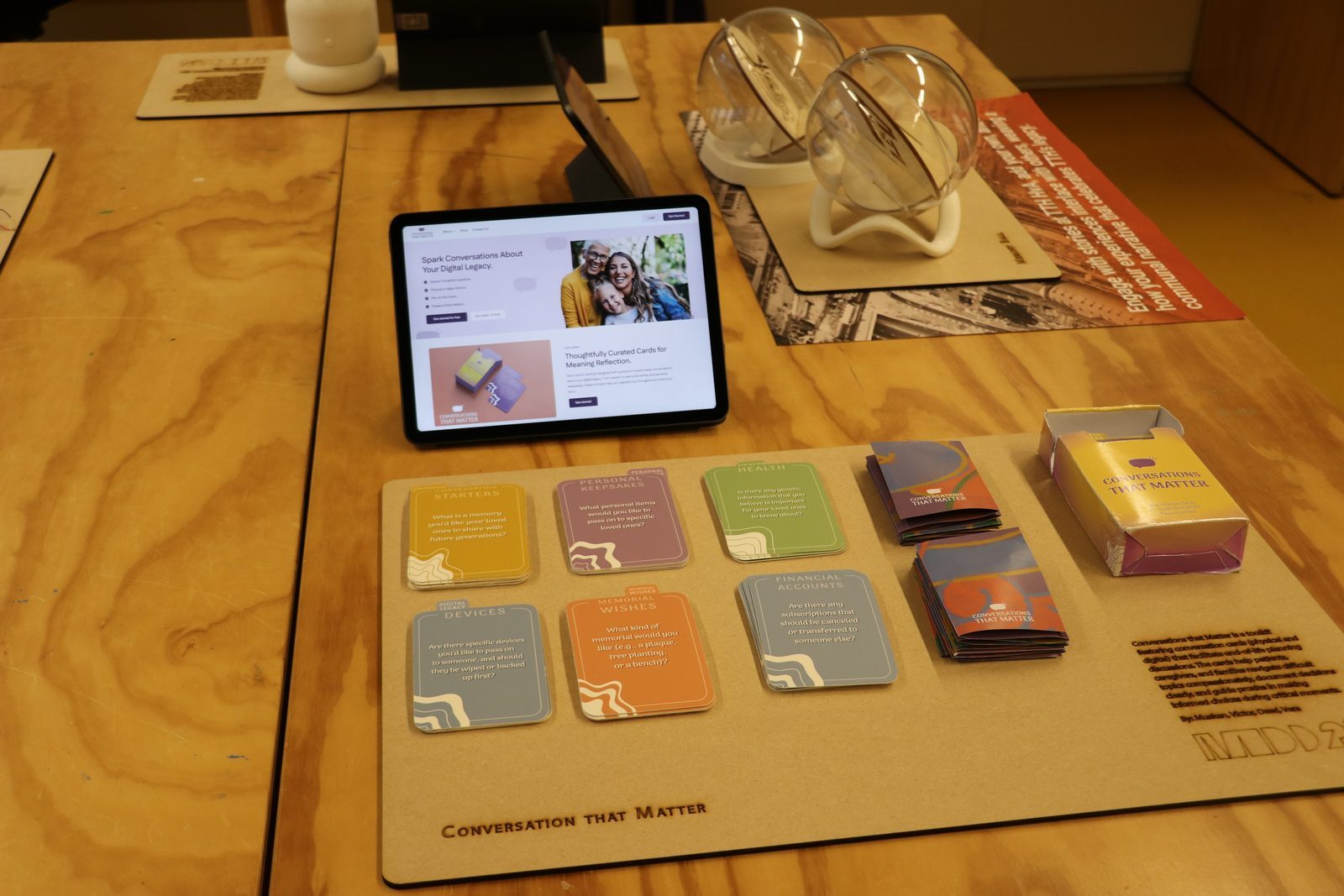
Conversations That Matter · Thesis Booth
Graduation project display
Afstudeerproject presentatie
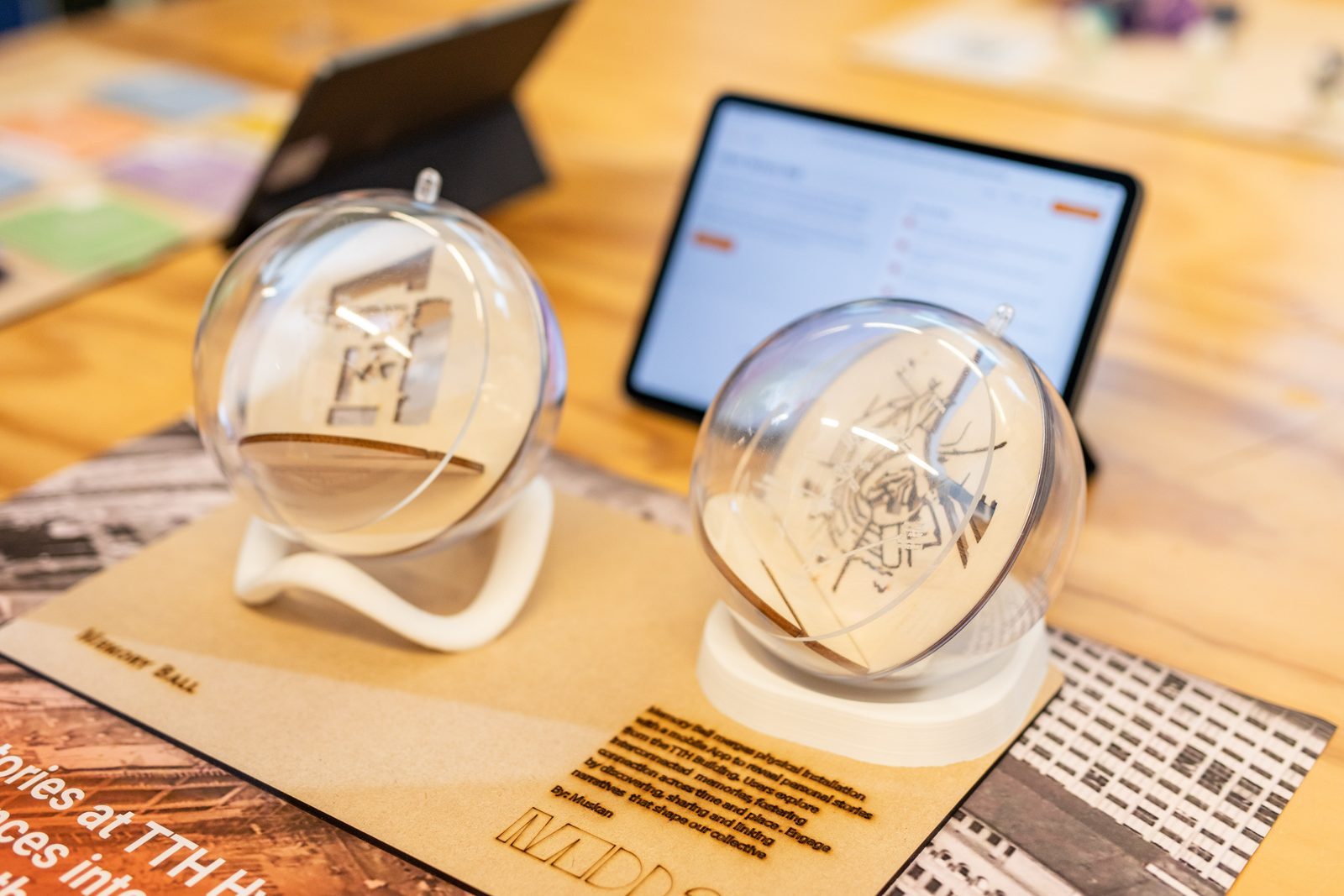
Memory Ball
Project display · MDD Graduation 2025
Projectpresentatie · MDD Afstuderen 2025
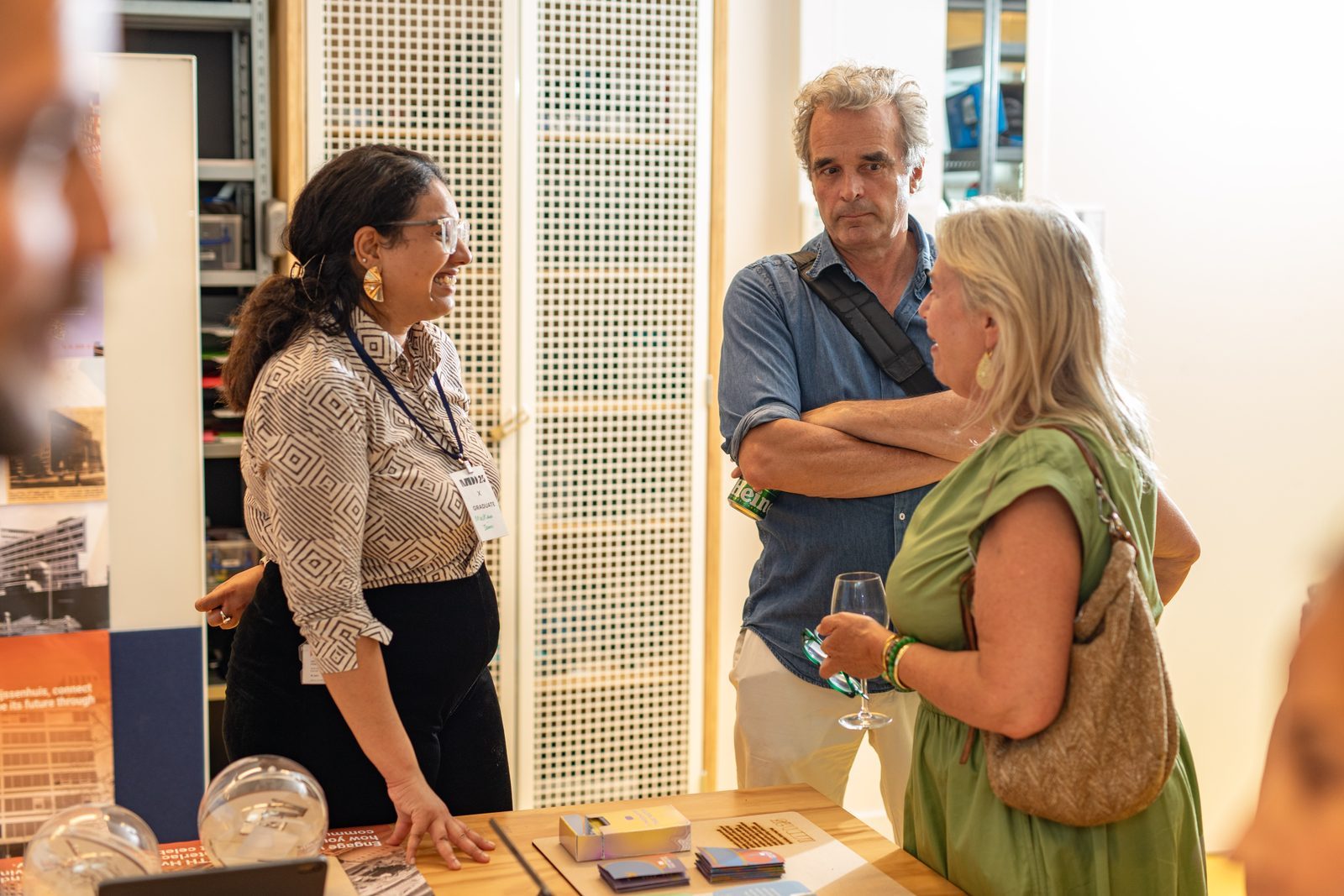
Conversations That Matter
Project display · MDD Graduation
Projectpresentatie · MDD Afstuderen
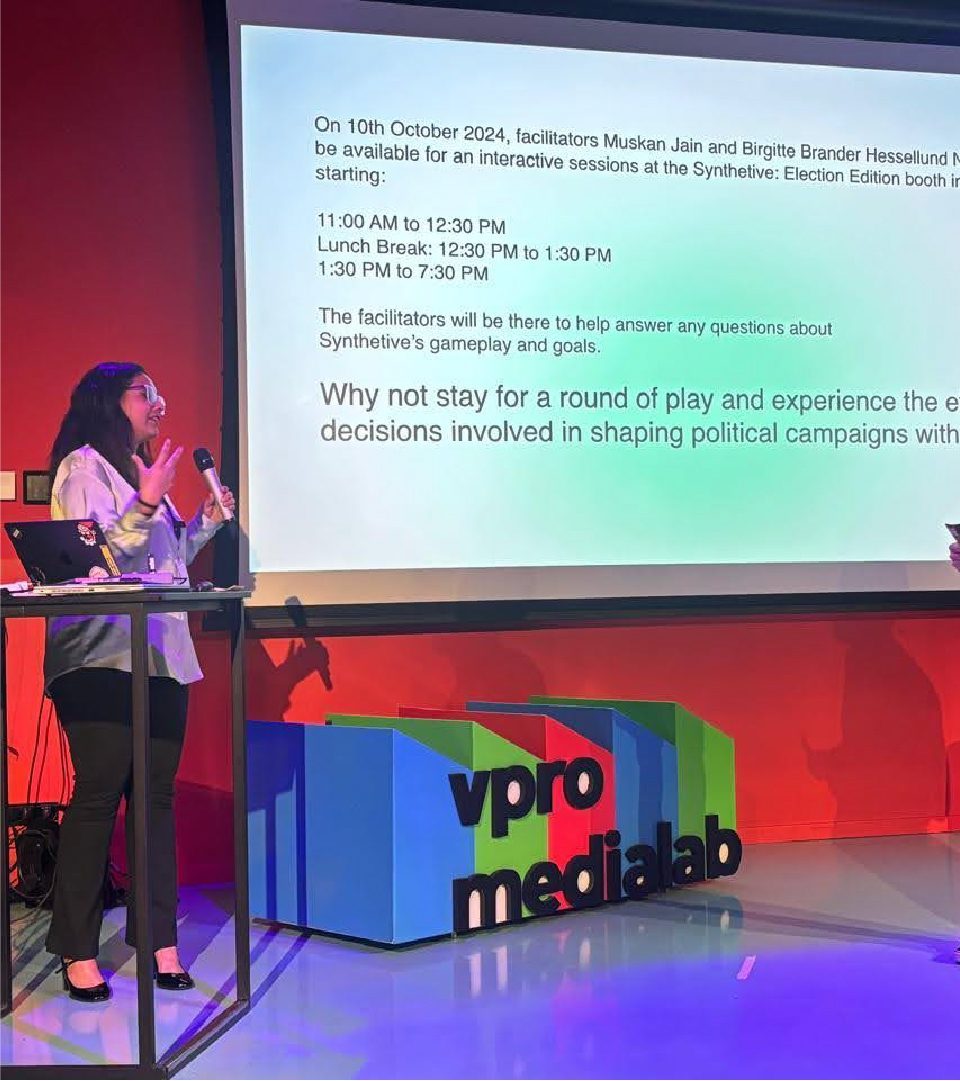
Synthetive Project Talk
Society 5.0 · 2024
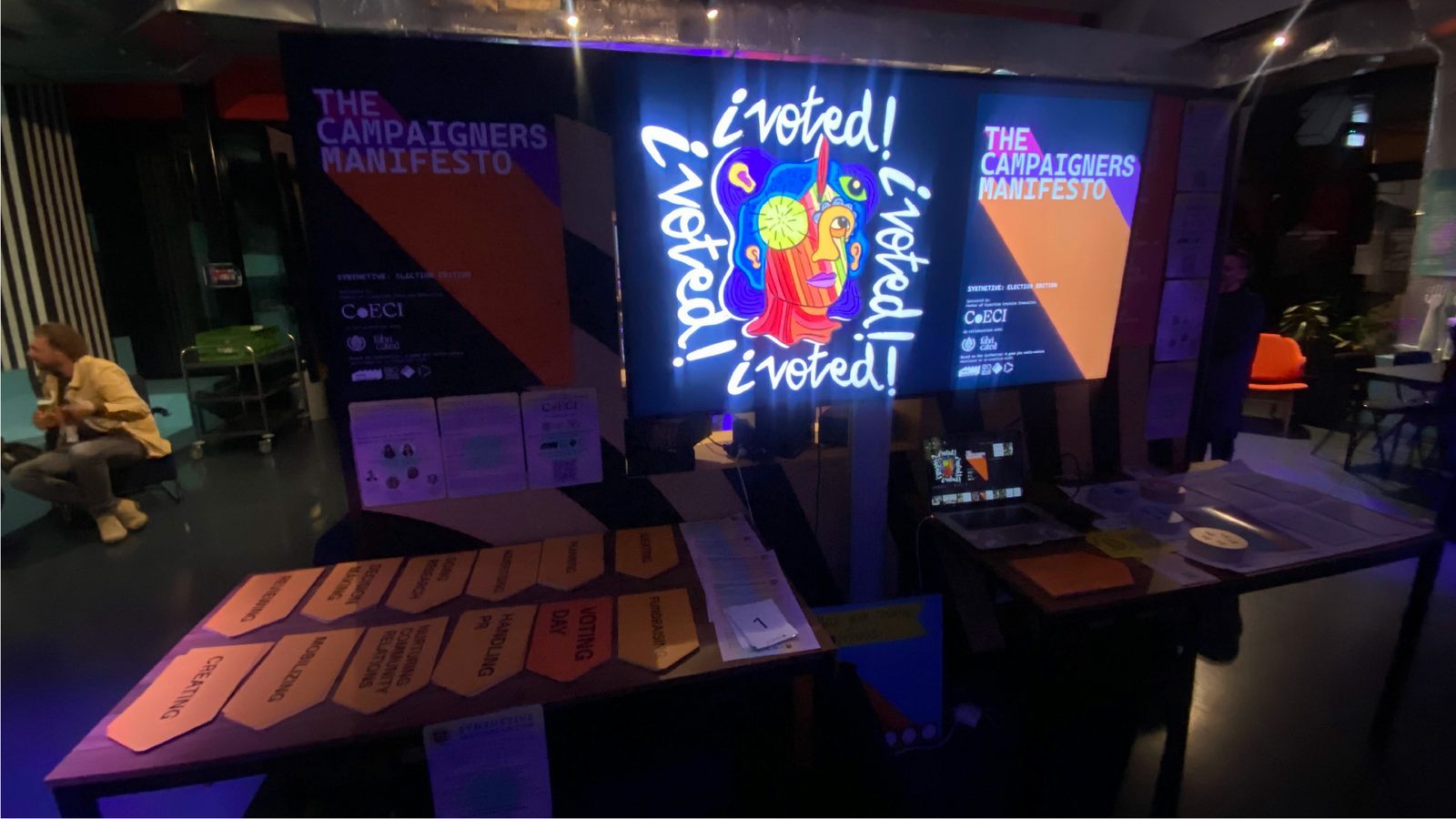
Synthetive: Election Edition · VPRO Medialab
Workshop facilitator · Exhibitor
Workshop-begeleider · Exposant
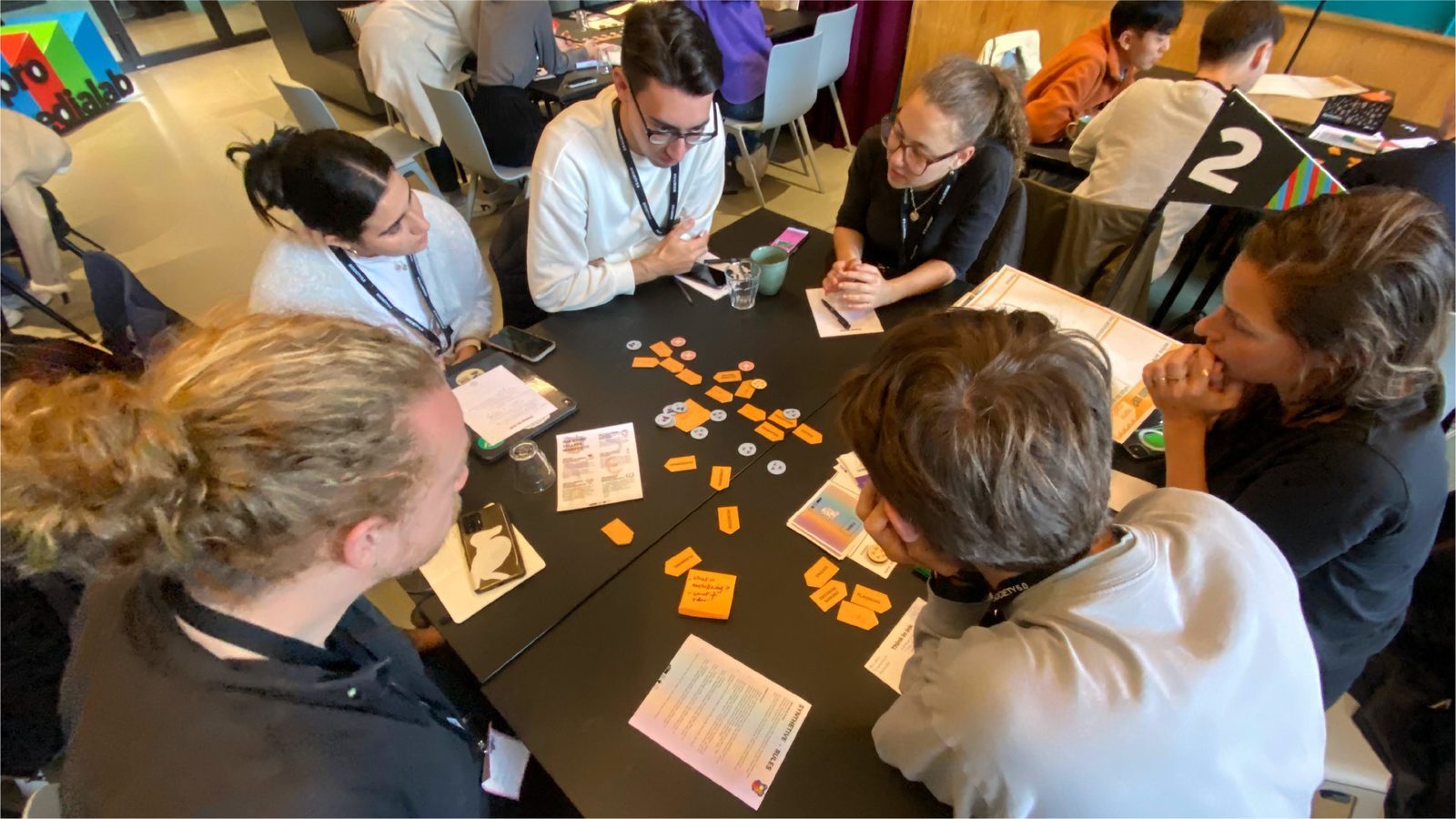
Workshop Facilitation
Workshop-begeleiding
Society 5.0 · 2024
Accessibility · Tactile + Audio · Children's Design · MDD Amsterdam
Toegankelijkheid · Tactiel + Audio · Kinderdesign · MDD Amsterdam
A 25×25 cm tactile + audio learning tool that helps visually impaired children (ages 4–6) explore real-world environments through touch and spatialised sound — without relying on Braille.
Een tactiel + audio leertool van 25×25 cm dat visueel beperkte kinderen (4–6 jaar) helpt om omgevingen uit de echte wereld te verkennen via aanraking en ruimtelijk geluid — zonder afhankelijk te zijn van Braille.
✦ Overview
Feelscape is a 25 × 25 cm tactile map paired with spatialised audio. Four scenes — neighbourhood, city, water, and pathway — sit on a single landscape, separated by a cobblestone path. A child runs their fingers along the path; embedded buttons and electric-paint contacts trigger 3D audio cues that describe what they’re touching.
Built with Alina and Mihaela as part of the Master in Digital Design Accessibility project at Amsterdam University of Applied Sciences, designed specifically for visually impaired children aged 4–6.
Brief
Teach real-world concepts to visually impaired children without using Braille.
Insight
Spatialised 3D audio aids orientation skills in visually impaired children.
Method
Double Diamond · desk research · museum field study · expert feedback.
✦ In use
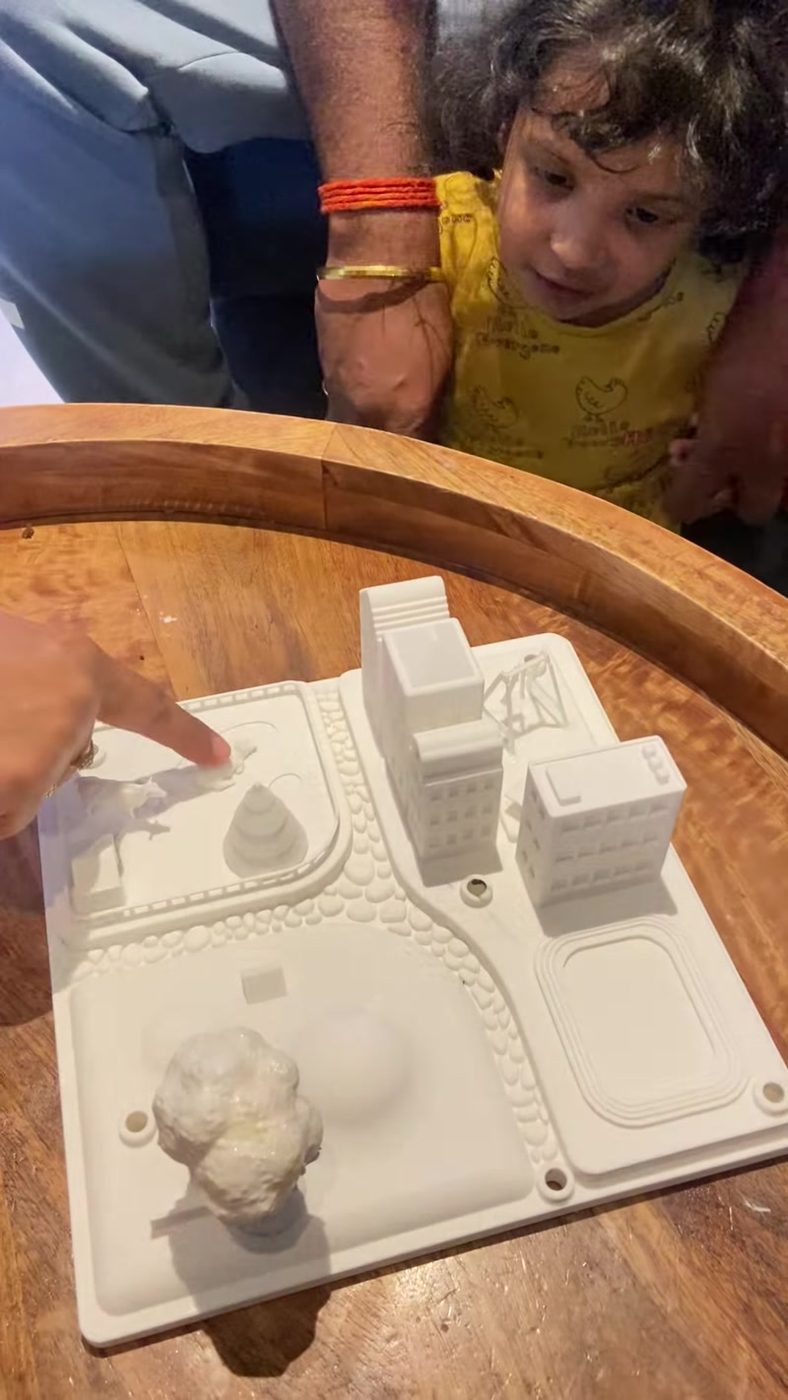
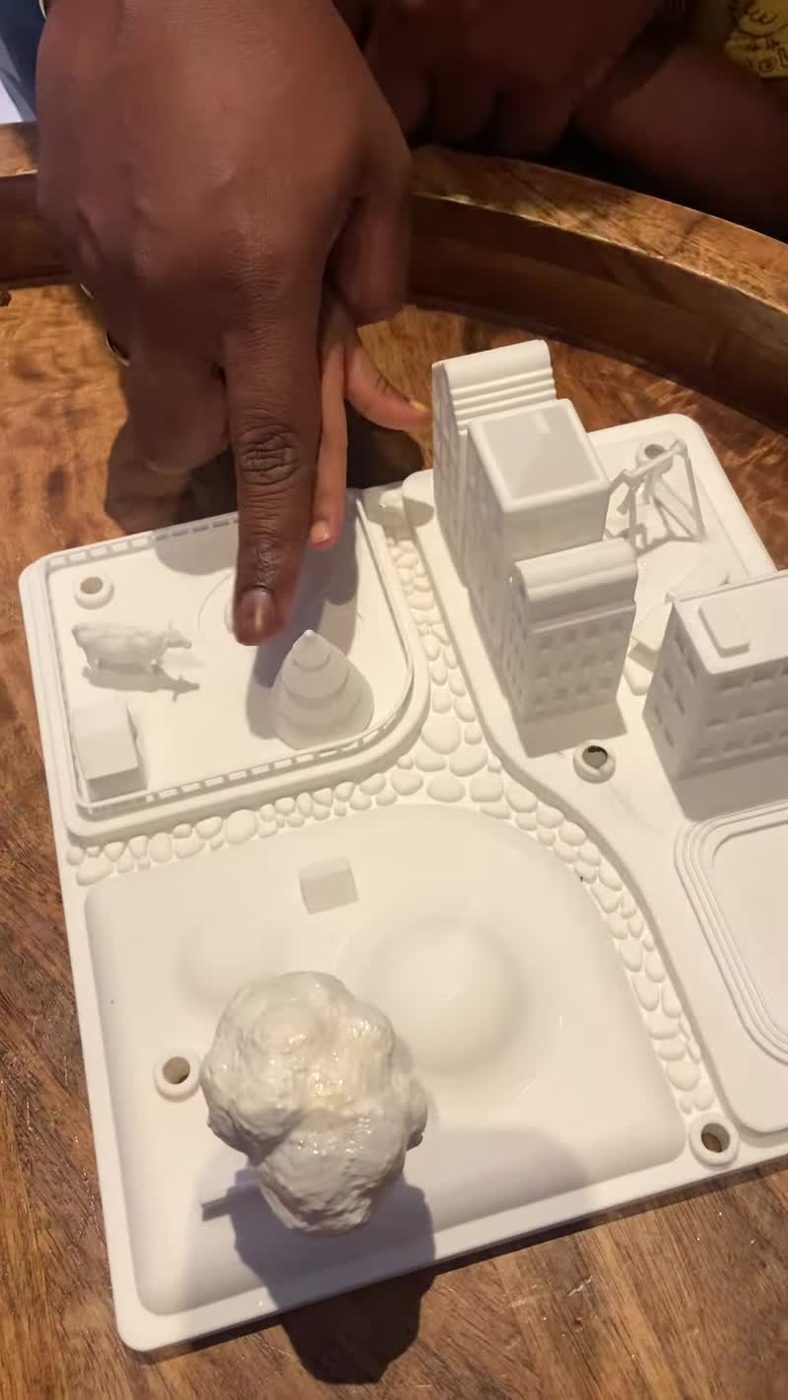
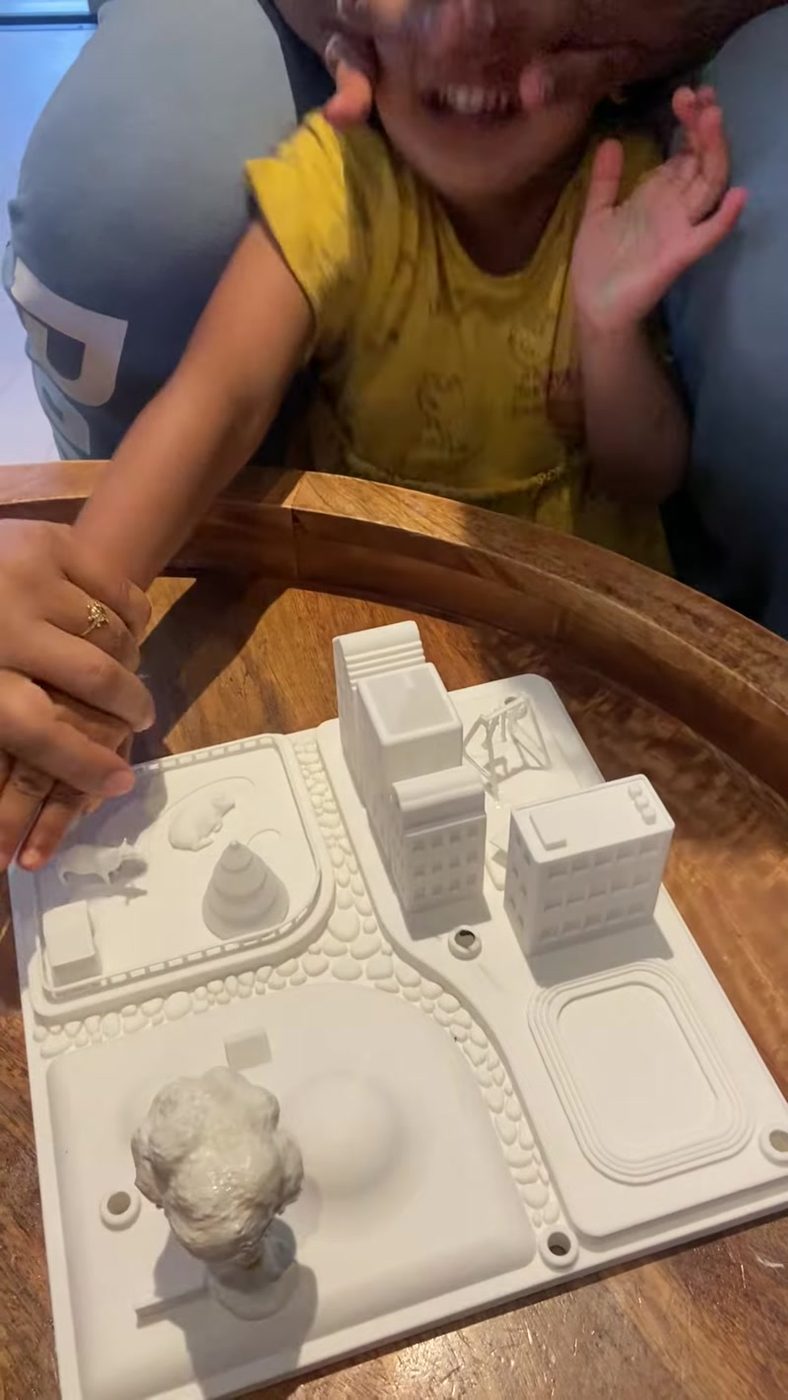
✦ Process
We started at a museum dedicated to the visually impaired — a field trip that reshaped our assumptions and gave us a felt sense of what designing for blindness actually means. Function over form became the guiding principle from that day on.
From there, desk research grounded every decision. The Netflix adaptation of All the Light We Cannot See — in which a blind girl uses a 3D map of her city to navigate WWII Saint-Malo — gave us our first conceptual anchor. Research papers on spatialised audio and orientation in visually impaired children gave us the technical one.
Practical constraints — manufacturing scale, button density, audio fidelity — pushed us toward a 25 × 25 cm format, with audio triggered through buttons and electric-paint contacts on the map surface.
Expert feedback then refined the 3D scenes’ proportions, so the model wouldn’t mislead a child about real-world size relationships.
✦ Outcome
The project reinforced something I’d believed but hadn’t felt as sharply: when you’re designing for users whose sensory experience differs from your own, intuition isn’t enough.
Evidence — from research, museums, and experts in the field — isn’t a box to tick. It’s the only way the design works.
Feelscape is now a working prototype: a tactile model paired with audio cues, validated through expert feedback and grounded in peer-reviewed research on orientation skills.
The framework we built — Double Diamond + field research + expert validation — has stayed with me as the default approach for any project where the user isn’t in the room.
Function over form. That’s where accessibility starts.
Exhibitions & Talks
Tentoonstellingen & Lezingen
Twenty-two events across the Netherlands, Italy, and Canada — 2023 onwards.
Tweeëntwintig evenementen in Nederland, Italië en Canada — vanaf 2023.
Motion, illustration, and creative experiments — this is where I explore skills beyond product design. Always a work in progress.
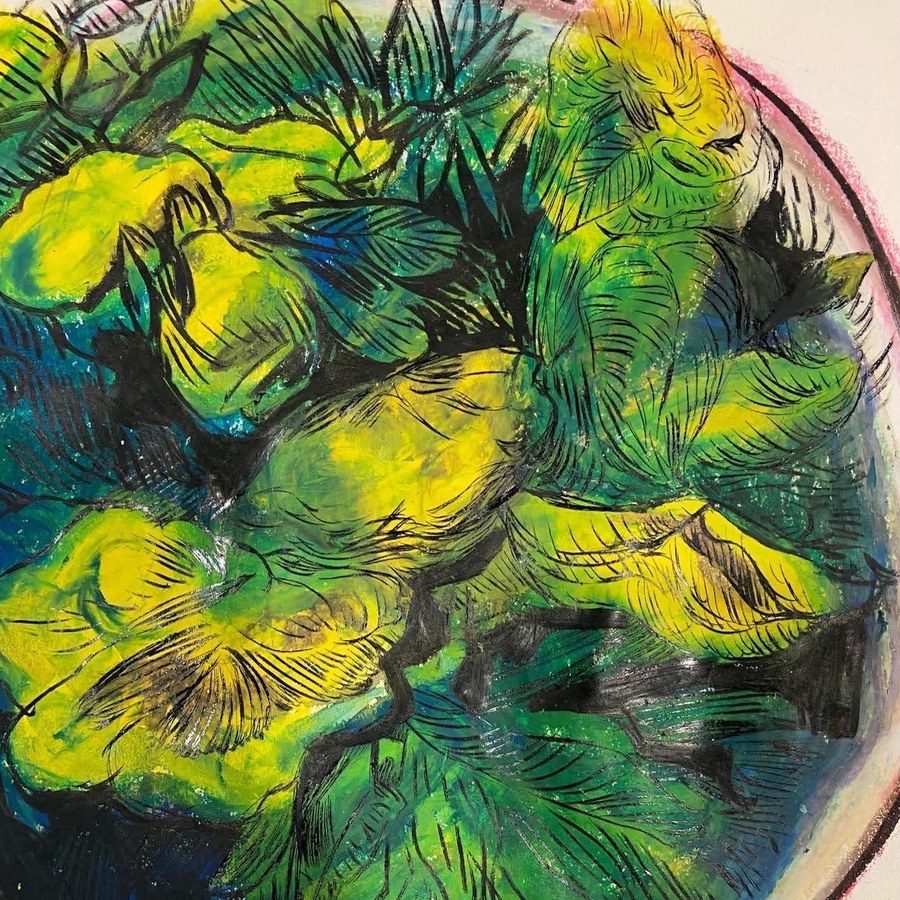
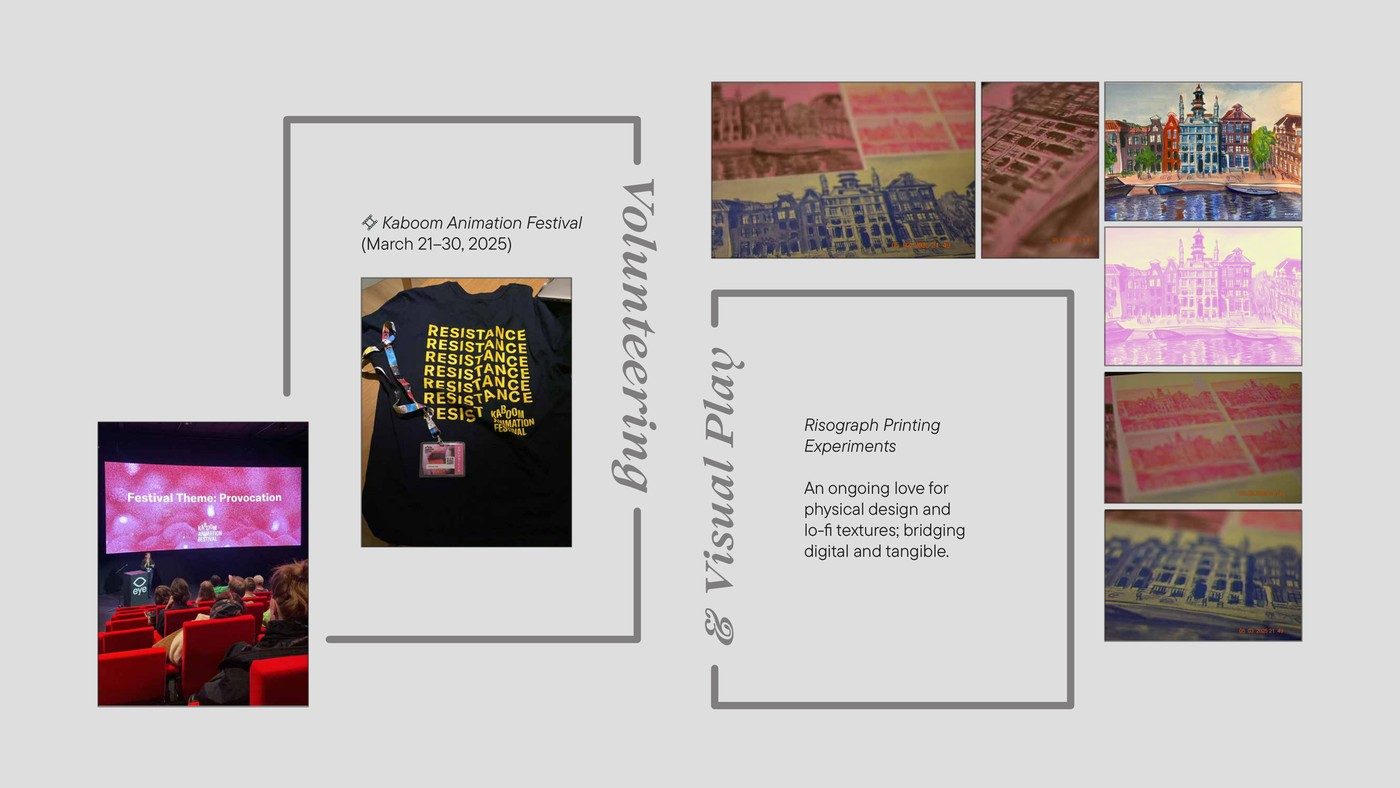
Riso prints, stickers, and wearables — the muskabun brand is my ongoing personal design experiment. Made for the joy of making.
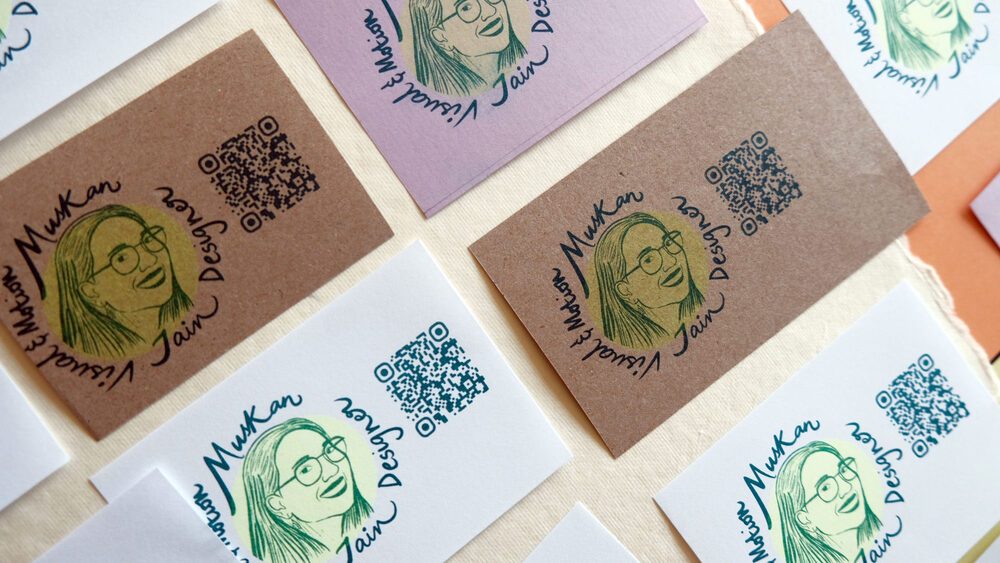
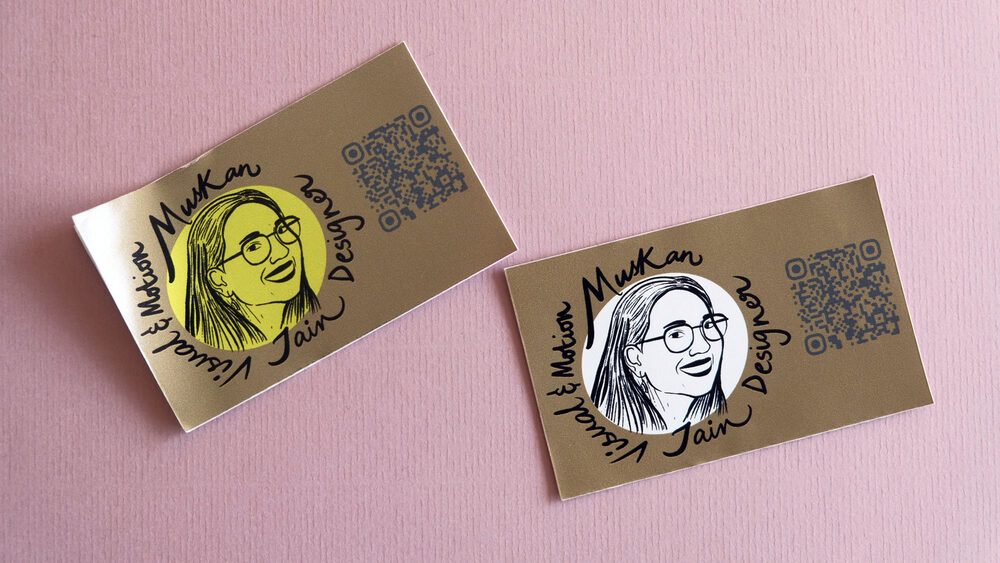
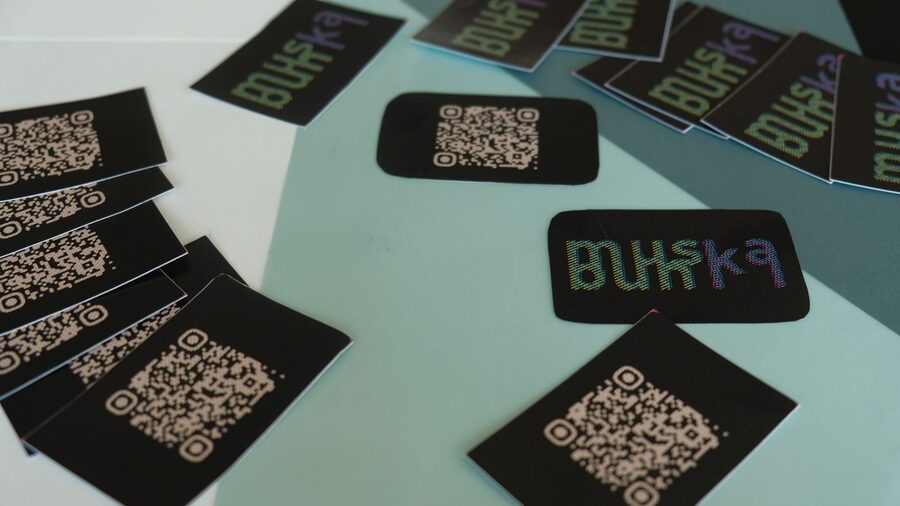
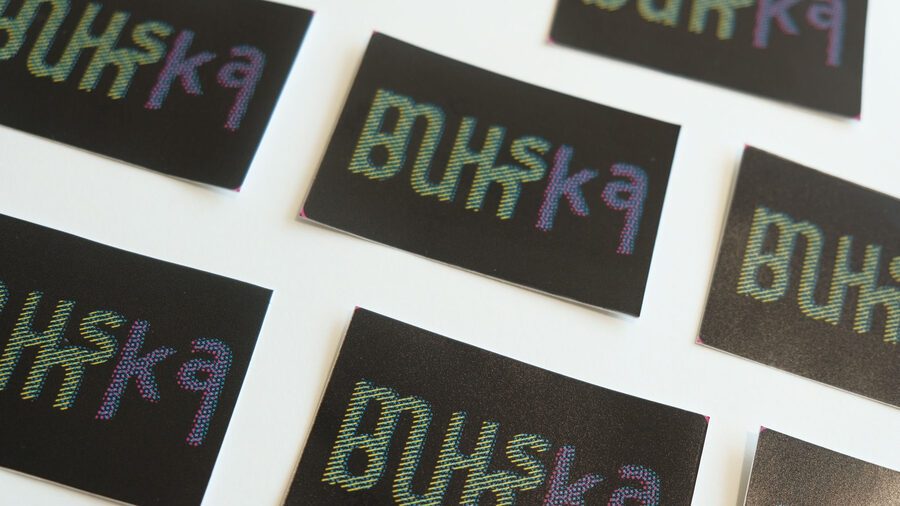
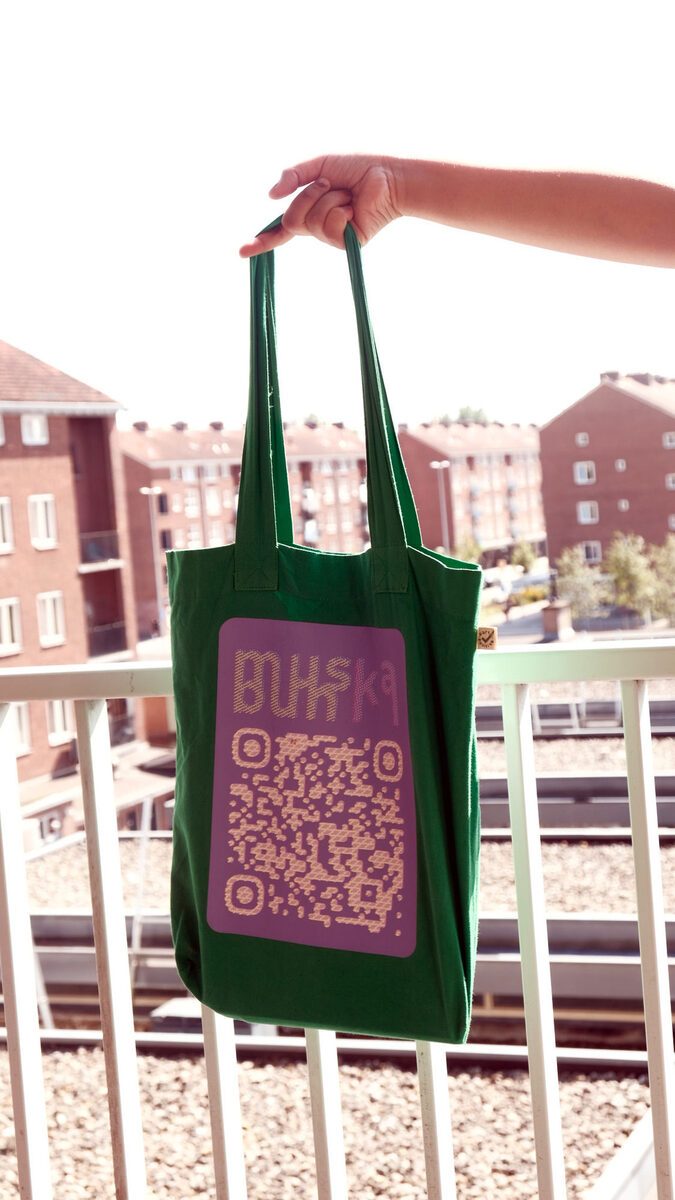
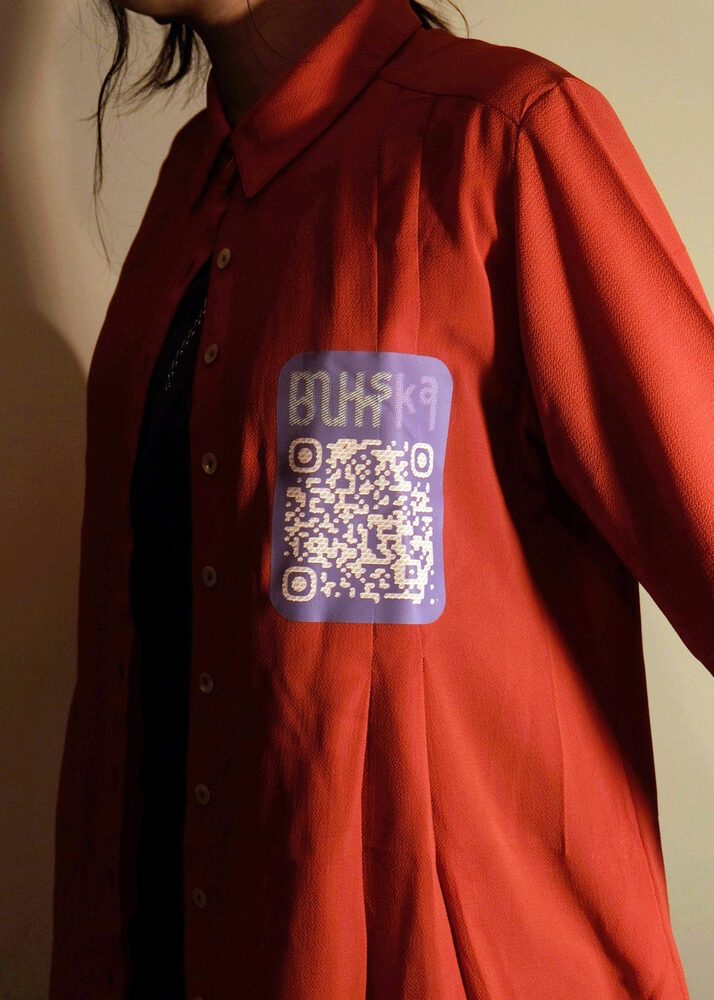
muskabun — a personal brand & design sandbox
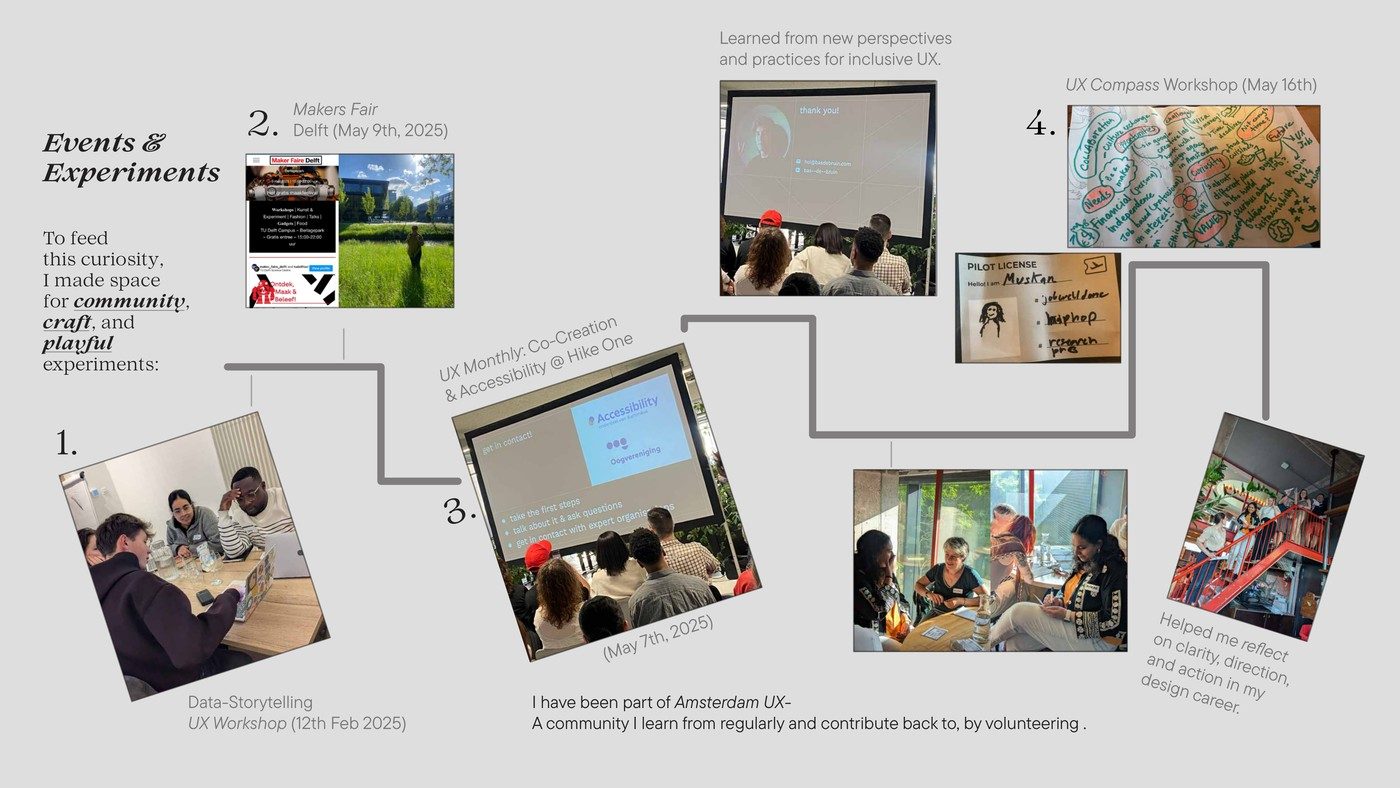
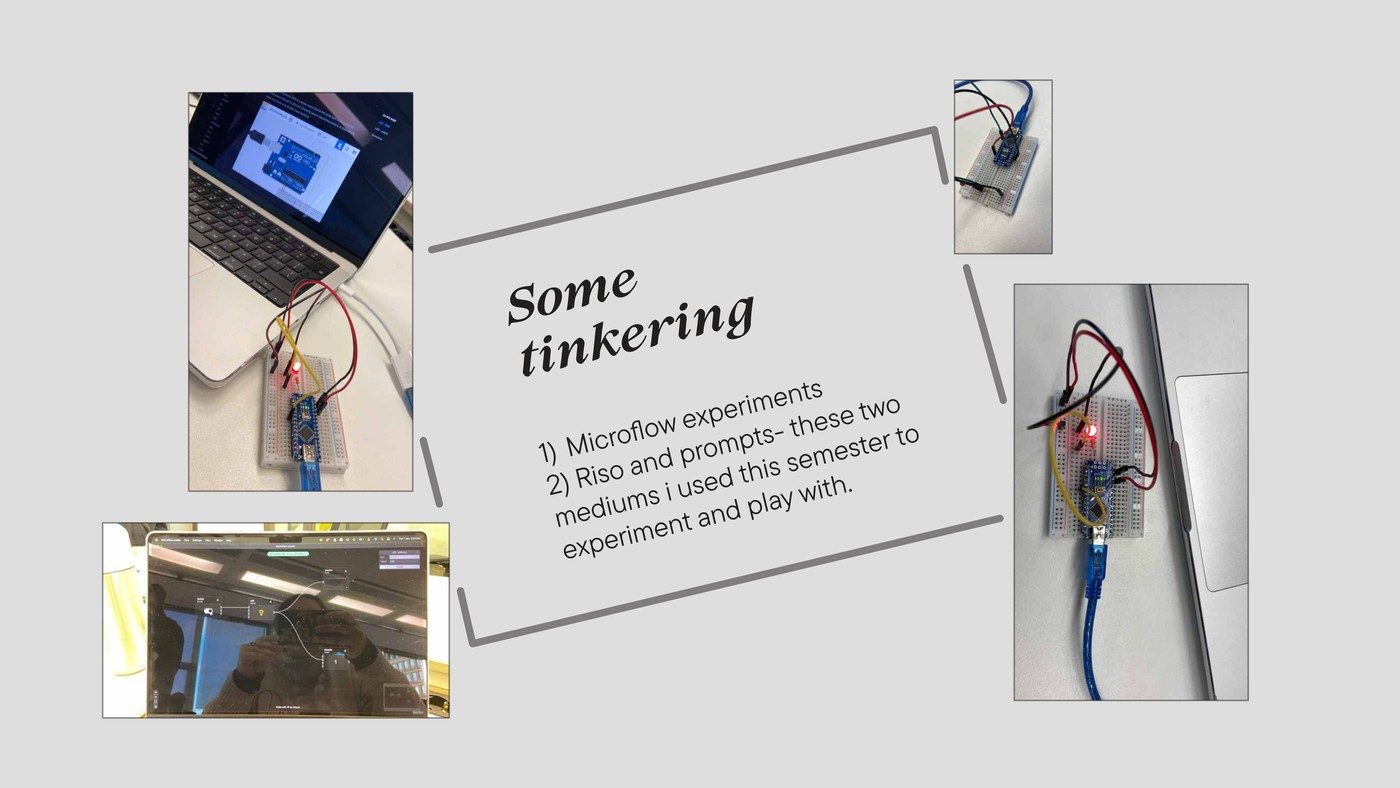
Staying curious beyond the syllabus — exhibitions, workshops, volunteering, and hands-on experiments.
01
Strategy drives everything. I start with positioning, audience, and brand voice — then design follows with real purpose behind every decision.
Strategie stuurt alles. Ik begin met positionering, doelgroep en merktone — daarna volgt design met echte intentie achter elke beslissing.
02
I build frameworks that scale — design systems, brand guidelines, and component libraries that empower teams long after I hand things over.
Ik bouw frameworks die opschalen — designsystems, merkrichtlijnen en componentbibliotheken die teams in staat stellen om door te bouwen, lang nadat ik het werk heb overgedragen.
03
I lead by doing. I'm in the work alongside the team — art directing, refining, and setting the quality bar through example, not just instruction.
Ik leid door te doen. Ik zit in het werk samen met het team — art direction geven, finetunen en de kwaliteitslat hoog leggen door voorbeeld, niet alleen door instructie.
04
From a 6-metre wall to a 6mm label — the finish matters everywhere. I bring the same rigour to spatial environments as I do to digital pixels.
Van een muur van 6 meter tot een label van 6 mm — de afwerking is overal belangrijk. Ik breng dezelfde precisie naar ruimtelijke omgevingen als naar digitale pixels.
05
I know how to direct external partners — briefing tight, challenging with substance, and protecting the brand vision through every creative review.
Ik weet hoe je externe partners aanstuurt — strak briefen, inhoudelijk uitdagen en de merkvisie beschermen tijdens elke creative review.
06
Building design teams is part of the job. I hire for attitude, mentor for craft, and create conditions where people do the best work of their careers.
Designteams opbouwen hoort bij het werk. Ik rekruteer op mentaliteit, coach op vakmanschap en creëer omstandigheden waarin mensen het beste werk van hun carrière maken.
Contributing to the development of Halla Health (Beta launch June 2026), a self-care app. Designed a scalable in-app visual system while collaborating with cross-functional stakeholders to deliver accessible, implementation-ready solutions aligned with product and business goals.
Provided UI modernisation strategy to enhance platform aesthetics and usability for an AI-powered travel product.
Designed the second edition of Synthetive, a serious game developed during the 2023 Fall Semester, for which funding was received from the Centre of Expertise Creative Innovation (CoECI). Led gameplay iteration, UX testing, and facilitation at Society 5.0 Festival and MozFest.
Led UX design and creative direction for multiple educational technology initiatives supporting early English literacy for children in rural schools across India.
Co-designed Synthetive — a board game and conversation tool for VPRO Medialab and NPO broadcaster, collaborating across 10+ media stakeholders to integrate user research, brand identity, and participatory testing into a live product launch.
Established consistent icon guidelines across digital and physical products; created video assets for new product line pitches in collaboration with the in-house industrial design team. Four years building scalable visual systems for a leading consumer electronics brand.
Worked in a high-functioning UX team of 12 on redesigning an internal banking operations platform used by bank employees — prioritising accessibility and grounding every decision in strong user research.
Visual designer and animator at Katha Digital Lab — creating website assets, social media graphics, and storytelling animations for children's education programmes.
Master's research focused on generative AI, memory, and embedded interaction design. Thesis project Memory Ball — featured in the ThingsCon State of Responsible Technology 2025 report. Paper Conversations That Matter accepted and presented at RSD14, OCAD University.
One of Asia's most prestigious design institutions. Rigorous training in visual communication, typography, animation, and design thinking — forming the craft and conceptual foundation of everything that followed.
Open to product and UX design roles in education, media, AI, and civic innovation — especially where research-driven design can make a meaningful difference.
Beschikbaar voor product- en UX-designrollen in onderwijs, media, AI en civic innovation — vooral waar onderzoeksgedreven design echt verschil kan maken.
App Audit · UX Research · Redesign Recommendations
App-audit · UX-onderzoek · Herontwerp-aanbevelingen
A structured audit of the Havells Sync app — benchmarked against 2023 product design standards across visual language, interaction patterns, and component quality — delivered as ten prioritised redesign recommendations.
Een gestructureerde audit van de Havells Sync app — vergeleken met de productdesignstandaarden van 2023 op visuele taal, interactiepatronen en componentkwaliteit — opgeleverd als tien geprioriteerde herontwerp-aanbevelingen.
✦ Final Outcome
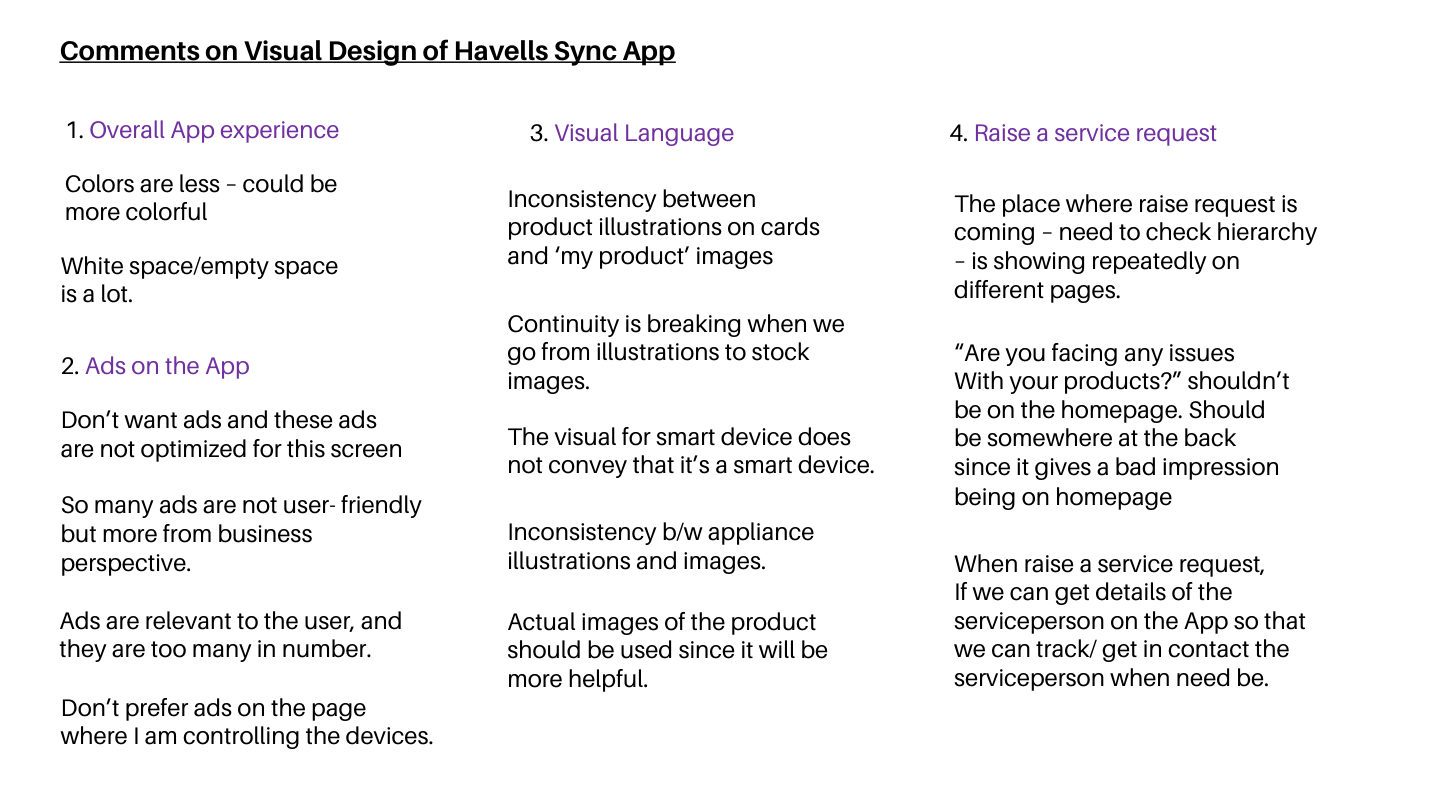
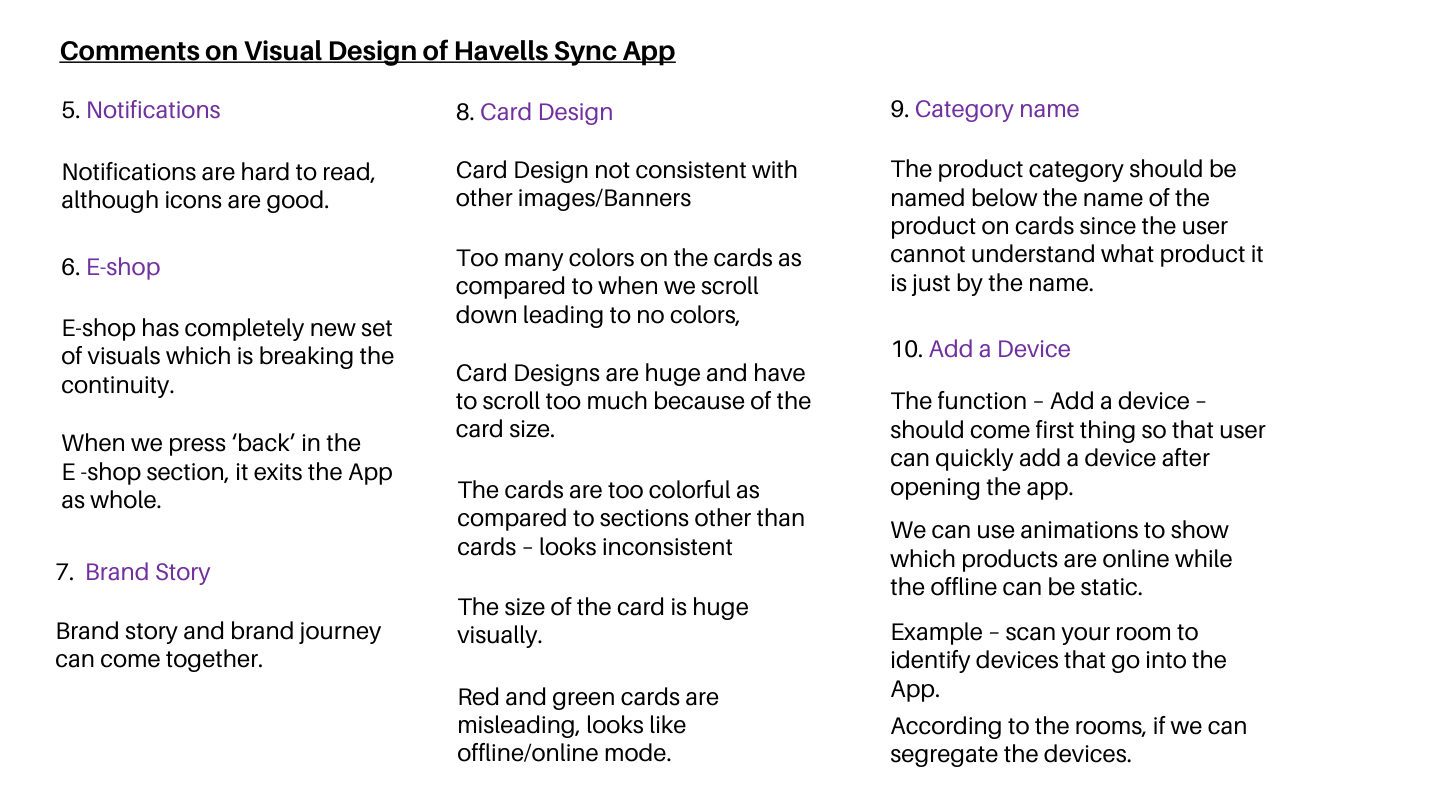
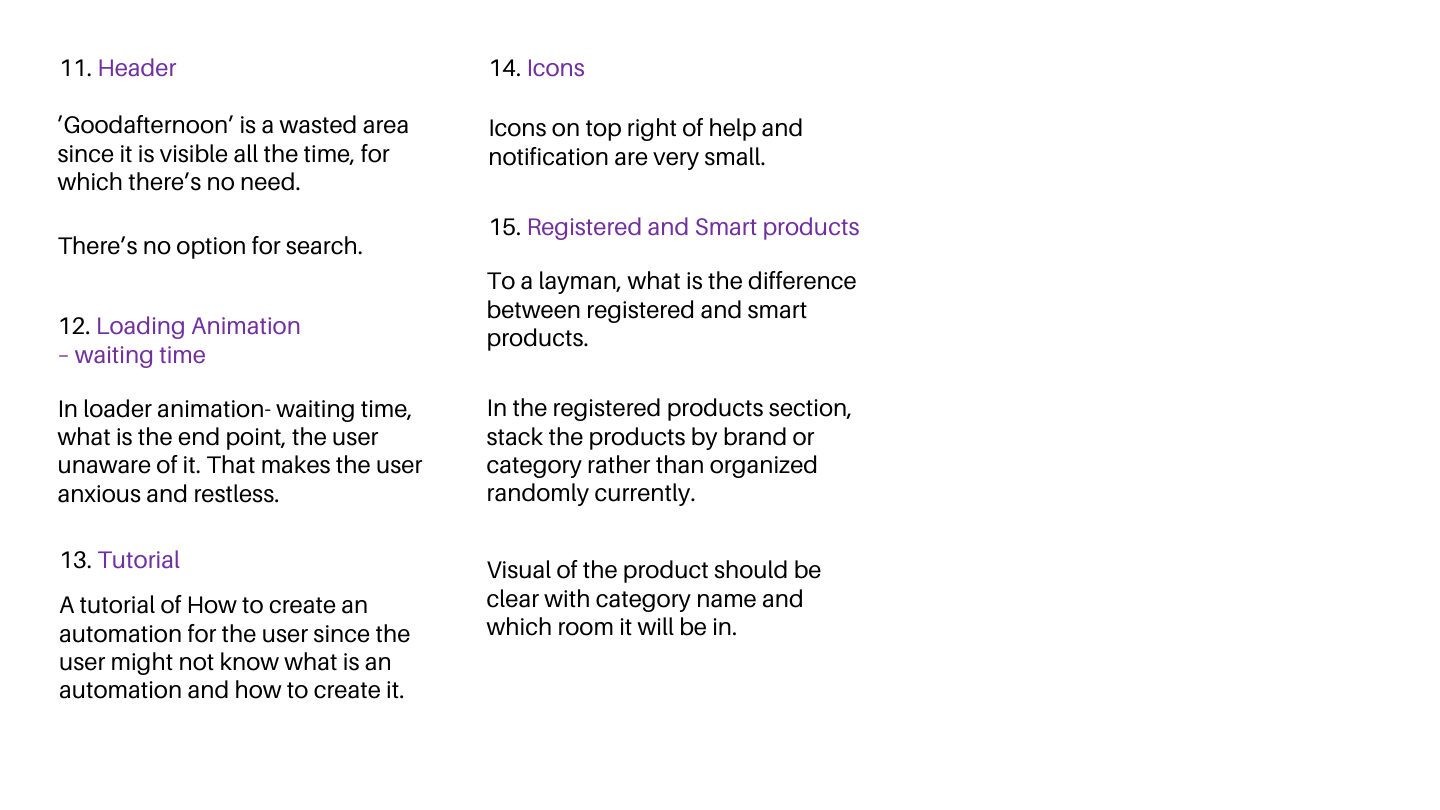
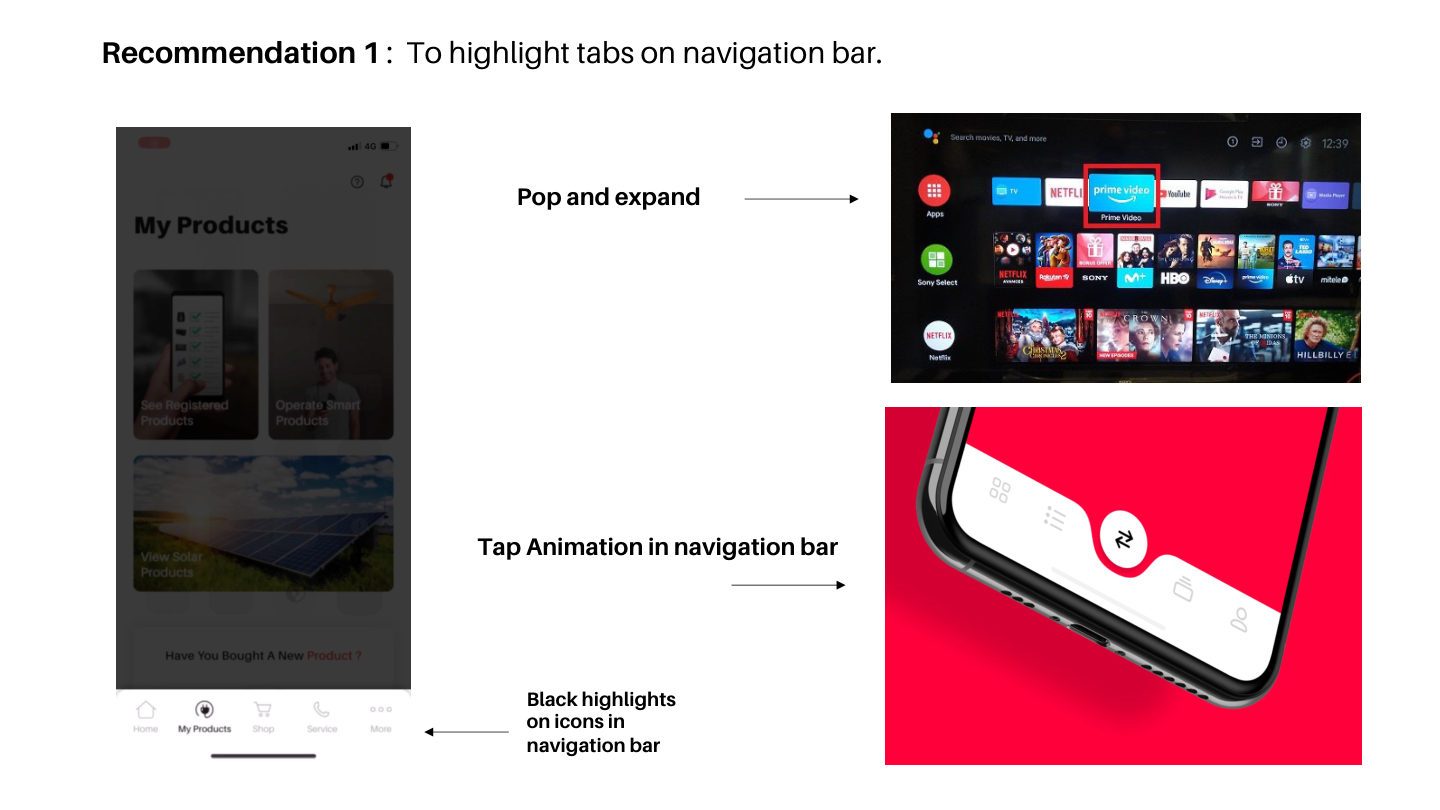
Audited the Havells Sync app against current product design standards — mapping visual language gaps, weak interaction patterns, and outdated components — then consolidated findings into ten evidence-backed redesign recommendations, delivered as a 62-page brief.
App Audit
A systematic review of the Havells Sync app across visual language, loading states, navigation, typography, cards, and motion — identifying gaps against 2023 product standards.
Benchmarking
Nine interaction categories benchmarked — splash screens, scroll, transitions, micro-animations, loading states, onboarding, illustrations, card layouts, and dark mode.
10 Redesign Recommendations
Ten prioritised, evidence-backed redesign improvements — from navigation hierarchy and loading patterns to card density, colour usage, and notification design.
Visual Designer (Full-time) · Havells India · Havells Sync App · 62-page deliverable · March 2023
✦ 01 — The Problem
Working at Havells, I noticed something: the Sync app worked, but it didn't feel considered. Loading animations were generic. Cards were oversized. Navigation used unlabelled icons. The visual language felt borrowed from an earlier era of mobile design.
The brief was open: audit where the app falls short and identify what could be improved. I used that freedom to build a structured audit — not a mood board, but a working document grounded in benchmarking and evidence.
The question I kept coming back to: what would it take to make this feel like an app someone cared about?
Research Questions
Scope
02 — Key Decisions
A structured audit could have been subjective. These were the calls that gave it credibility — as evidence, as a working document, and as something that could actually be acted on.
Decision 01
Nine benchmarked categories against 2023 product standards, not aesthetic preferences. Every finding tied to evidence. Opinion doesn't survive a first review meeting — especially not with a team that has shipped a live product.
Impact: findings were presented as evidence, not preferences — no pushback on subjectivity.
Decision 02
Measuring Sync against the strongest interaction patterns globally — not against adjacent products in the same category — set the ceiling high. Aspiration creates better recommendations than comparison.
Impact: recommendations were actionable against a world-class bar, not a local one.
Decision 03
Filtering six audit categories into exactly ten actionable, ranked recommendations made the deliverable something that could actually be placed on a product roadmap. A 50-finding audit gets filed; a 10-recommendation brief gets actioned.
Impact: 62-page deliverable with a clear priority hierarchy — structured for a product team to act on directly.
✦ 03 — The Work: App Audit & Gaps
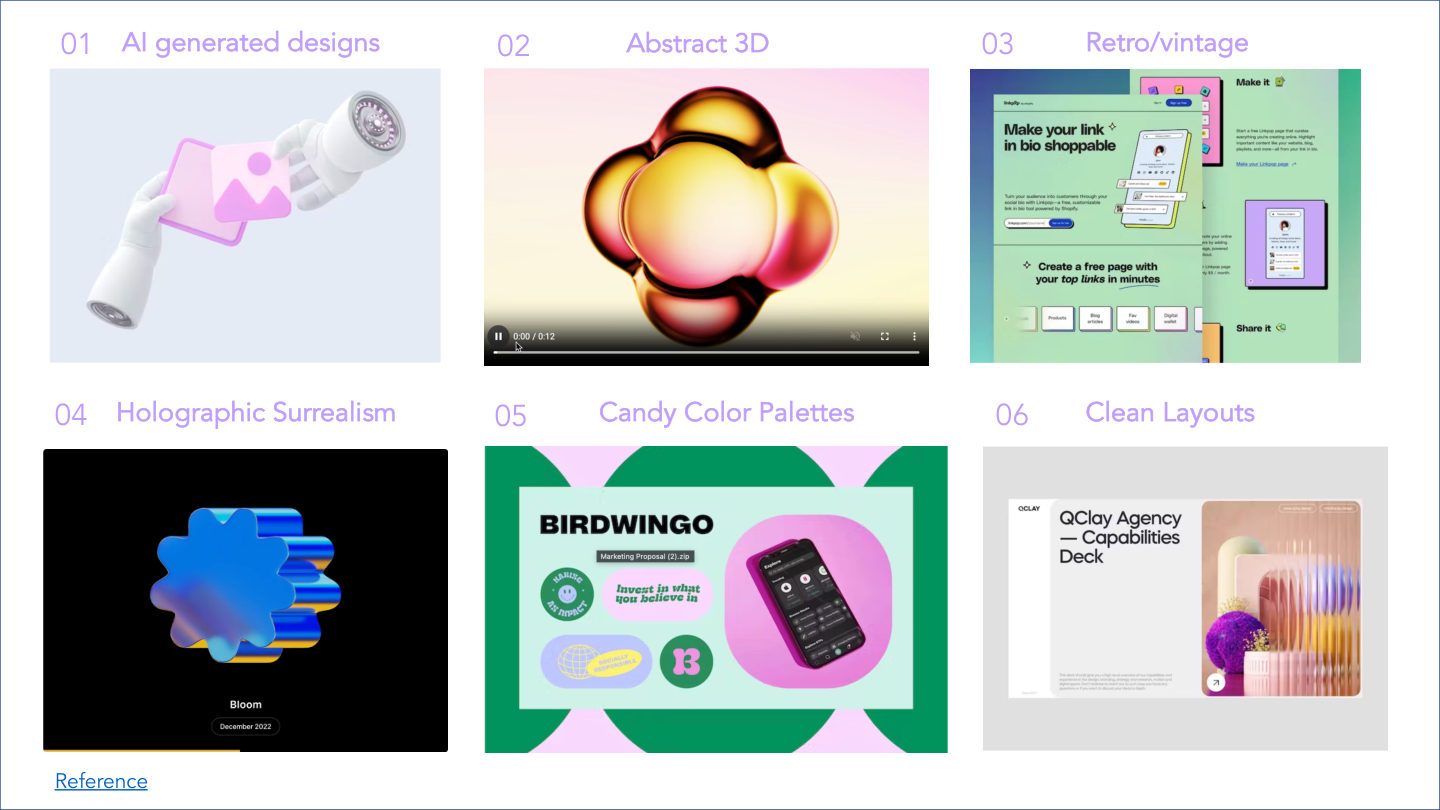
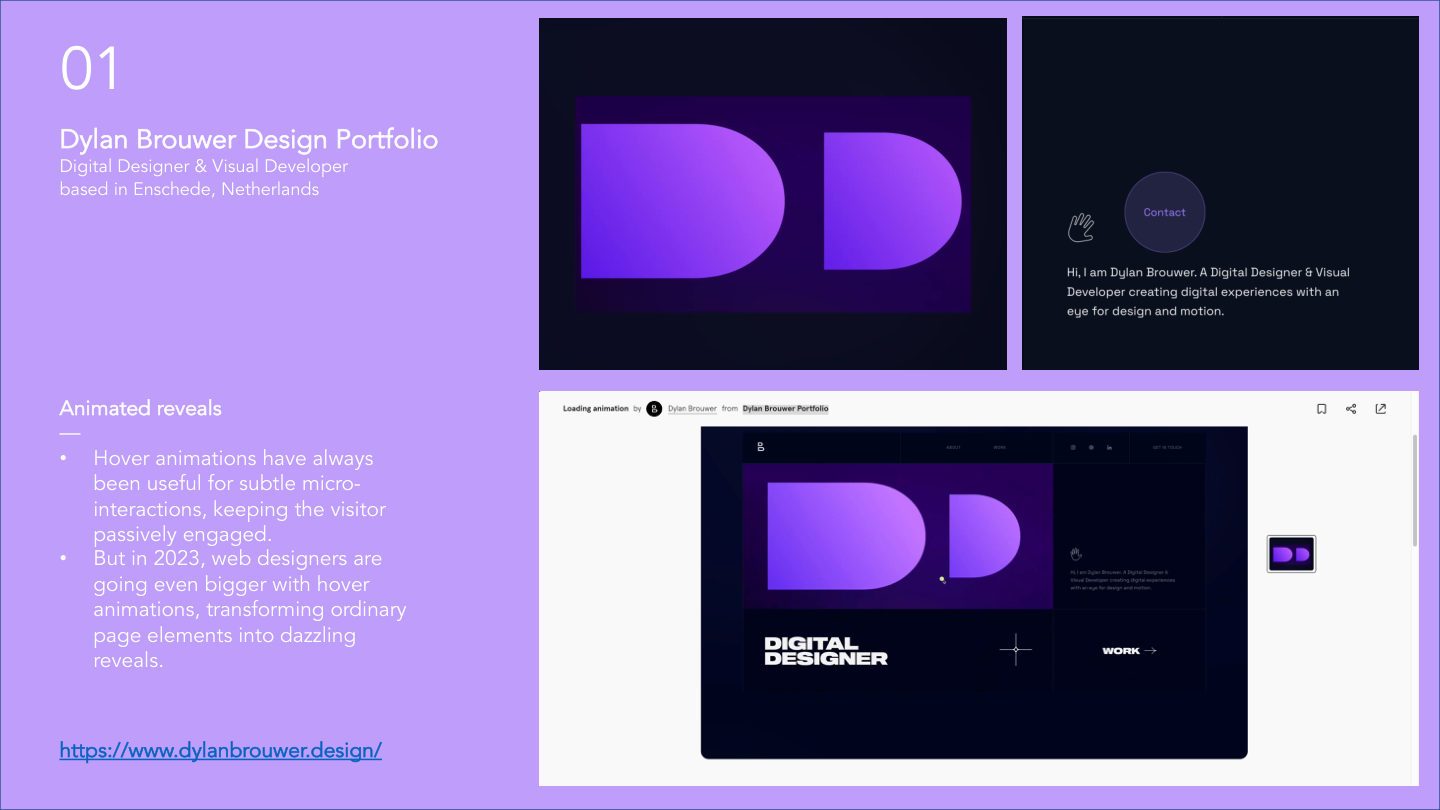
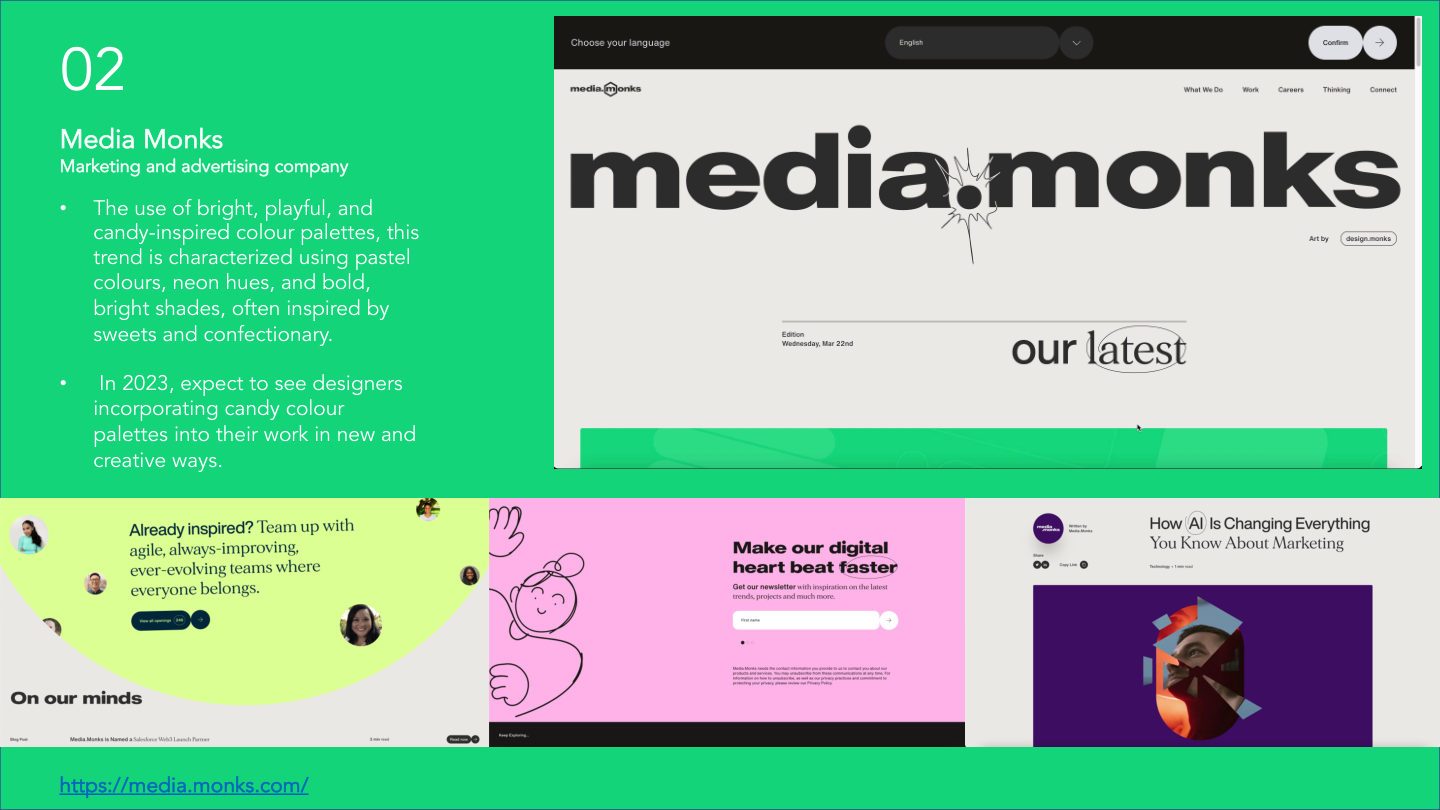
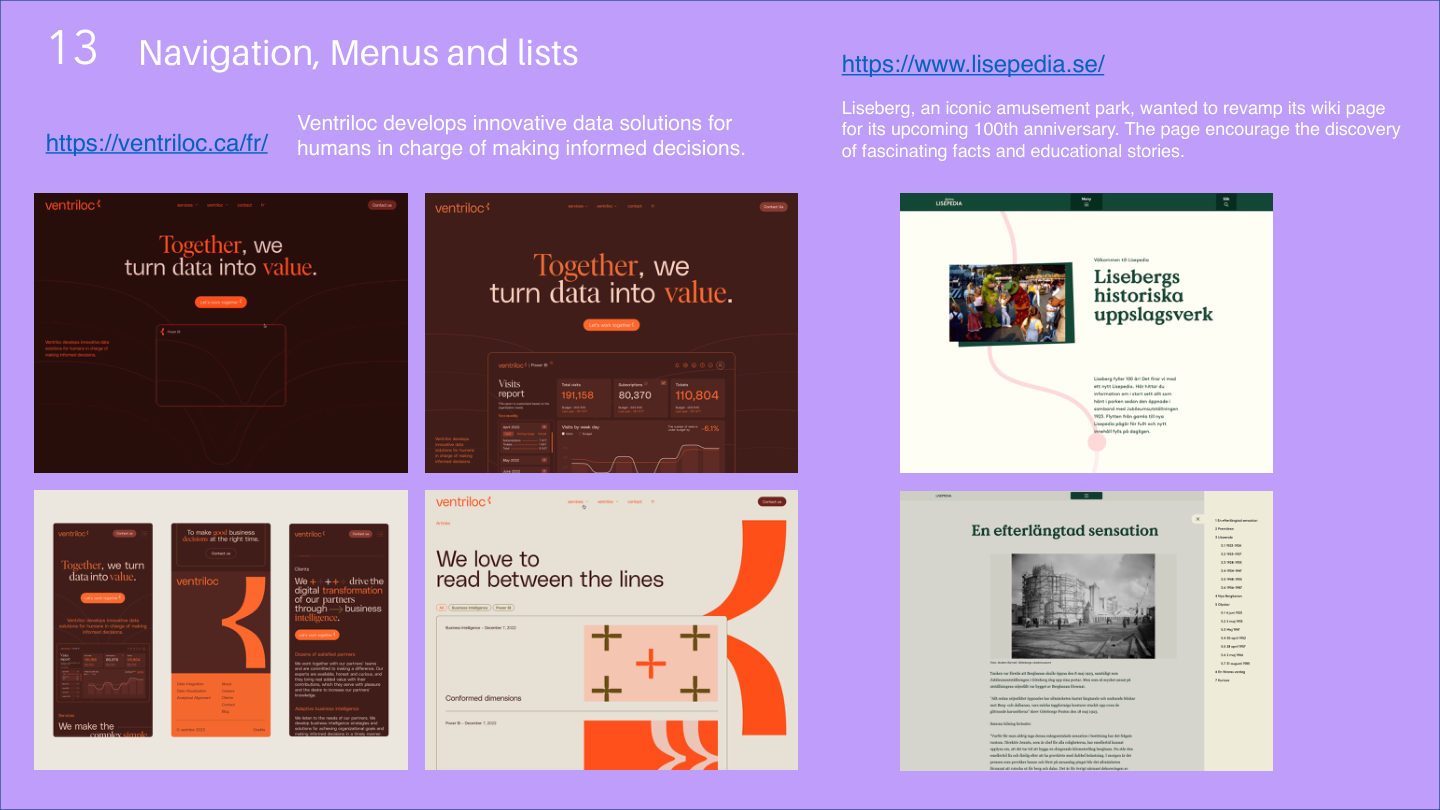
Research across six major directions shaping digital product aesthetics — from holographic surrealism to AI-generated design, studied through real brand case studies.
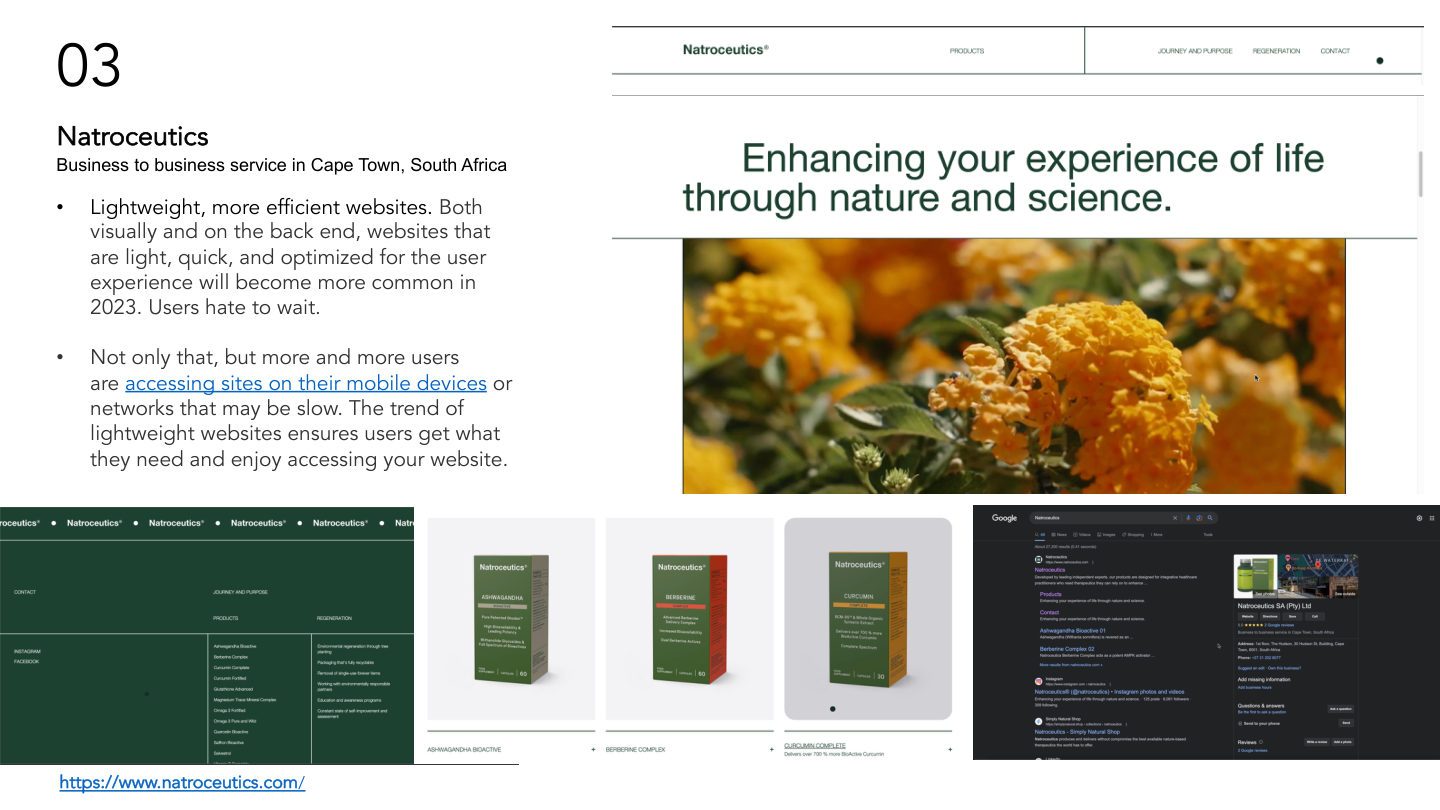
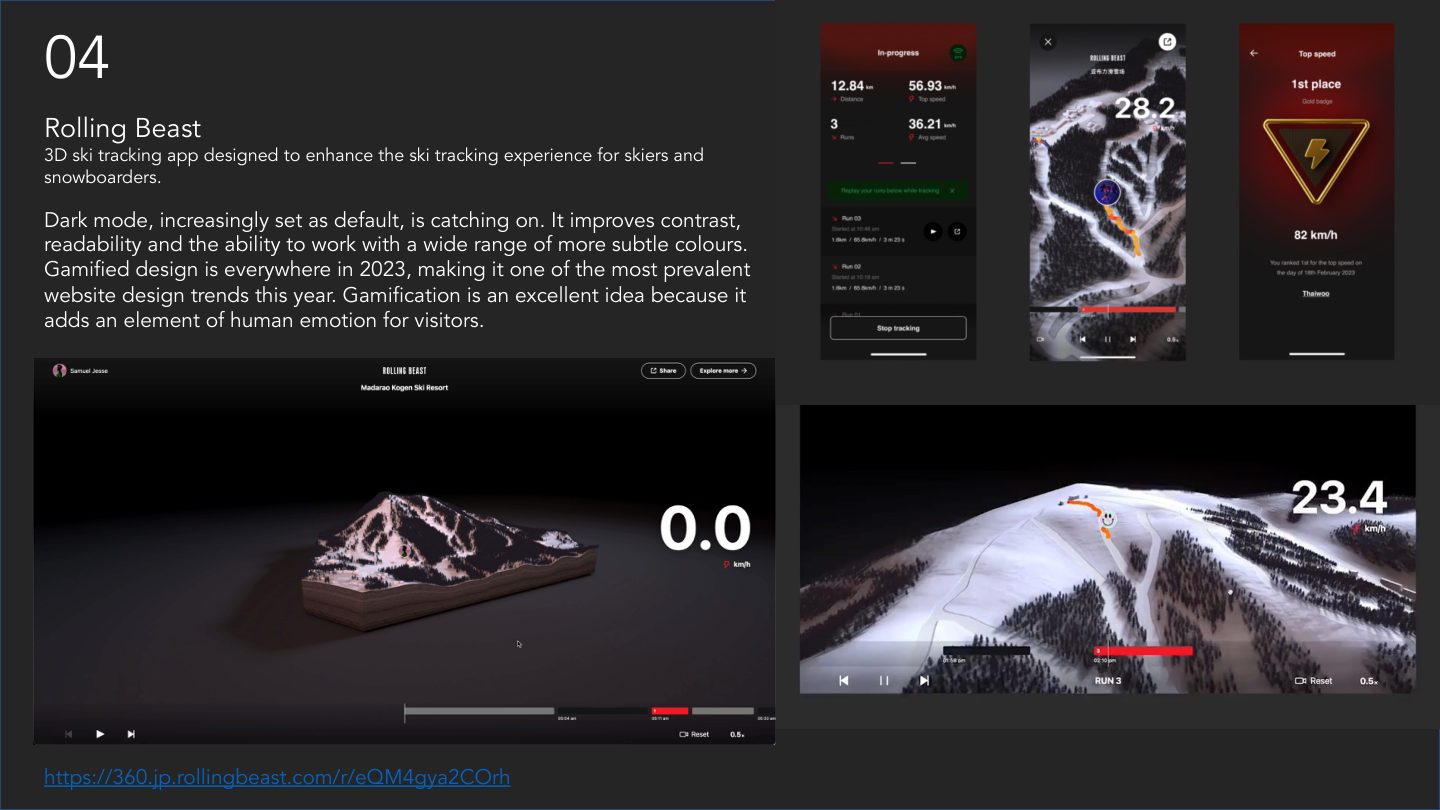
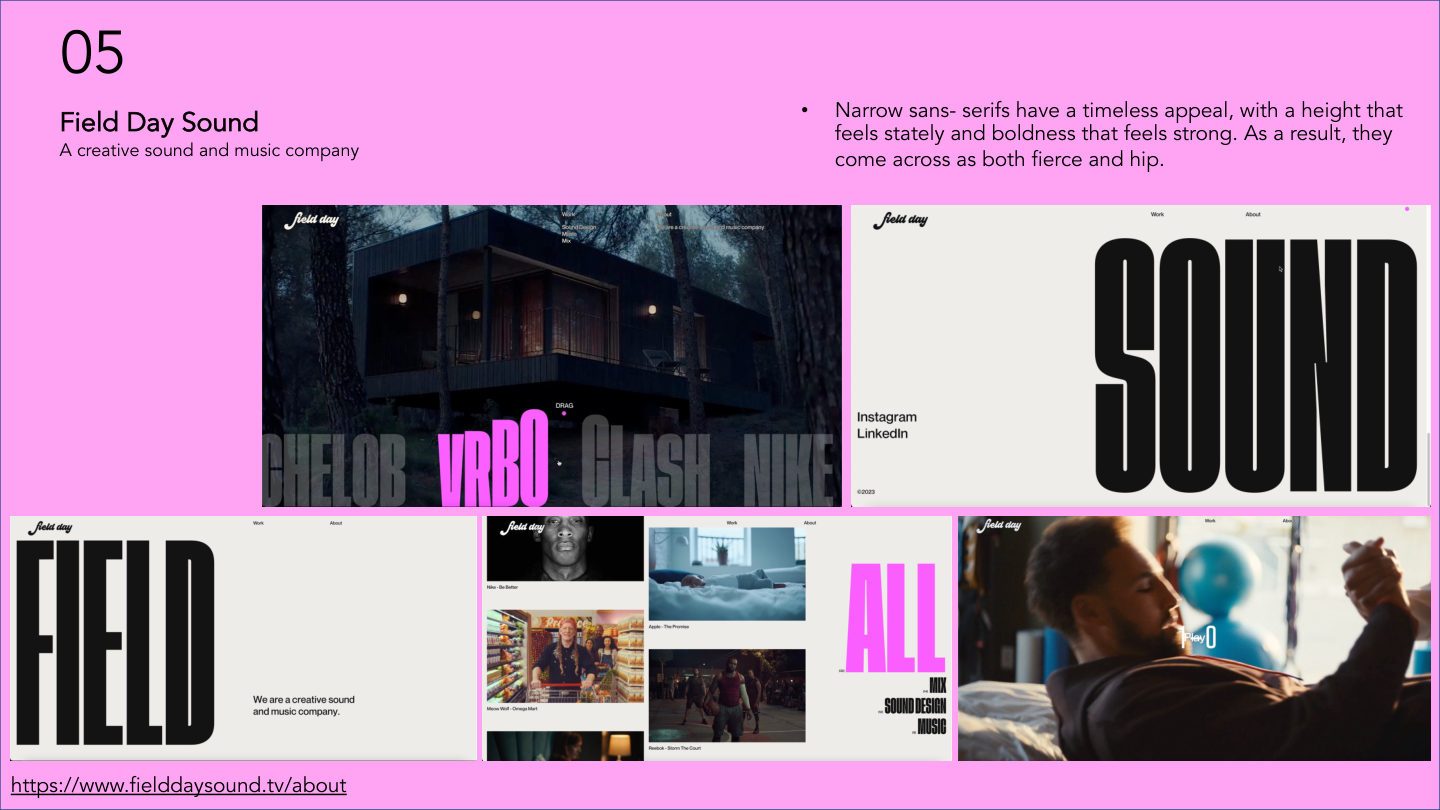
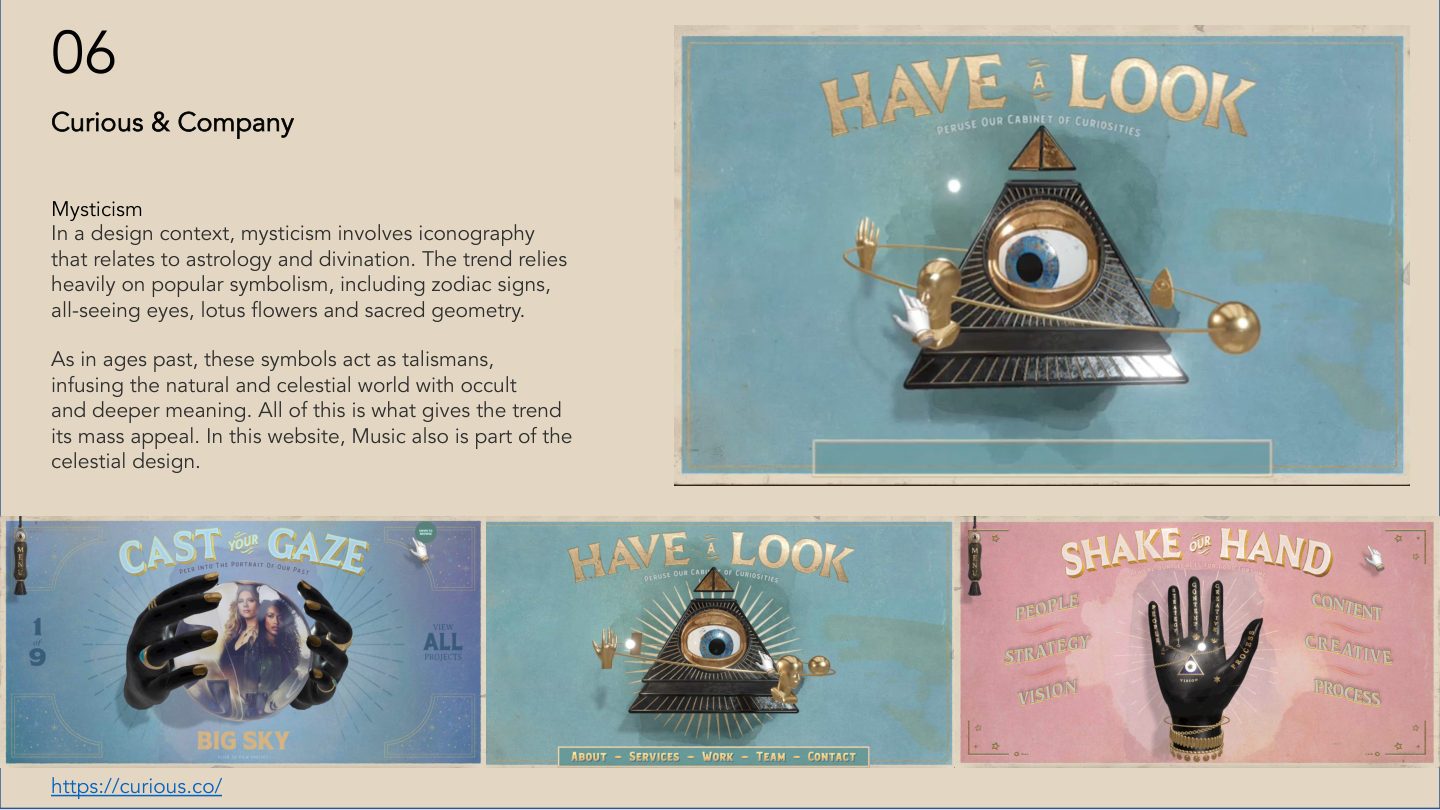
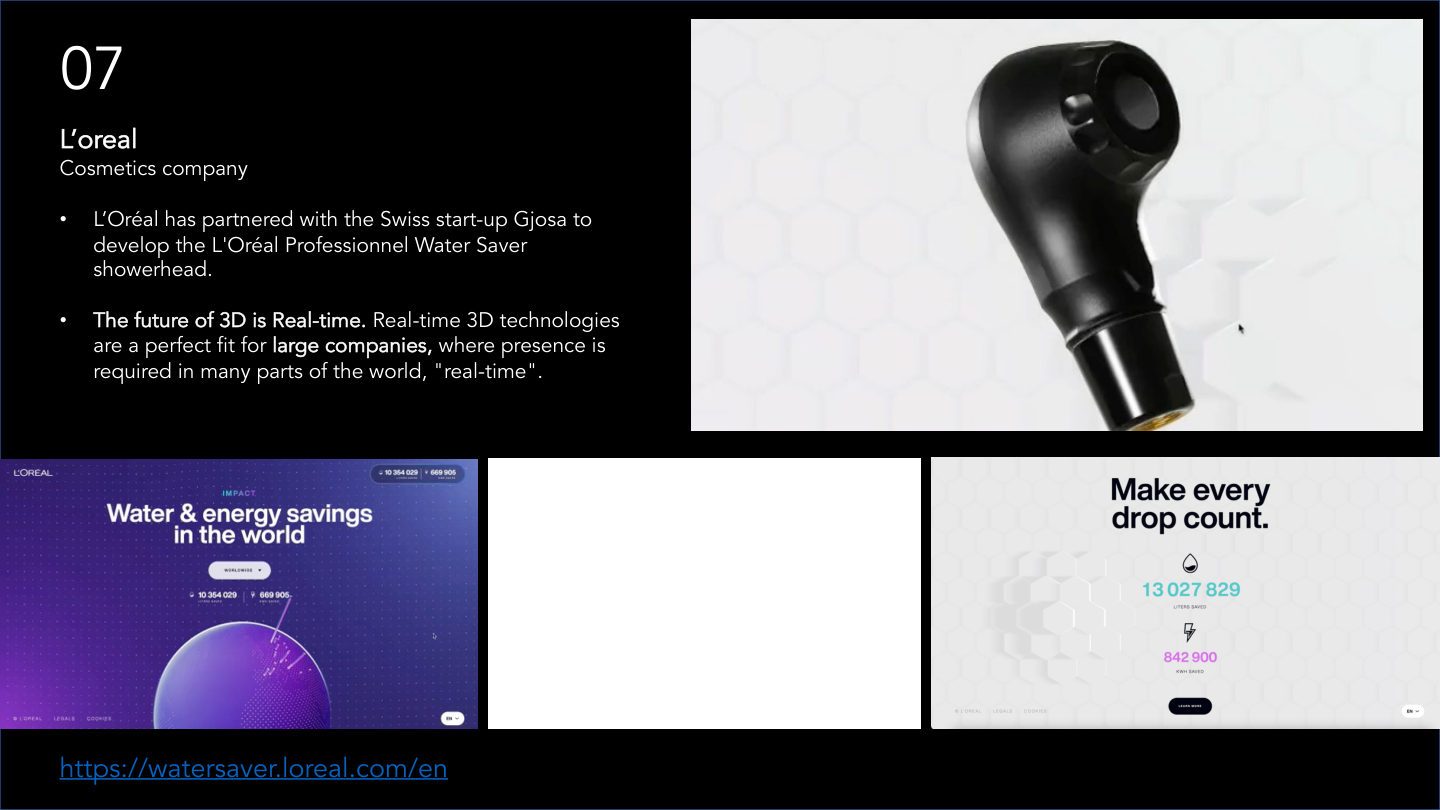
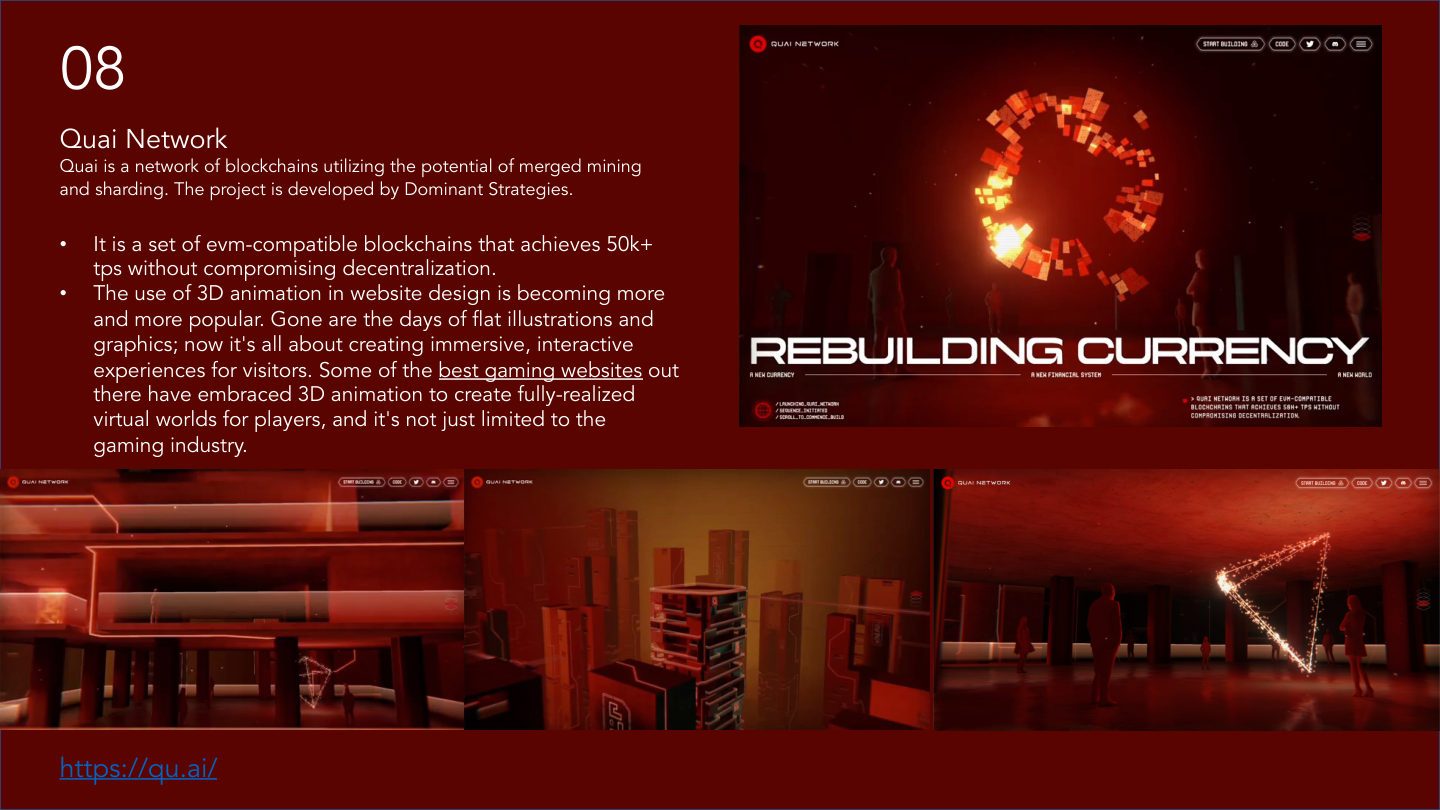
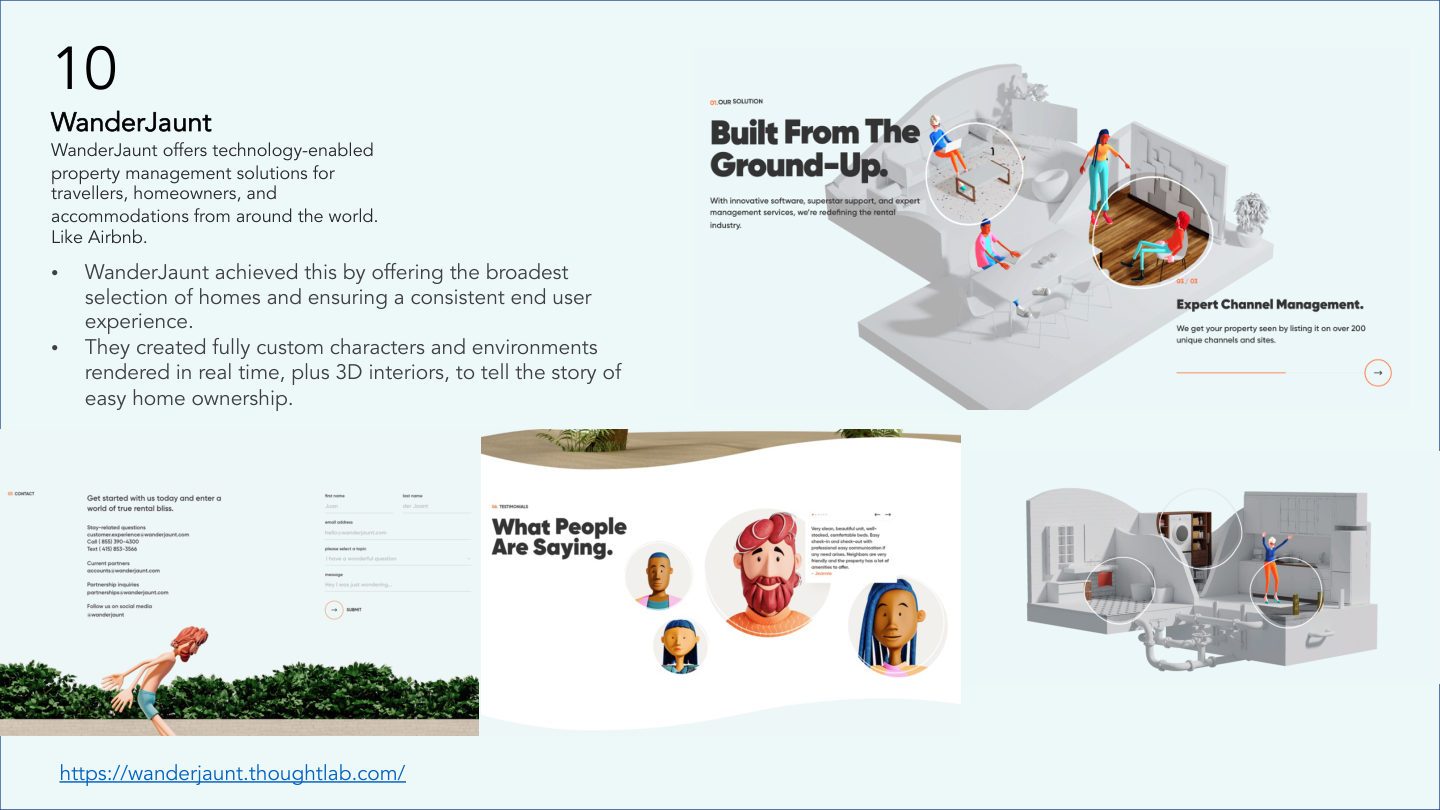
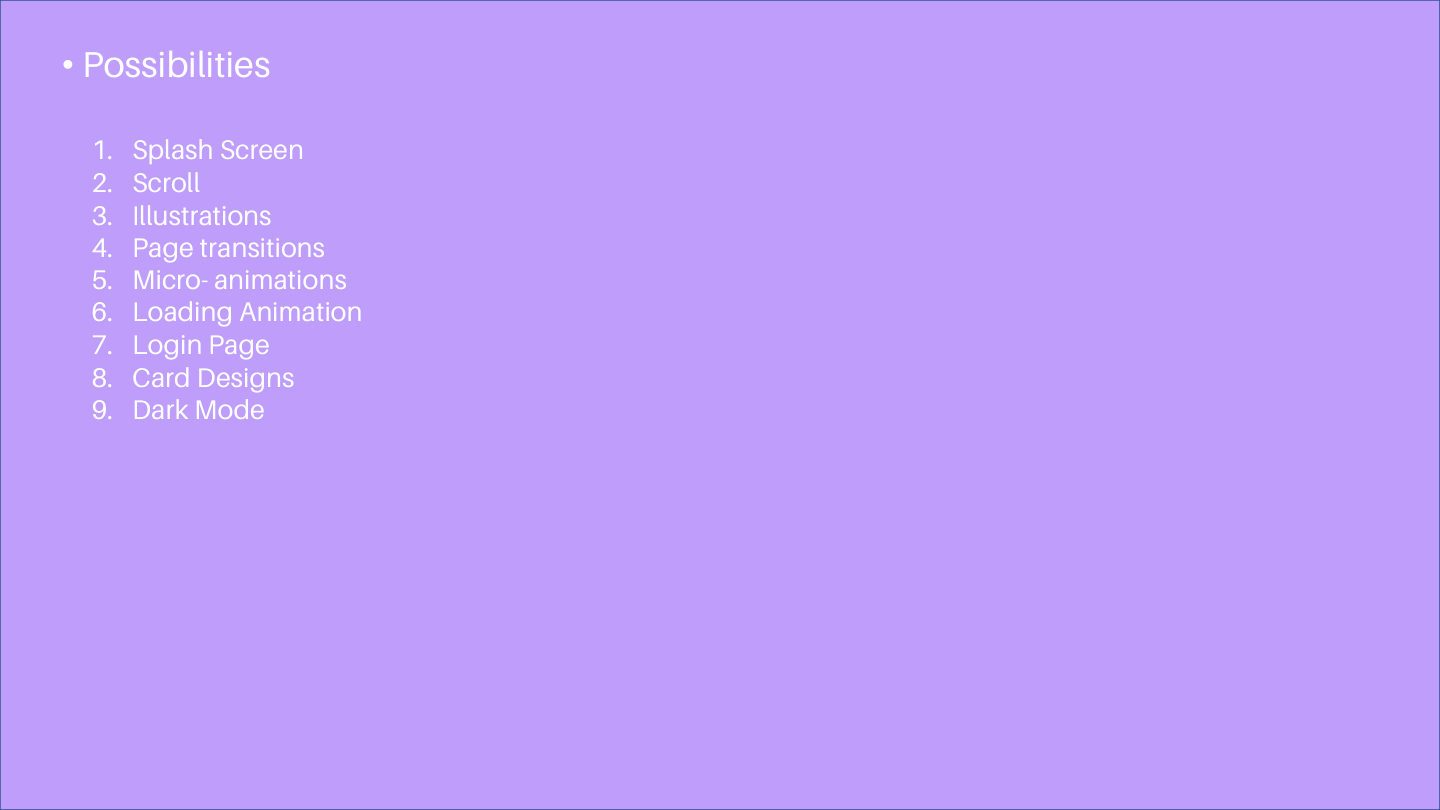
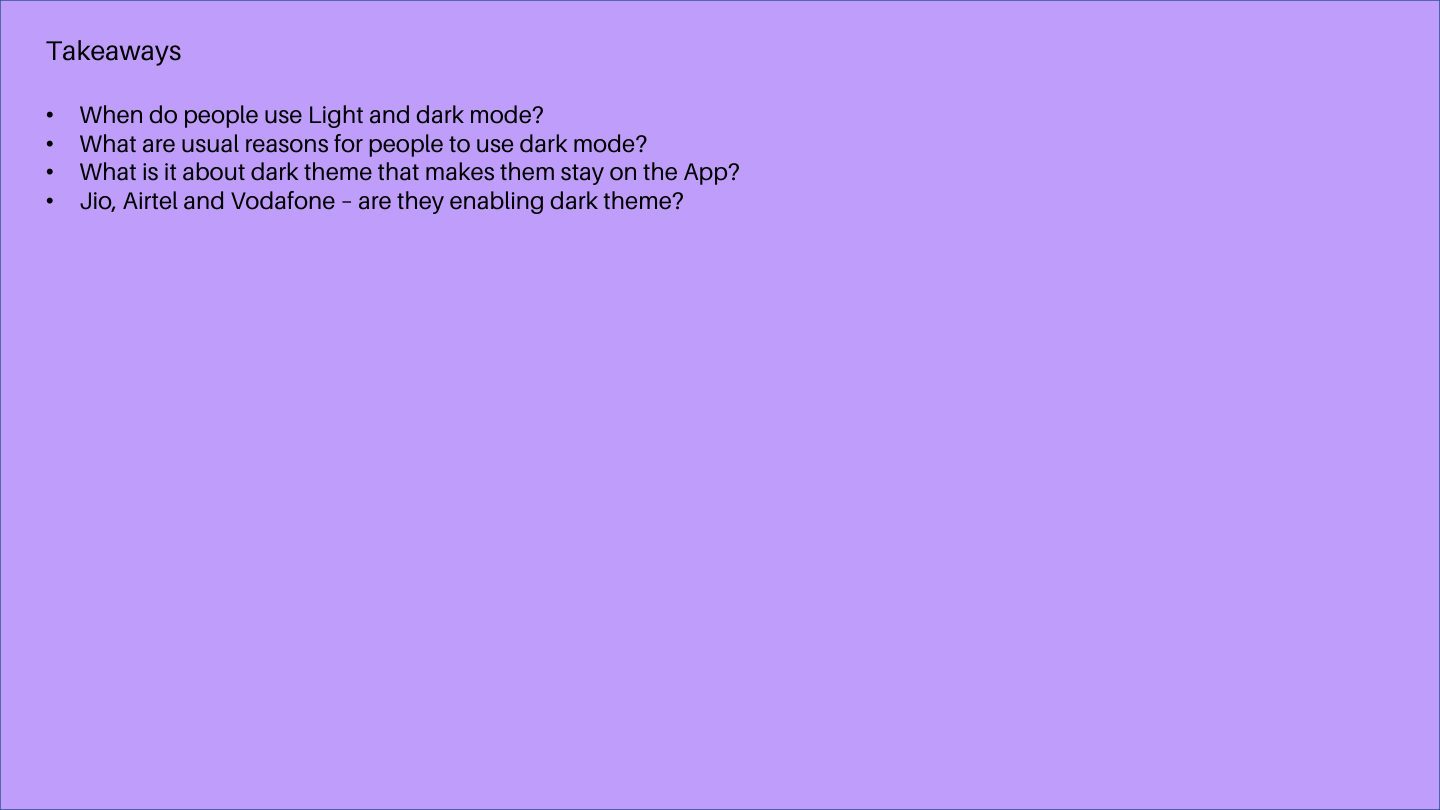
✦ The Work — Interaction Patterns
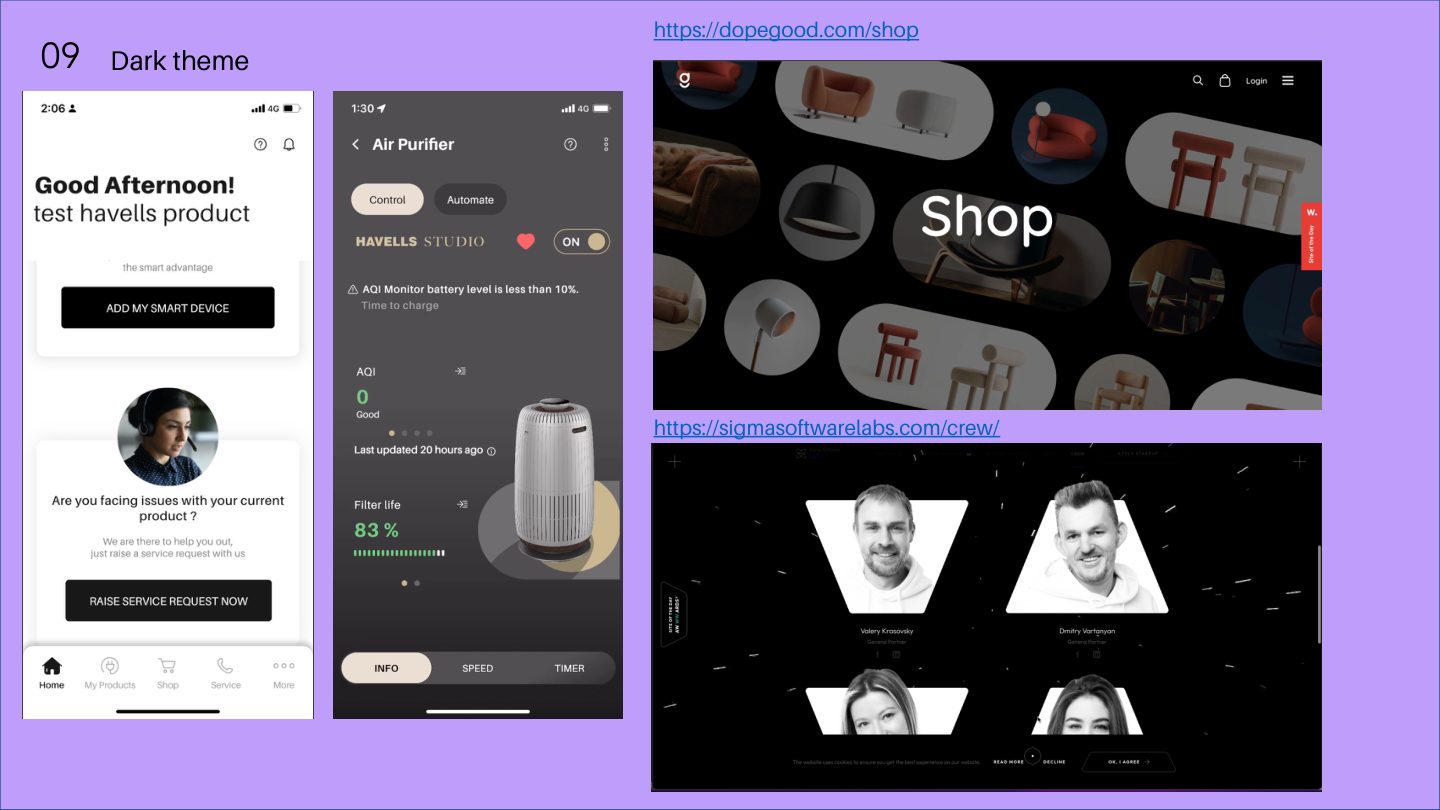
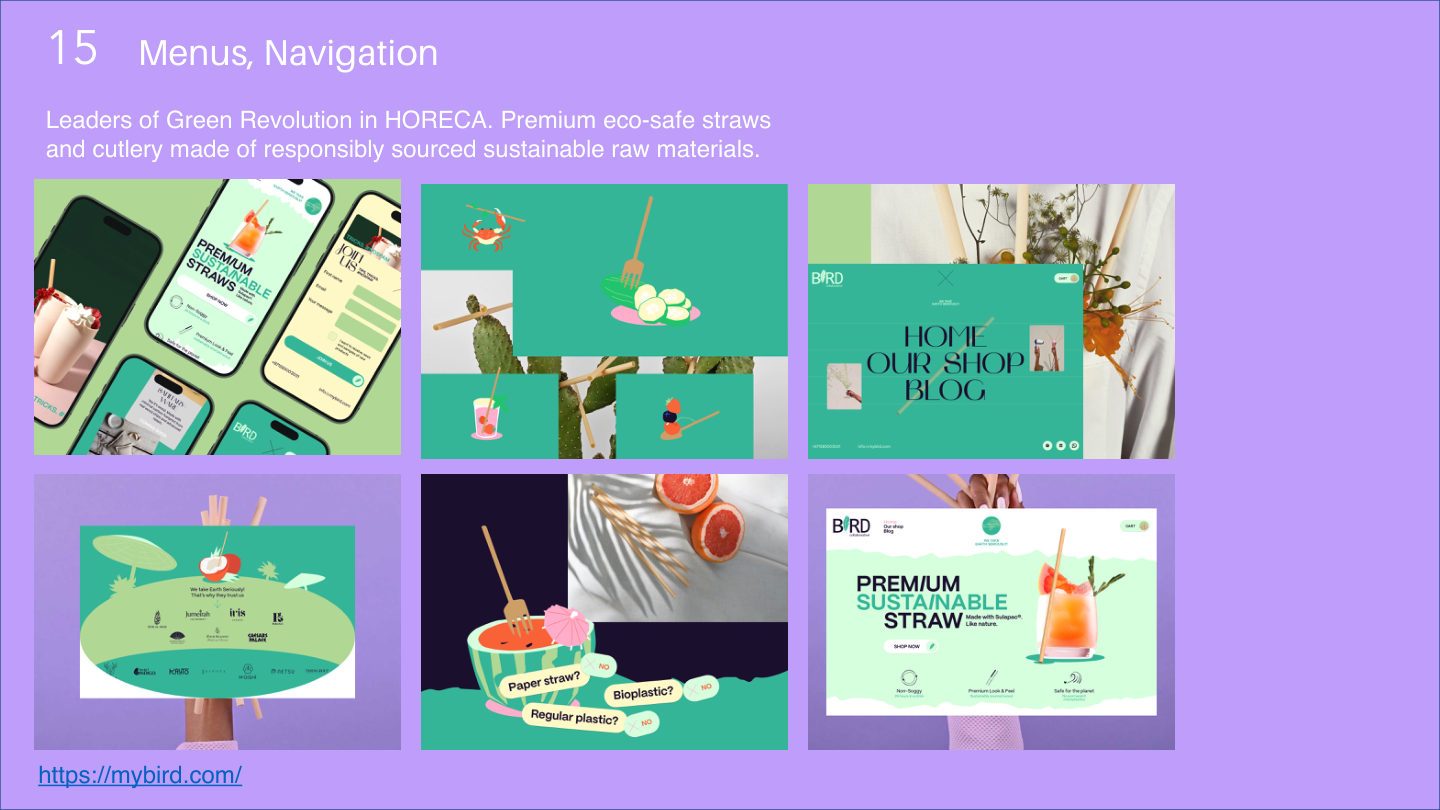
Nine interaction patterns identified as high-opportunity applications for the Havells product ecosystem — from splash screens to dark mode, each studied through live examples.
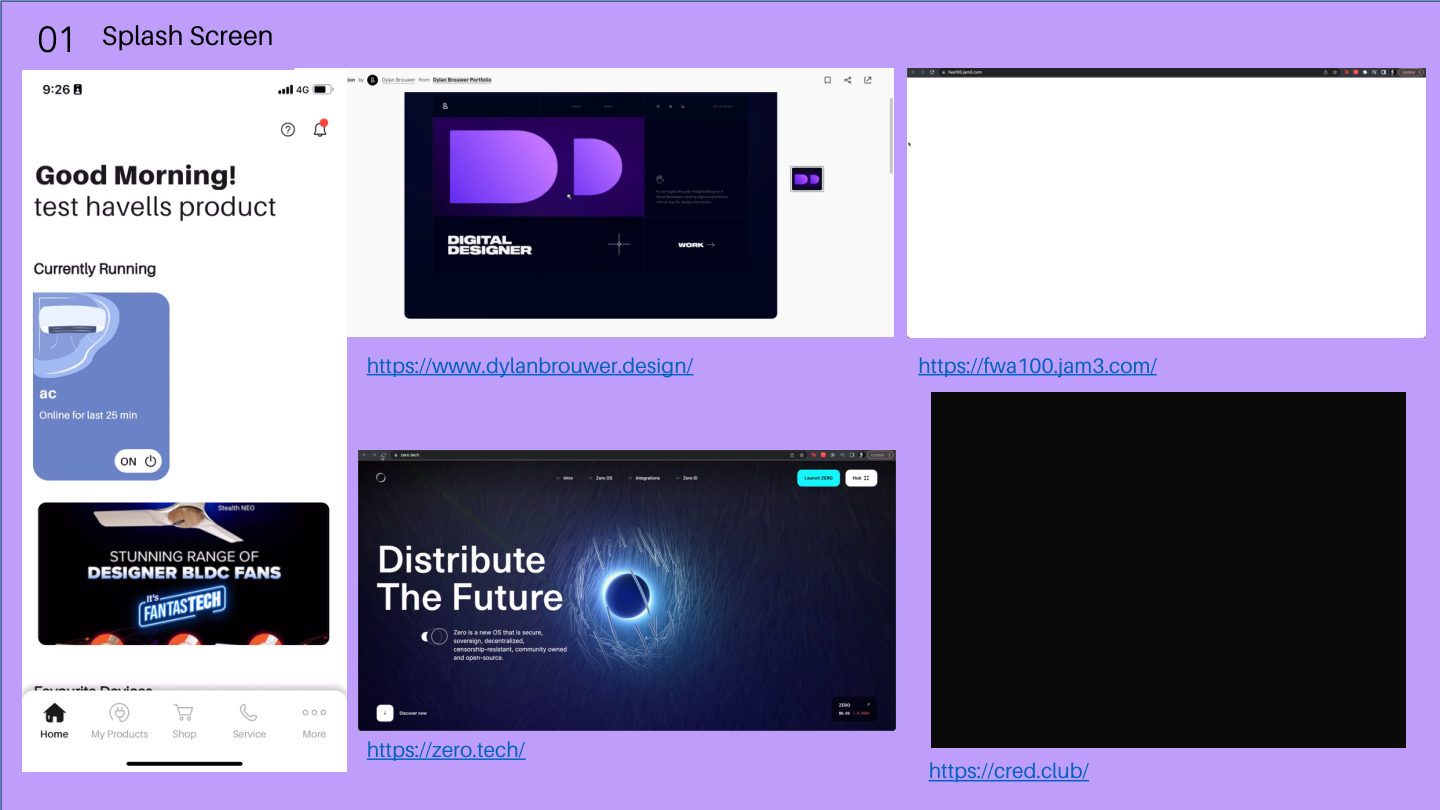
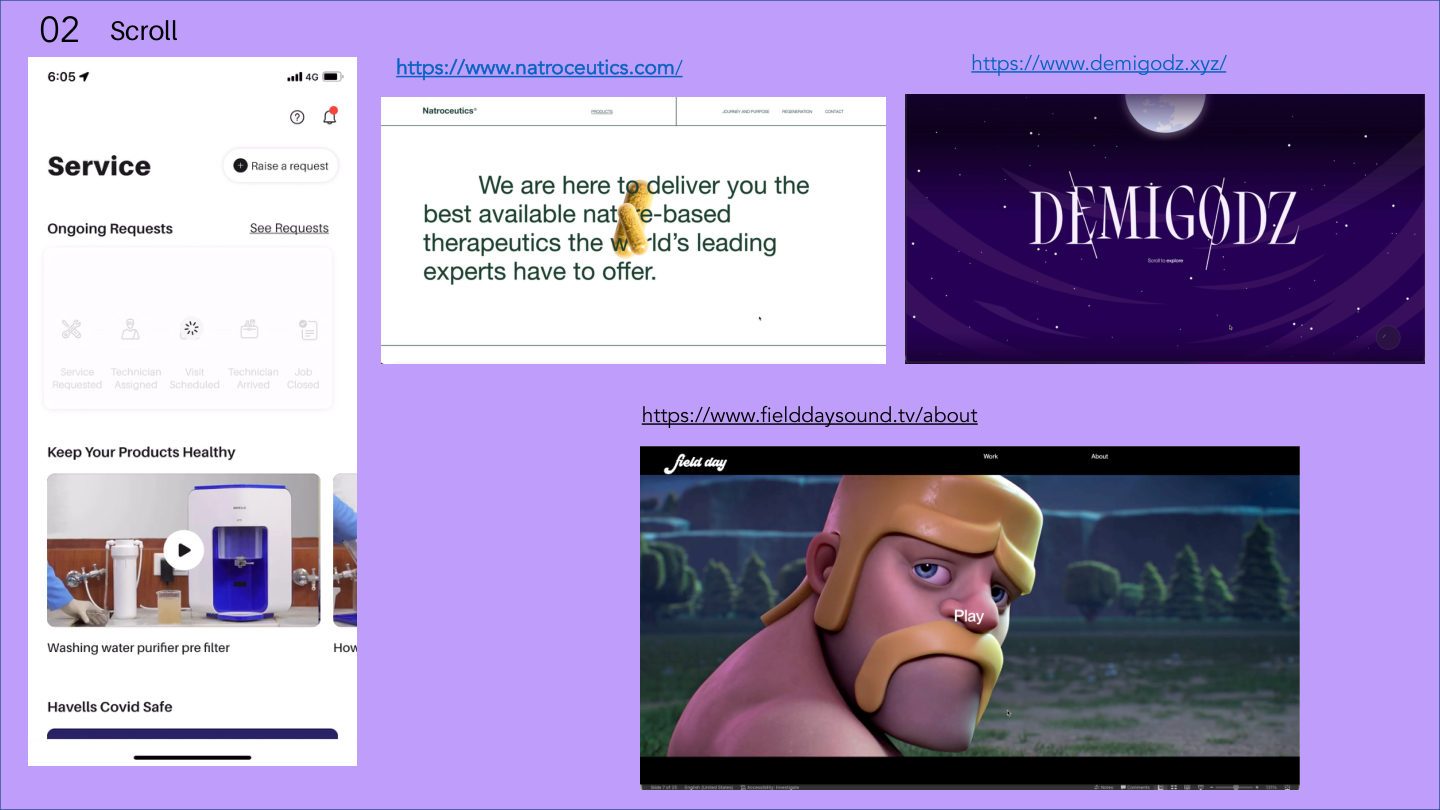
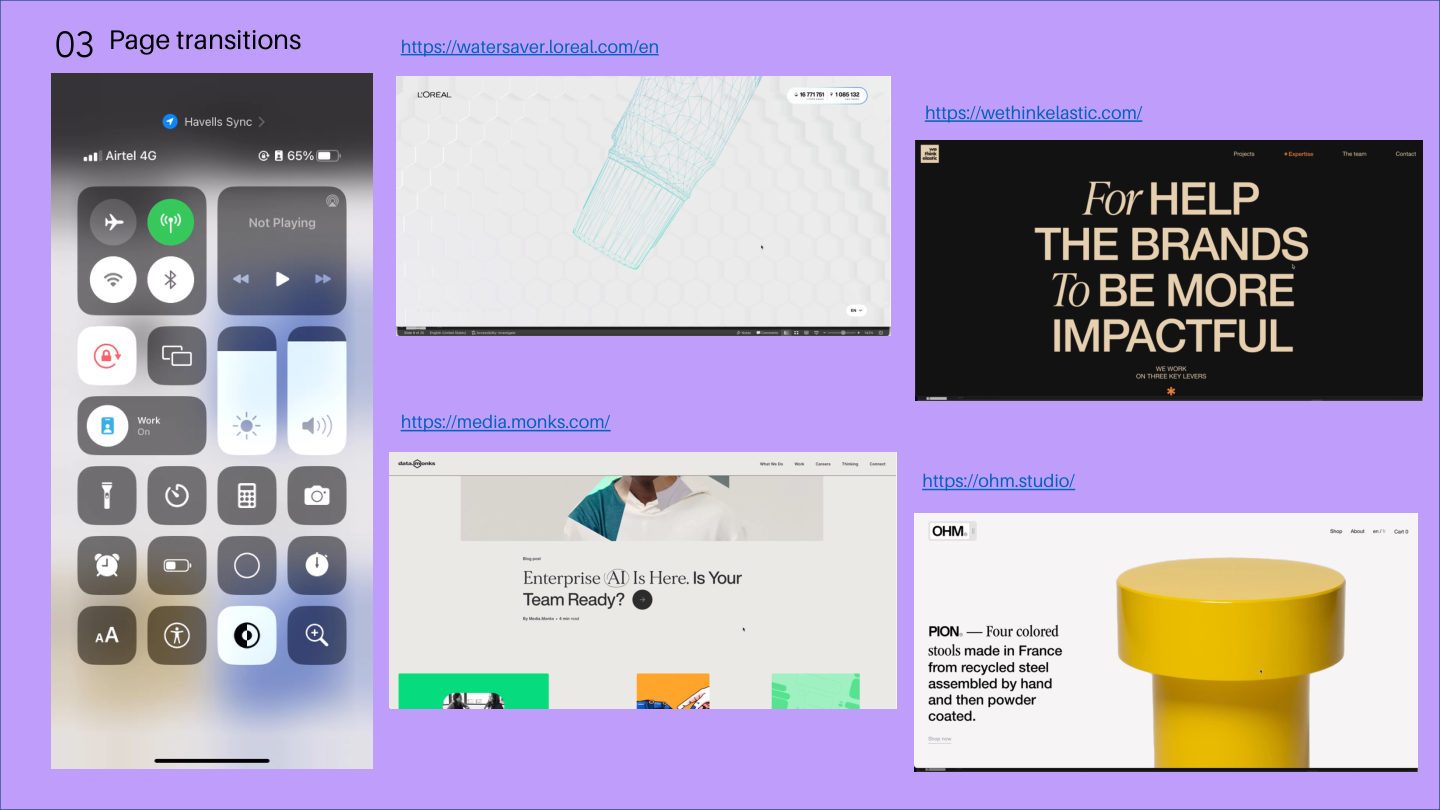
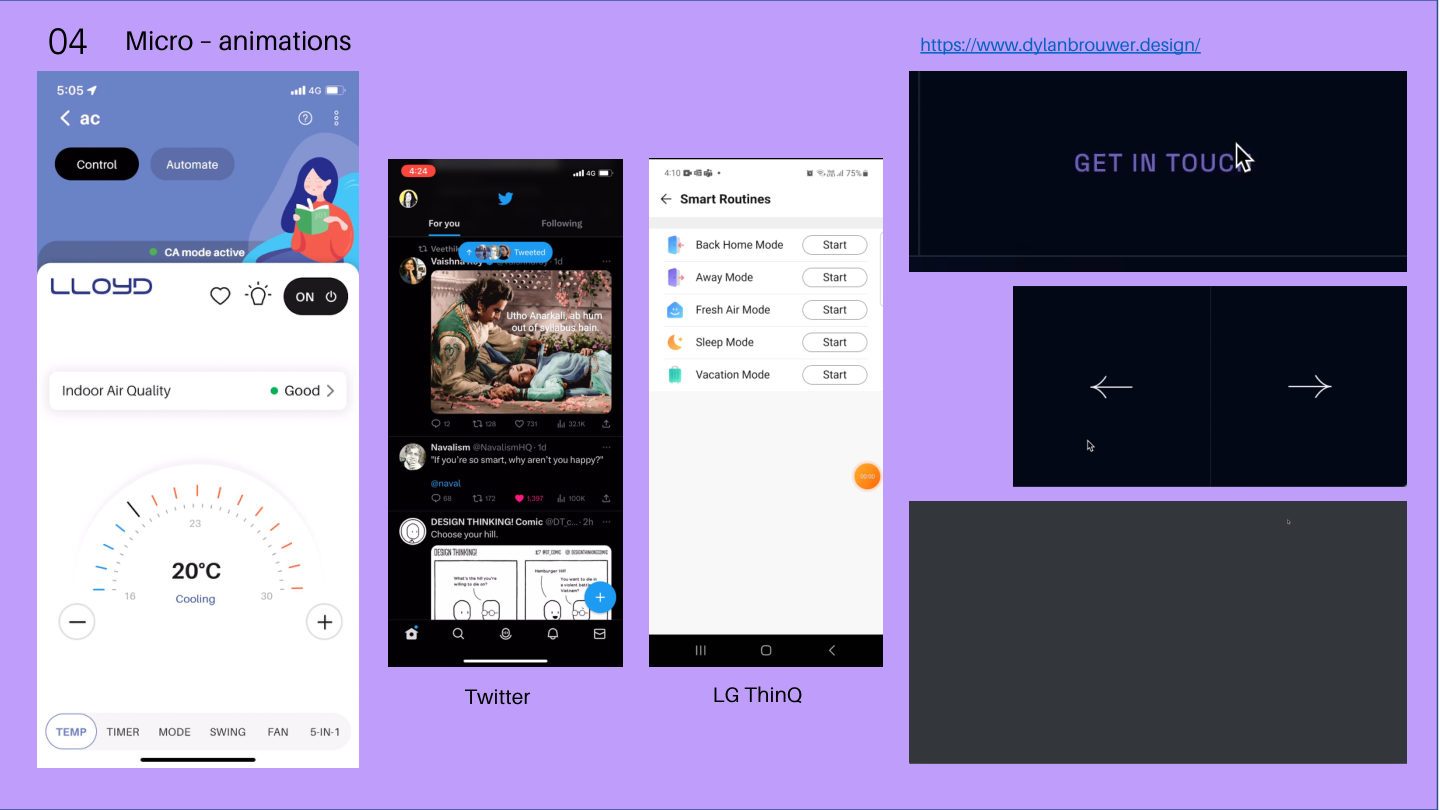
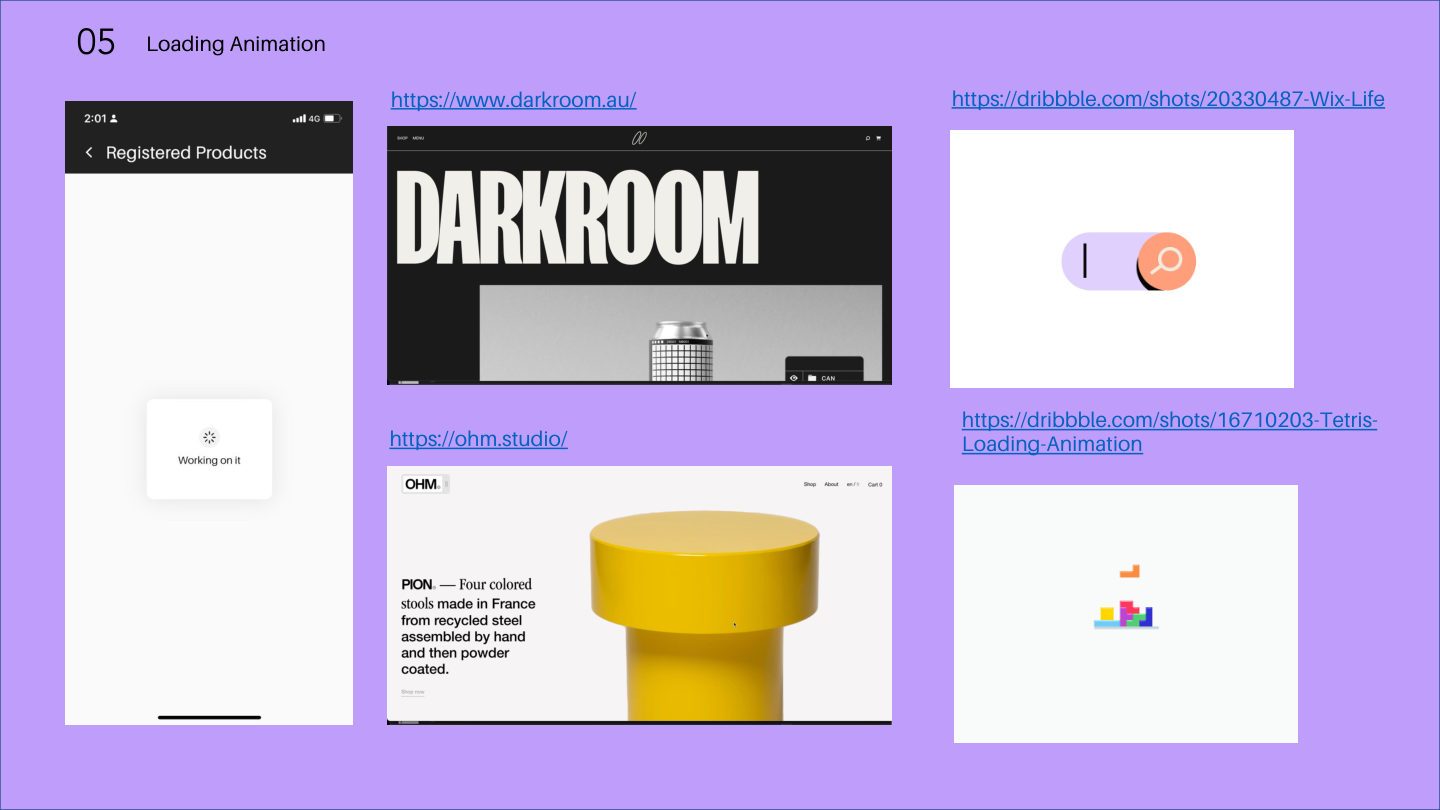
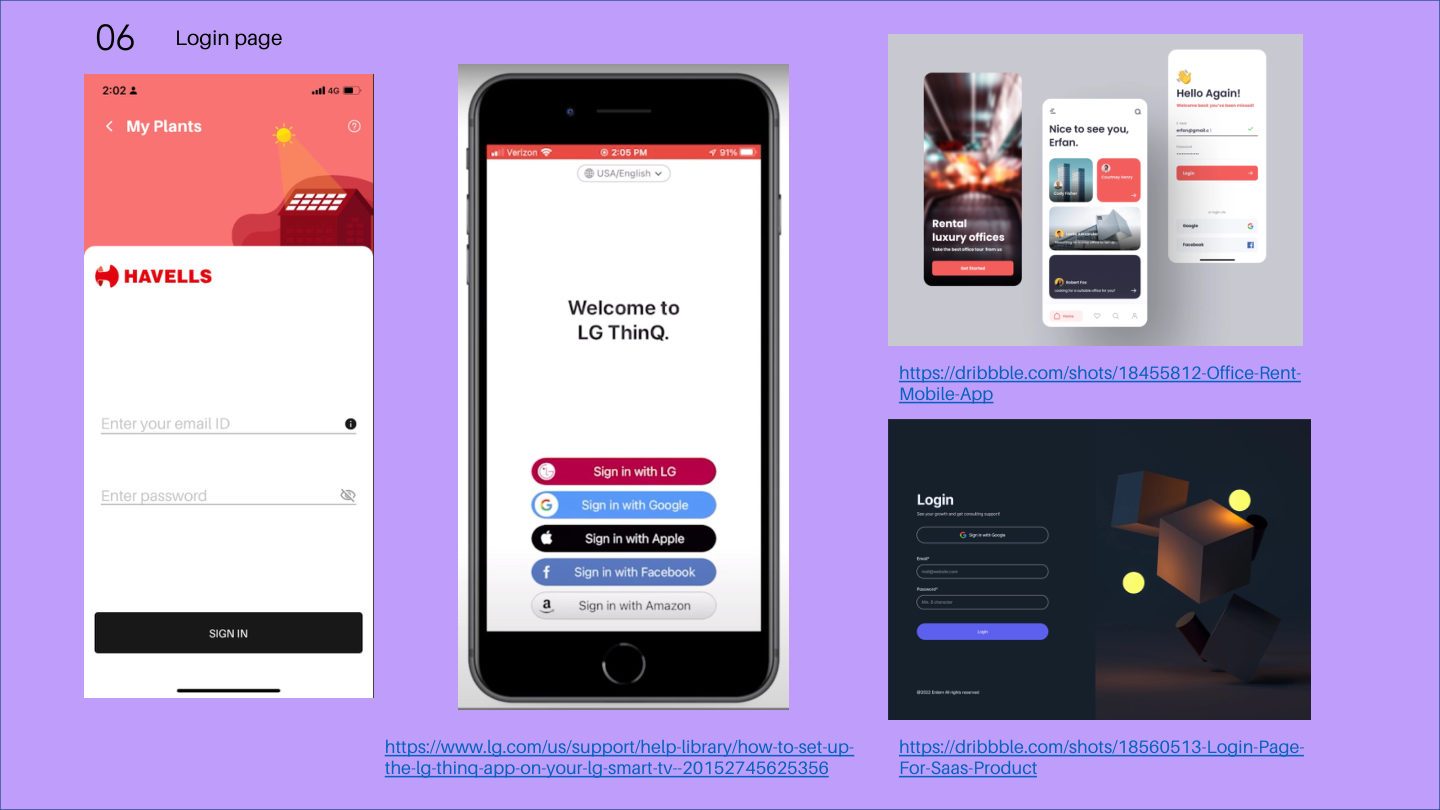
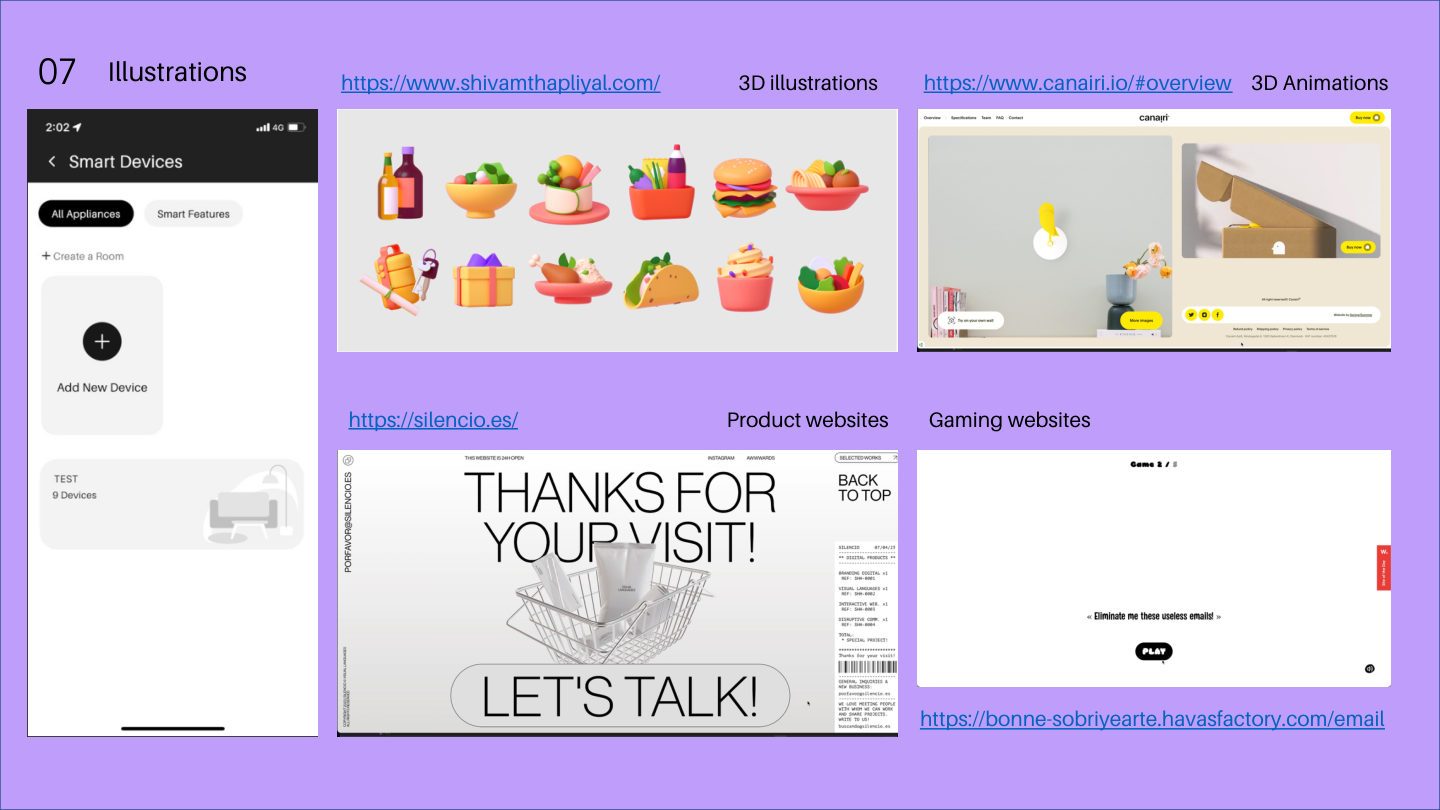
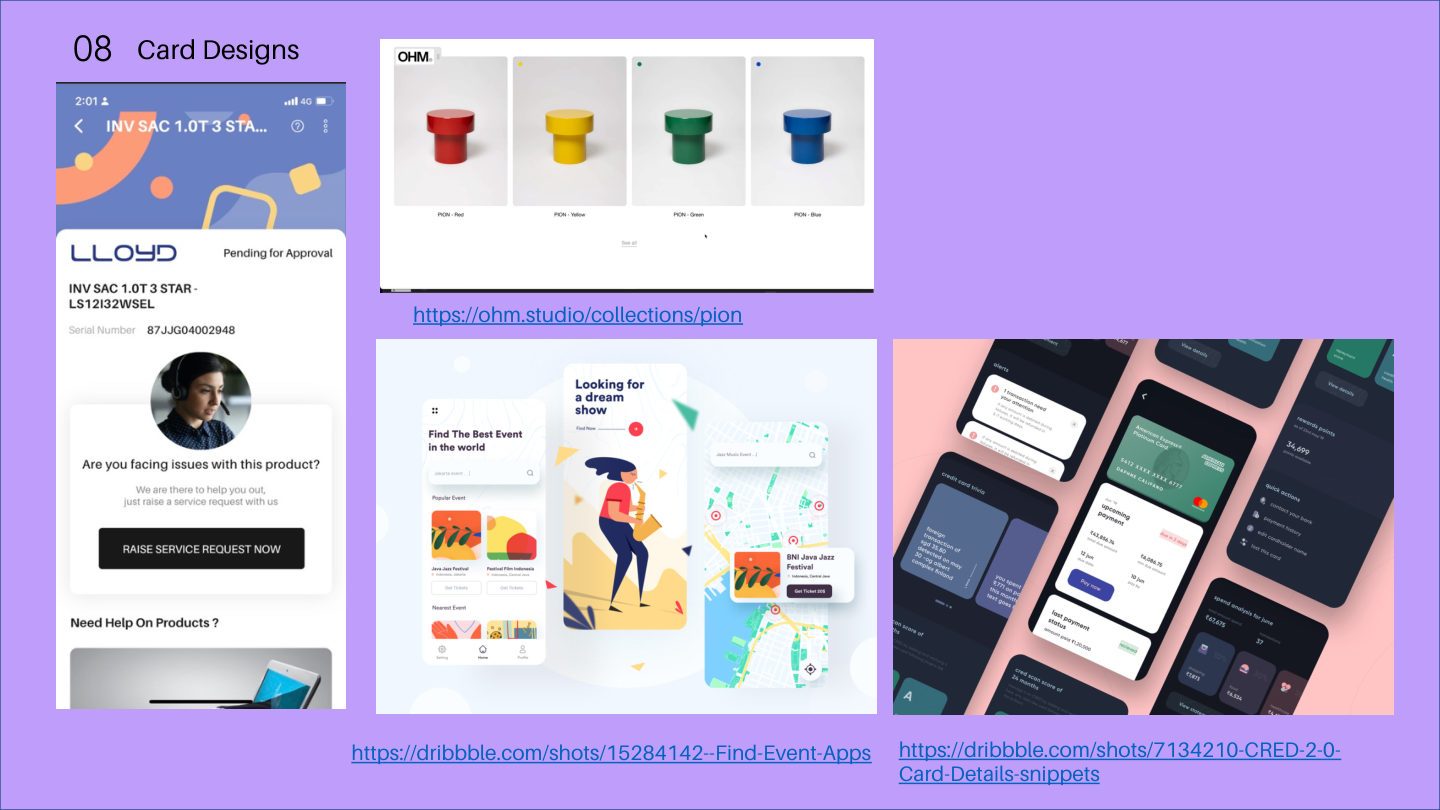
✦ The Work — Visual Language Analysis
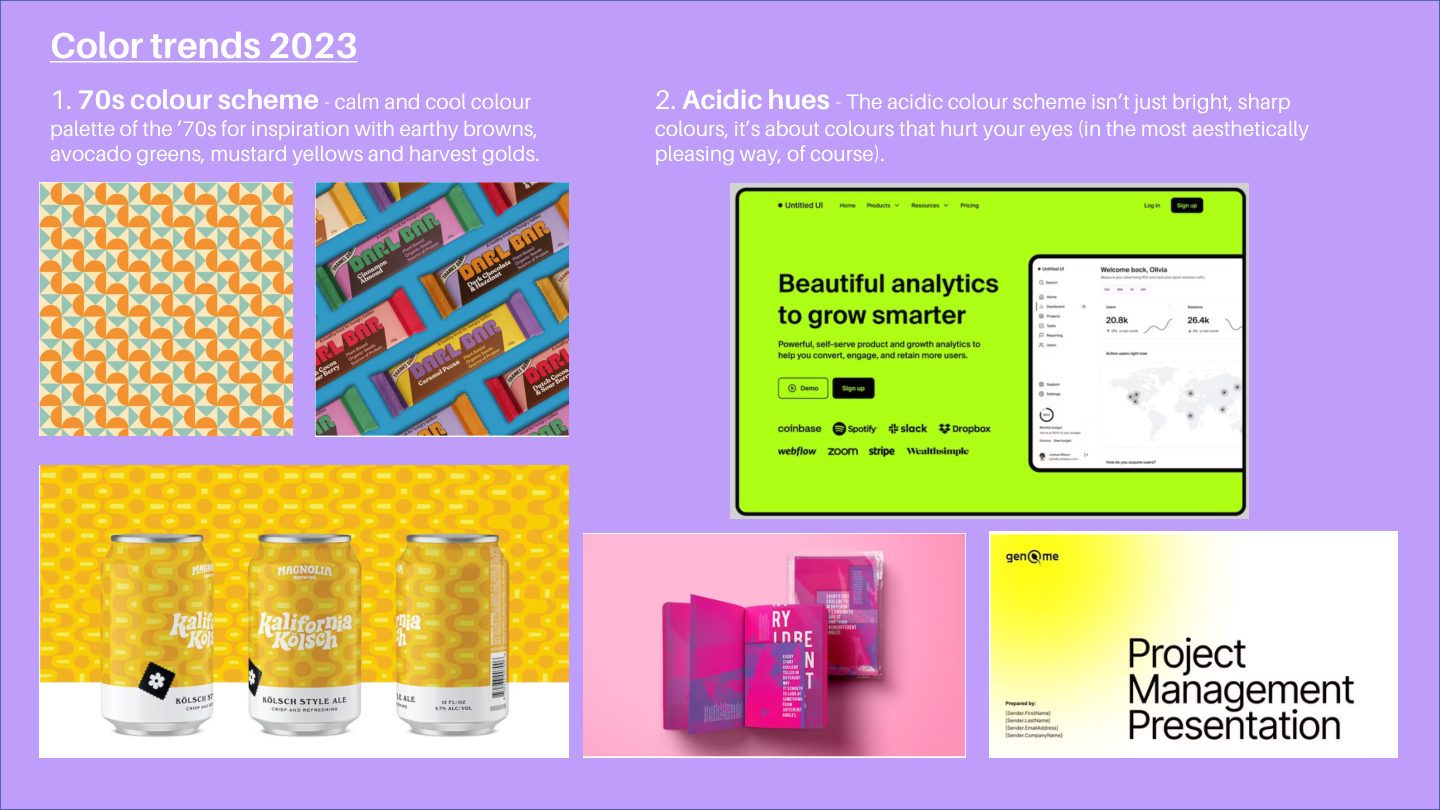
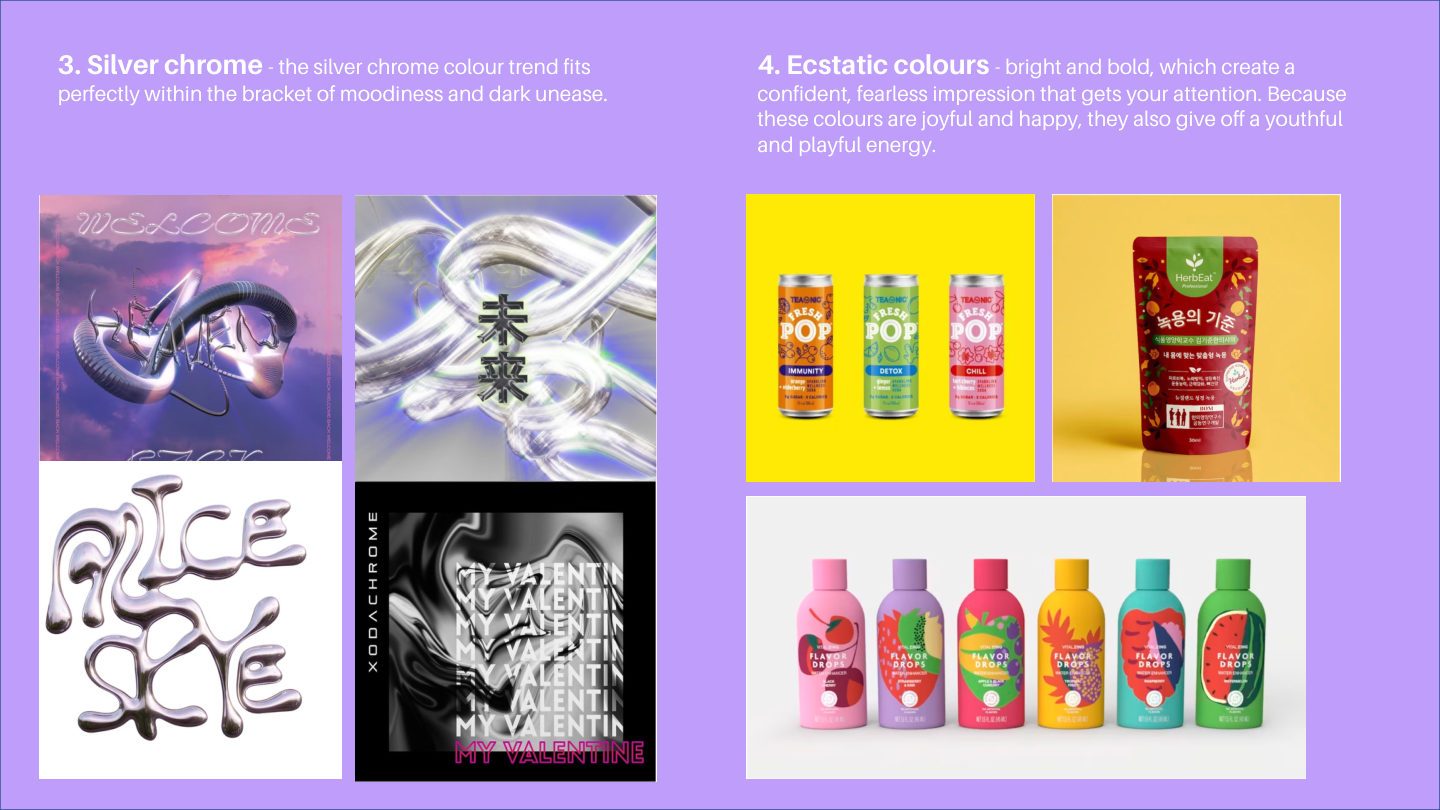
Analysis of 2023 colour movements — from acidic hues and millennial kitsch to dark sci-fi tones — mapped for relevance to Havells' health-tech positioning.
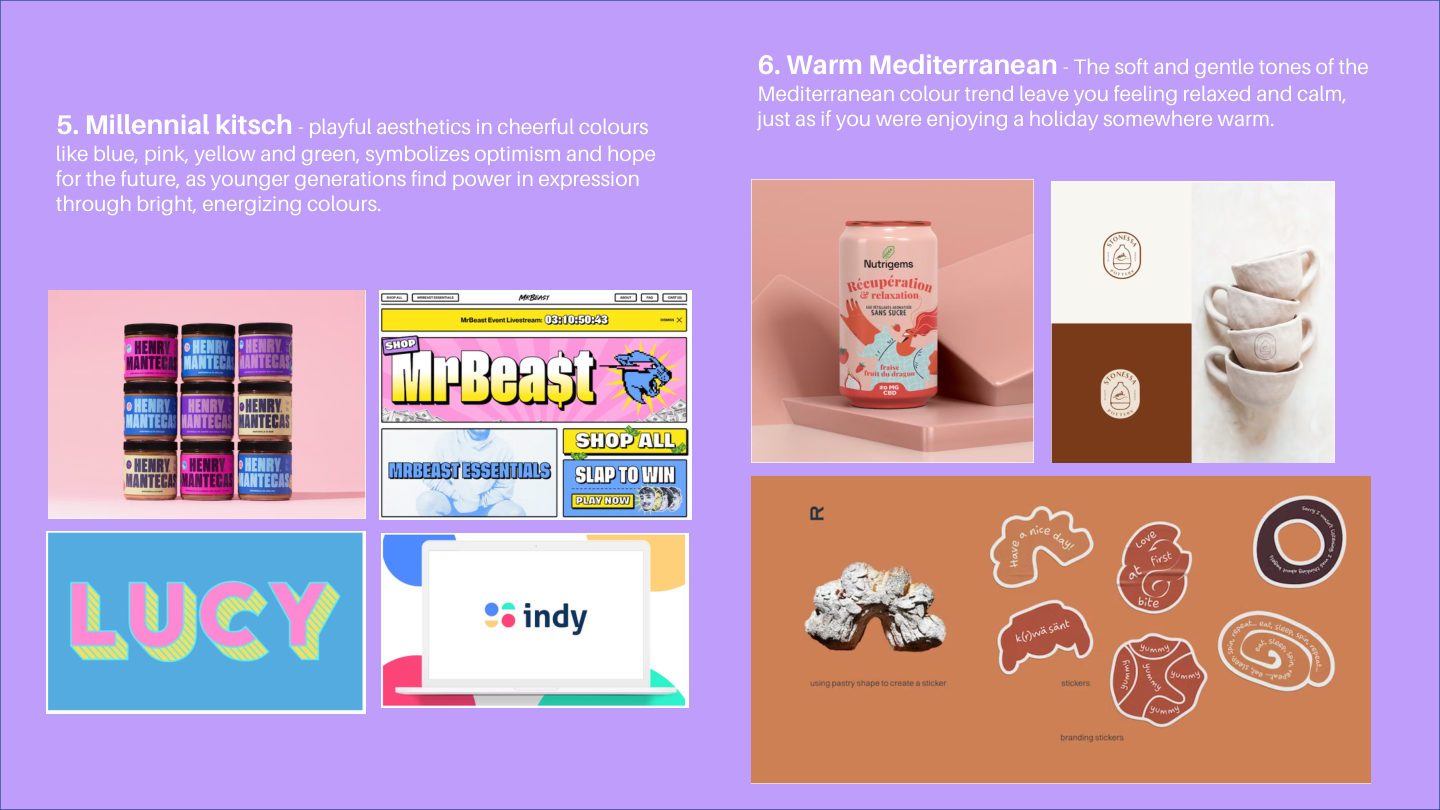
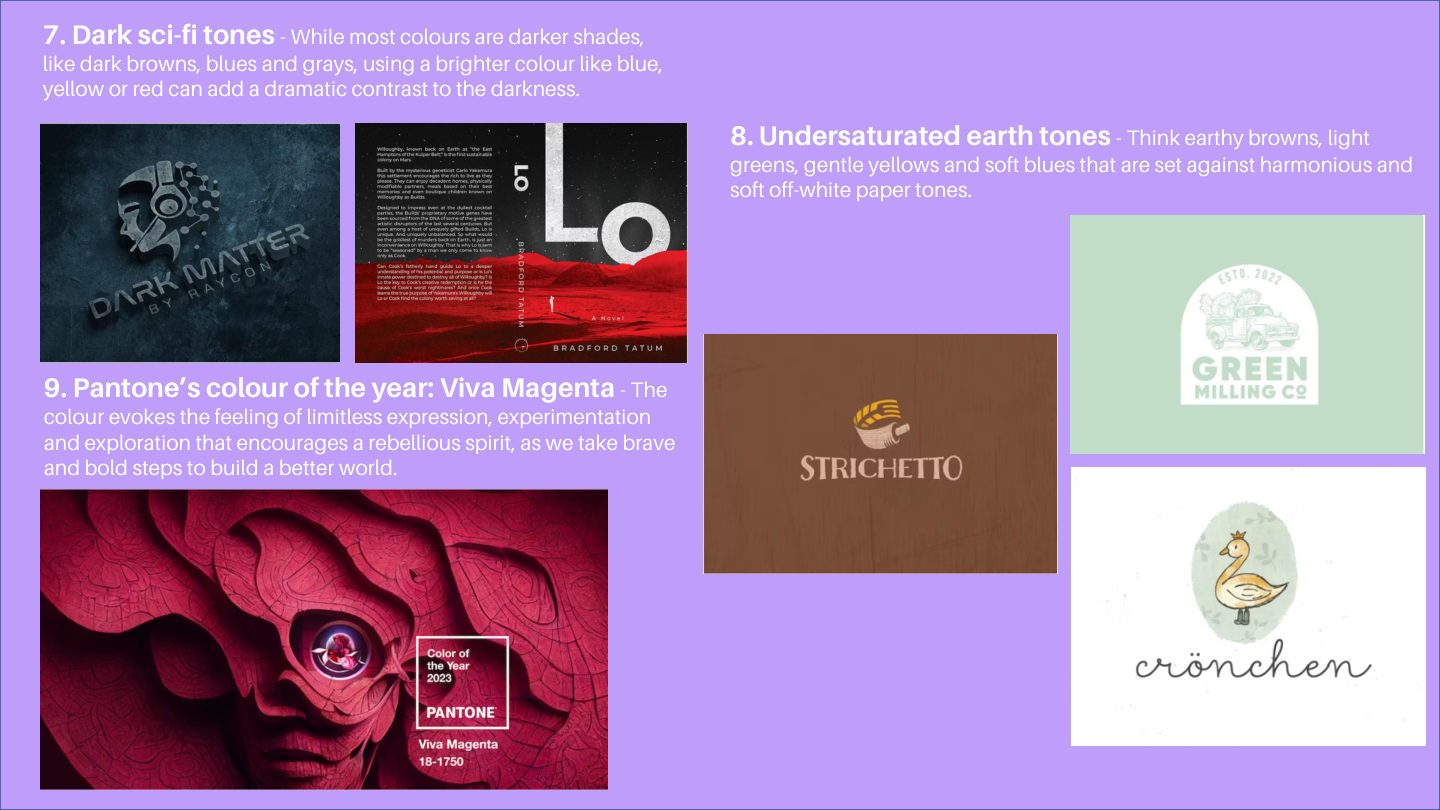
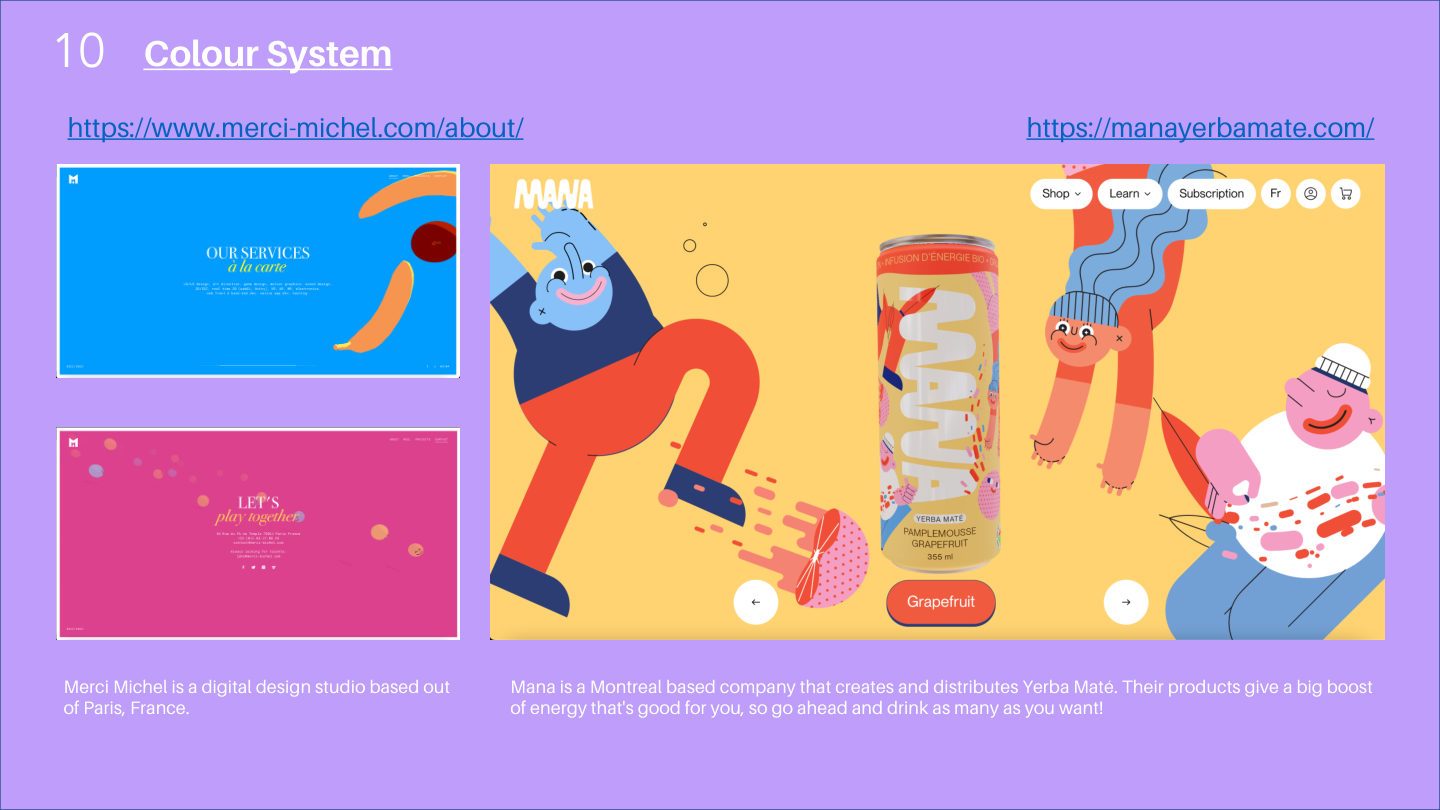
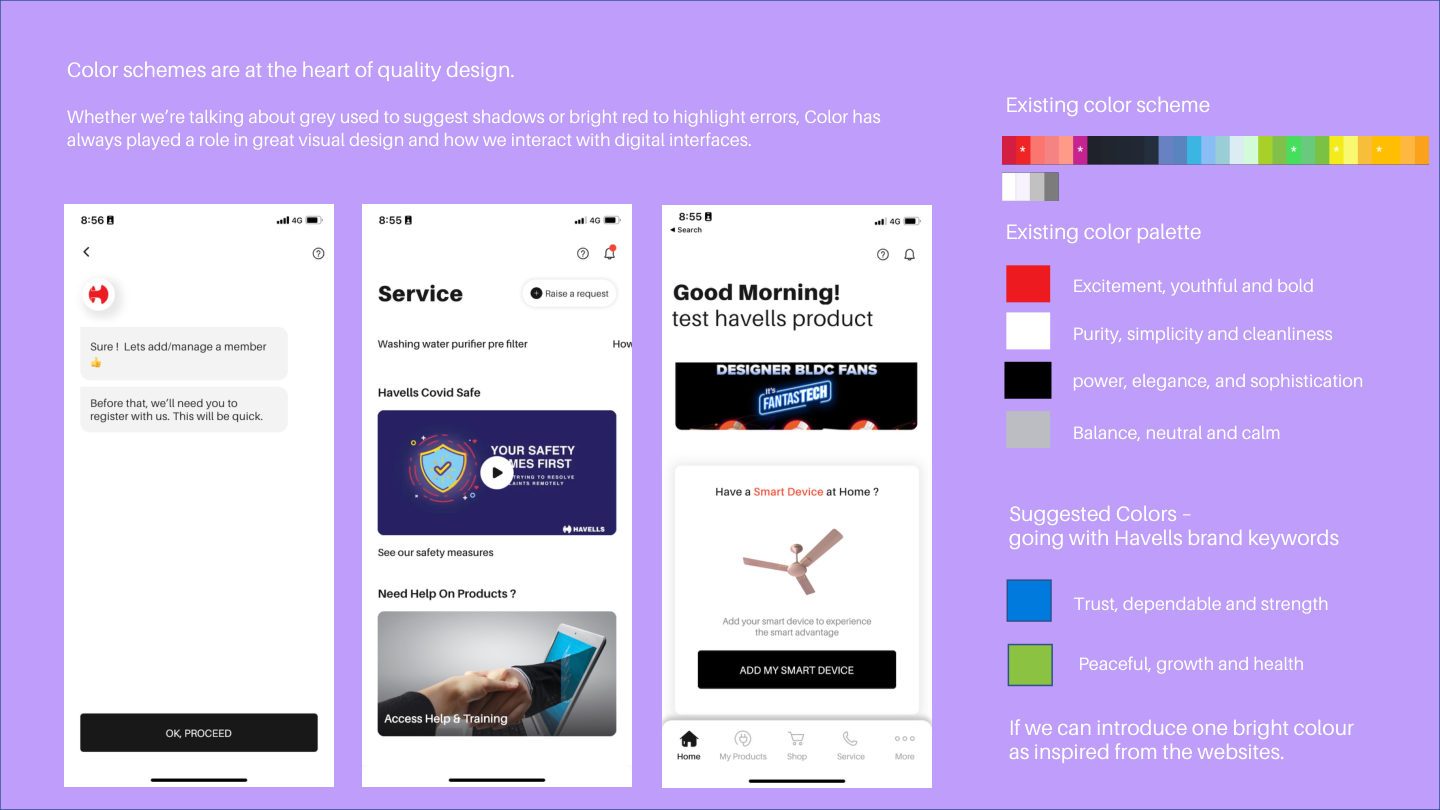
✦ The Work — Component & Pattern Gaps
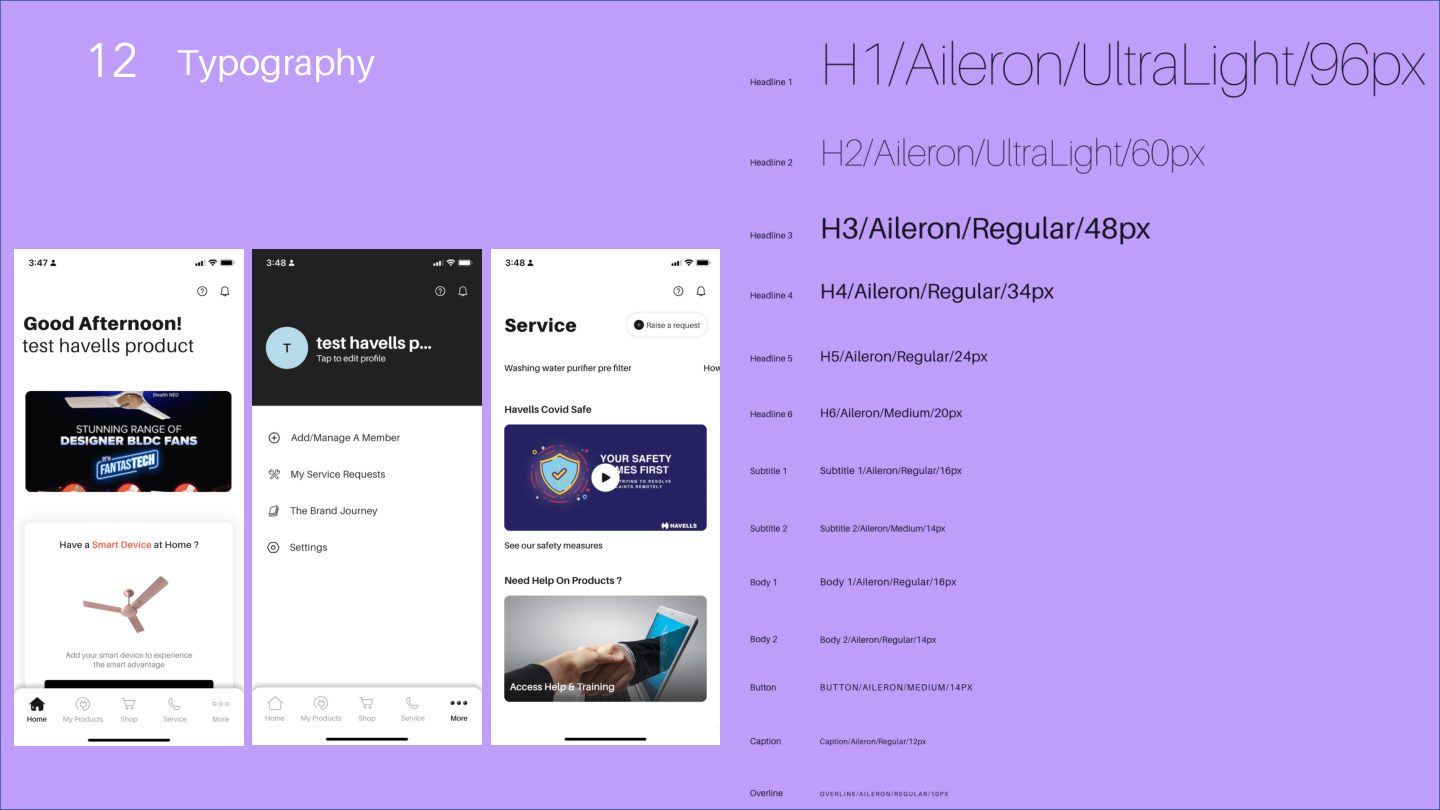
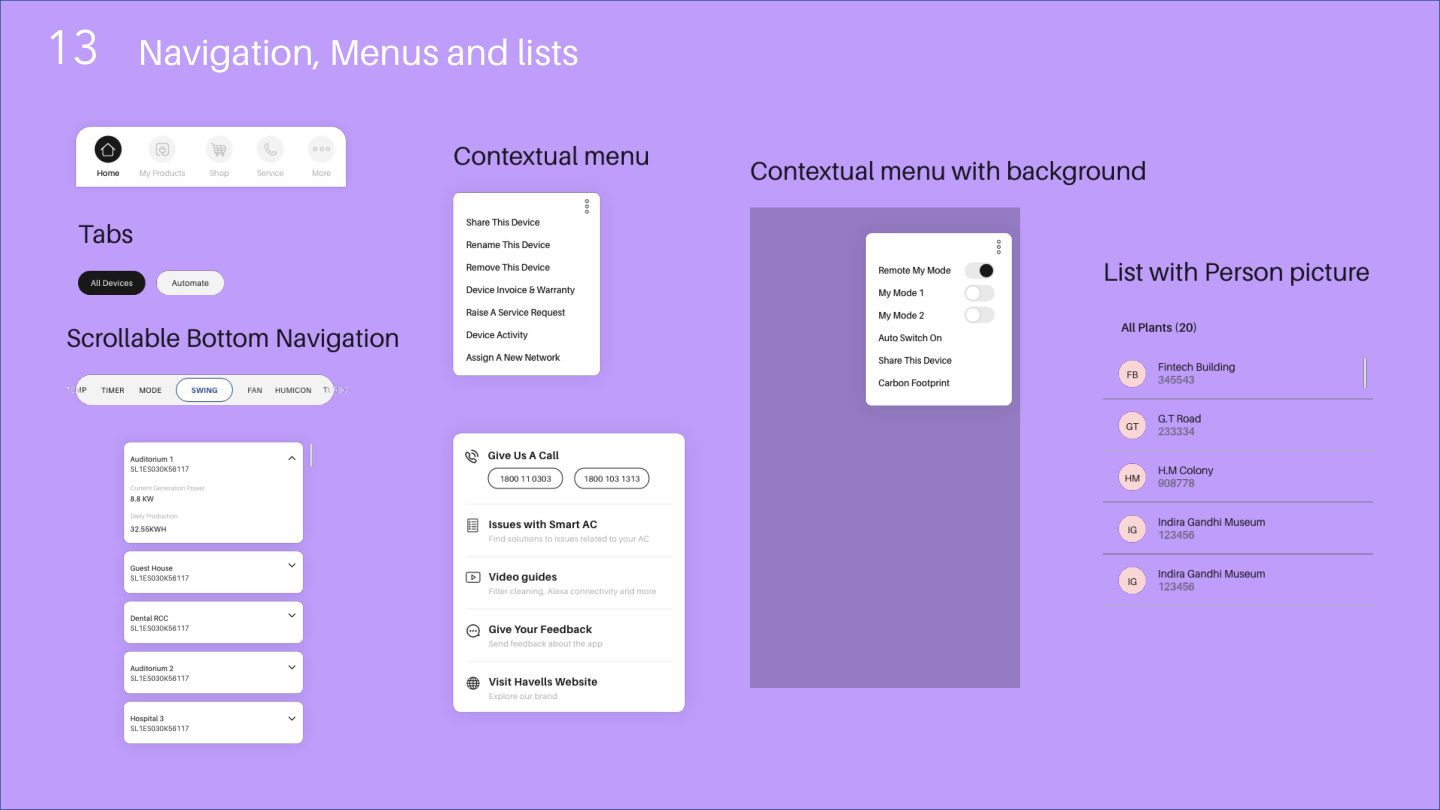
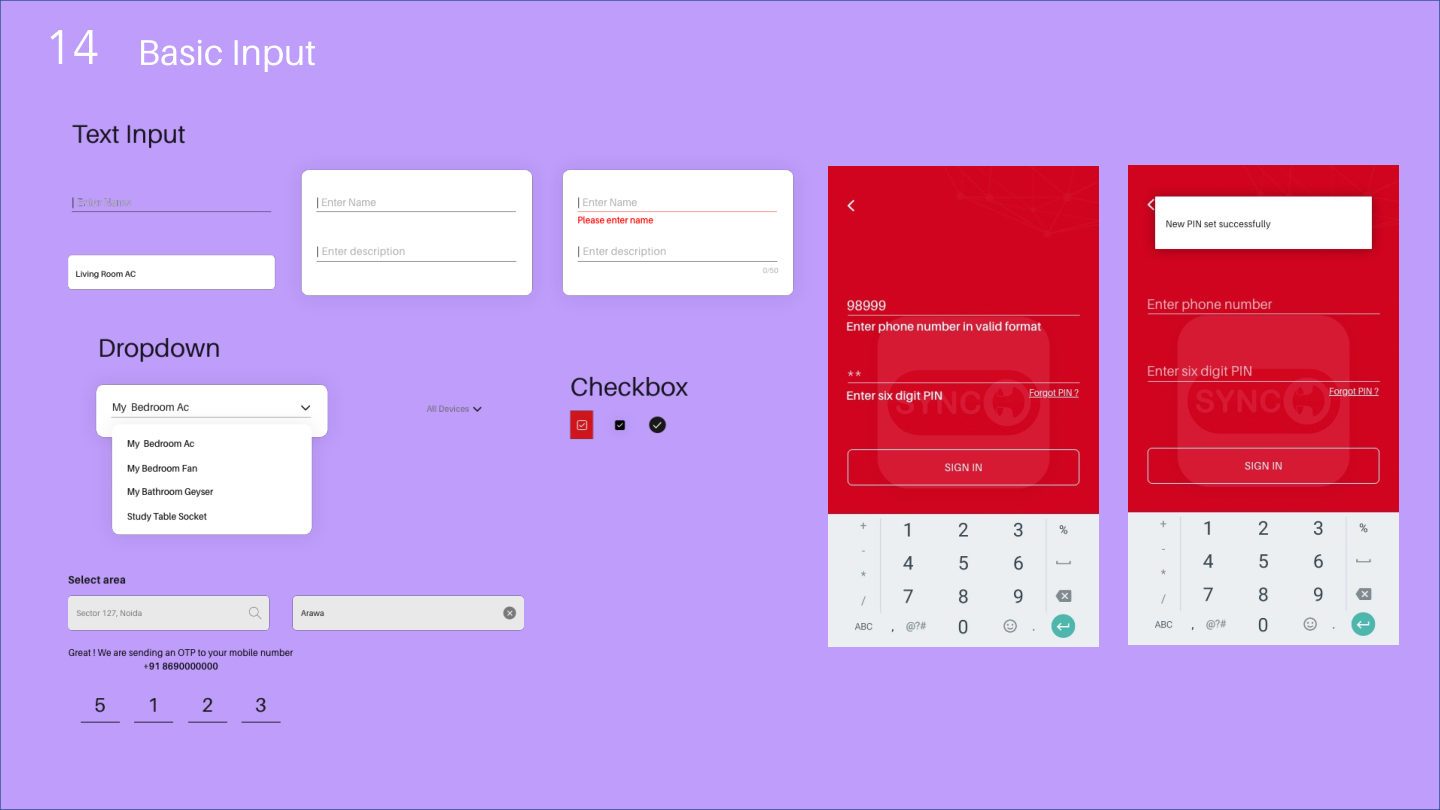
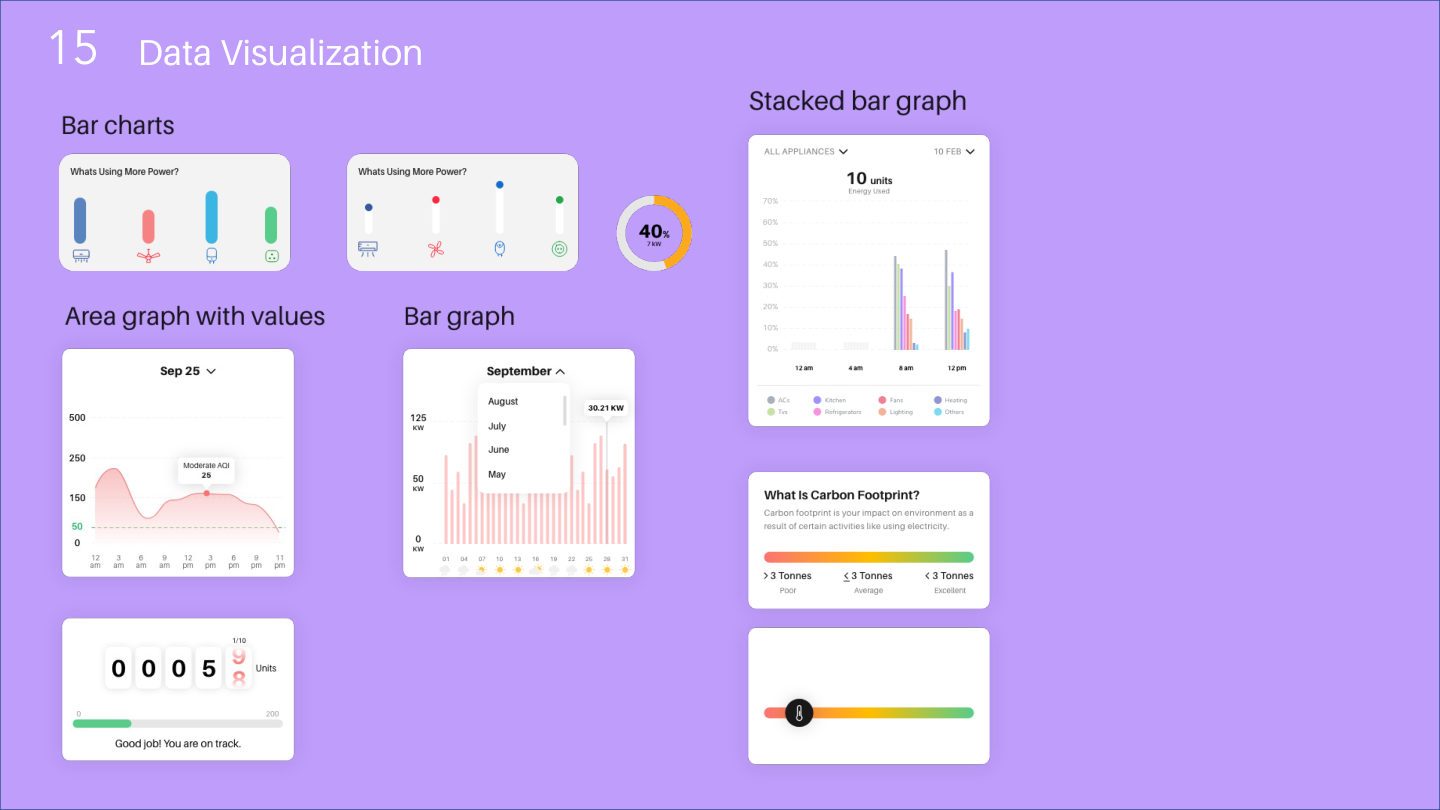
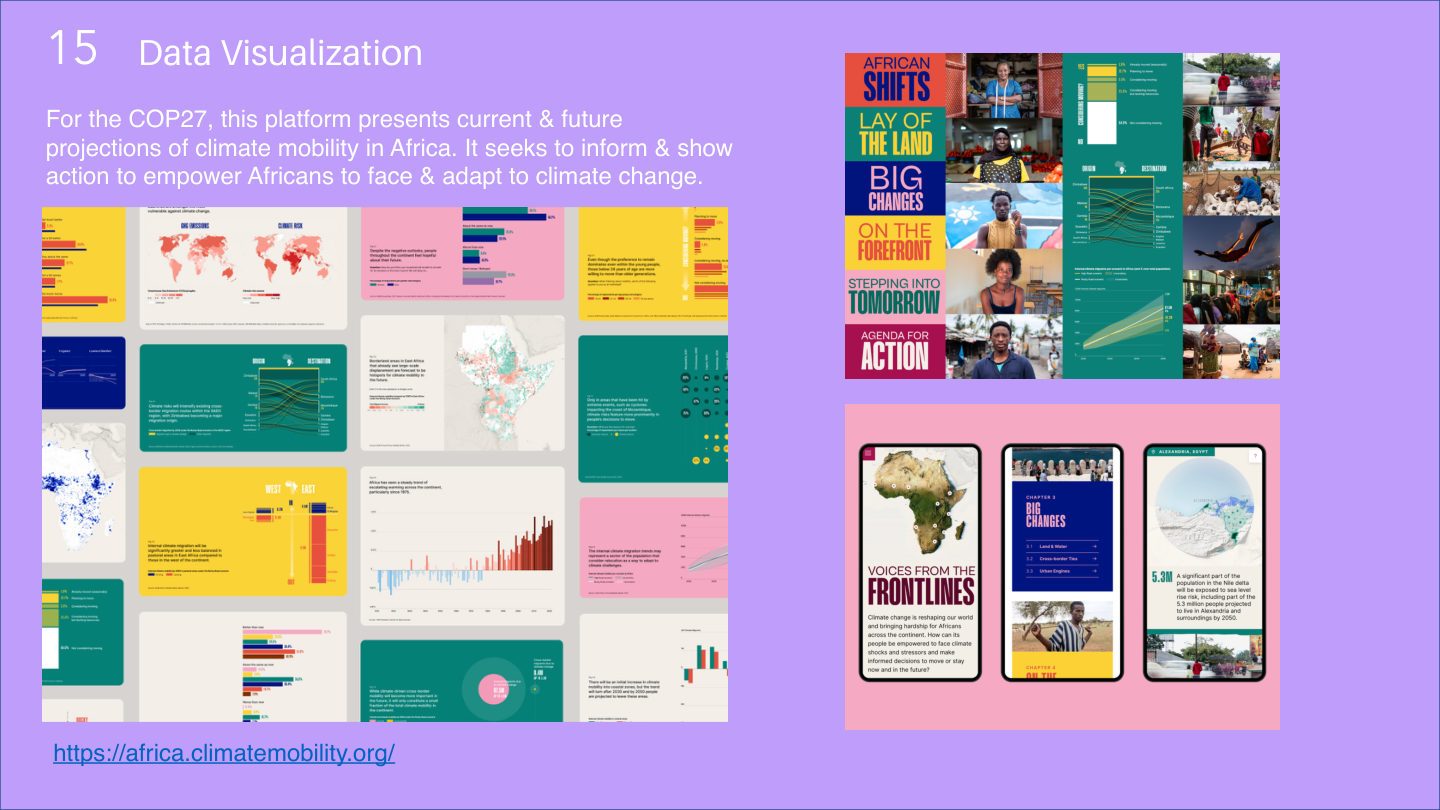
Deep-dive into UI building blocks: iconography, typography hierarchy, button design, navigation patterns, data visualisation, and animation trends — with live reference examples.
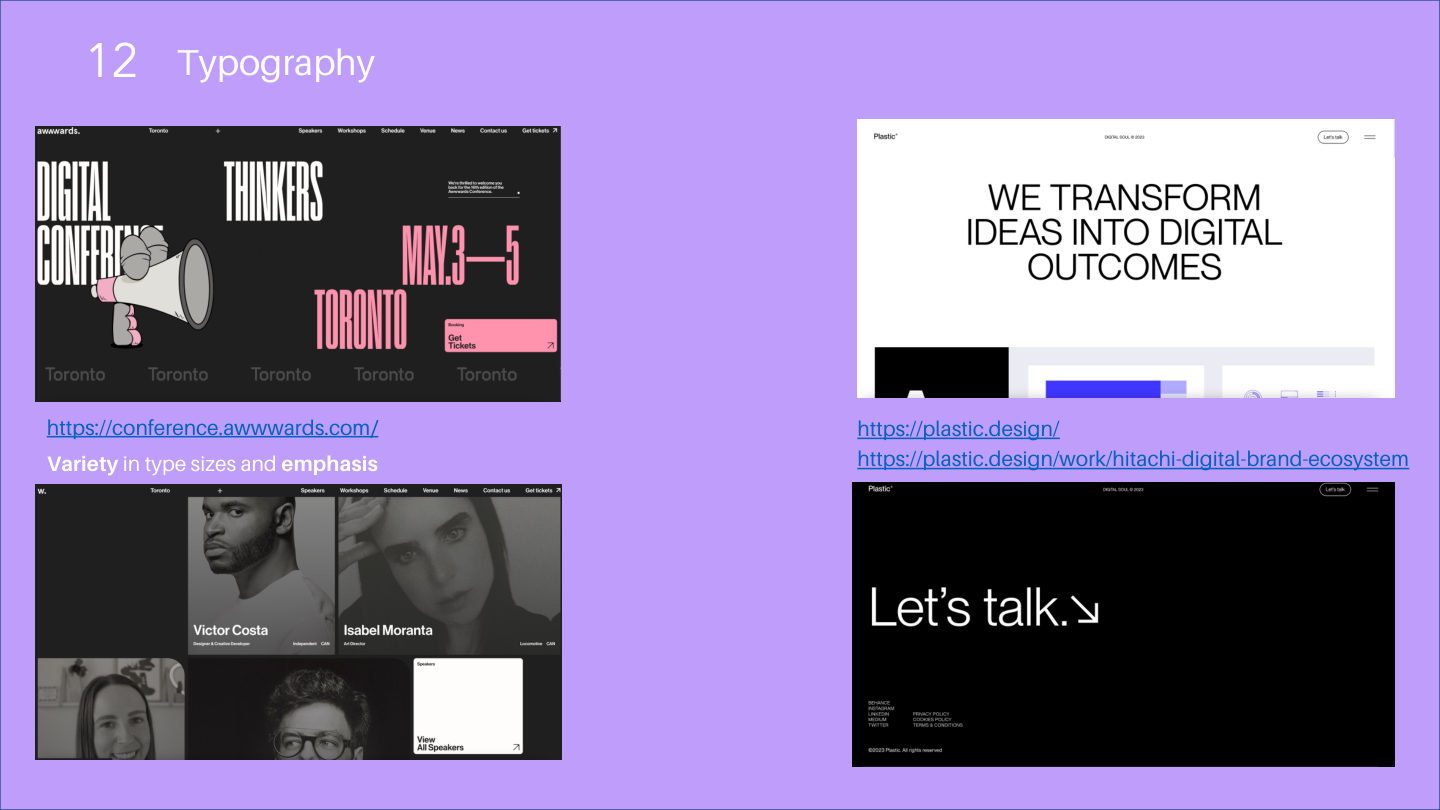
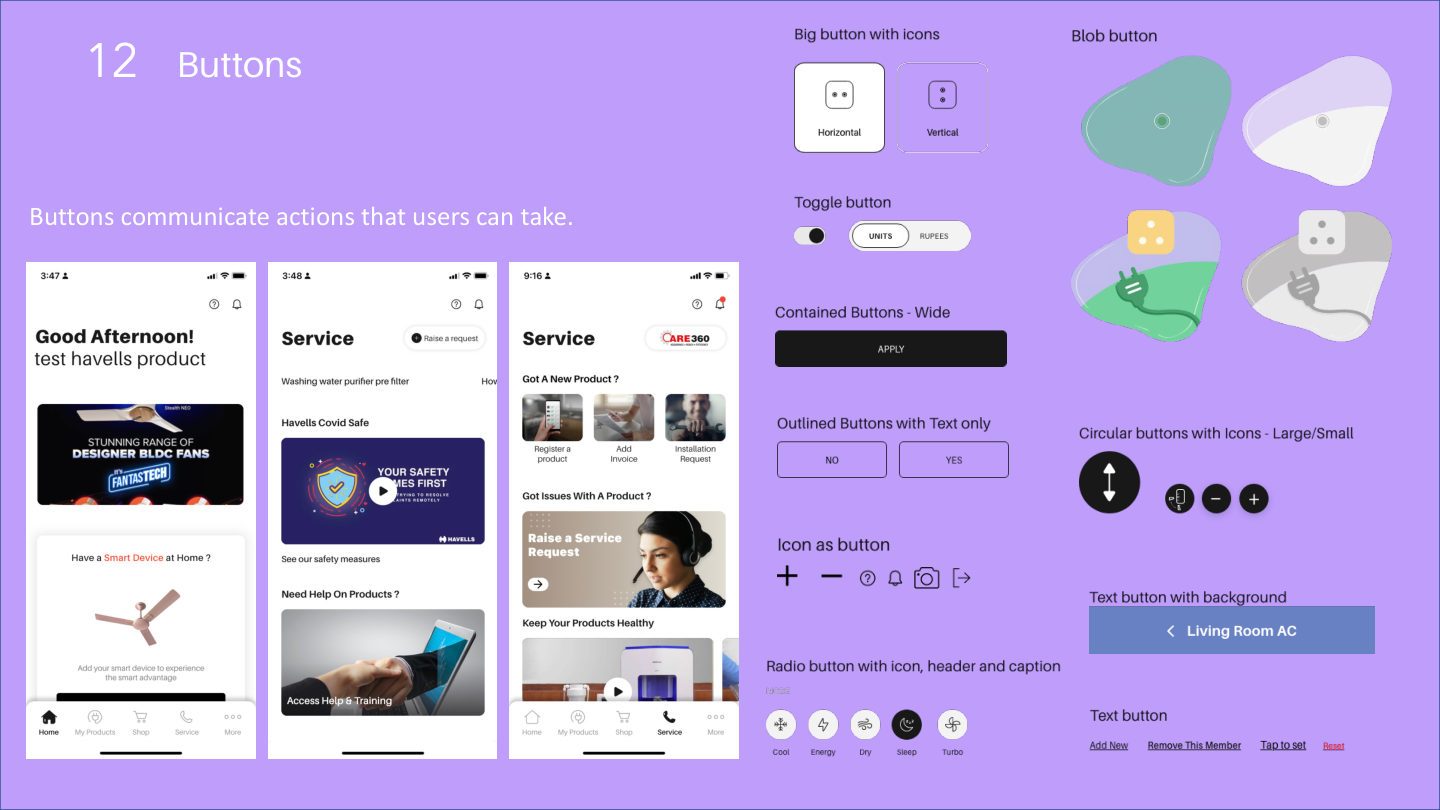
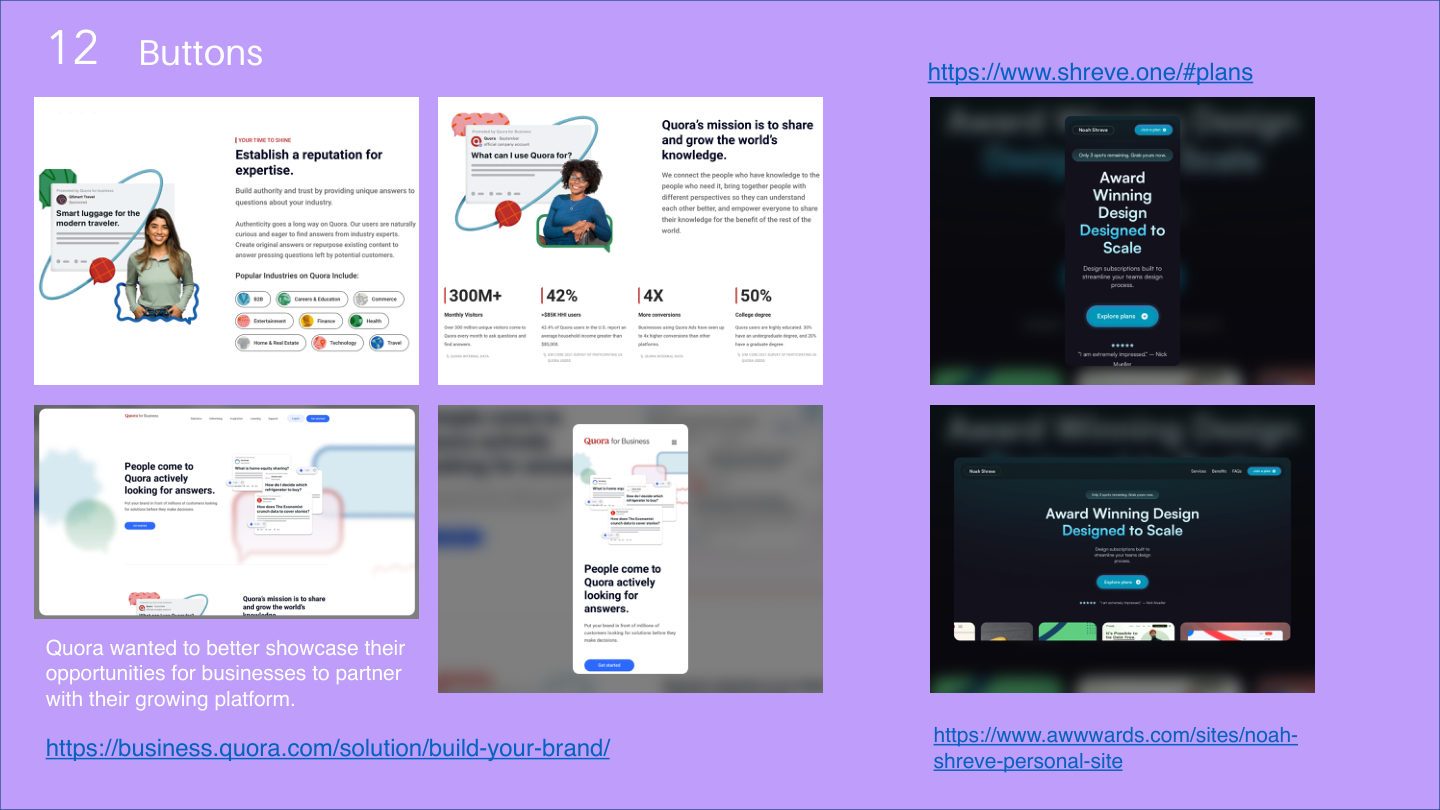
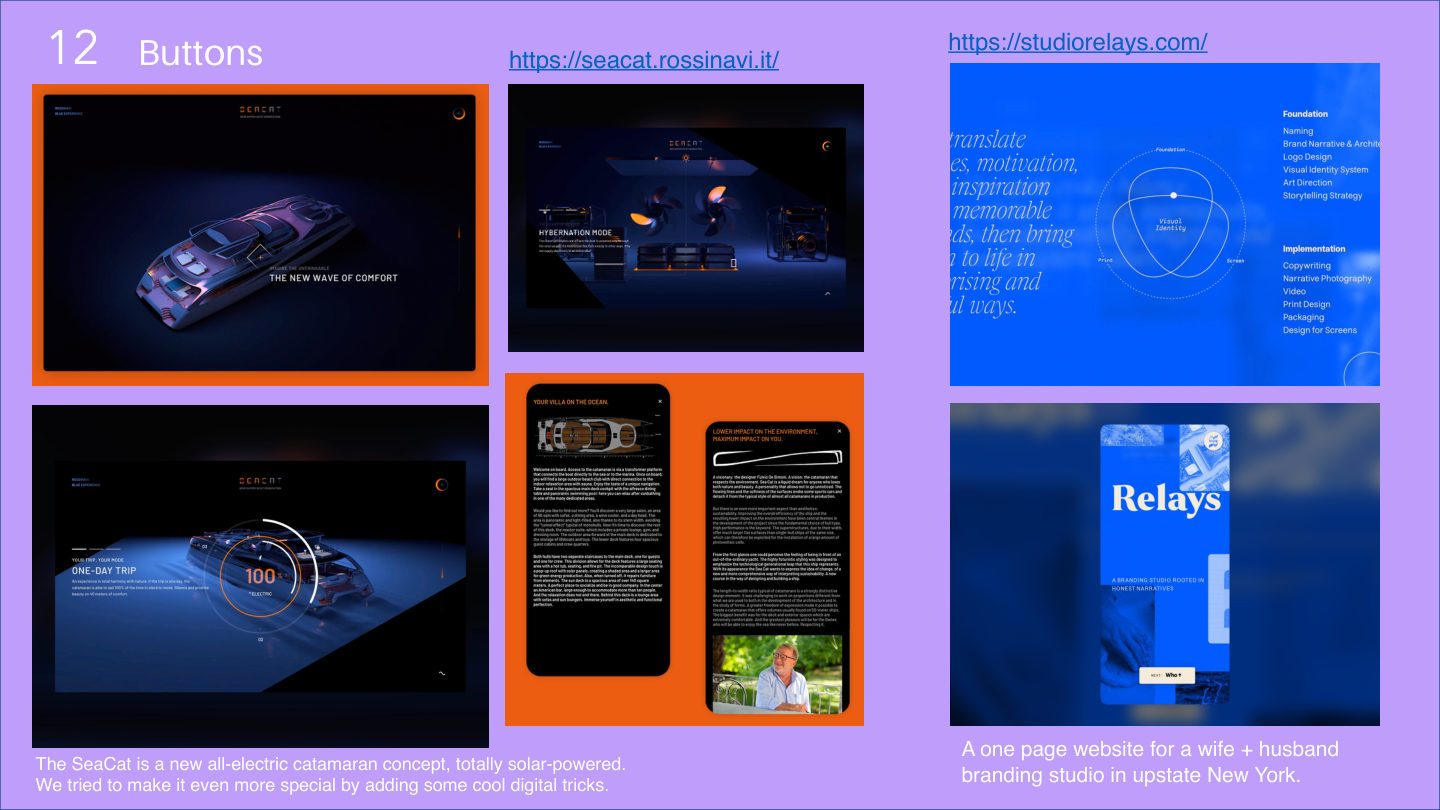
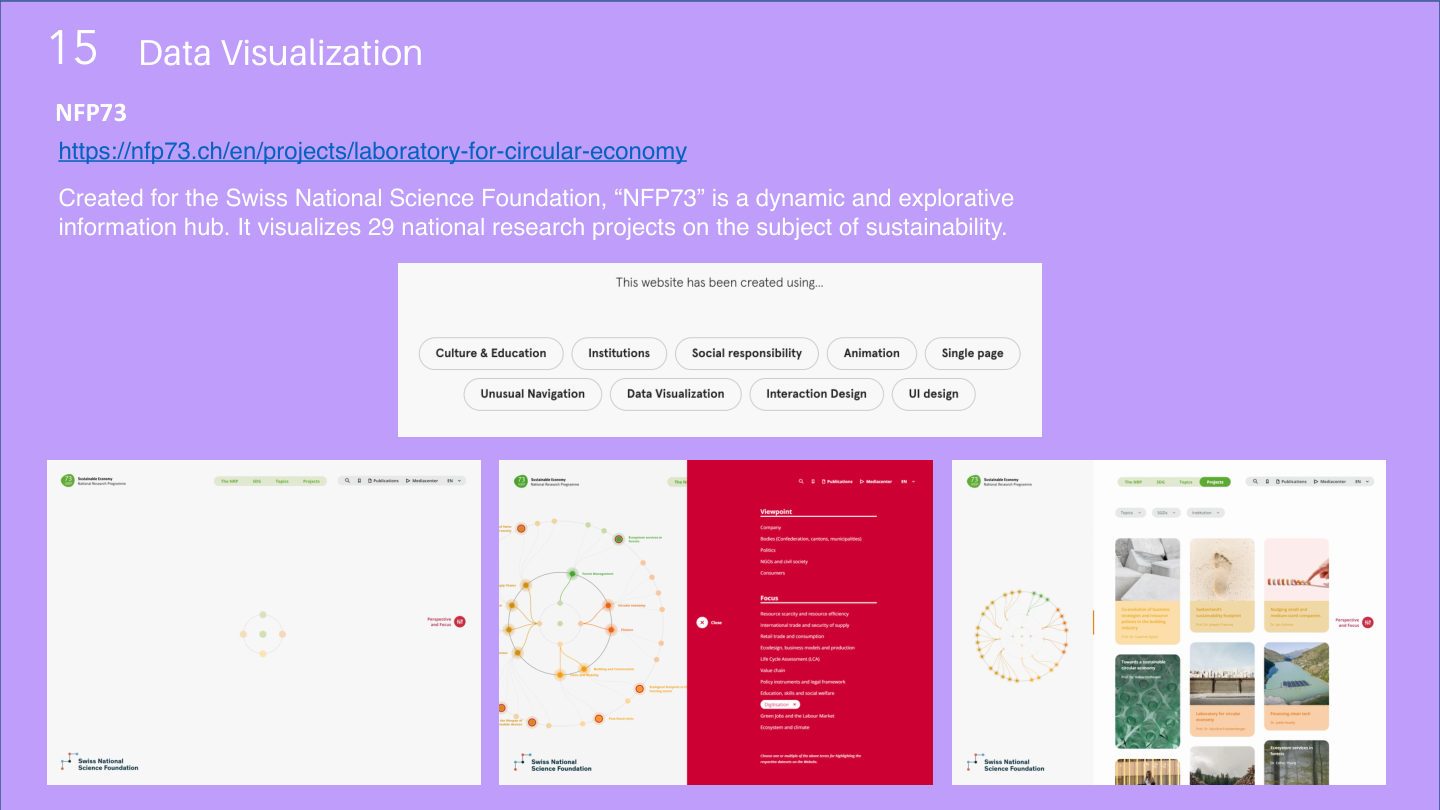
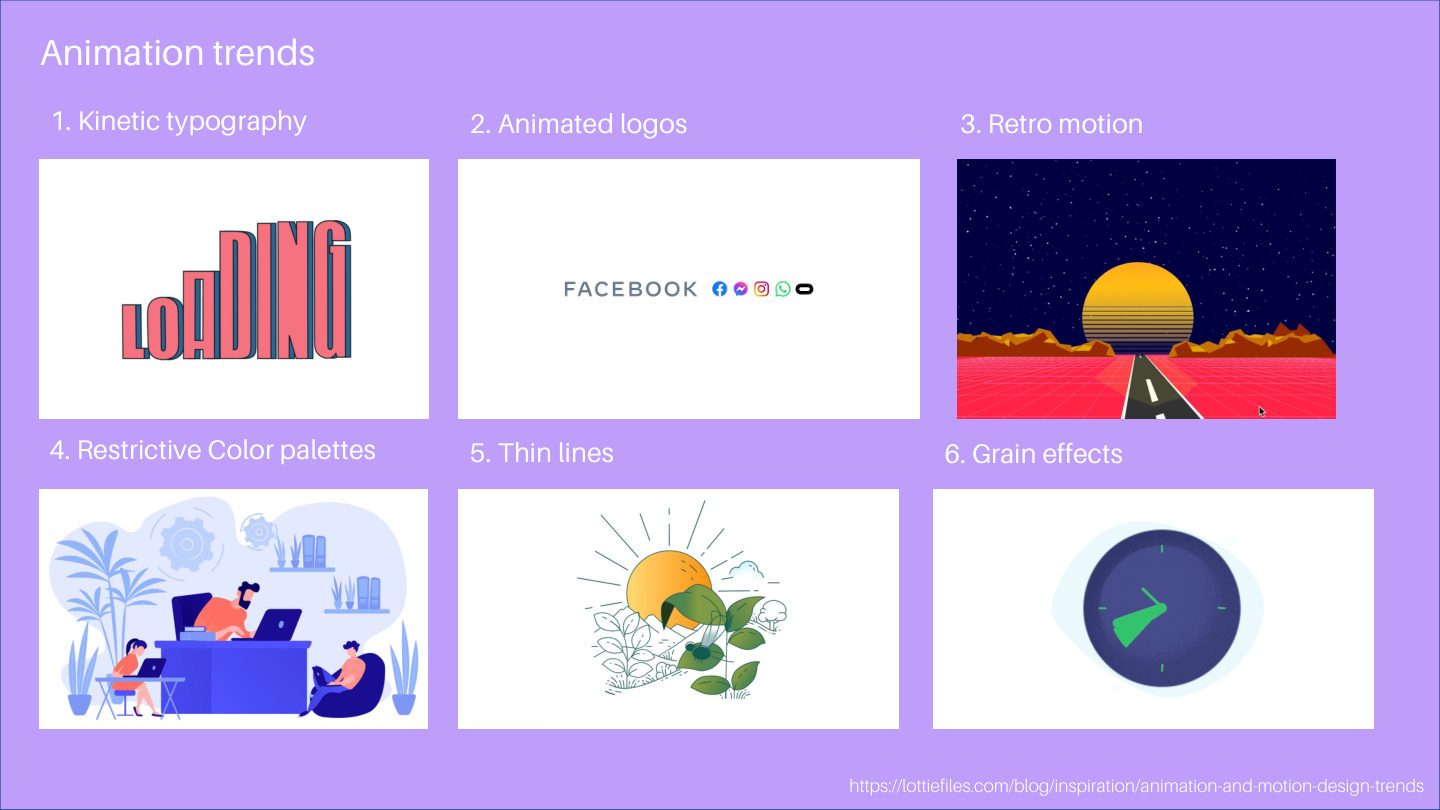
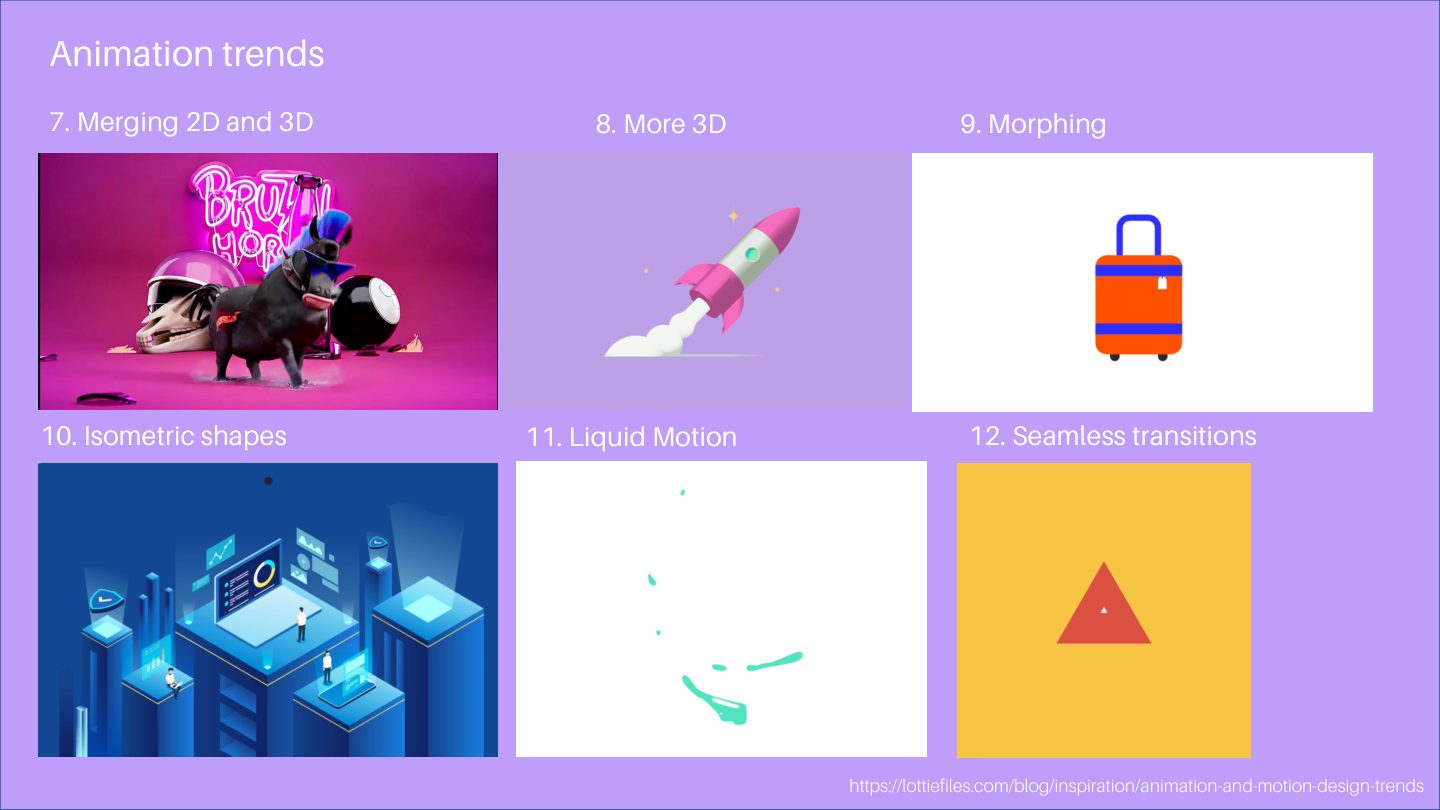
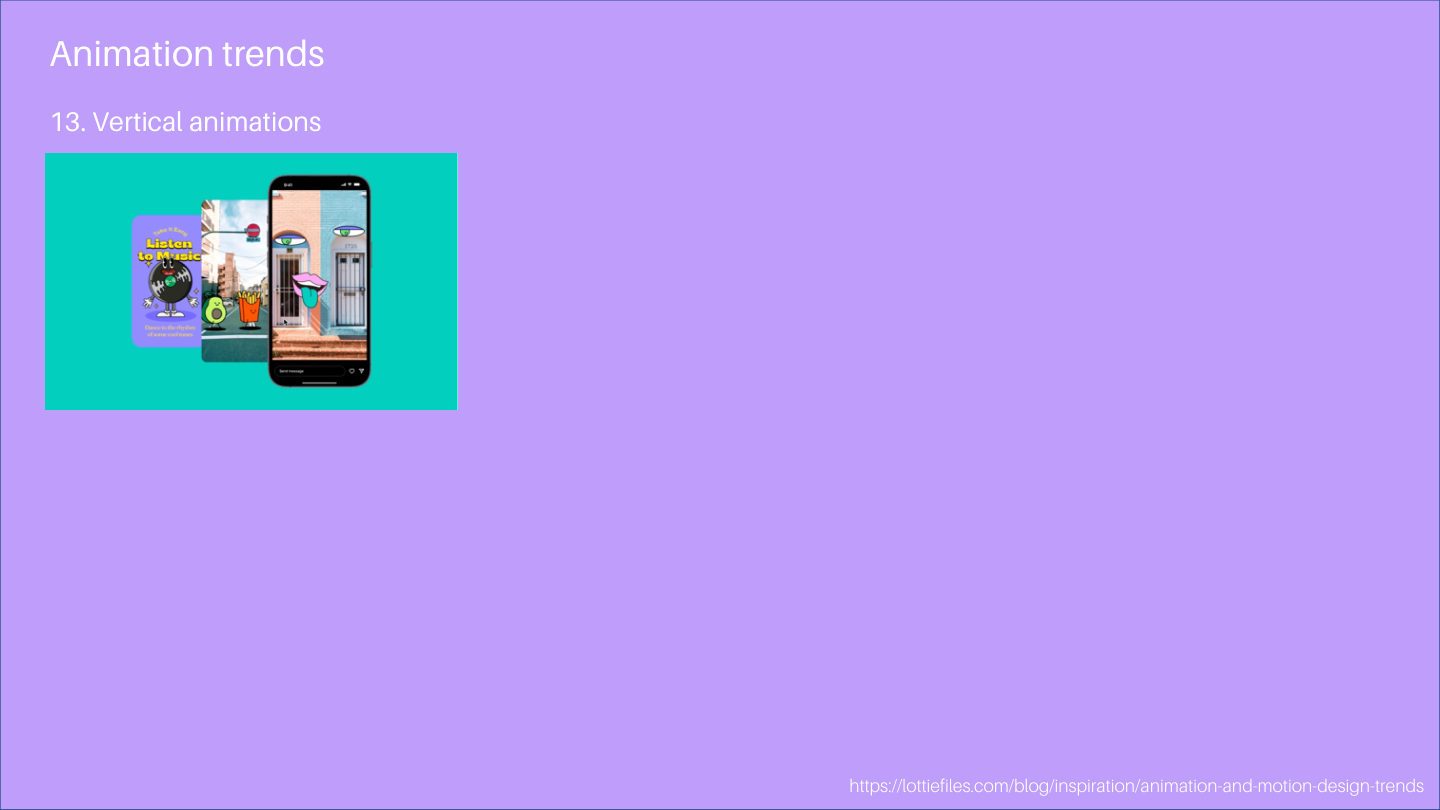
✦ 04 — Outcome: Redesign Recommendations
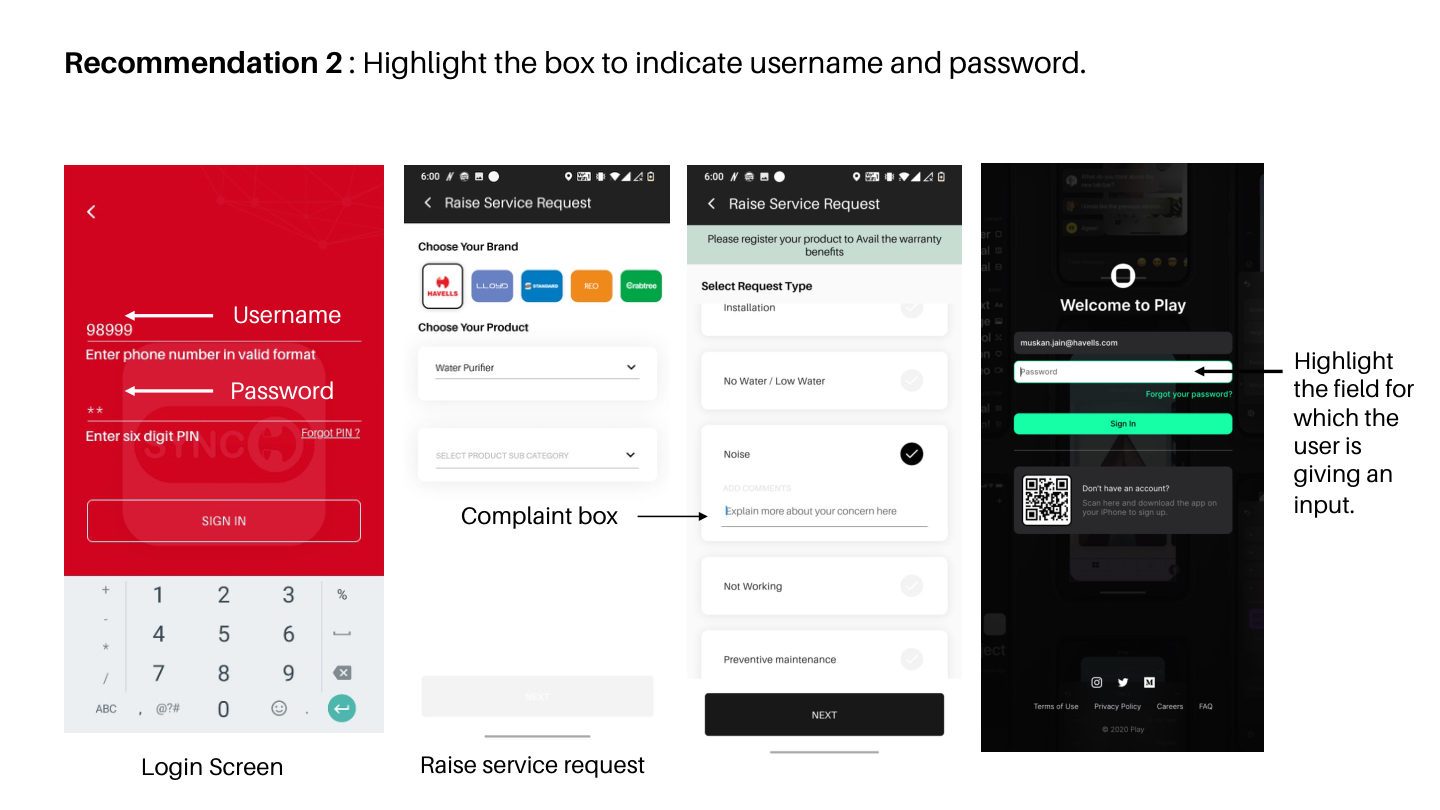
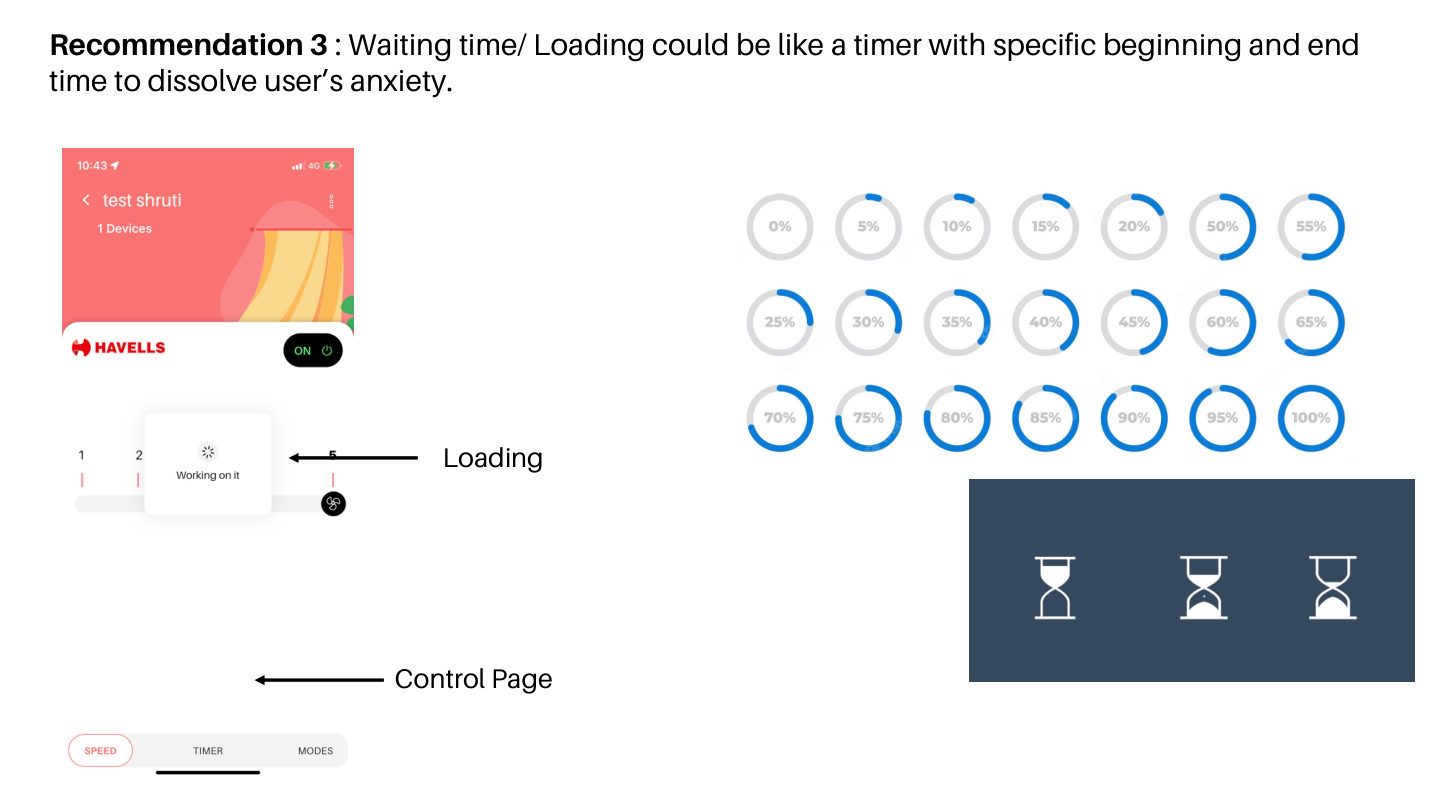
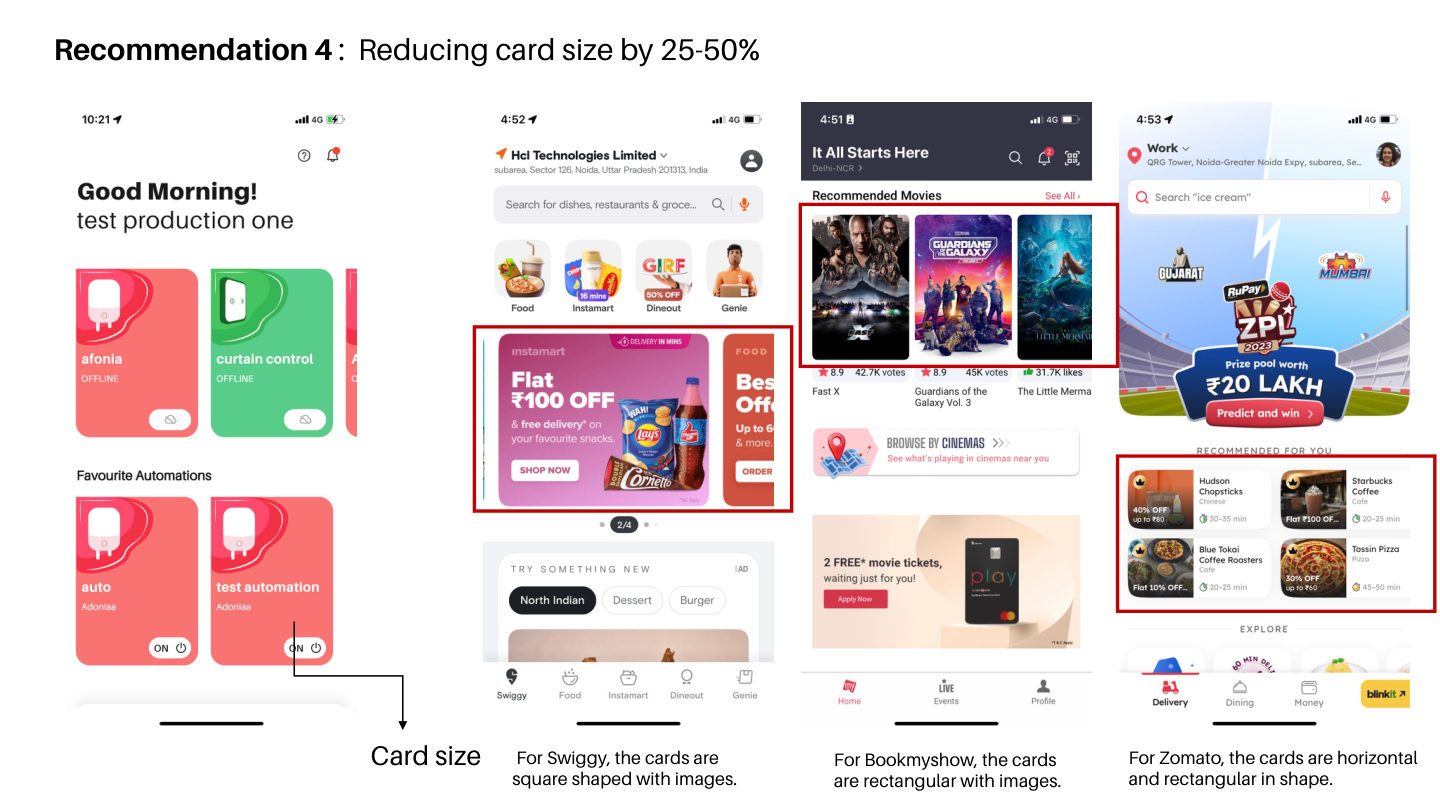
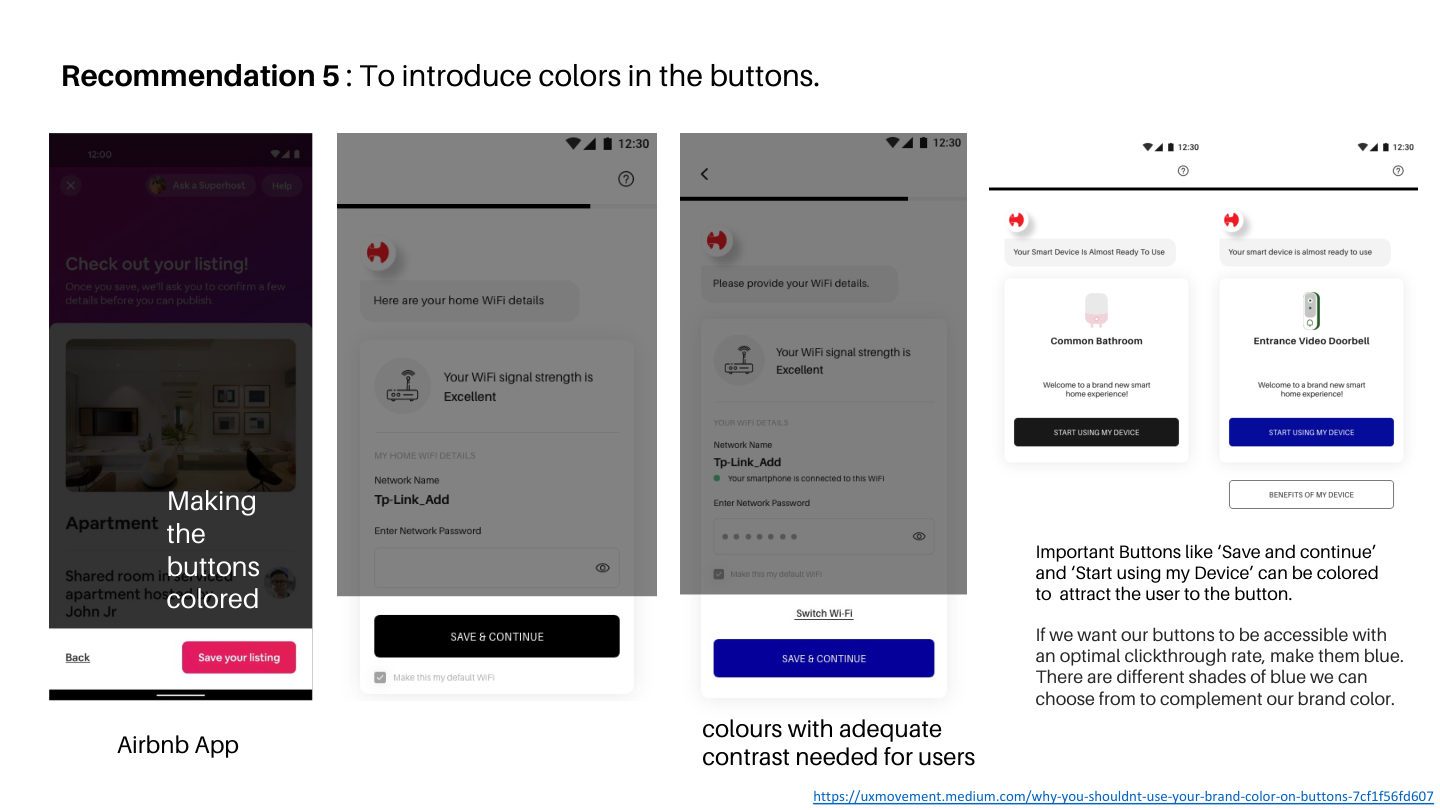
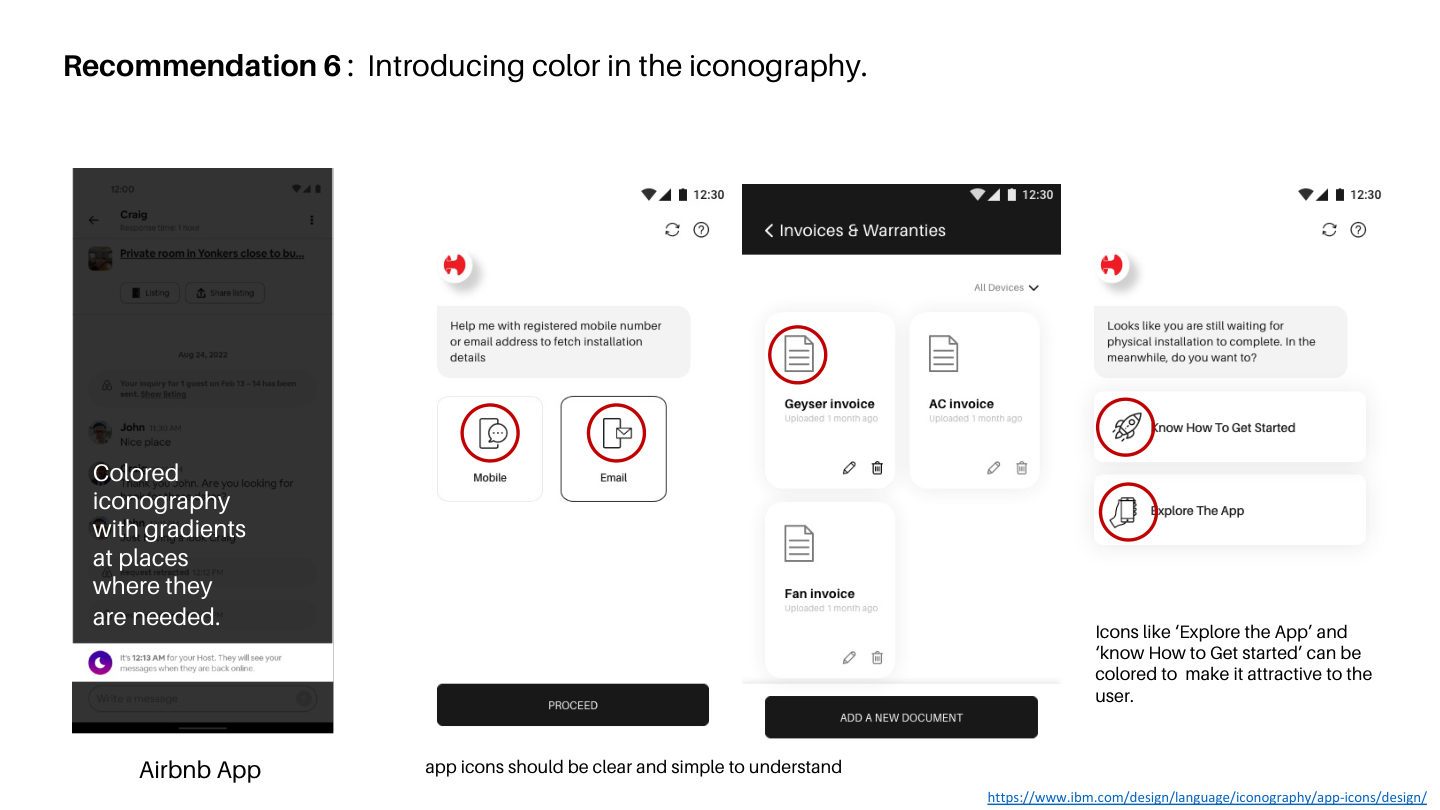
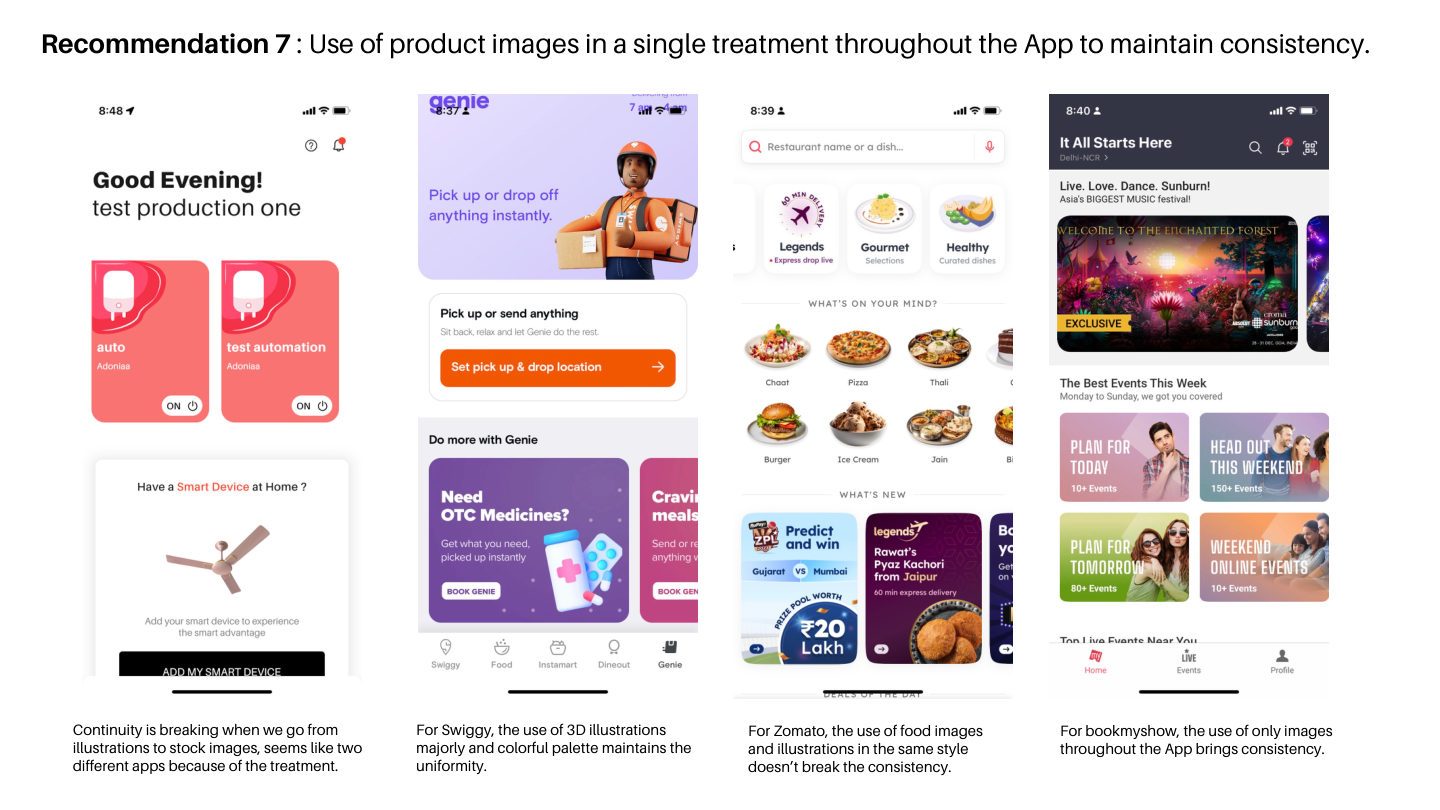
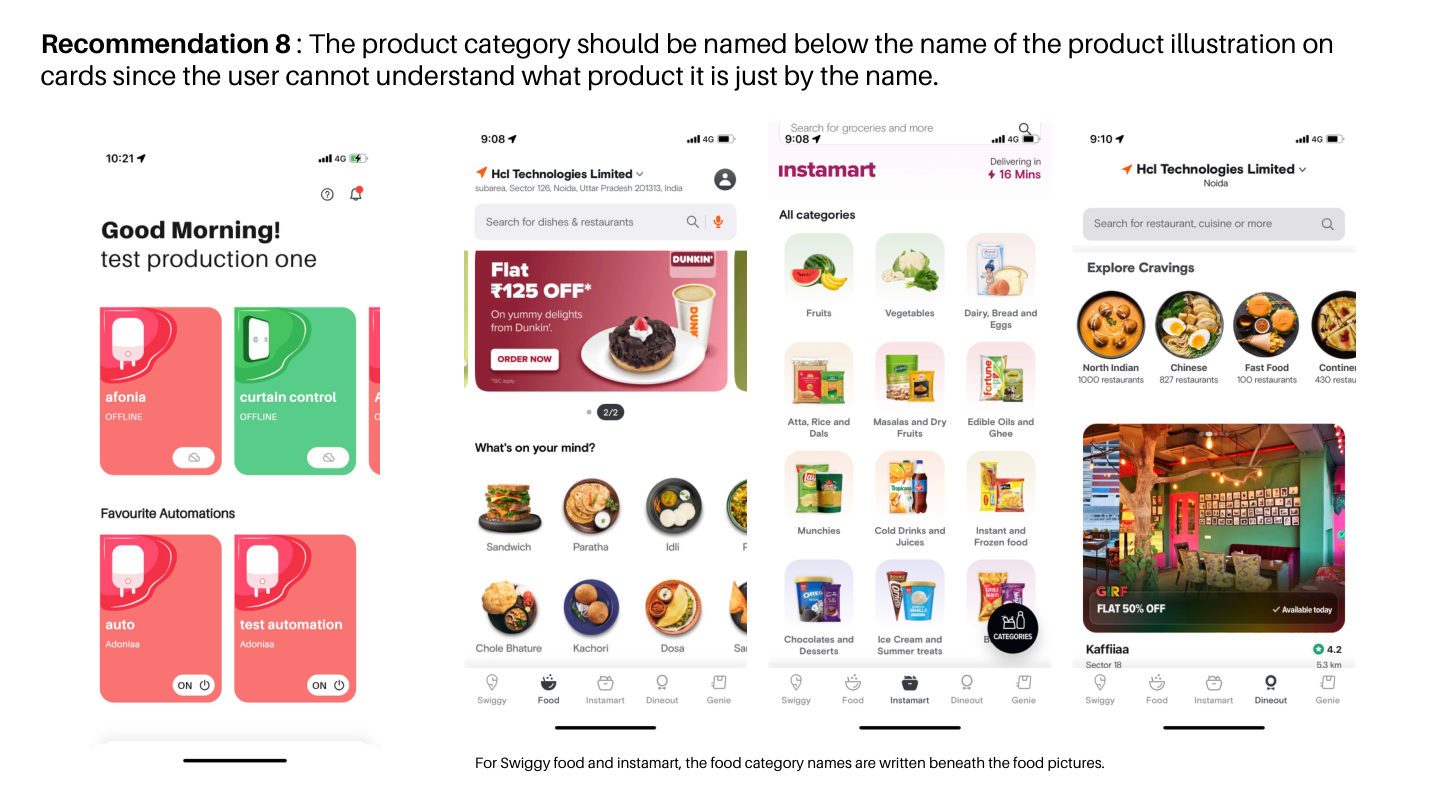
Ten concrete recommendations for the Havells WellTech app, grounded in the research above — from navigation hierarchy and loading patterns to card density and colour in UI.
Visual Design · Icon Systems · Brand Language
Visueel design · Iconensystemen · Merktaal
Setting the design language for an electrical giant — auditing icons across five product sub-brands, benchmarking against global competitors, and defining an icon anatomy framework built on Havells brand values.
De designtaal van een elektriciteitsgigant vormgeven — iconen auditeren over vijf product-sub-merken, vergelijken met wereldwijde concurrenten en een framework voor icoonanatomie definiëren op basis van de merkwaarden van Havells.
✦ Final Outcome
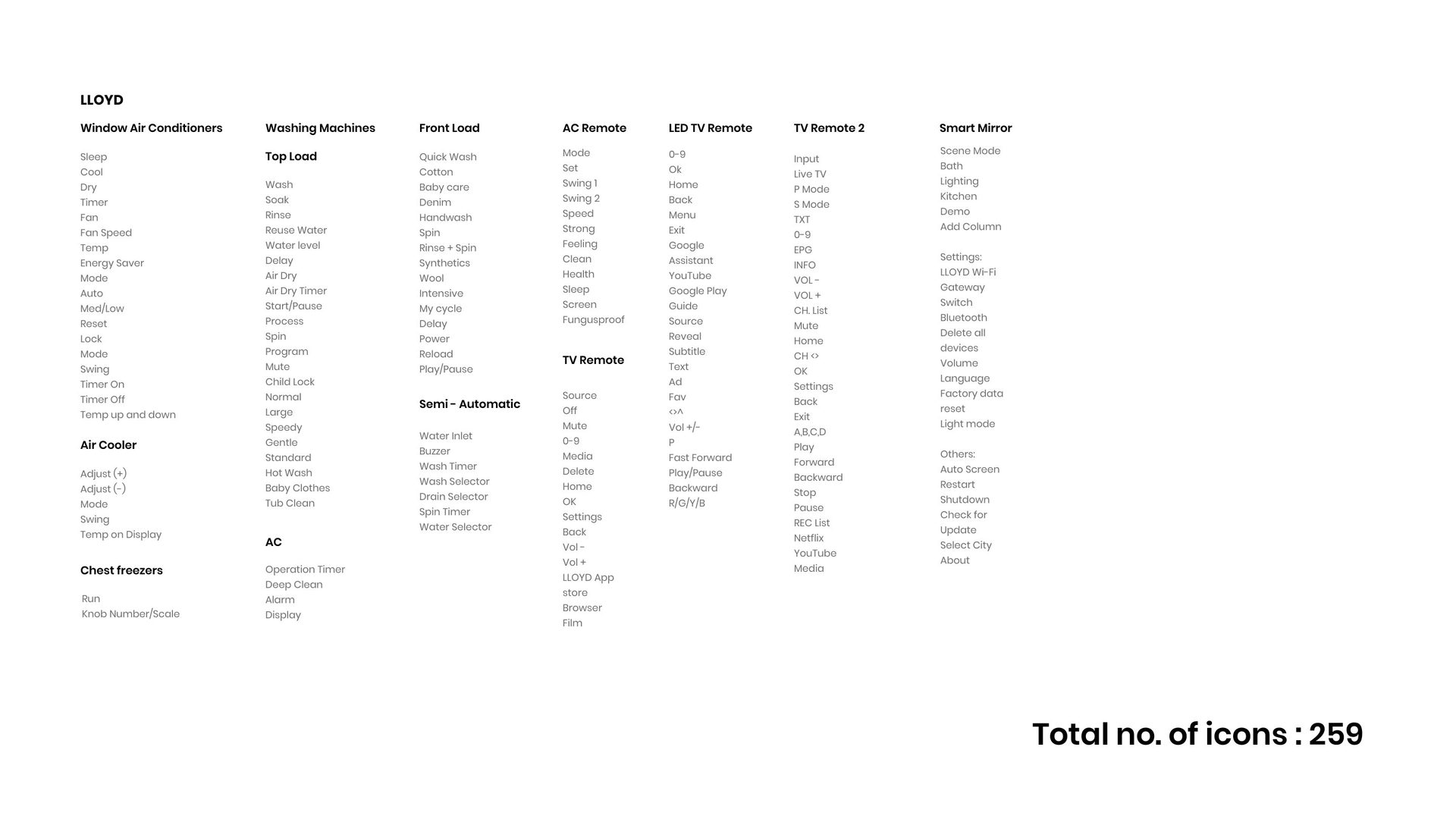
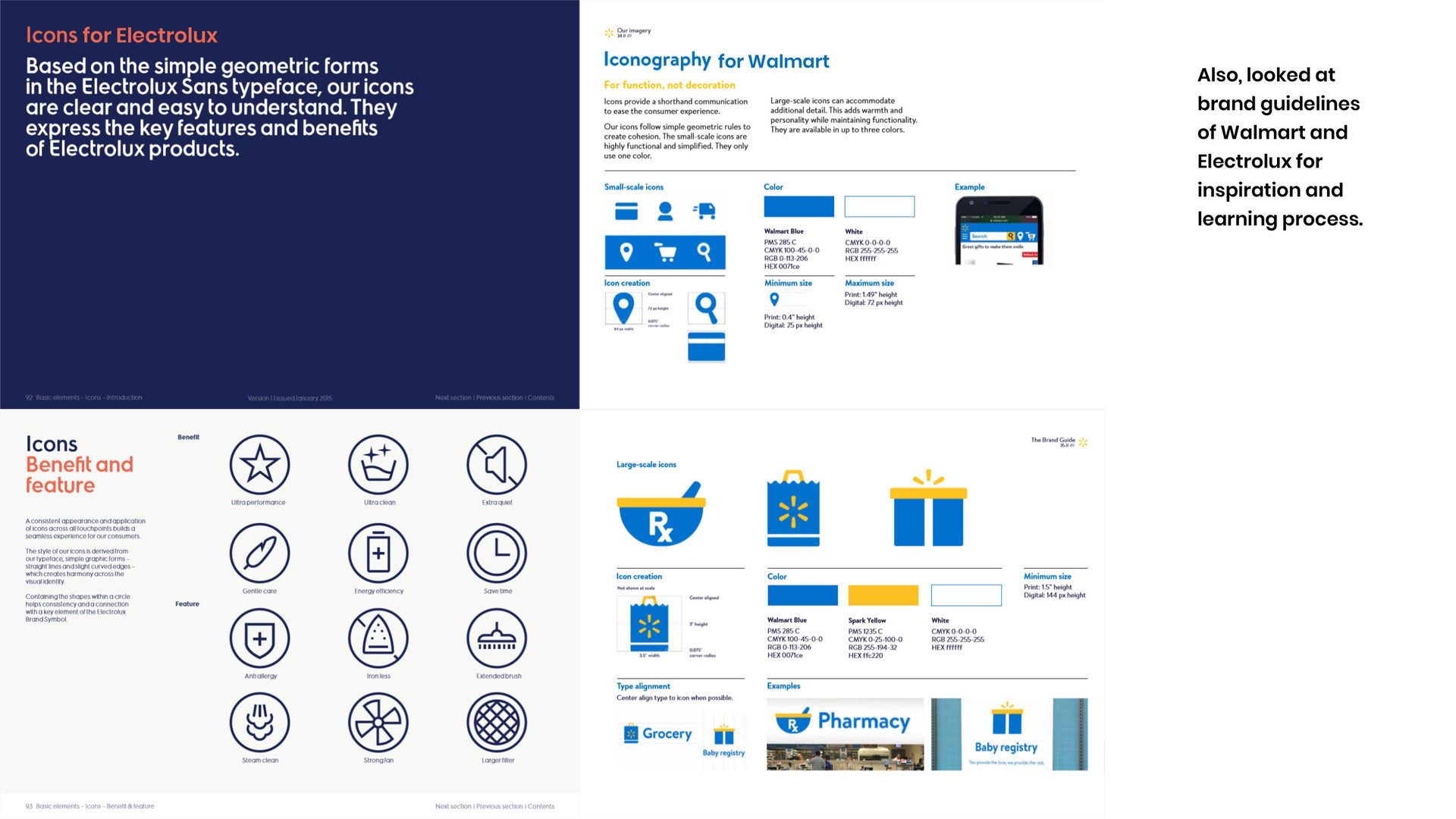
Researched icon systems across Havells, Crabtree, Lloyd, Standard, and Reo product lines — then benchmarked against Walmart, Electrolux, LG, and Aquaguard to define a guiding icon style, anatomy, and set of principles for use across all Havells physical and digital products.
Icon Audit
Mapped existing icons across all Havells sub-brands — uncovering inconsistency in style, shape, size, form, and colour.
Style Framework
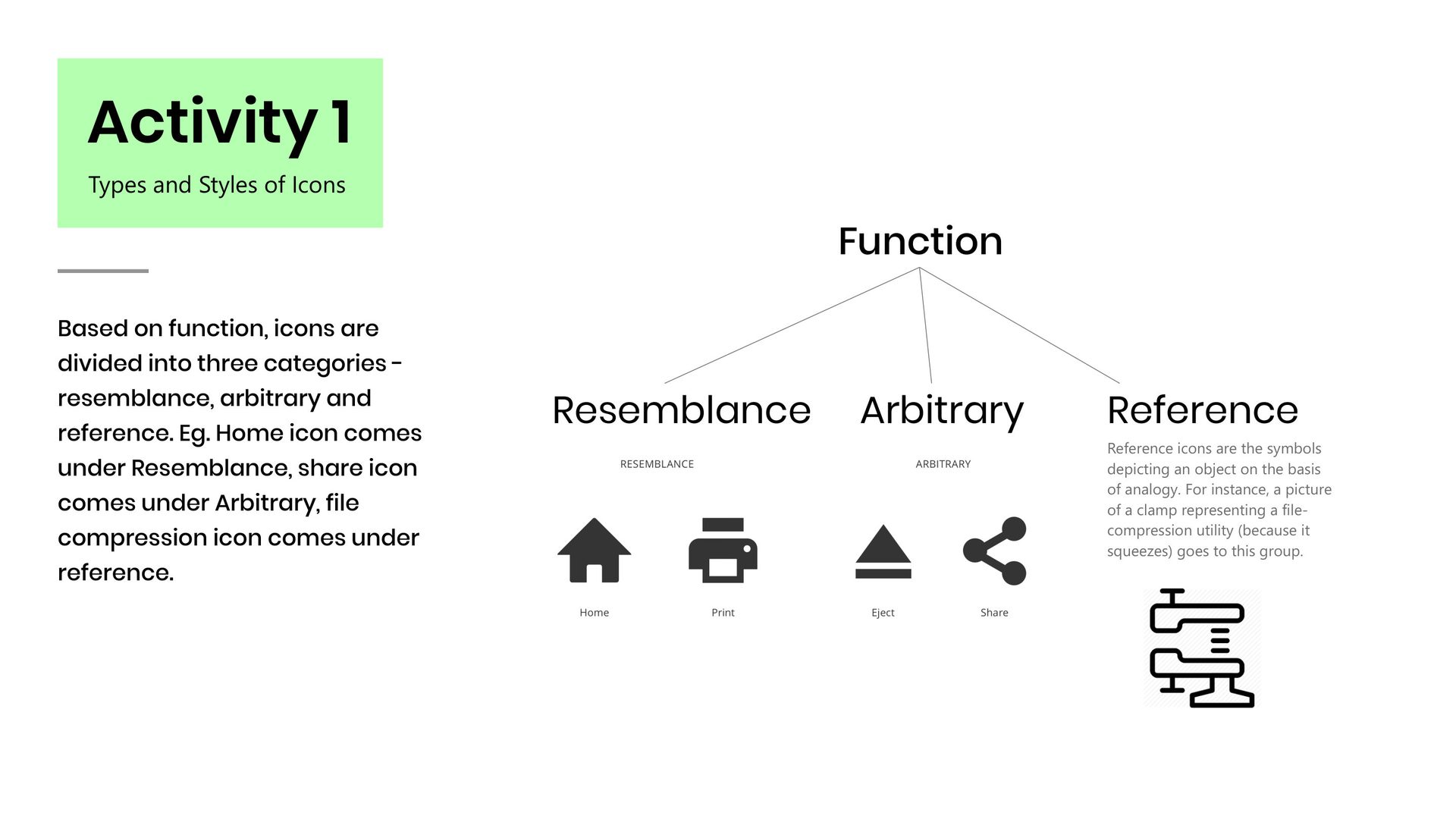
Defined icon taxonomy by type (function, resemblance, arbitrary) and style (outline, filled, coloured) — with rounded vs. sharp corner rules.
Brand-Rooted Principles
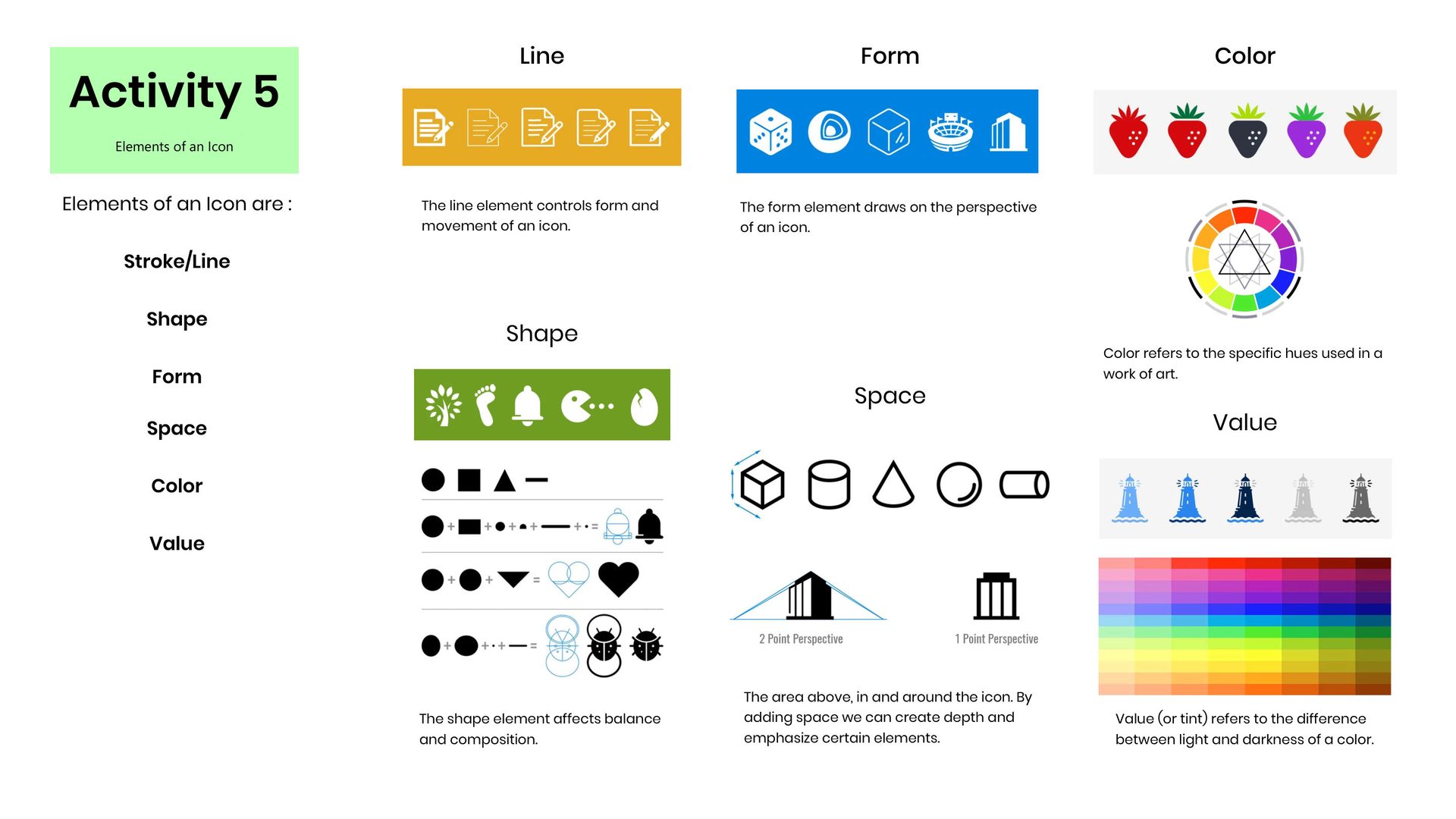
Six guiding principles for icon anatomy — stroke, shape, form, space, colour, and value — grounded in Havells brand attributes.
Cross-Product Library
A starting icon vocabulary covering all Havells product categories — from water purifiers and ACs to smart home and switchgear.
Full-time Visual Designer · Havells India · Icon Design Language
✦ The Result — 54-Icon Library
The complete icon set for Havells and its sub-brands — spanning smart home control, device states, utilities, security, and user actions. All icons follow the unified style, stroke weight, corner radius, and bounding area defined through the research and anatomy framework below.
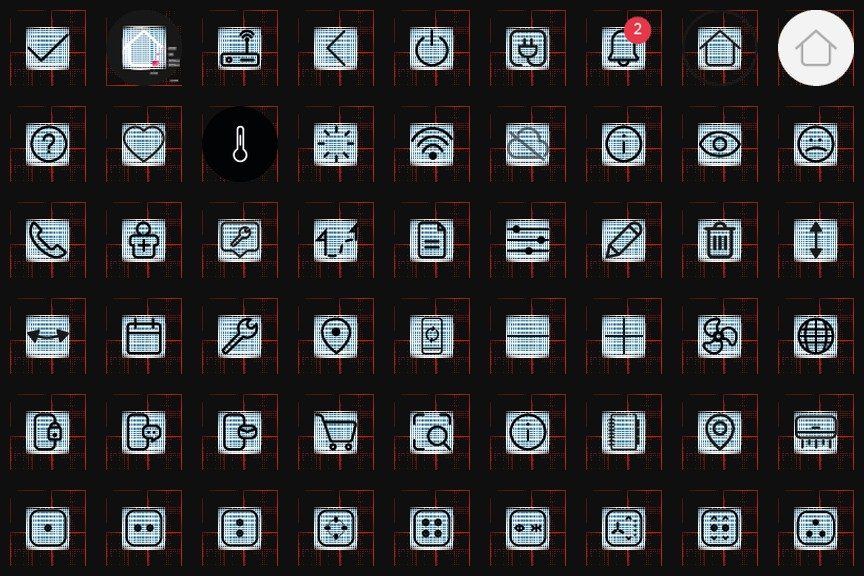
54 icons · smart home, device control, utilities, security, navigation
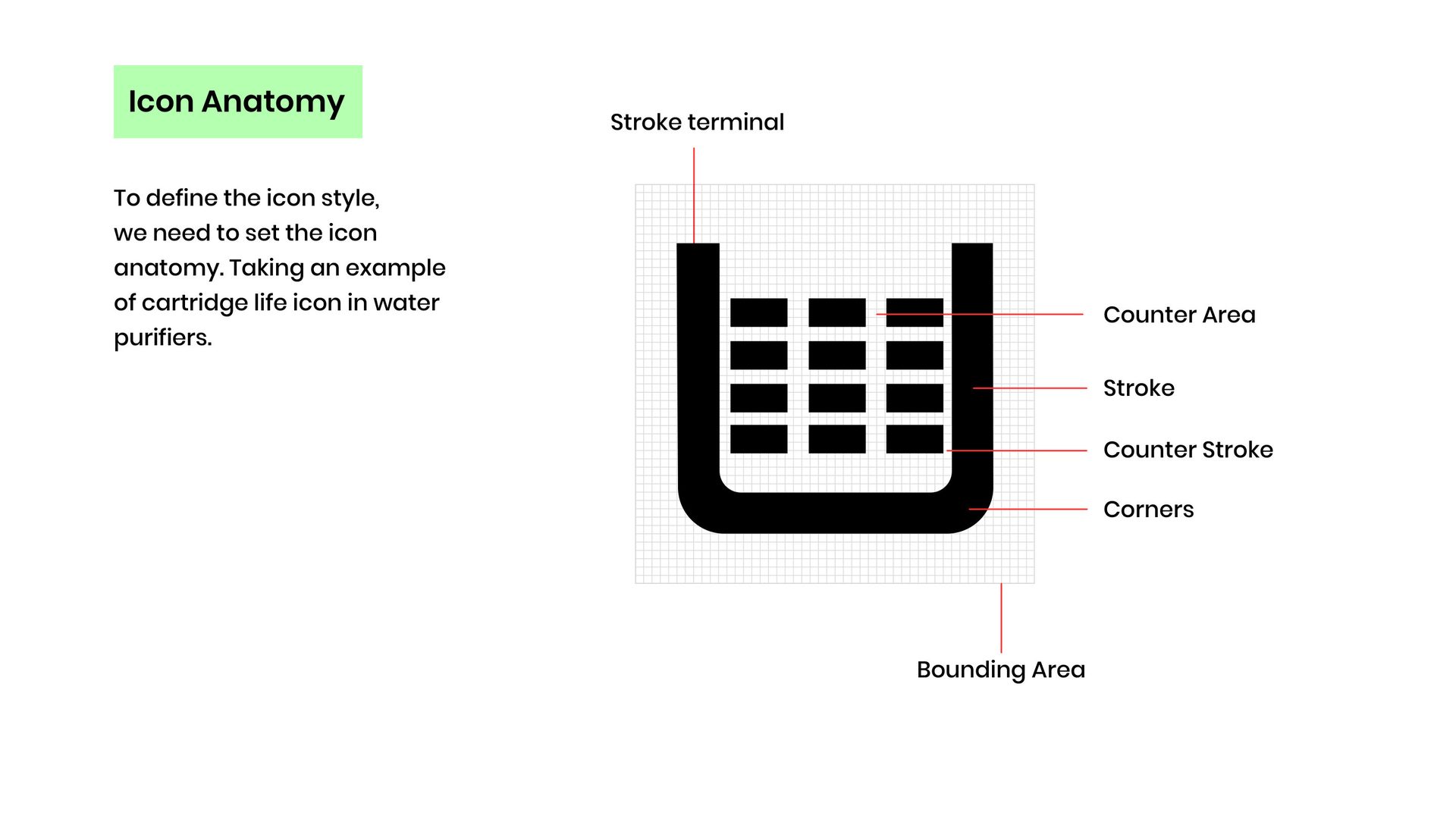
✦ Icon Anatomy — Home / Device Control Icon
Every icon in the system is governed by six anatomical elements — each a design decision, not a default. Defining these upfront is what makes 54 icons feel like one family.
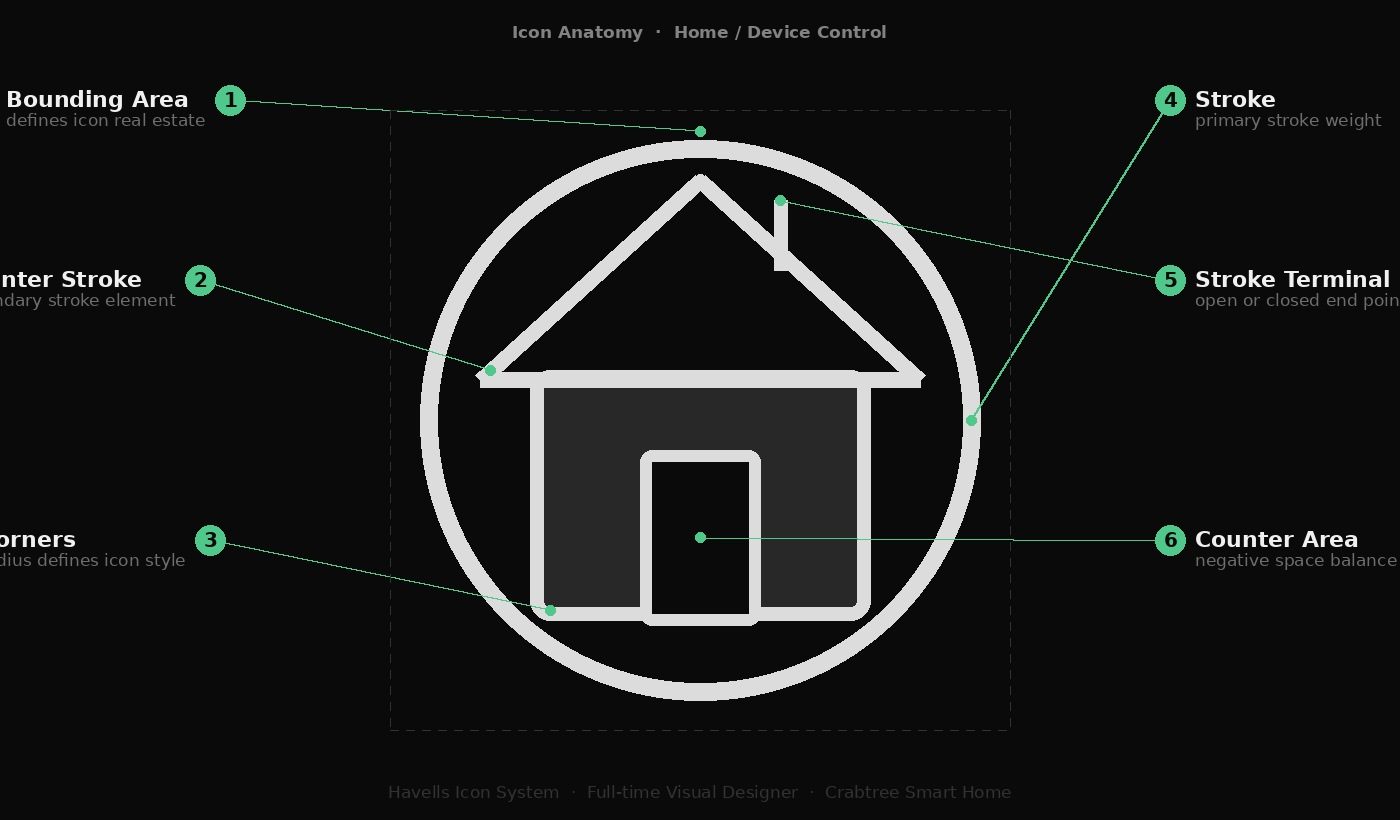
The containing circle — defines how much real estate each icon occupies.
Secondary strokes (e.g. roof slopes) — same weight as primary for visual consistency.
Rounded corners — the same radius used across all icons defines the style signature.
Primary stroke weight — governs visual heaviness and readability at all sizes.
Open or closed line ends — sets whether strokes feel sharp and technical or rounded and friendly.
Negative space inside the icon — balanced to maintain legibility at 16px and below.
✦ 01 — The Problem
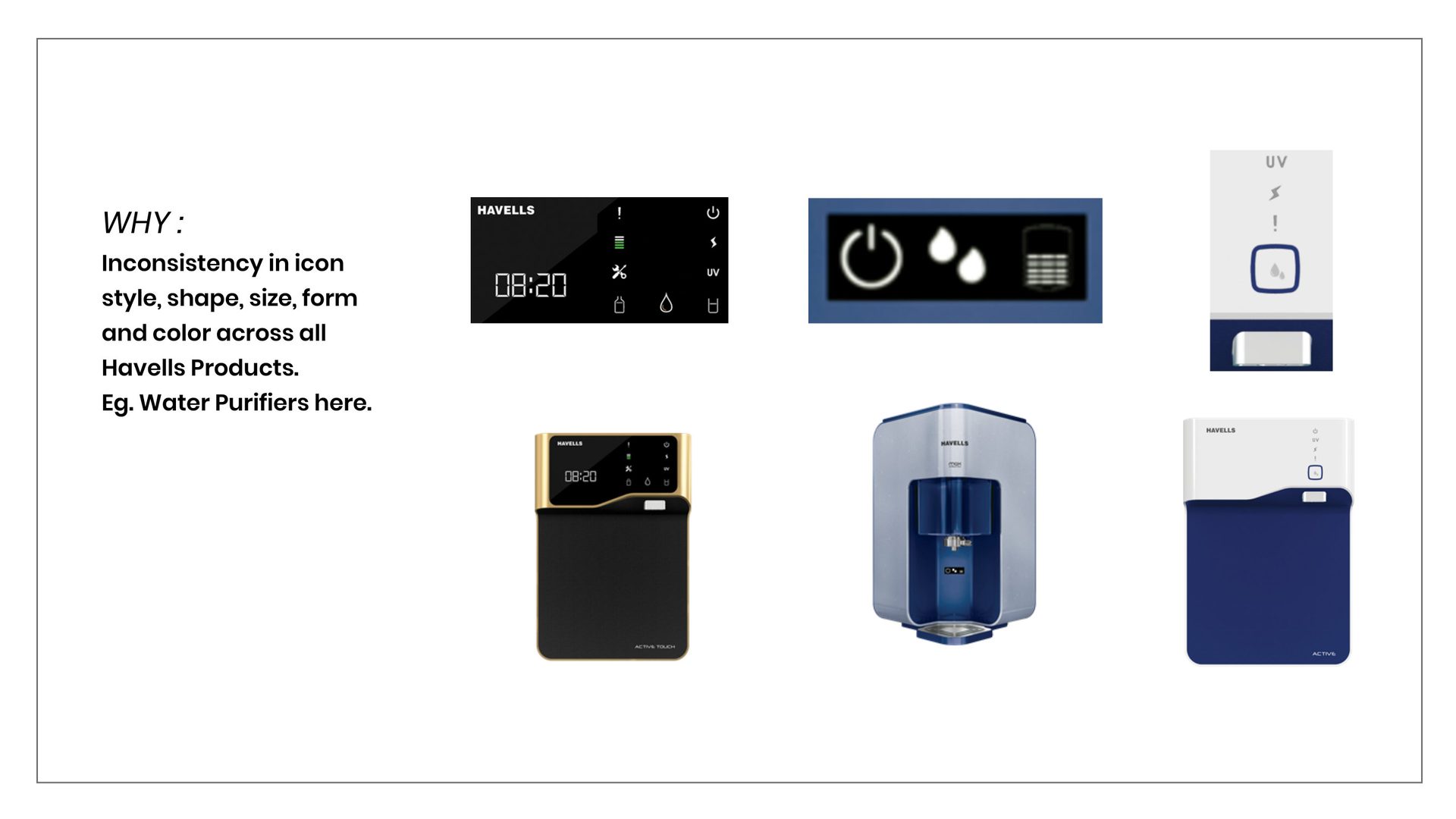
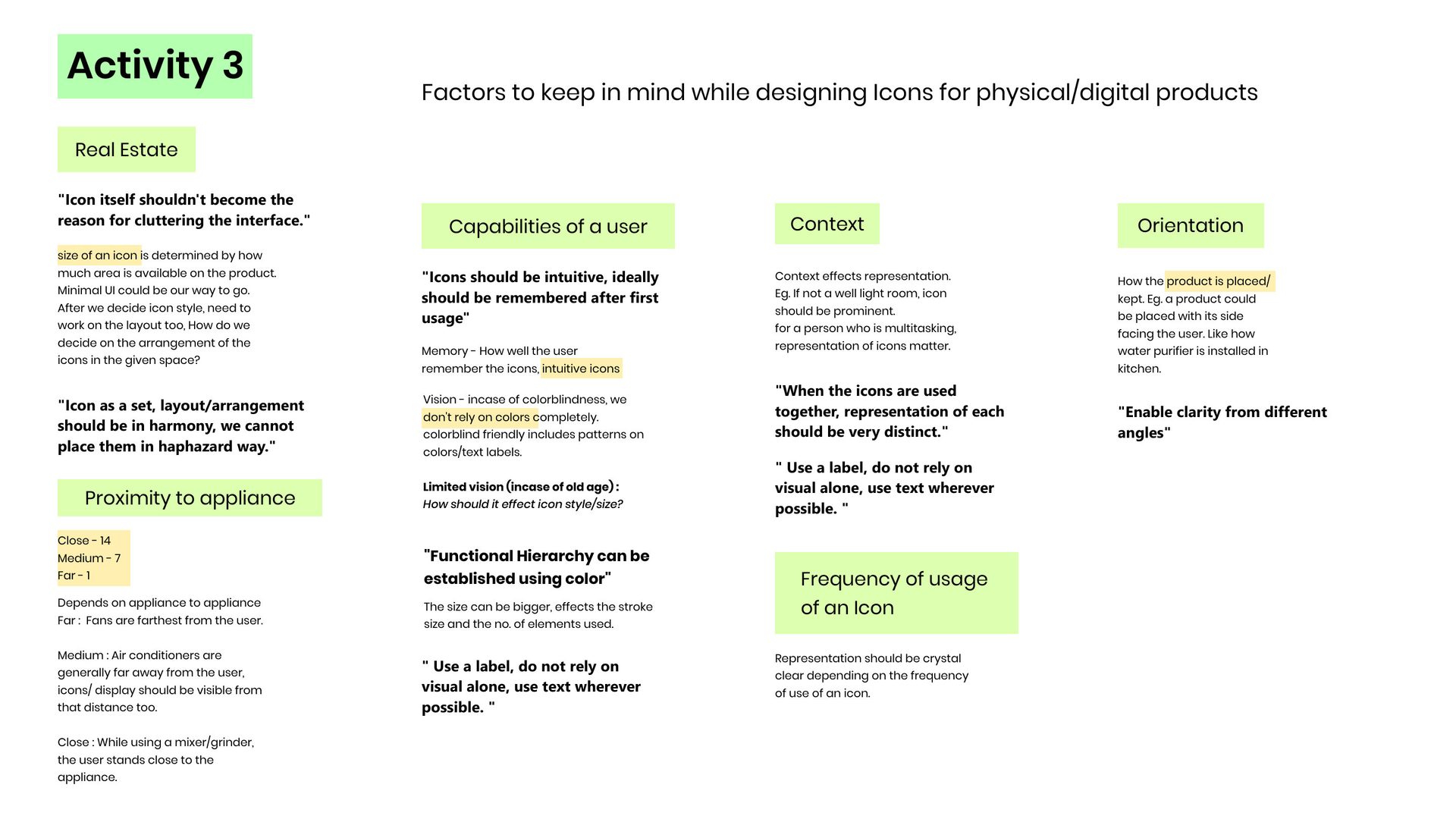
As a visual designer at Havells, I worked across the product ecosystem — water purifiers, switchgear, ACs, smart home panels. Every product had icons. But they didn't belong to the same family.
A sharp-cornered filled icon on the purifier, a coloured outline icon on the panel, a symbol-based icon on the remote. Visually, they were strangers.
The brief was clear: set the design language for Havells through iconography — and build a consistent icon library across all products. But before designing anything, I needed to understand why the inconsistency existed in the first place.
That meant an audit, a competitive study, and a proper framework — not just a new set of icons drawn in the same style.
The Brief
Set the design language for Havells through iconography.
Build a consistent icon library for all Havells products.
Research Approach
02 — Key Decisions
A 54-icon library could have been arbitrary. These were the decisions that made it a language — not a collection.
Decision 01
Six guiding principles — stroke, shape, form, space, colour, value — established before a single icon was drawn. Rules at this level mean every future addition feels like the same family, regardless of which designer made it.
Impact: 54 icons feel like one family — not a collection from multiple hands.
Decision 02
Havells' brand values translated into specific corner radius, stroke weight, and terminal decisions. Subjective brand identity became objective, manufacturing-grade specifications. The icon anatomy is Havells — not generic.
Impact: icons work across all 5 sub-brands without visual conflict.
Decision 03
Mapping inconsistency across 5 sub-brands and benchmarking against Walmart, Electrolux, LG, and Aquaguard before creating a single icon. Diagnosis before prescription. A library without a diagnosis is just decoration.
Impact: every icon decision grounded in evidence, not instinct.
✦ 03 — The Work
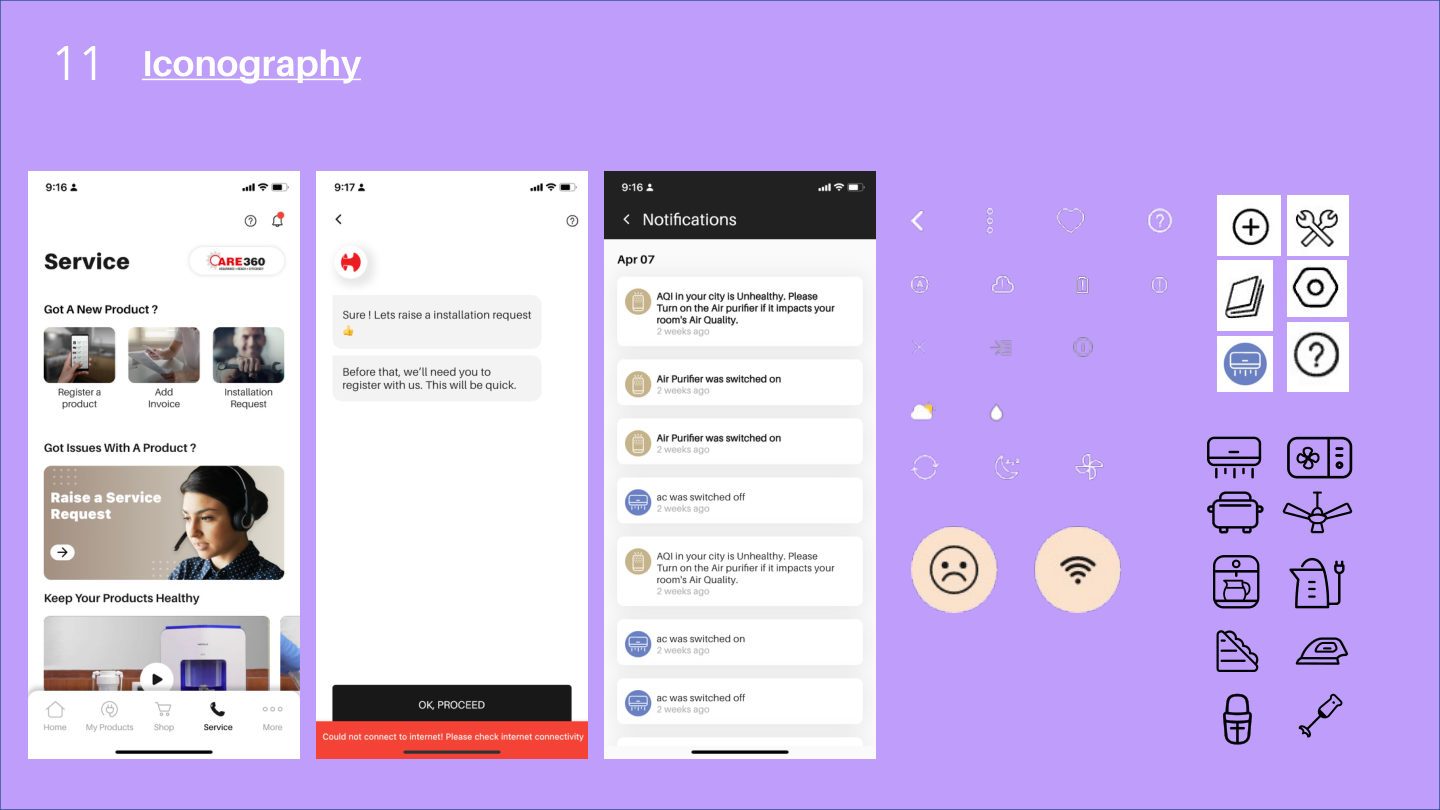
Starting with the problem: inconsistency in icon style, shape, size, form, and colour across all Havells products and sub-brands — evidenced through the water purifier line.
✦ The Work — Icon Inventory
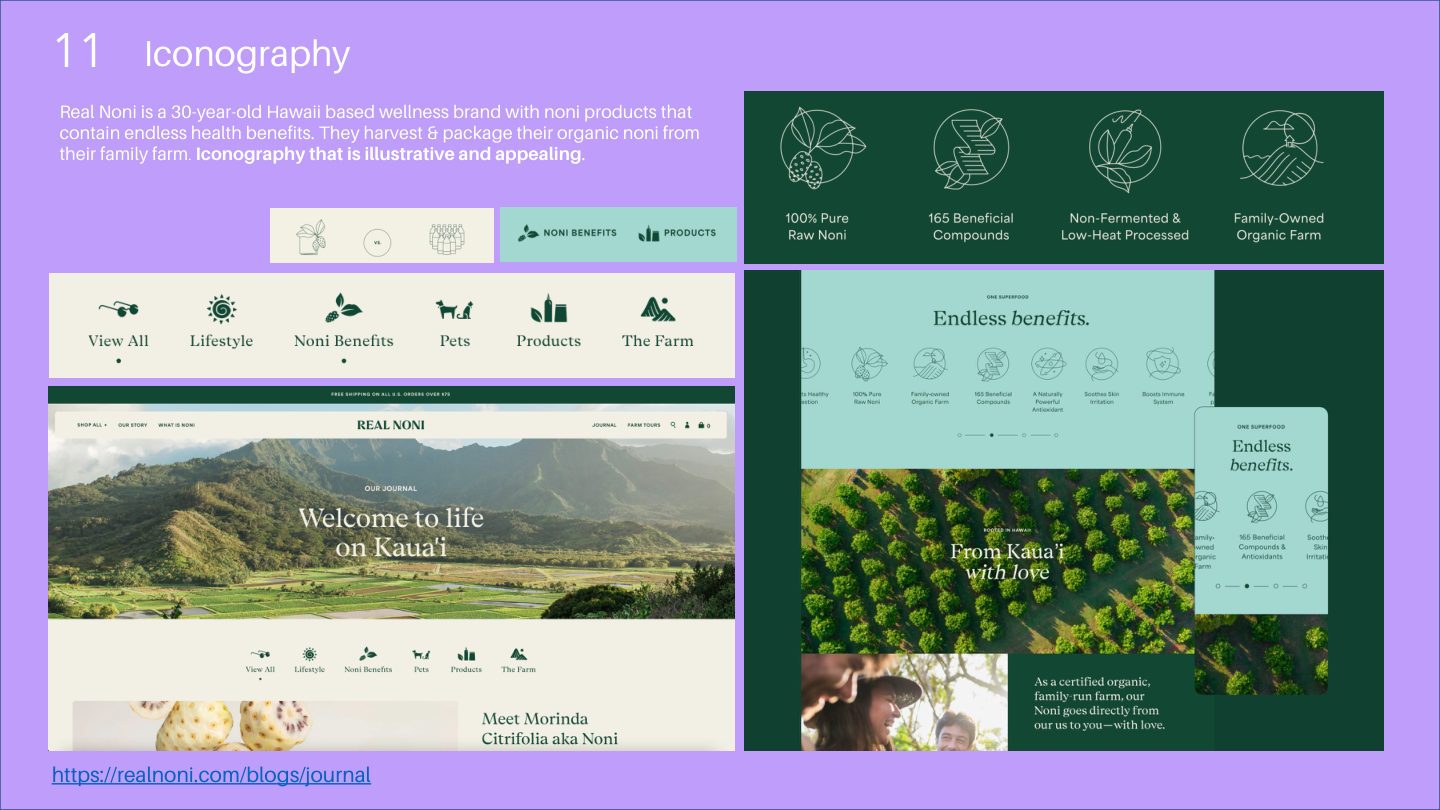
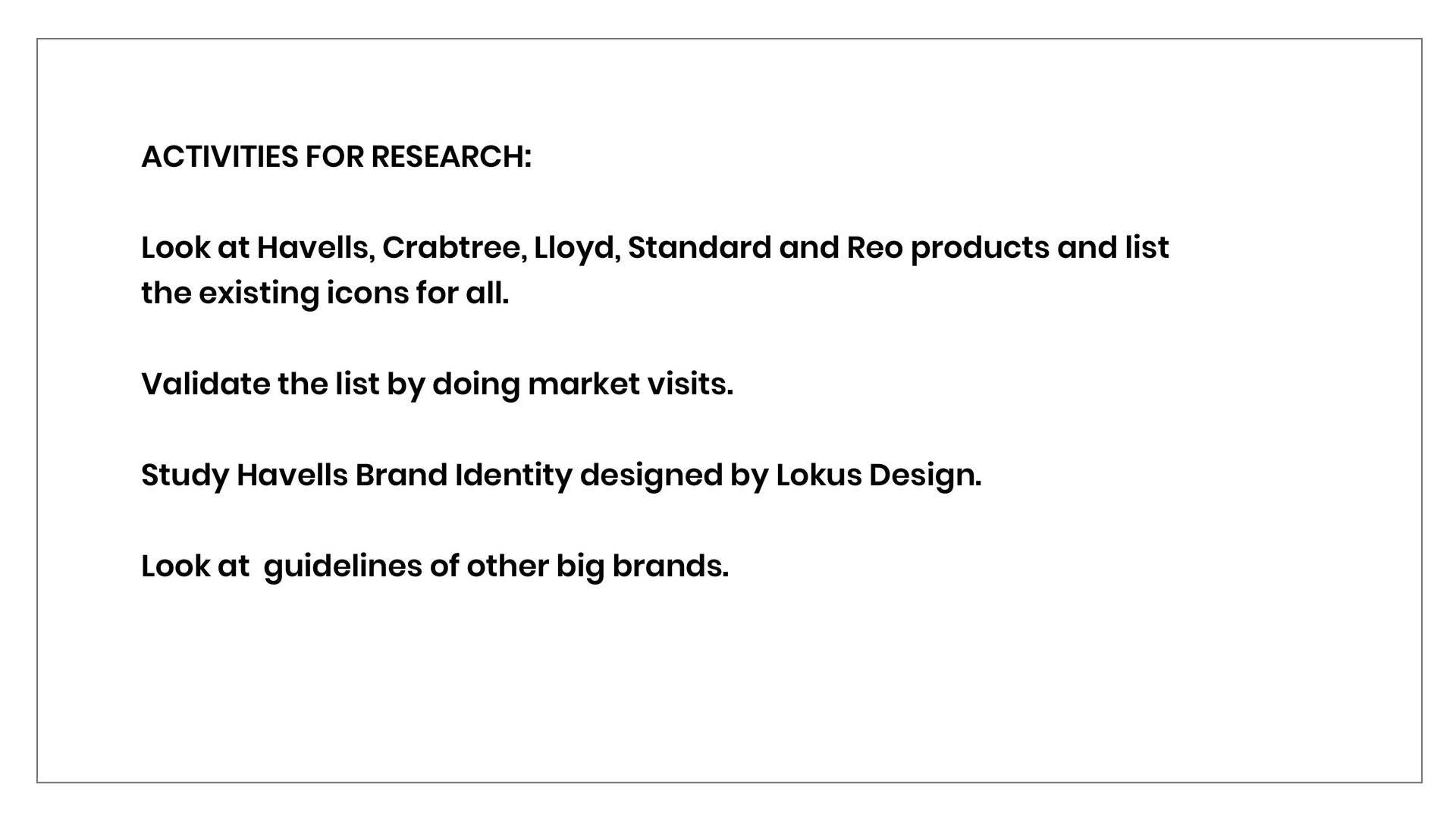
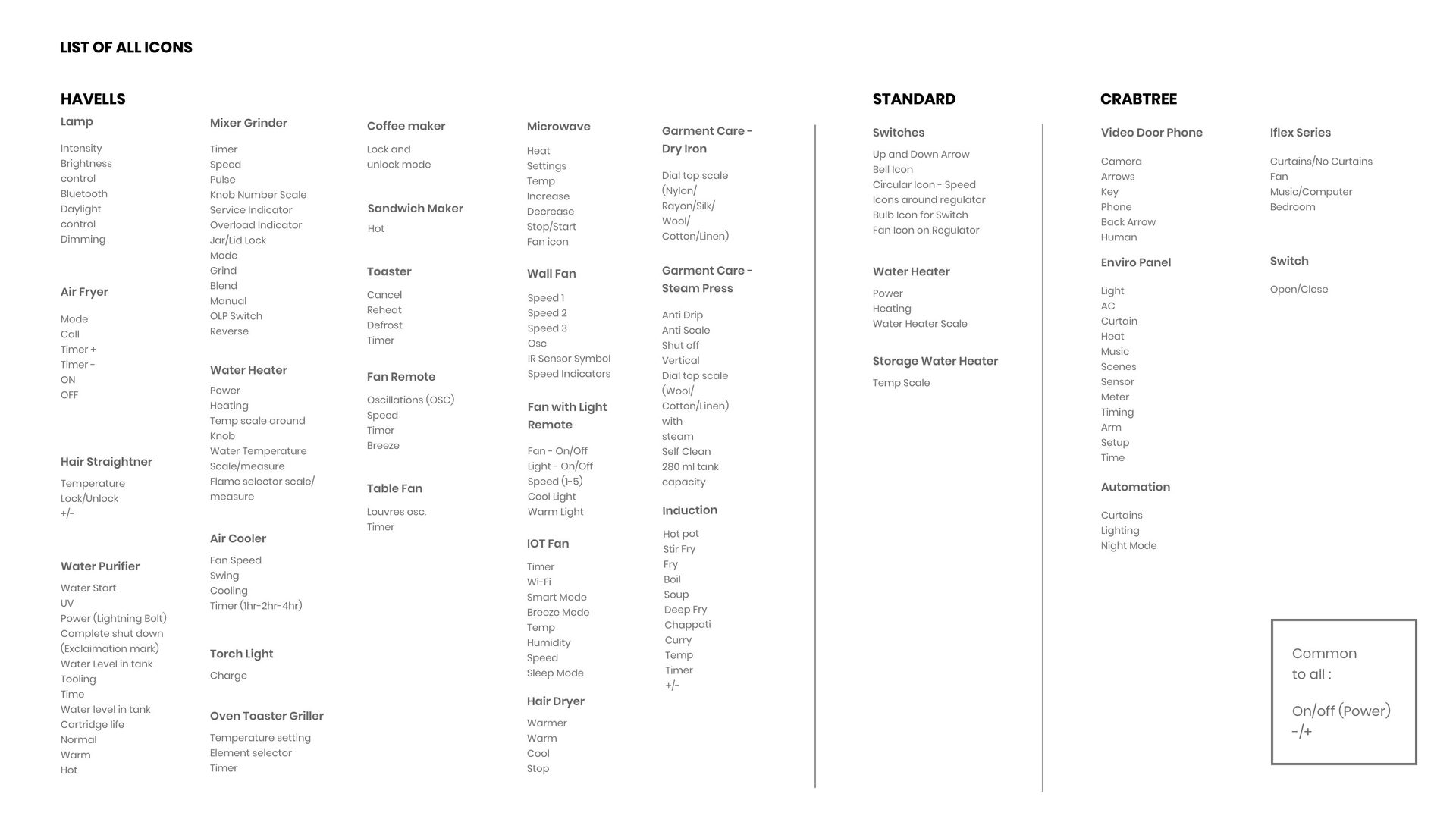
A comprehensive audit of all existing icons across Havells, Crabtree, Lloyd, Standard, and Reo — catalogued by product type and context. Followed by a study of Walmart and Electrolux brand guidelines for learning and inspiration.
✦ The Work — Icon Types & Styles
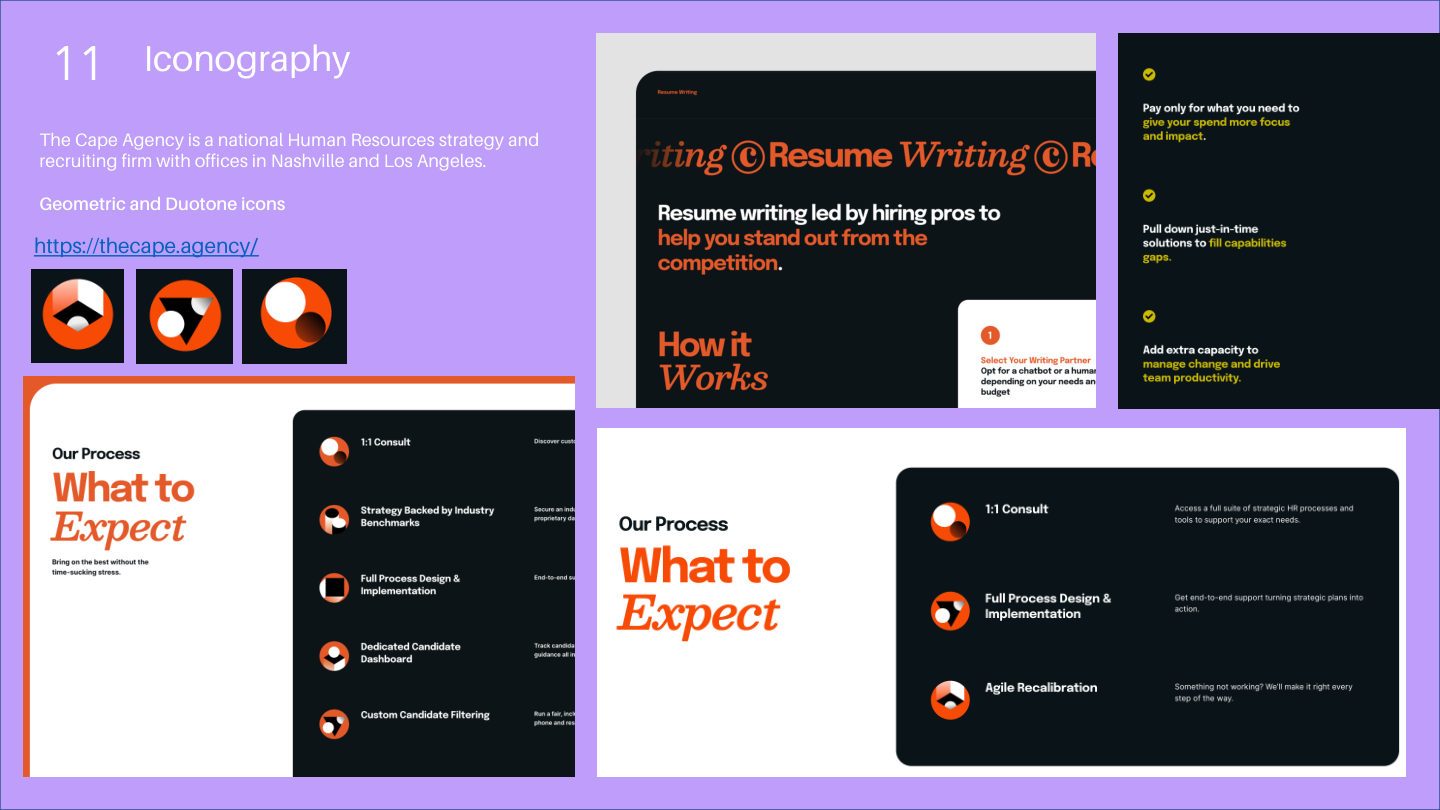
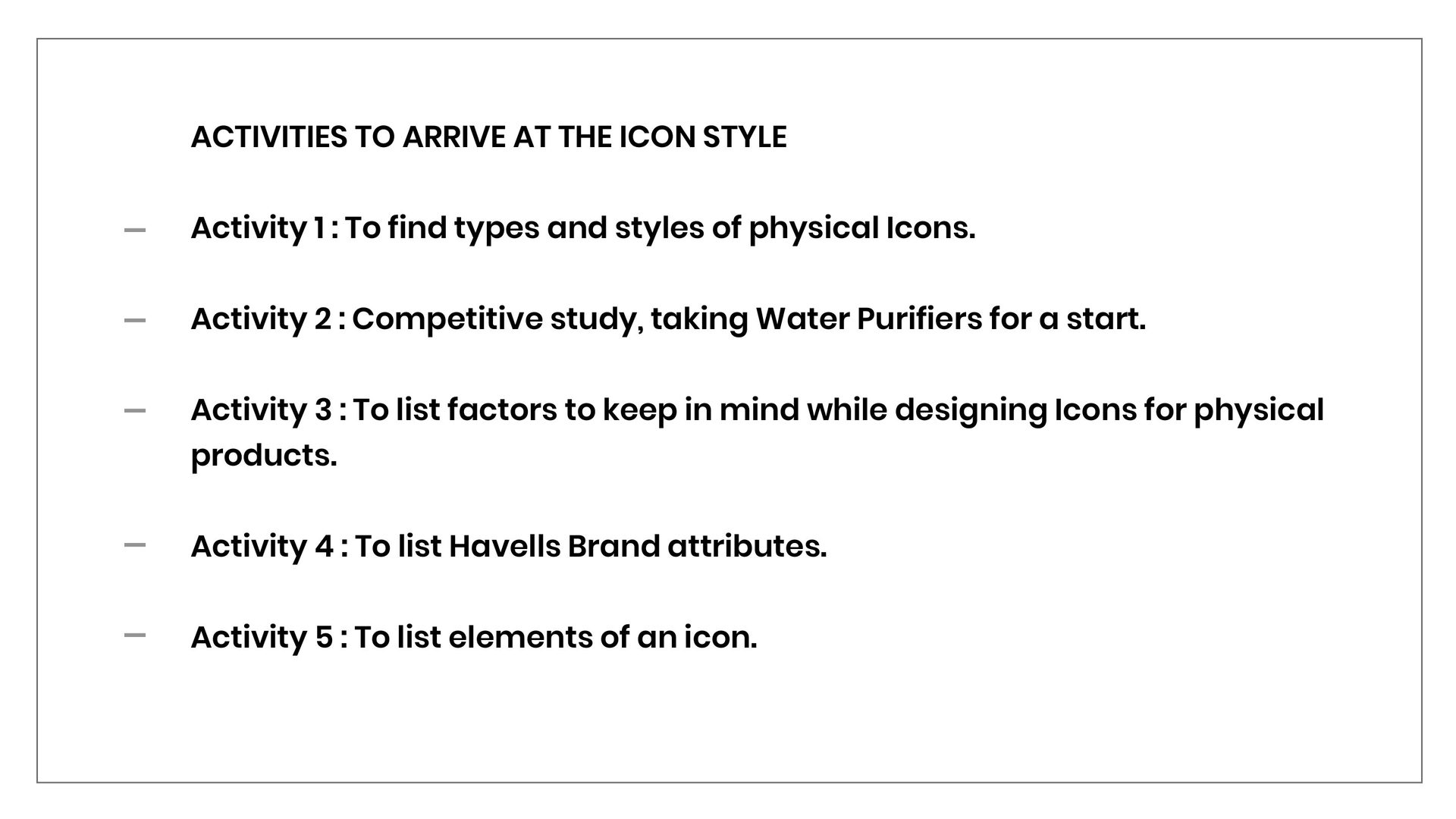
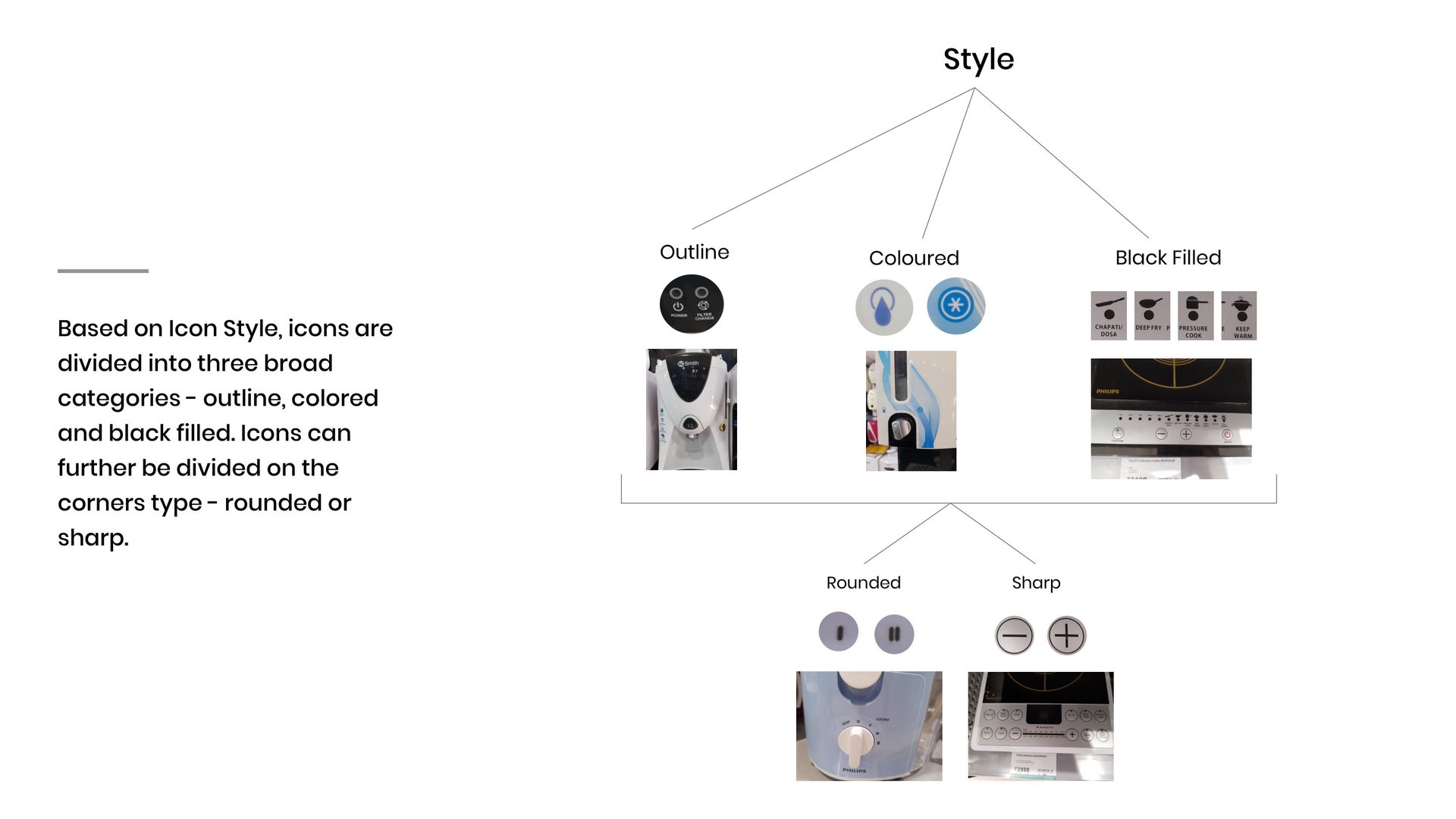
Classifying icons by function (function, resemblance, arbitrary) and style (coloured, outline, filled) — with rounded vs. sharp corner variations. The foundation for making a principled style decision.
✦ The Work — Competitor Study
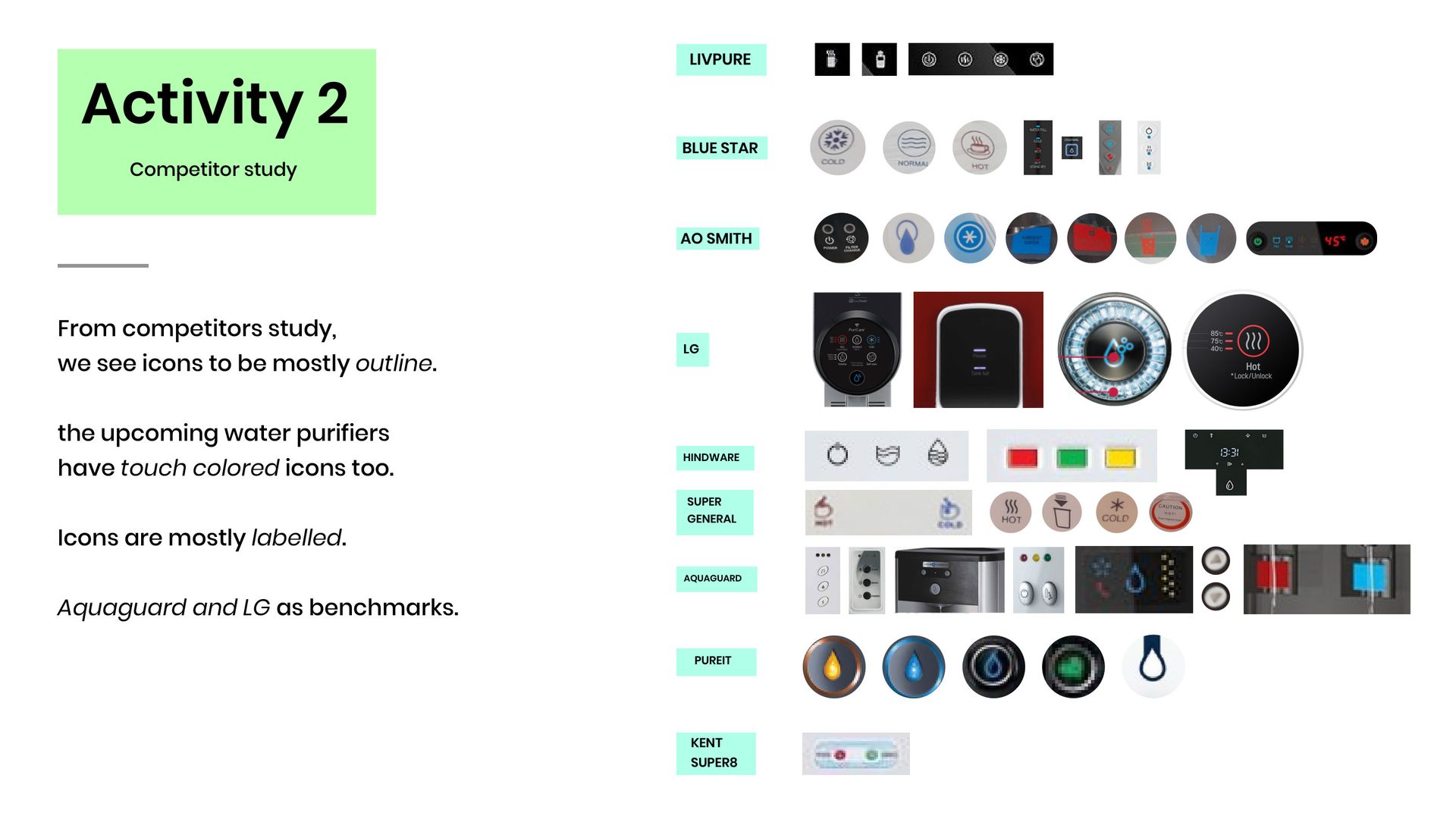
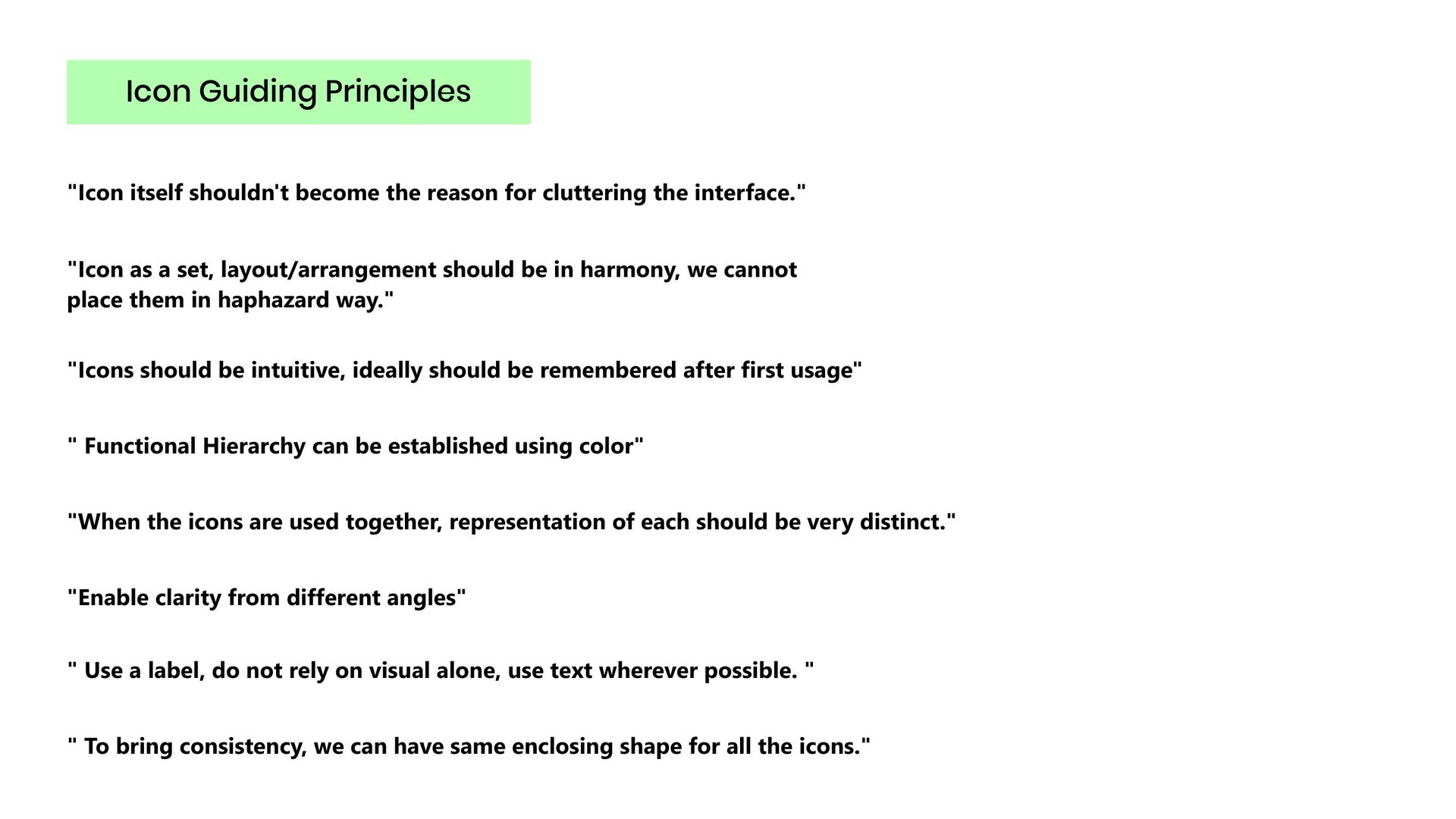
Benchmarking Livpure, Blue Star, AO Smith, LG, Aquaguard, Hindware, Pureit, and Kent — revealing a clear market direction toward outline icons, with coloured icons emerging in newer products. Followed by six icon design principles grounded in the Havells context.
✦ 04 — Outcome: Brand Attributes, Icon Elements & Anatomy
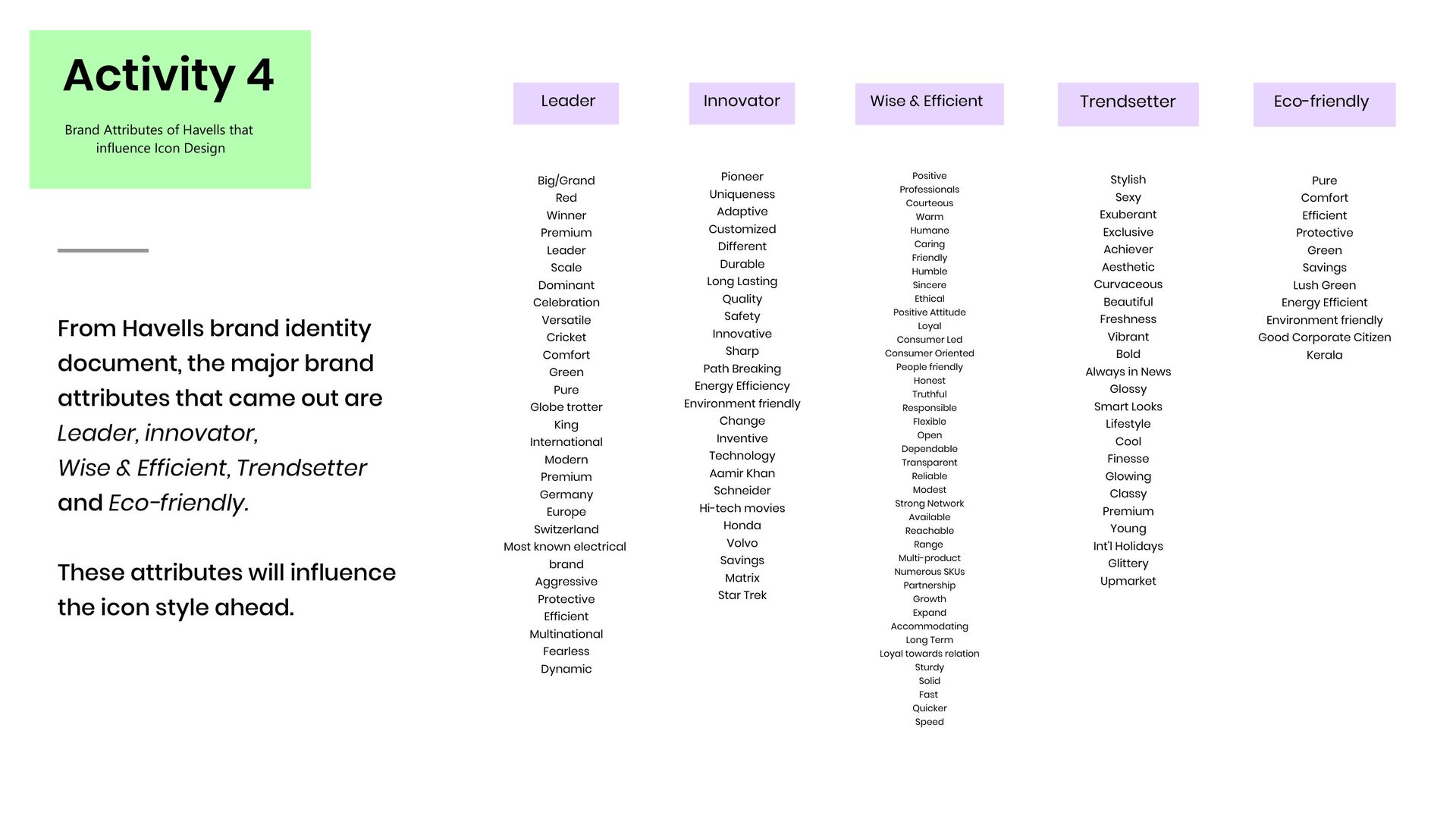
Translating Havells brand attributes — premium, modern, international, dominant — into icon design decisions. Defining the six building blocks of every icon: stroke, shape, form, space, colour, and value. Then establishing the icon anatomy using the water purifier cartridge life icon as the defining example.
Product Illustration · Motion Design · Havells / Crabtree
Productillustratie · Motion design · Havells / Crabtree
A complete illustration and animation system for four Crabtree and Havells smart home products — the 4-channel switch, curtain controller, Adonia smart geyser, and AQI monitor — designed to make every device feel native to the same app.
Een compleet illustratie- en animatiesysteem voor vier Crabtree en Havells smart home producten — de 4-kanaals schakelaar, gordijnregelaar, Adonia slimme geiser en AQI-monitor — ontworpen om elk apparaat aan te laten voelen als onderdeel van dezelfde app.
✦ Final Outcome
Designed product illustrations and animation sequences for the 4-channel switch, curtain controller, Adonia smart geyser, and AQI monitor — building a consistent visual language that makes every device feel native to the same app.
4-Channel Switch
Product illustration + SVG connectivity icon + 3 animations — switch interaction, fan control, and app onboarding.
Curtain Controller
Illustrated curtain states (closed → open) with a live position slider — making a physical action feel direct in the app.
Adonia Smart Geyser
Product illustration + onboarding animation in 3 iterated versions — proximity pairing with temperature calibration.
AQI Monitor
App banner illustration for the AQI monitor device — product visual placed in a room context within the Havells app header.
Full-time Visual Designer · Havells India · Crabtree Smart Home
✦ The Work
Three Crabtree products. Three very different physical interactions. All needing to feel consistent, tactile, and intelligible within the same app — without relying on text to explain them.
4-channel switch: representing a multi-load panel clearly — four channels, one illustration, one icon for connectivity state.
Curtain controller: making position feel continuous and physical — the illustration moves with the slider.
Adonia geyser: solving onboarding anxiety. Proximity pairing is a step users abandon, so the animation needed to feel calm, sequential, confidence-building.
All three share the same illustration style — greyscale product renders, circular framing, minimal shadows — so they read as a family inside the Crabtree app.
Deliverables
Design Decisions
✦ 01 — 4-Channel Switch
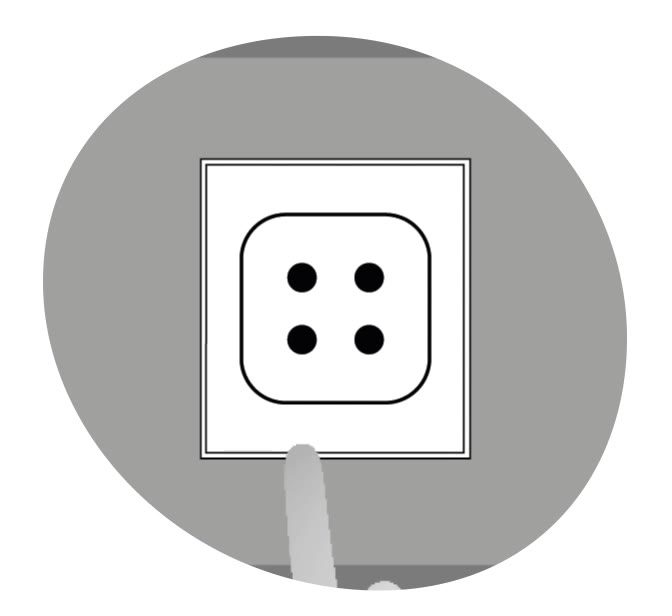
Four channels, one panel. The illustration had to show which channel is which at a glance — and the SVG connectivity icon had to abstract the four-node structure into a symbol recognisable at 24px.
Product Illustration
Connectivity Icon — SVG
Four-node dashed-circle — represents 4-channel connectivity. Used in pairing UI and device control screen.
Animations
Switch Interaction
Four-button press interaction — shows individual channel selection and the switch face responding.
Device Control — Fan
Live state feedback: the switch controlling a connected fan within the Crabtree device screen.
App Onboarding Flow
In-app setup sequence — long press, LED glow, reset complete. Designed to feel immediate and clear.
✦ 02 — Curtain Controller
A curtain position is continuous — not binary. The illustration had to reflect every state between fully closed and fully open, with the curtain moving visually in sync with the position slider.
Fully Closed
Curtain illustration drawn across the full window — warm amber fabric, opaque. Position slider at 0%.
Partially Open
Curtain pulled to one side, window partially visible. Sky and daylight become visible — communicating the open state clearly.
Fully Open
Curtains drawn fully to the sides — full window visible. The illustration reinforces the ON state beyond just the toggle.
App Context
The Crabtree app shows the curtain illustration as the central device representation on the control screen, with Control and Automate tabs for manual control and scheduled automation. The ON/OFF toggle and heart (favourites) sit above the illustration. The position slider sits below it.
✦ 03 — Adonia Smart Geyser
The Adonia onboarding sequence uses a 5-second proximity countdown with a temperature calibration step. Three animation versions were produced — the original and two iterations refining the interaction affordance cues.
Original Animation
The first version — geyser product illustration, 5-second countdown, +/– temperature adjustment.
Iteration 1 — App Context
Full app context added. Red highlight rings on +/– buttons emphasise the interaction affordance. "We Are Setting Up Your Smart Geyser."
Iteration 2 — Refined
Updated highlight treatment, cleaner countdown timing, and refined visual hierarchy on the control buttons.
✦ 04 — AQI Monitor
Banner illustration for the Havells AQI monitor — a product visual placed in a room context within the app header, part of the broader Havells smart home illustration language.
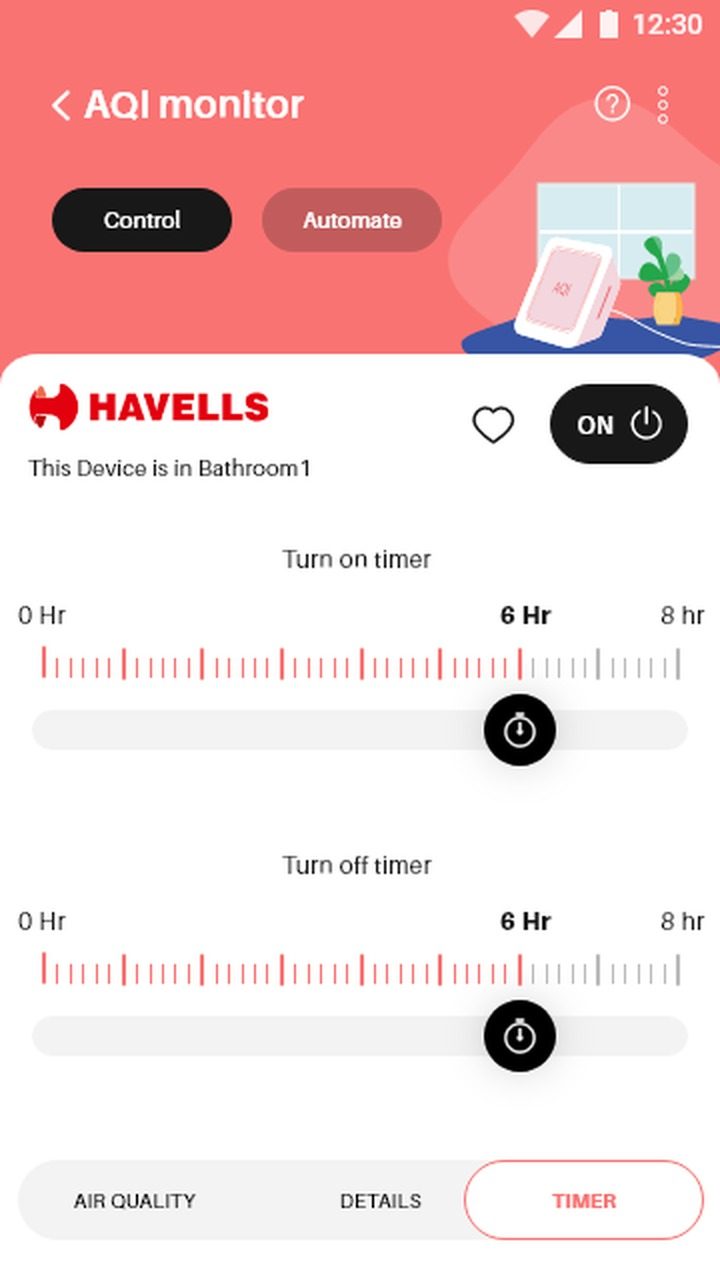
Screen Details
Banner Illustration
The coral header features a product illustration of the AQI monitor — placed in a domestic room setting with a potted plant, making the device feel approachable and contextual within the app.
Illustration Language
Consistent with the Crabtree and Havells product illustration style — isometric-leaning device rendered in warm tones, placed against a lifestyle background rather than a plain colour field.
Real-World Impact
An independent reviewer tested the Crabtree iSense system in a live studio setup — replacing existing switches with zero rewiring and documenting the full experience. Here's what the product delivered.
The core claim — verified
No breakage, no new wiring, no contractor chaos. The entire studio switchboard was replaced in a matter of minutes — and the transformation was immediately visible.
0
minutes of rewiring required
4kVA
inbuilt surge protection for Indian power conditions
~₹50,000
to fully automate a 2BHK home end-to-end
🔲
The switchboard itself
Capacitive, backlit, glass-faced modules that look premium and feel immediate. Always works — even if WiFi is down. Available in white and graphite grey.
📱
Havells Top app
Available on iOS and Android. Create scenes and automations — lights and fans configured for guests, for work, for night. The reviewer's preferred method for full control.
🎙
Remote + Voice
Physical remote controls lights and fans. Voice control works through supported apps and devices, set up directly from the Havells Top app — "lights on" and it's done.
2 Fan controls
Speed regulation via app or switch
4 On/off switches
For standard lights and appliances
4 Dimmers
Full light dimming for ambience control
2 Scenes
One-tap preset configurations
One thing to plan for
The receiver must stay plugged in and connected to WiFi at all times for automation to function. Physical switches always work — but smart features pause if power or internet drops. For multi-storey homes, two receivers are recommended to keep everything reliably connected.
UX Research · Product Design · Digital Sustainability
UX-onderzoek · Productontwerp · Digitale duurzaamheid
Digital doesn't mean invisible. Digital leaves a footprint too — a tool that helps design agencies measure and improve their impact, one project at a time.
Digitaal betekent niet onzichtbaar. Digitaal laat ook een footprint achter — een tool die designbureaus helpt hun impact te meten en verbeteren, project voor project.
Role
UX Researcher · Workshop Facilitator · Designer
Partner
Faraday Digital Agency · Amsterdam
Team
4-person multidisciplinary team
Stakeholders
13–20 across agency, academia & industry
Duration
8 weeks · Mar – Apr 2025
00 — Falling in Love with the Problem
I had never thought of a website as having weight. Digital feels intangible — no packaging, no exhaust fumes, no landfill.
Then I found the data: a single website visit generates roughly 1.76 grams of CO₂, and the internet as a whole produces as much carbon as the aviation industry. I felt unsettled — I'd been building invisible polluters, and had no idea.
The problem isn't denial — designers and agencies generally care about doing the right thing. The problem is invisibility: you cannot improve what you cannot measure.
When our team at HvA's Beyond Human Design Playgrounds asked Faraday Digital Agency how they assess sustainability, the answer was almost universal: we don't. Not for lack of will — for lack of an accessible standard, a workable tool, a shared language.
That gap became the problem I fell in love with. Not "how do we make designers feel guilty" — that's the wrong lever entirely.
But: how do we make the invisible visible in a way that fits how agencies already work — something a team can act on before decisions are made, when the cost of changing direction is still low?
Eight weeks in, I came to understand that sustainability benchmarking for design agencies isn't just an environmental project. It's a product design problem at its core — a challenge of relevance, adoption, and workflow integration. The tool needed to be as frictionless as a good design brief template. That's what we set out to build.
You cannot improve what you cannot measure. The problem wasn't apathy — it was the total absence of tools that made measurement possible.
1.76g
CO₂ per average website pageview (WebsiteCarbon, 2023)
80%
of a digital product's environmental impact is shaped by design decisions (Flying Bisons, 2024)
0
accessible benchmarking tools for digital design agencies at project level — before we built this
0A — Stakeholder Map
Digital sustainability doesn't live in one person's responsibility — it's a chain that runs from hosting infrastructure to the client brief to the end user's device. Mapping who holds power in that chain helped us understand where a benchmarking tool could create the most leverage.
Direct Users of the Benchmark Tool
Creative Director / Design Lead
Owns project quality standards
UX/UI Designer
Makes day-to-day decisions that compound
Frontend Developer
Implements images, scripts, rendering patterns
Project Manager
Controls timelines and scope trade-offs
Clients & Commissioners
Client Organisation
Sets project briefs and ESG ambitions
Marketing Lead
Drives content weight and asset decisions
Structural Enablers & Validators
Environmental Researcher
Provides scientific grounding for metrics
Policy / Regulatory Bodies
Sets future compliance requirements
HvA / Academic Mentors
Guides the research methodology
Faraday Digital Agency
Validates real-world feasibility
0B — User Personas

Niels
Creative Director
"Sustainability needs to fit kickoff — not become a second project."
Needs actionable scores under 30 min. Frustrated by vague guidelines with no way to track progress.

Joss
Junior UX Designer
"I care about climate but don't know what my design decisions actually cost."
Needs concrete, jargon-free guidance. Frustrated by no feedback loop — no way to know if she improved.

Marta
Marketing Director (Client)
"Our board wants ESG credentials. I don't know what our agency is doing about it."
Needs a plain-language score for reports. Frustrated by agencies that can't quantify their sustainability claims.
Digital products feel weightless — no packaging, no physical waste. But they're not. Every click, render, and API call consumes energy. Every design decision shapes that footprint. Yet most design agencies have no way to measure it.
Developed as part of the MDD Beyond Human Design Playgrounds programme at Amsterdam University of Applied Sciences, our design challenge was clear: How can we help digital design agencies understand and improve their digital sustainability impact on a project level — through a benchmarking tool?
We partnered with Faraday Digital Agency, guided by mentor Niels de Keizer — a 15-year veteran of building digital products and experiences who understood both the commercial and ethical dimensions of the problem.
Designer's Responsibility
"Design shapes 80% of a digital product's carbon footprint." — Flying Bisons, 2024. It's our responsibility as designers to address this.
The Ethical Question
"Does what we create justify what we destroy?" — Fry, 2011. Agencies influence clients and users to adopt energy-efficient or wasteful digital habits.
Business Case
"Sustainable design = cost-efficiency + profitability." — Komodo Digital, 2024. Sustainability isn't just ethics — it's also reduced technical debt and regulatory readiness.
Decision 01
In Week 3, Faraday challenged our initial concept: "Company values are always set — who is this actually for?" That feedback forced a sharper scope. Instead of asking agencies to define their own sustainability values from scratch, we gave them a framework to assess against — predefined, grounded in research, and usable in under 30 minutes.
Trigger: Agency workshop feedback
Decision 02
A broad audit covering everything would be abandoned in a project kickoff. So we distilled the research to 5 dimensions that together account for 80% of a digital product's environmental impact:
Clean energy, stewardship, avoiding dark patterns, product lifecycle, and operational efficiency — narrow enough to be actionable, broad enough to be meaningful.
Trigger: Research synthesis + adoption barrier
Decision 03
A static checklist would be filed and forgotten. So we built the benchmark as a live tool instead — a Framer one-pager with a scoring interface, deployed on Vercel.
Agencies score a project, see their radar chart instantly, and get specific recommendations. The format mattered as much as the content: friction-free, shareable, built to fit into a project kickoff.
Trigger: Adoption + usability goal
The Digital Sustainability Benchmarking Tool helps design agencies with 10+ team members assess their sustainability performance across five foundational values — at the start of each new project.
🌱 Clean
Energy-efficient hosting, minimal data usage, lightweight code and assets.
🤝 Stewardship Principles
Diversity, equity, accessibility, and responsible community impact.
🛡 Avoiding Manipulative Design
No dark patterns, transparent data practices, honest interfaces.
⏱ Product Lifecycle
Planning for longevity — updates, maintenance, and eventual retirement.
📊 Operational Digital Efficiency
Reducing unnecessary processing, storage, and digital waste in workflows.
The tool asks targeted questions, generates a sustainability score via a radar/spider chart, and surfaces actionable recommendations. Built as a Framer one-pager website and a v0 Vercel interactive app.
A HvA BHD Playgrounds Production
Digital leaves a footprint too. Out of sight, not impact-free.
This tool helps you build a more sustainable digital world.
Practical, smart, and just a bit better with every project.
Live Benchmark Output
Results generated using the live tool — scored against Amsterdam design agency benchmarks.
Category Scores
Digital Sustainability Benchmark
Performing at an average level in digital sustainability compared to other design agencies in Amsterdam.
Week 1–2 · Debrief & Expert Interview
I led our team's initial engagement with Faraday Digital — including introductions, formal communication, and our first stakeholder meeting. Research phase: competitor analysis, stakeholder mapping, initial ideation. We studied Faraday's spider-web matrix framework for evaluating projects.
Week 3 · Workshop 1.0 — Design Agency Simulation
I volunteered to facilitate our "Design Agency Simulation" workshop at MDD studios, inviting participants from outside the university to simulate real agency decision-making.
Participants took on role cards — Designer, CEO/Founder, Software Developer, Sales Lead — and worked through client challenge cards across healthcare, fintech, e-commerce, and education.
Week 4 · Expert Review & Pivot
Presented our Value Assessment concept to Faraday. Key feedback: "Who is the target audience?" and "Company values are always set." We pivoted from a value-mapping tool to a sustainability benchmarking tool with predefined assessment criteria — a sharper, more actionable scope.
Week 5–6 · Workshop 2.0 & Digital Tool Design
Ran a second iteration with 9 role cards and 6 challenge cards — expanded based on Faraday's actual team structure. Simultaneously, we translated the physical workshop into a digital interface: sketching wireframes through 3 iterations from onboarding → value input → recommendations.
Week 7–8 · Usability Testing & Final Delivery
Validated through usability tests and a live demo with Faraday Digital. Final deliverable: a complete workshop session run with Faraday + the benchmarking tool live on the web.
The benchmarking tool wasn't designed from intuition alone. It was built on a foundation of established frameworks, validated through real agency feedback.
W3C Web Sustainability Guidelines
Core technical and design standards for sustainable web development.
Sustainable Web Manifesto
Clean, efficient, open, honest, regenerative, and resilient principles.
Wholegrain Digital
Comprehensive sustainable web design methodologies (Tom Greenwood, 2024).
UN Sustainable Development Goals
SDGs 9, 12, 13, and 17 — industry innovation, responsible production, climate action, partnerships.
01
Predefined values, not open mapping
Workshop 1.0 revealed that participants want predefined sustainability values to guide them — not blank-slate value mapping. The benchmark needed to lead, not just listen.
02
Role clarity is critical
The purpose of role cards was initially unclear. We redesigned them with explicit behavioural guidance and perspective-specific tips — making the simulation more realistic and productive.
03
Whose values? Agency or client?
A key ambiguity emerged: should sustainability values be assessed from the client's perspective or the agency's? We resolved this by making the tool agency-first — the agency benchmarks its own project practices.
This project pushed me into genuinely unfamiliar territory. I wasn't just designing interfaces — I was facilitating workshops, leading stakeholder meetings, and helping a team of four find consensus under time pressure.
The "Design Agency Simulation" workshop was the moment I'm proudest of. Volunteering to facilitate, recruiting participants from outside the university, and running a session that generated real, actionable insights — that took initiative I had to build deliberately.
I also learned what it means to pivot with purpose. When Faraday challenged our concept in week four, we didn't just adjust — we used the feedback to sharpen our scope and build something more genuinely useful. That shift from "value assessment" to "sustainability benchmark" made the tool better in every way.
"Digital doesn't mean invisible. Out of sight — but not impact-free."
Read my article on Medium ↗More Case Studies
Colour System · UI Design
TripGoGo
→
Game Design · UX Research · Media Literacy
Synthetive
→
Motion Design · Storyboard · Brand Film
Ramco ERP
→
Product Design · HealthTech
Havells WellTech 🔒
→
Political Design · Media Literacy
Synthetive: Election Edition
→
✦ Final Outcome
Built and validated a scoring tool for digital design agencies — covering image weight, hosting choices, font loading, interaction efficiency, and render strategy. Validated with Faraday Digital Agency in Amsterdam. The framework was delivered as a usable assessment tool, not an abstract checklist.
Benchmarking Framework
Five-dimension assessment model covering the design decisions that account for 80% of a product's carbon footprint.
Agency Validation
Co-developed and stress-tested with Faraday Digital Agency — real briefs, real timelines, real constraints.
Academic Recognition
Produced at HvA Beyond Human Design Playgrounds — positioned as a contribution to emerging digital sustainability practice.
8 weeks · HvA Beyond Human Design Playgrounds · Faraday Digital Agency, Amsterdam
09 — Learnings
Presenting the tool to stakeholders, mentors, and students surfaced real tensions — not flaws in the tool, but in the space itself. These are the questions and conflicts we're still sitting with.
Core question from discussion
Is making a digital tool to help companies become more sustainable itself an ethical act?
Yes — if the tool drives real systemic change. The risk is tokenism: a company using the tool to say "we're sustainable" without changing any harmful practice. A score that becomes a checkbox rather than a catalyst.
If the tool is grounded in real values, invites reflection and iteration, and puts pressure on the system — not just the individual — it avoids tokenism and becomes a tool for actual change.
01 · Intent
Are we building this to drive real change — or to meet a compliance or marketing goal? Make the purpose public. Declare values up front in the tool's onboarding.
02 · Transparency
Is the scoring logic visible? Can teams understand how their score is calculated? Avoid black-box algorithms — explain the process, even if it's imperfect.
03 · Inclusivity
Are the benchmarks culturally biased or Western-centric? Include feedback from designers in underrepresented regions and people with different lived experiences.
04 · Data Ethics
What data does the tool collect? Can users opt out? Default to privacy-first — don't store more than you need.
05 · Power
Who controls the benchmarks? Who decides what "good" looks like? Co-design with the community — make the tool a living thing that evolves.
06 · Self-Consistency
Is the tool itself energy-efficient? Are we modelling the practices we preach — clean code, lightweight design, sustainable hosting? Practice what you benchmark.
Four challenges from stakeholders — and how we'd respond.
Sander — "The tool looks a bit AI-created"
The interface or copy felt generic — too polished or templated, missing human tone and storytelling cues.
→ Add human warmth through examples and emotional hooks. Visually personalise with illustrations. Be transparent where AI assisted — and humanise the collaboration.
Ander — "Why not build it in Figma with Variables?"
If it's a conceptual tool or survey, couldn't lower-tech prototyping suffice? Why invest in Vercel infrastructure?
→ Figma can show flow, but can't track answers, compare scores, or adapt content dynamically. We wanted this to feel like a real tool teams could use today — not a prototype for workshops. And the future plan is to expand it into a real-time assessment platform.
Irene — "Awareness: is that enough?"
If a team is just made "aware," what does that actually change? Awareness without agency is hollow.
→ The tool is a conversation starter, not just a scorecard. We'd reframe from "Are you aware of…" to "How do you currently approach…" — and add a "what can I do about it?" tip next to each question, plus a resources section per dimension.
General — "Beginning or end of project?"
When in the project lifecycle does the tool actually belong? Kickoff felt obvious, but retrospective use surfaced as equally valuable.
→ Two modes: 🟢 Kickoff mode ("use this to plan a more sustainable approach") and 📘 Retrospective mode ("reflect on decisions made and what to improve next time"). The same framework serves both if the framing shifts.
What we'd do next
Update the tool's language for warmth and clarity — shift from awareness to action framing
Add Kickoff vs Retrospective usage modes
Embed examples and stories inside each dimension to humanise the metrics
Create a lightweight Figma version to validate the flow concept before rebuilding
Include a feedback prompt inside the live tool: "Did this feel relevant to your project?"
Seek input from designers outside the Western European context to test benchmark inclusivity
Persona photos via Pexels — Moisés Sánchez, Oliver Dohrn, Speak Media Uganda.
Game Design · UX Research · Media Literacy
Game design · UX-onderzoek · Medialezen
What if a card game could teach media makers to co-create responsibly with AI? — Designing an award-winning boardgame at the intersection of media literacy and responsible technology.
Wat als een kaartspel mediamakers kon leren om verantwoord samen te creëren met AI? — Het ontwerpen van een bekroond bordspel op het snijvlak van medialezen en verantwoorde technologie.
✦ Final Outcome
Synthetive launched as a complete, playable game exploring synthetic identity, digital surveillance, and the boundary between authentic self and algorithmic persona. It won the Go HvA Game Changers Public Choice Award 2024 and was shown in multiple public venues.
Full Game Shipped
End-to-end game design, mechanics, narrative arc, and visual system — from concept to playable build.
Public Choice 2024
Won the Go HvA Game Changers Public Choice Award — selected by public vote across all graduating projects.
Shown in the Wild
Exhibited at IMPAKT Festival Utrecht, ZERO Medialab, and MozFest — reaching audiences beyond the academic context.
KABK Graduation Project · Go HvA Game Changers Public Choice Award 2024
00 — Falling in Love with the Problem
In 2023 I watched a documentary about AI-generated newsrooms and felt something I hadn't expected: not fascination, but dread — the dread of a media professional handed a tool they hadn't asked for, with no framework to use it responsibly.
I started paying attention to how colleagues and students in media talked about generative AI: mostly in avoidance or uncritical enthusiasm, rarely in anything resembling ethical literacy.
When NPO, VPRO Medialab, and Beeld & Geluid brought the brief — help media makers co-create with AI responsibly — I noticed the framing was already wrong. The usual response is a training module, a policy document, a slide deck.
But you don't build moral intuition by reading slides. You build it by making decisions under pressure — by feeling the weight of a choice between what's strategically smart and what's editorially right.
That's the problem I fell in love with: how do you teach someone to feel the tension before they face it in real life? Roleplay and simulation are ancient tools — but nobody had applied them with this rigour to the pressures of AI-assisted media making.
The card game format wasn't a gimmick, it was the solution: the physical deck forces presence, the scenario cards force choice, the challenge cards force justification.
The deeper I researched, the more I found Dutch media organisations living in a paradox — audiences increasingly sceptical of AI-generated content, while organisations felt pressure to use AI to cut costs.
Nobody was talking openly about the ethics. Synthetive needed to create a safe space for that conversation — playfully, seriously, and without judgment.
Moral intuition is not built by reading guidelines. It's built by making decisions under pressure — and Synthetive was designed to create that pressure in a room full of people who needed to have this conversation.
🏆
Go HvA Game Changers Public Choice Award 2024
3
partner organisations shaping the Dutch media landscape
1st
physical card game for ethical AI co-creation in Dutch media
0A — Stakeholder Map
The game needed to serve a wide ecology — from the junior journalist uncertain about AI to the broadcaster executive setting editorial policy. Mapping these relationships helped us write scenario cards that felt credible to every level of the room.
Players — Primary Experience
Broadcast Journalist
Makes editorial AI decisions daily
Content Producer
Faces AI tools in content workflows
Script Writer / Editor
Navigating AI-assisted narrative creation
Visual Journalist
Using generative image tools
Commissioning Partners
NPO (Dutch Public Broadcasting)
Sets national editorial standards
VPRO Medialab
Experimental media innovation arm
Beeld & Geluid
National archive — context for media history
Wider System
Media & Journalism Educators
Embed media literacy in curriculum
Regulatory & Policy Bodies
Developing AI-in-media guidelines
Audience & Citizens
Ultimate recipients of AI-shaped media
0B — User Personas
Every scenario card in Synthetive was tested against these three archetypes — not as abstractions, but as the voices I was trying to bring into the room. The game only works if it speaks to all three.

Roos
Broadcast Journalist, NPO
35 · Amsterdam
"I want to use AI to work faster — but I'm terrified of what my audience will think if they find out."
Needs
Frustrations
Motivation: Wants to remain a trusted journalist while adapting to the tools her industry is adopting.

Thomas
Head of Digital, VPRO
47 · Hilversum
"We need a policy. But policy documents don't change how people actually behave in the edit suite."
Needs
Frustrations
Motivation: Wants VPRO to lead rather than react — and to build a culture of responsibility that outlasts any single policy document.

Lena
Recent Graduate, Media Studies
23 · Rotterdam
"AI is just a tool, right? I don't understand why everyone's so stressed about it."
Needs
Frustrations
Motivation: Wants to use technology fearlessly and responsibly — and build an intuition for the difference.
The Dutch media landscape was grappling with generative AI — how to use it ethically, creatively, and without losing editorial integrity. Partners NPO, VPRO Medialab, and Beeld & Geluid commissioned a framework that would help media makers explore co-creation with AI in a hands-on, accessible way.
The challenge had two layers: develop a practical co-creation framework, and embed genuine media literacy and responsible AI use into the experience — making it something people would actually want to engage with, not just a training module.
02 — Key Decisions
Not everything in this project was obvious. These were the calls that had real consequences — for the outcome, the team, and whether the work would actually hold.
Decision 01
The usual response to 'build AI literacy' is a workshop deck. But moral intuition isn't built by reading slides — it's built by making decisions under pressure. The card game format is the pedagogy itself, not a vessel for it.
Impact: players left with a felt understanding, not a received framework.
Decision 02
Every scenario in the game reflects a documented real-world AI editorial decision made by a media organisation. The pressure players feel is borrowed from actual situations — which made the ethical weight authentic, not simulated.
Impact: post-play feedback showed players connecting game choices to their own professional contexts.
Decision 03
Showing at IMPAKT Festival, ZERO Medialab, and MozFest put the game in front of working media practitioners — not just students. Real audiences with real stakes stress-tested whether the concept held outside the academic context.
Impact: Public Choice Award 2024 — selected by public vote across all graduating projects.
The output was Synthetive — a physical card game featuring "WHAT IF…" scenario cards and "CHALLENGE:" response cards. Players take on the role of media makers navigating real-world AI dilemmas, debating creative and ethical choices together.
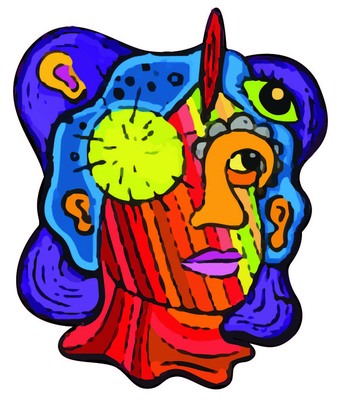
Synthetive's visual identity was designed to feel deliberately human and chaotic — a counterpoint to the clean sterility of generative AI. The psychedelic, layered face illustration became the project's signature mark, appearing on all game materials, social media, and launch communications.
Scenario prompts designed to spark debate about AI co-creation — from deepfakes to algorithmic bias to creative authorship.
Practical response prompts that push players to think through real production decisions and editorial responsibilities.
Custom-produced boxes distributed to industry partners including NPO Innovatie, VPRO MediaLab, and Beeld en Geluid.
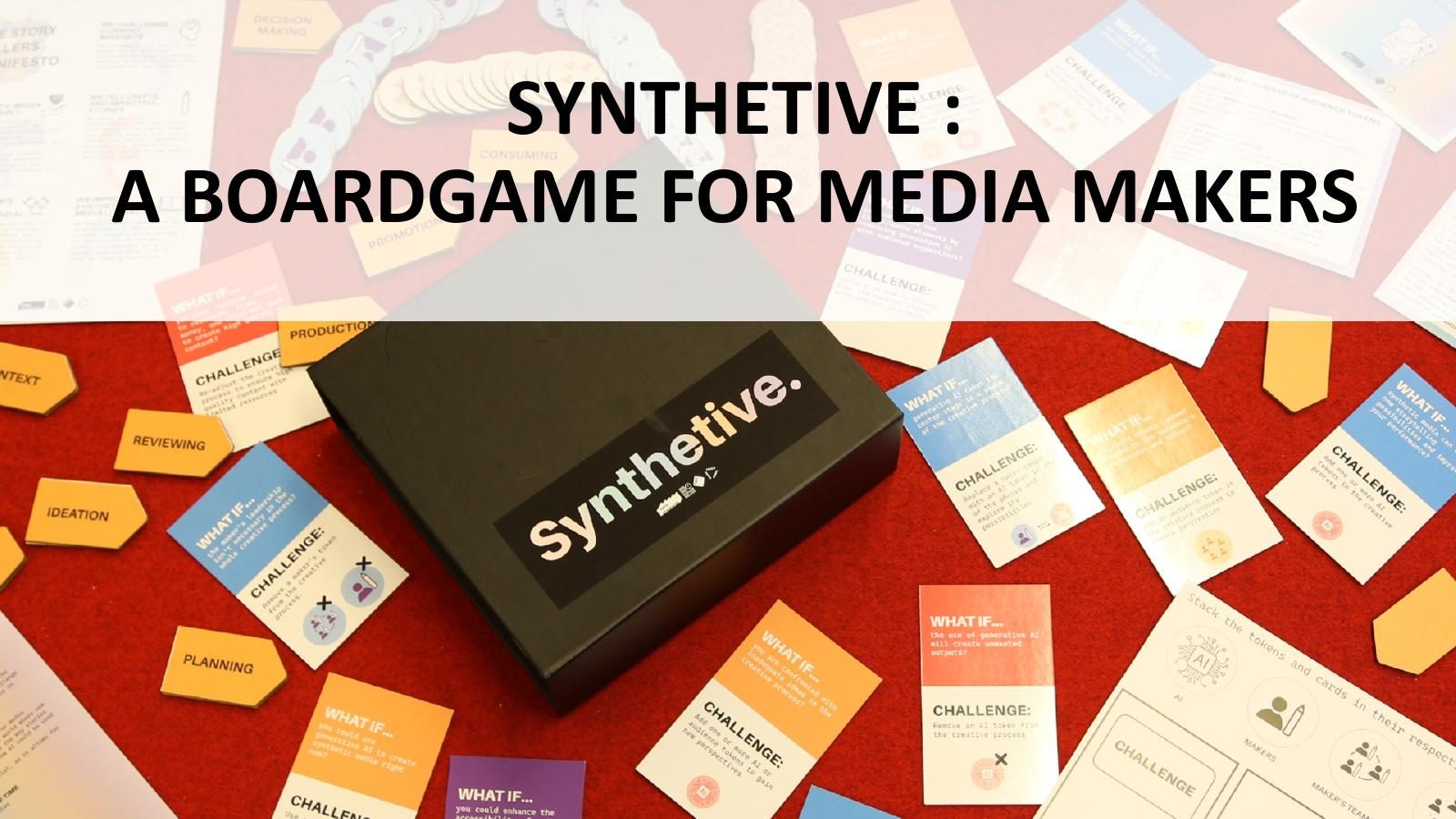
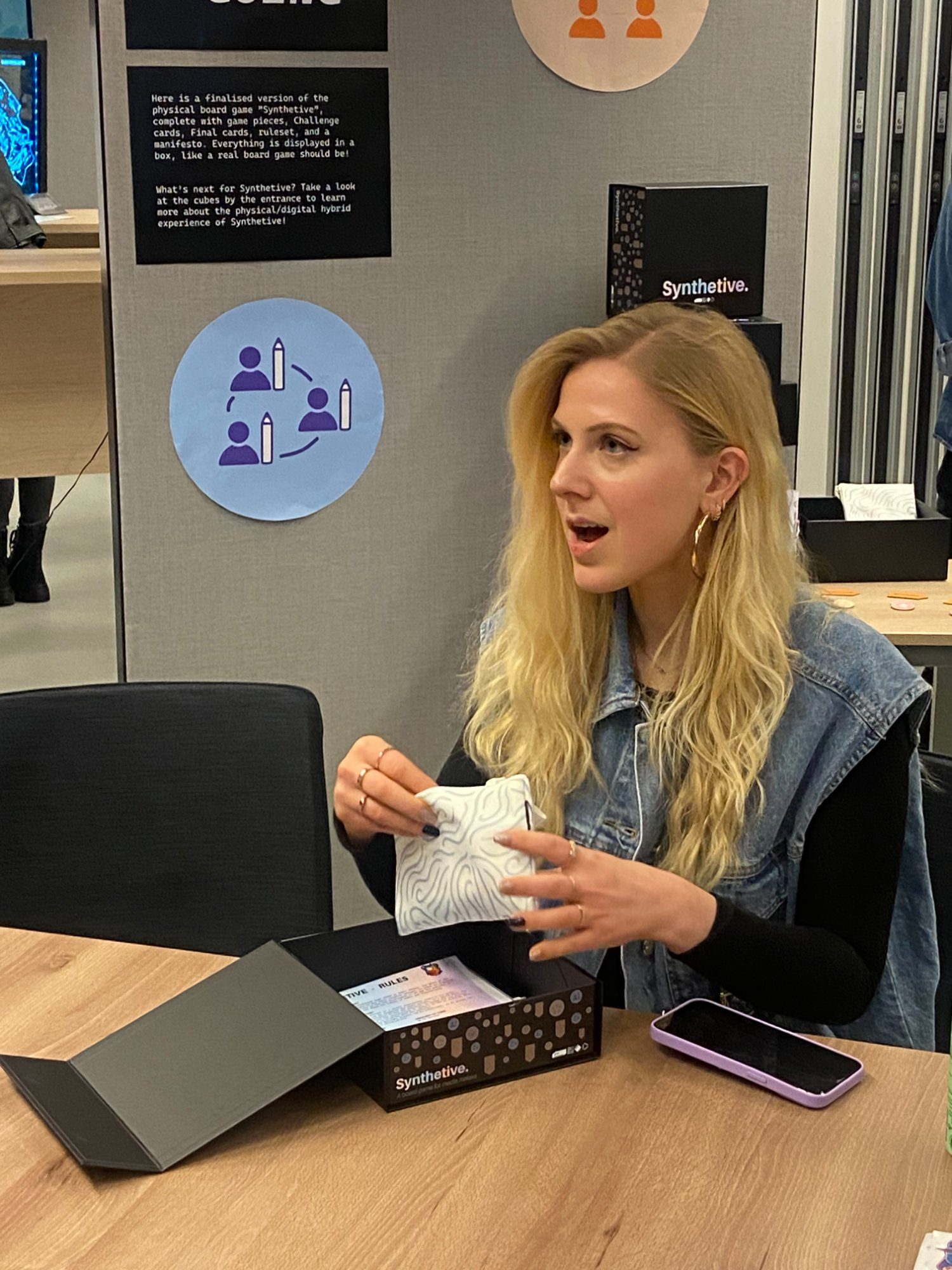
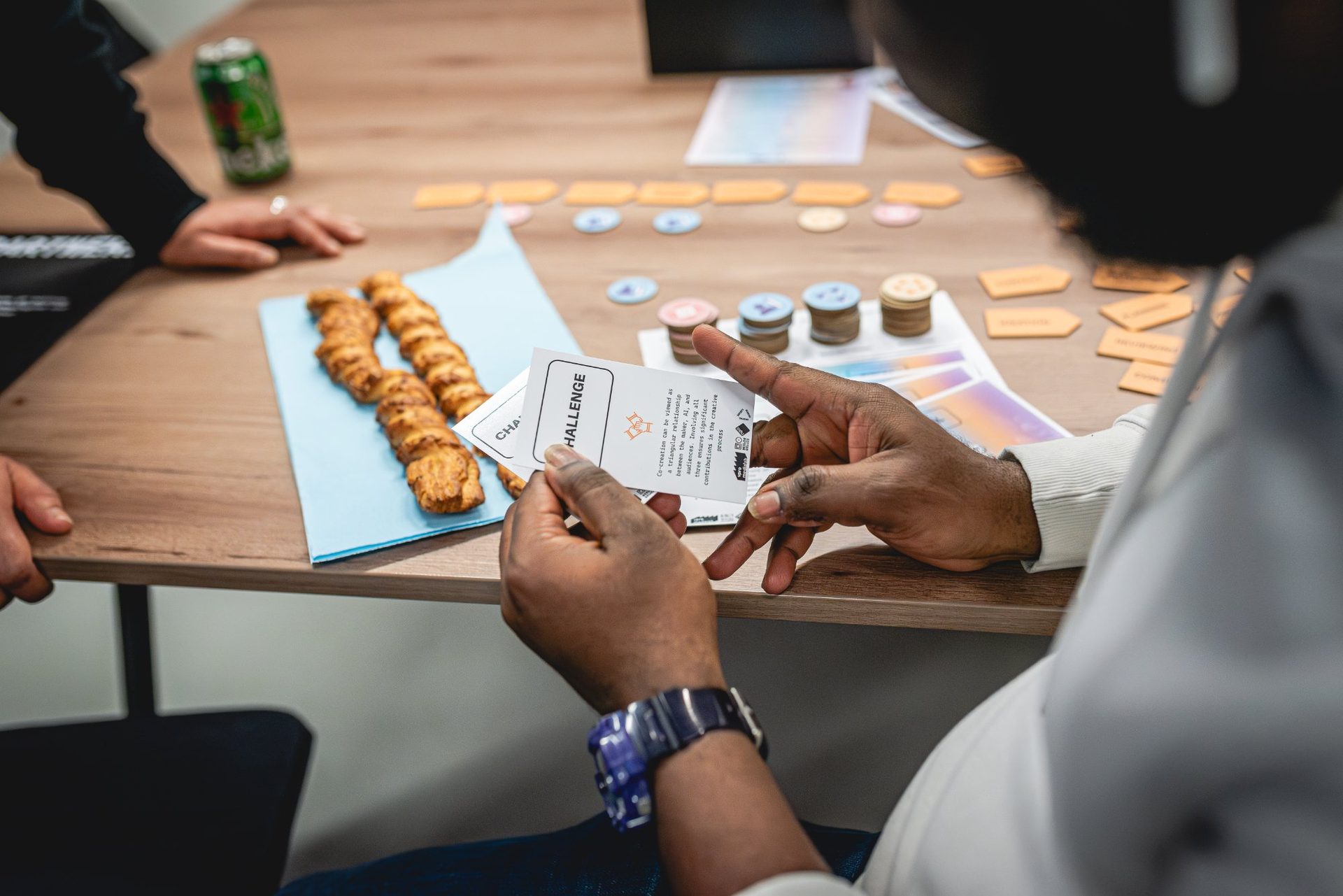
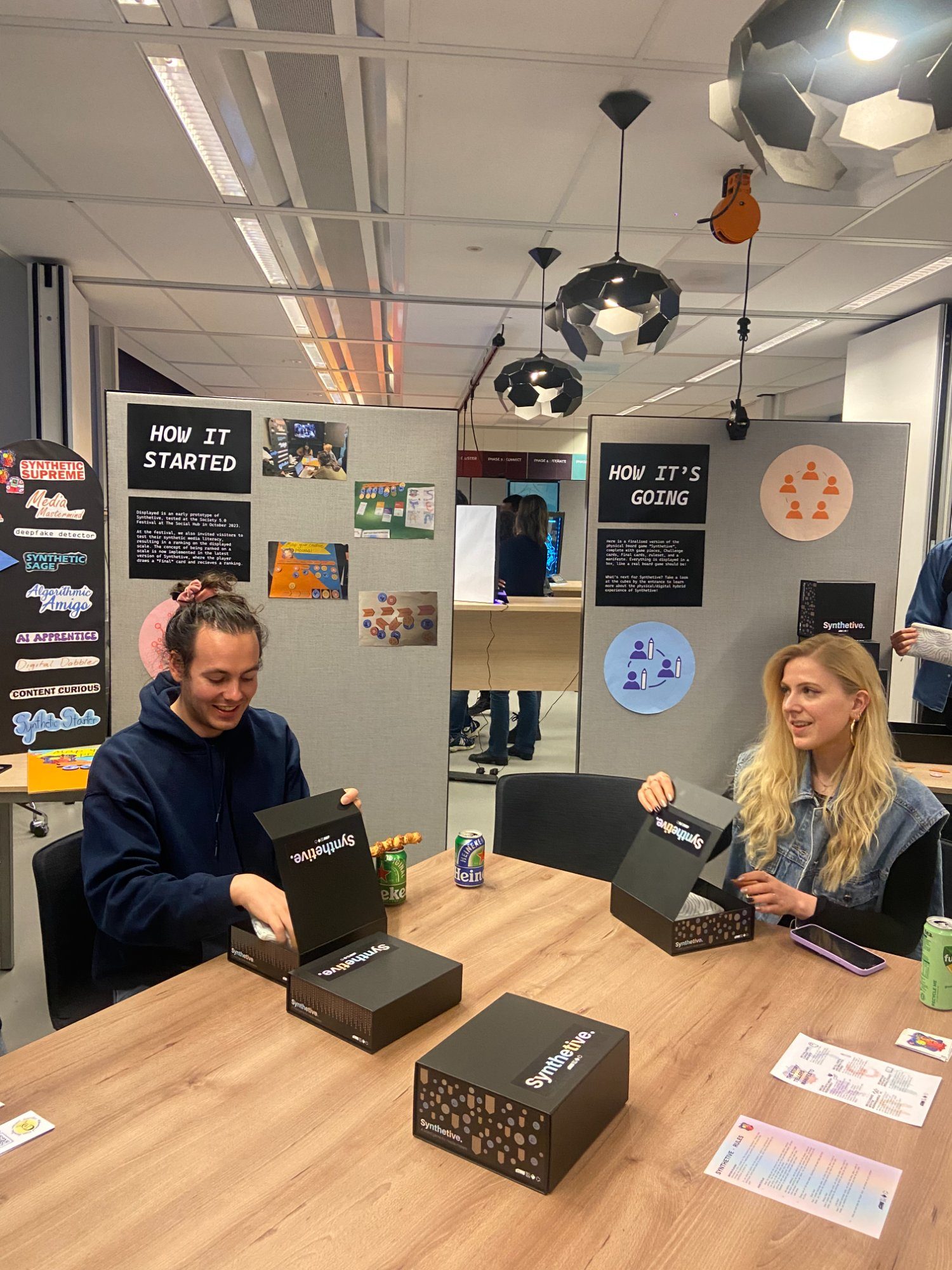
The project followed an intensive 5-sprint structure combining immersive field research with iterative game prototyping and real-world testing at public events and media industry conferences.
Stakeholder interviews · Empathy mapping · Persona development · How Might We framing
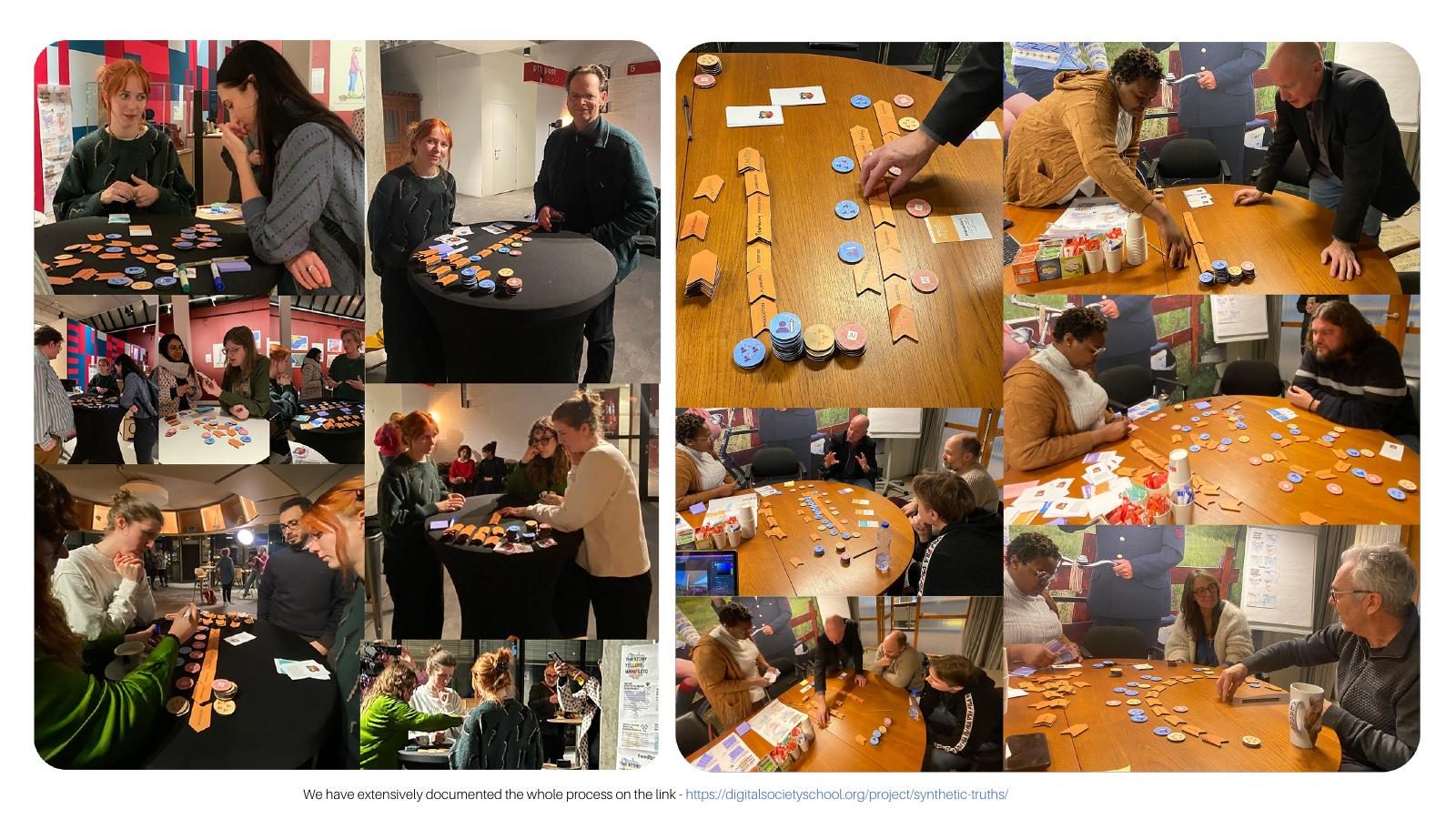
Society 5.0 Festival research booth · Board game + literacy quiz + survey + stickers + video
Prototype refinement based on 50+ participant sessions · Card wording & mechanic testing
Full visual identity · Game box design · Card typography · Social media campaign launch
Distribution to 10+ media stakeholders · Presentation at NPO Innovatie, VPRO & Beeld en Geluid
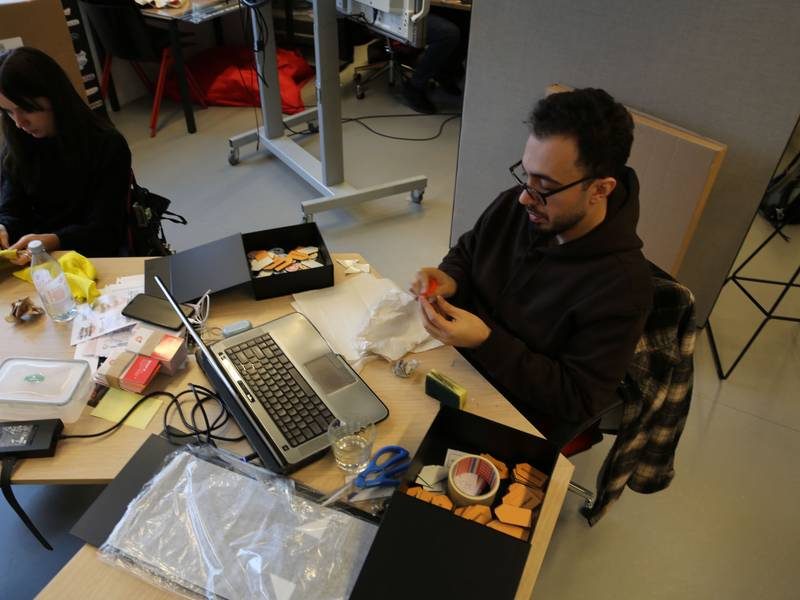
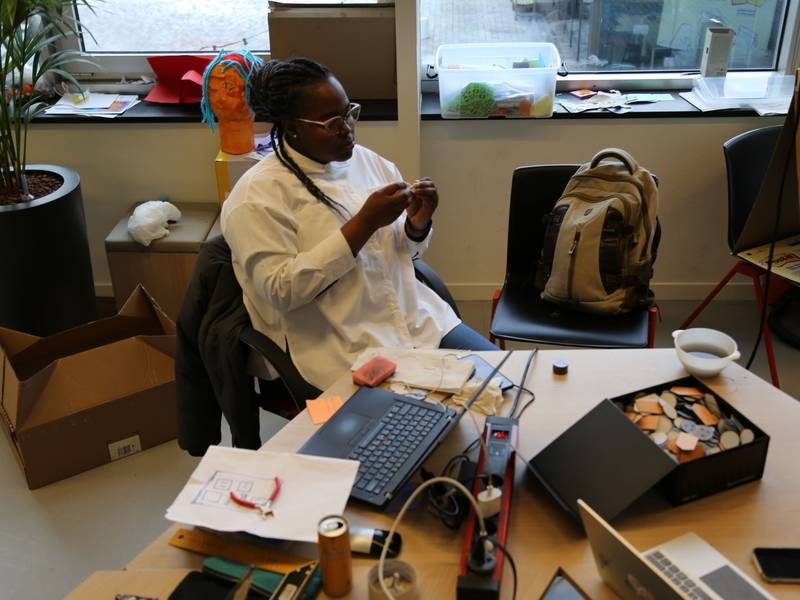
The game had to spark curiosity and creative confidence — not anxiety about AI. Every card prompt was designed to open possibility, not close it down.
The framework was built for media professionals who already know their craft. The design respected that expertise and gave them new tools to interrogate AI, not replace their judgment.
Media literacy doesn't have to be dry. The game's playfulness — bold colours, physical cards, competitive debate — made difficult conversations about AI feel engaging and memorable.
User interviews and field testing sessions conducted at public events and media industry festivals.
To NPO Innovatie, VPRO MediaLab, and Beeld en Geluid — now actively used in media literacy workshops.
Public Choice Award — voted best project by the Go HvA community at the annual showcase.
Presented to the Digital Affairs Committee (Jun. 2024) — audience included Barbara Kathmann (Chair) and Ger Baron (CTO, Municipality of Amsterdam).
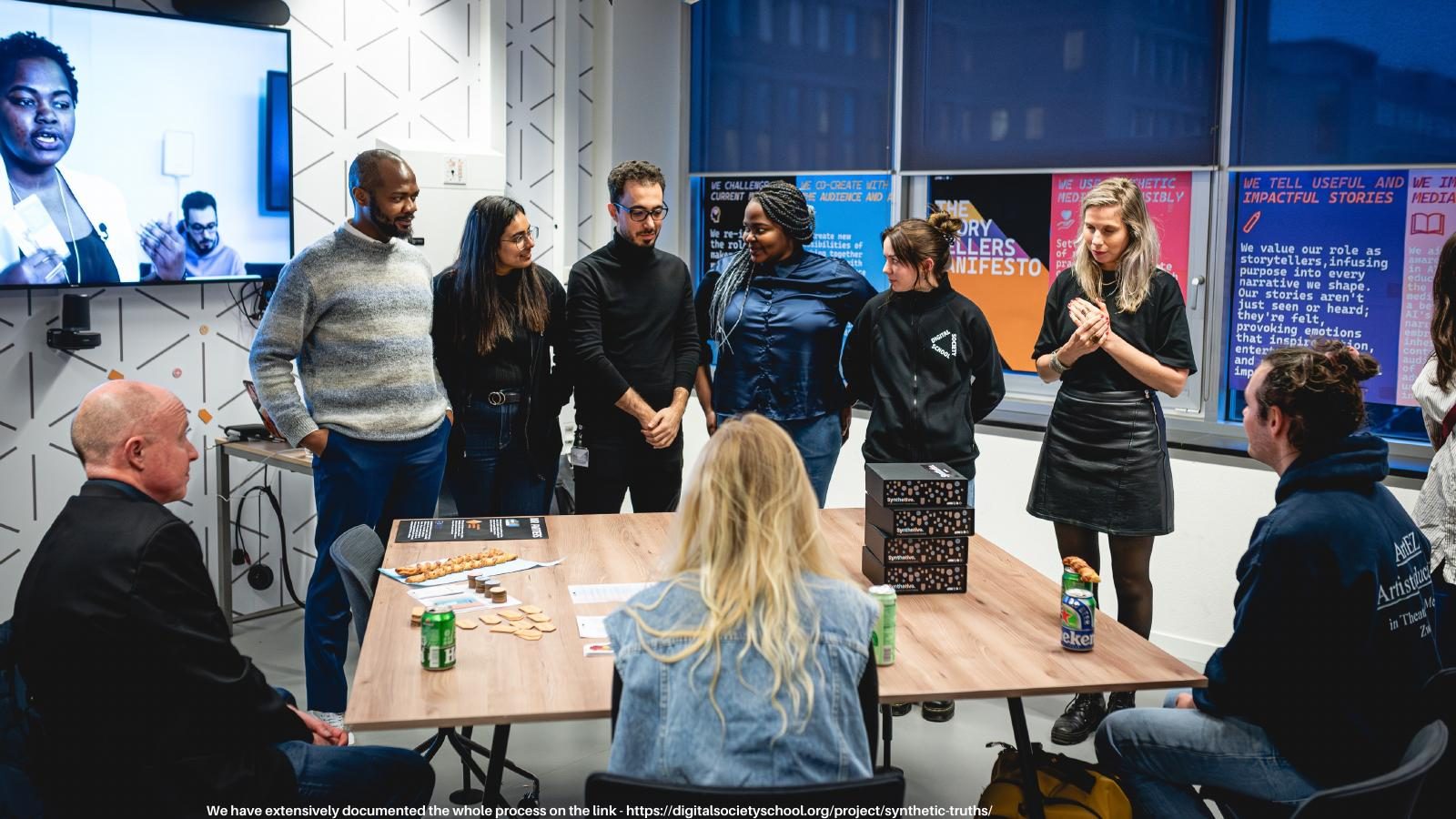
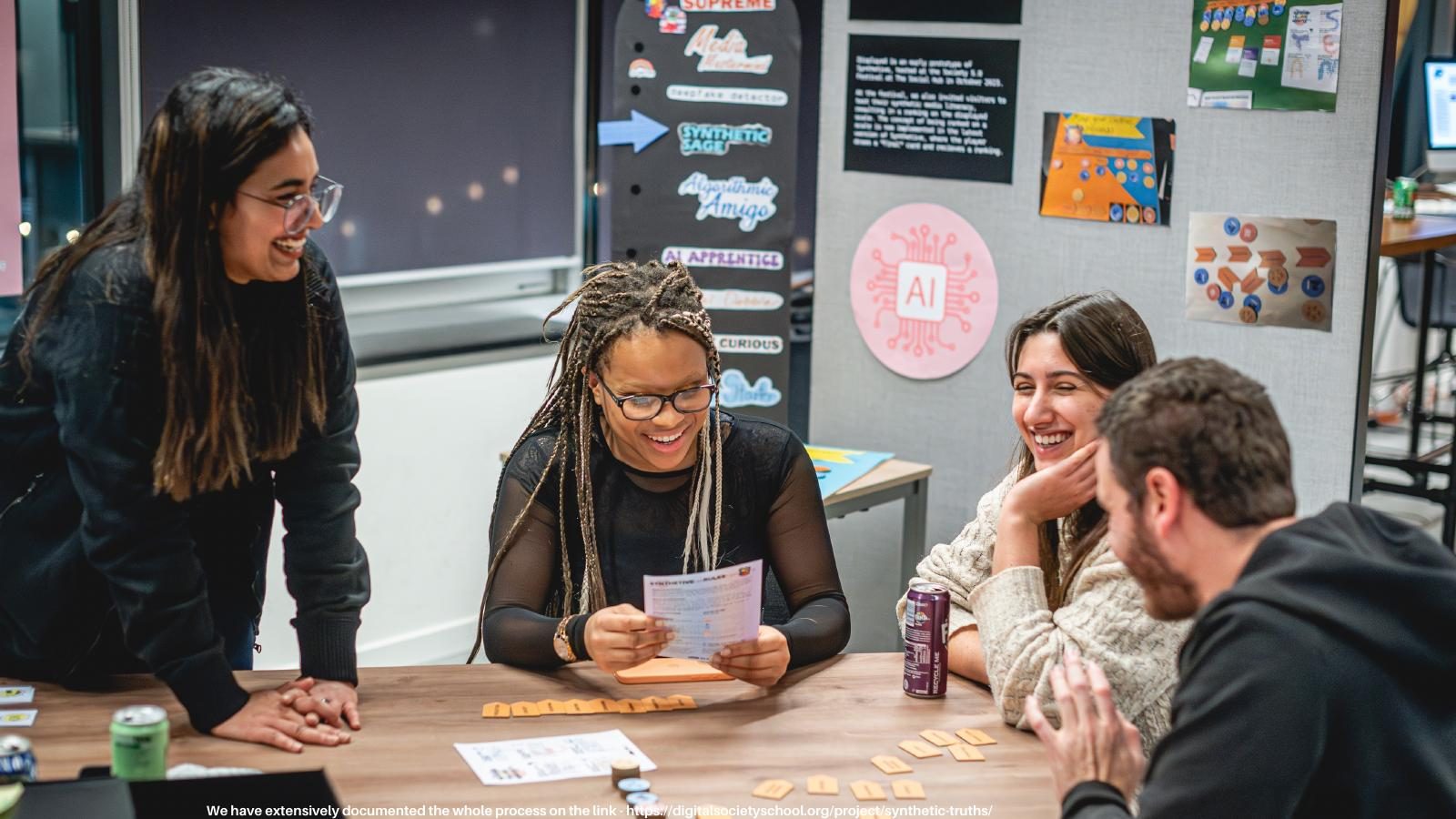
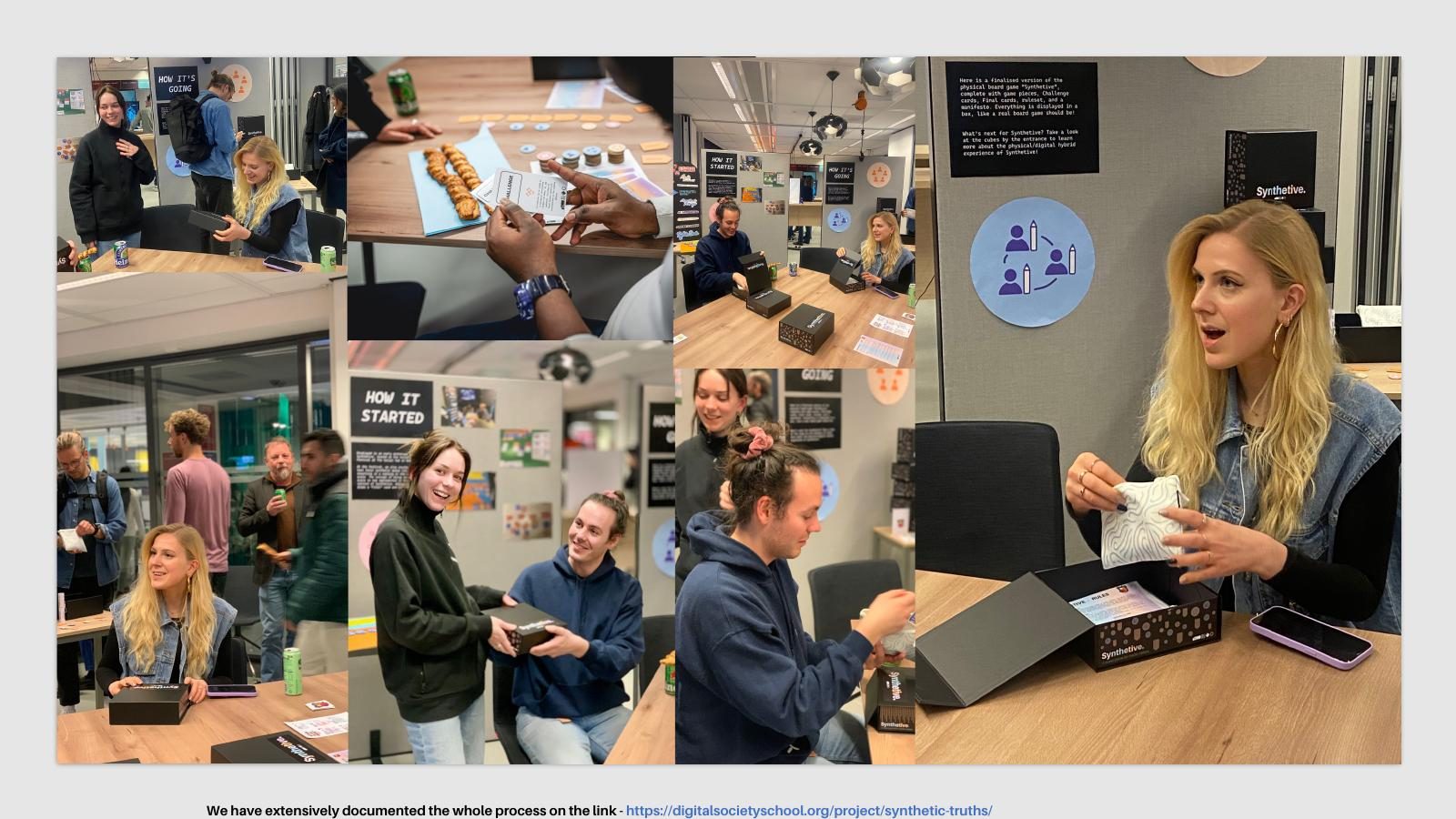
Full project documentation at digitalsocietyschool.org/project/synthetic-truths/ ↗
Persona photos via Pexels — Zoe Galarza, Murat IŞIK, Büşranur Aydın.
More Case Studies
Colour System · UI Design
TripGoGo
→
UX Research · Product Design
Digital Sustainability Benchmark
→
Motion Design · Storyboard · Brand Film
Ramco ERP
→
Product Design · HealthTech
Havells WellTech 🔒
→
Political Design · Media Literacy
Synthetive: Election Edition
→
Colour System · UI Design
Kleurensysteem · UI design
Plan smarter. Travel better. — Building the visual language for a travel platform that lacked direction.
Slimmer plannen. Beter reizen. — De visuele taal opbouwen voor een reisplatform dat richting miste.
✦ Final Outcome
End-to-end design system delivered — covering tokens, typography, spacing, grid, and a full component library in Figma. The product went from five conflicting blues to one coherent visual language, giving the team a shared source of truth they could build and ship from.
Design Tokens
Full colour, typography, and spacing token architecture replacing ad-hoc decisions across the codebase.
Component Library
Figma component set covering buttons, forms, cards, navigation, and states — with annotated prop tables for engineering.
Design Principles
Five documented principles that now govern every future addition to the system — from accessibility contrast to motion hierarchy.
Delivered Nov 2025 – Mar 2026 · TripGoGo.ai · Full design system handoff
00 — Falling in Love with the Problem
I was handed a live travel-planning product — TripGoGo.ai — with real users, real ambition, and a design that said nothing consistent.
The first time I opened it, I counted five shades of the same blue across four screens, three different button radii, and three font stacks with no apparent logic. The visual language was shouting different things in every room.
I didn't want to just audit and document what was broken — I wanted to understand why the inconsistency had accumulated. So I spent the first three days not in Figma but in the product, using it as a traveller would.
The friction I felt wasn't just aesthetic — it was cognitive. Every screen created a small moment of doubt: am I still in the same product?
That's when the problem became personal. Design inconsistency isn't just about brand polish — it erodes trust. A traveller trusting a platform with a trip to Lisbon needs the interface to feel as reliable as the service promise.
The visual chaos was quietly undermining the product's credibility. I fell in love with this problem because fixing it wasn't about decoration — it was about restoring confidence in every pixel.
The deeper I went, the more I saw: no shared tokens, no spacing scale, no documented decisions. Every component had been rebuilt from scratch in isolation — developers guessing what designers intended, designers guessing what developers had shipped.
The system had no memory. What was needed wasn't a visual refresh — it was a single source of truth the whole team could speak from.
Design inconsistency is not a cosmetic problem — it is a trust problem. Every mismatched component quietly signals: we don't have this together.
5
conflicting blue shades across screens at audit start
3
separate font stacks with no documented hierarchy
0
shared design tokens or spacing scale before the system
0A — Stakeholder Map
A design system touches every person in a product organisation — from the founders who set vision to the engineers who implement it and the travellers who ultimately feel it. Mapping this web early shaped every decision about what to standardise and what to leave flexible.
Primary Users — People who experience the inconsistency daily
The Digital Traveller
Plans trips via TripGoGo.ai
The Returning User
Expects consistency across sessions
Internal Stakeholders — Product & Engineering
Product Manager
Owns the roadmap & priorities
Frontend Developer
Implements components, needs specs
Backend Engineer
Needs stable component contracts
Product Designer
Maintains & extends the system
Decision Makers & Enablers
Founder / CEO
Drives brand vision & growth
Growth Lead
Needs consistent conversion-focused UI
QA Engineer
Tests against a defined standard
0B — User Personas
Every token value, every component variant, every documented decision was filtered through the lens of these three people. When I wasn't sure whether to standardise or leave flexibility, I asked: what does this mean for each of them?

Aarav
Frontend Developer
26 · Amsterdam
"I just want to know what blue to use. Every sprint I'm making up spacing from scratch."
Needs
Frustrations
Motivation: Wants to ship fast and confidently, without wondering if his implementation looks "right".

Sara
Product Manager
31 · Amsterdam
"I keep hearing "we'll fix the design stuff later" — but later never comes and users keep asking why the app feels off."
Needs
Frustrations
Motivation: Wants a product that reflects the ambition of the vision — and a team that can move fast without breaking things.

Nadia
Digital Traveller
34 · Berlin
"I almost didn't trust the payment screen — it looked different from every other screen. I wasn't sure I was still on the same site."
Needs
Frustrations
Motivation: Just wants to plan the perfect trip without friction, confusion, or visual noise.
TripGoGo is a travel-planning platform with a strong product vision but an inconsistent, underdeveloped visual identity — an arbitrary colour system, mismatched UI components, no documented specs for developers.
The task: build a coherent, accessible design system from scratch — colour, typography, spacing, and a full component library, all working together.
02 — Key Decisions
Not everything in this project was obvious. These were the calls that had real consequences — for the outcome, the team, and whether the work would actually hold.
Decision 01
Build the shared foundation — colour, type, and spacing tokens — before touching any component. Systems that retrofit tokens to existing work never actually hold. Starting with the architecture meant every downstream decision was made once.
Impact: every component derived from tokens — zero redesign cycles when brand evolved.
Decision 02
Moving from 5 conflicting blues to 1 coherent system meant defining a governing rule for colour decisions, not just picking a favourite. The colour principle — one primary, one semantic, one neutral — replaced opinion with structure.
Impact: developers stopped asking 'which blue?' — the system answered it.
Decision 03
Five documented principles mean every future designer adds to the system rather than alongside it. Principles defined at the start of the work outlive the sprint, the project, and the individual contributor.
Impact: onboarding a new designer takes one document read, not a knowledge transfer session.
Alongside the design system work, I ran a comprehensive UX audit of the TripGoGo.ai homepage to surface usability and accessibility gaps.
It covered heuristic evaluation, responsive behaviour, WCAG contrast compliance, keyboard navigation, form validation, and screen reader support — producing a prioritised list of recommendations fed straight into the product roadmap.
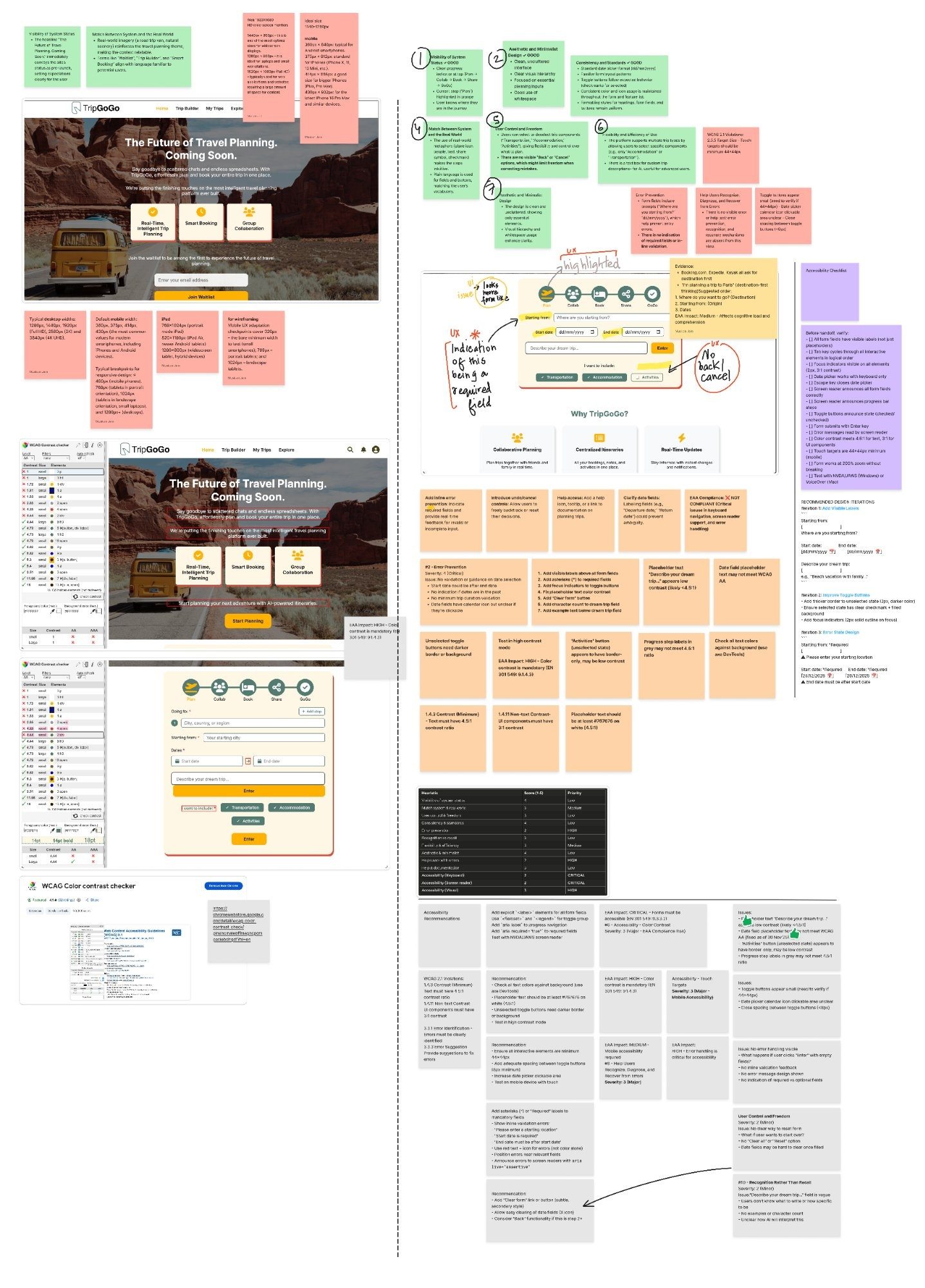
Audit Summary
The audit surfaced EAA and WCAG 2.1 compliance gaps — missing form labels, contrast failures, absent keyboard/screen-reader support, small touch targets, and no error validation.
The visual foundation is strong: hierarchy, progress signposting, and metaphor-driven navigation all hold up. Priority fix: explicit labelling and ARIA attributes, then contrast and error-handling.
Audit Outcomes — Changes Implemented
Multi-stop trip planner
Numbered destination fields with inline tooltips replacing a single ambiguous input
Progress indicator
5-step flow (Plan → Collab → Book → Share → GoGo) making the user journey transparent
Accessible date picker
Dual-month calendar with clear selection range, "Done" and "Clear dates" actions
Validated form fields
Real-time error states (red border), required field indicators, and clear error recovery
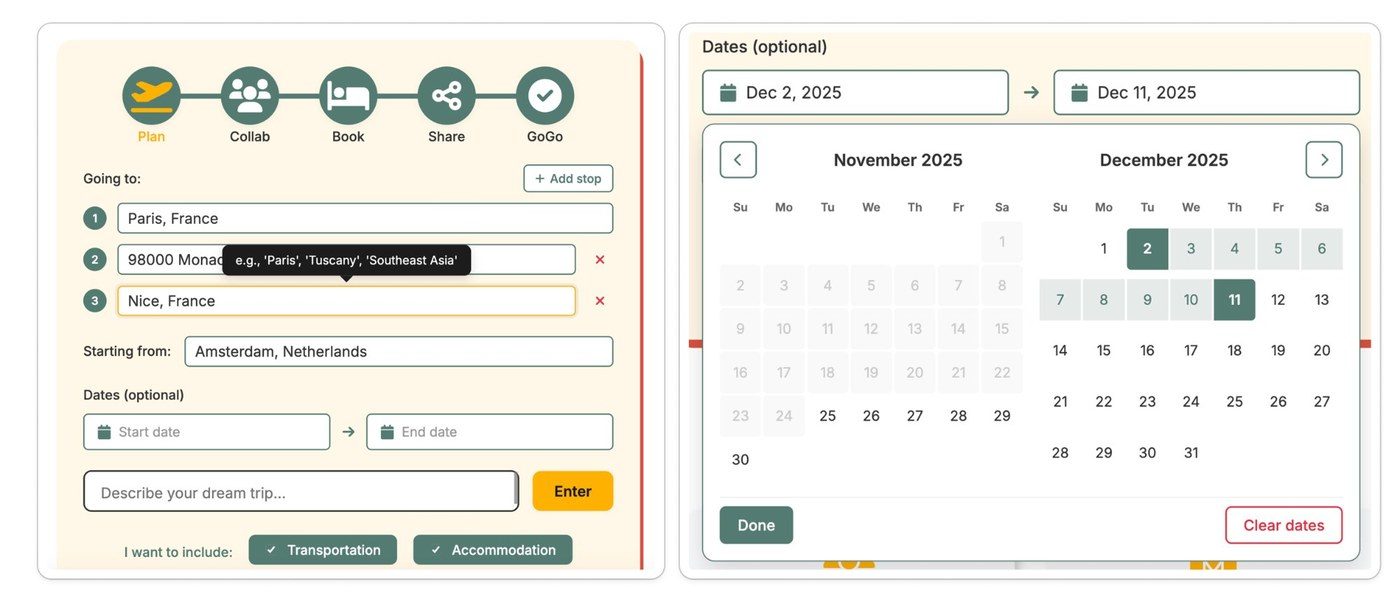
The updated trip planner (left) and accessible date picker (right) — key UI changes informed by the audit findings.
The bigger finding
The quick UI fixes worked — but the audit made something else clear: TripGoGo had no design system at all.
Every contrast failure, every inconsistent touch target, every unlabelled form field traced back to the same root cause: decisions made in isolation, with no shared visual language. Fixing individual screens was just a patch.
What the product needed was a foundation — a moodboard to align on brand direction, a colour system built to pass accessibility, and a component library that encoded the right decisions by default.
Before any colour swatches or component specs, the team aligned on a brand feeling. This moodboard — signed off by the founder — captured the essence of TripGoGo: teal as a grounding tone, the pleasure of slowing down.
Coffee culture, coastal cycling, natural materials, vivid local experiences. The design system had to feel this, not just match it.
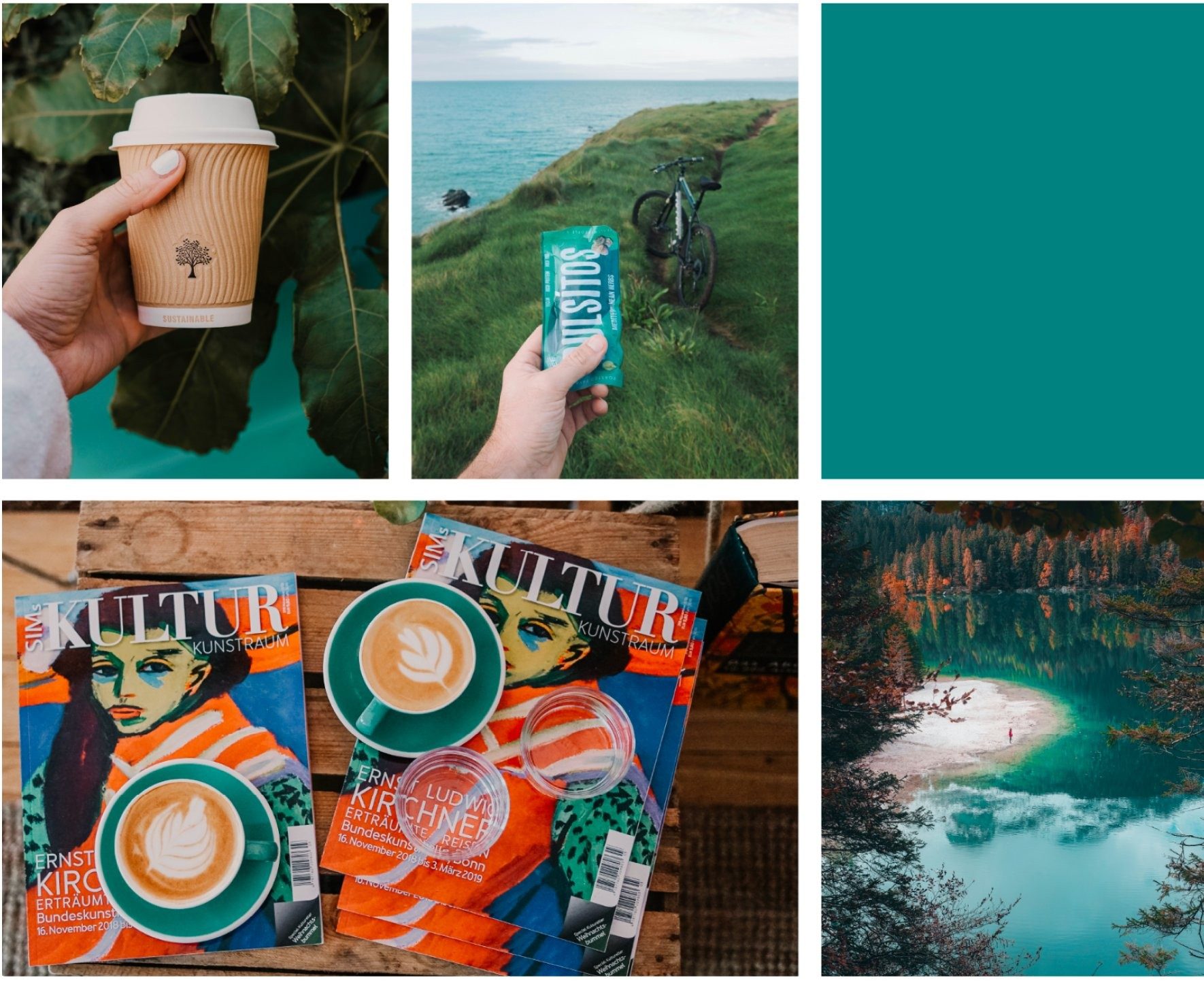
Moodboard approved by the creative lead — informing the teal palette, warm textures, and lifestyle-first visual direction.
The primary colour is Teal — grounding the interface in calm confidence. A complementary Terracotta secondary adds warmth for highlights and accents. Each colour was developed into a 10-step scale, with every tone assigned a semantic purpose from headers to backgrounds. All combinations meet WCAG accessibility standards.
Primary — Teal
Secondary — Terracotta
Accent & Utility
Warning
#FFB520
Success
#4ADED1
Error
#EF5350
White
#FFFFFF
Black
#000000
The system uses Inter as the primary typeface (fallback: Arial, sans-serif), chosen for excellent legibility at both display and body sizes. All sizes are defined in rem for responsive scaling. The minimum body text is 16px with an 11.7:1 contrast ratio — exceeding WCAG AAA.
H1 — Hero Heading
48px / 3rem · Bold · lh 1.2
H2 — Section Heading
36px / 2.25rem · Bold · lh 1.3
H3 — Card Heading
24px / 1.5rem · Semi-bold · lh 1.4
Body Large — Lead text for important content
18px / 1.125rem · Regular · lh 1.6
Body — Default paragraph text for readability
16px / 1rem · Regular · lh 1.6
Small — Captions, labels, meta info
14px / 0.875rem · Regular · lh 1.5
Accessibility
Min 16px body · 11.7:1 contrast (WCAG AAA) · Max 75 chars/line
Responsive
Mobile: −12.5% (H1 → 42px) · Use rem units throughout
All spacing follows an 8-point scale for consistency and predictability. Layouts use a 12-column grid at desktop (1440px), collapsing to 8 columns on tablet and 4 on mobile. Component rules ensure consistent rhythm across the entire product.
8-Point Scale
12-Column Grid
Desktop 1440px
12 cols · 24px gutter · 48px margin
Tablet 768px
8 cols · 16px gutter · 32px margin
Mobile 375px
4 cols · 16px gutter · 16px margin
Component Rules
Card: 24px padding · Button: 24px H-pad (L) · Form gap: 8–24px
Every component was built with at least three states (default, hover, disabled), clear sizing tokens, and documented accessibility requirements. The library covers the full booking and browsing flow.
Button System
Primary
Default · Hover
Secondary
Default · Hover
Four guiding principles — covering layout, interaction, mobile-first thinking, and dark mode — are documented to help any designer or developer extend the system without breaking its visual language.
Layout
White space min 48px · Hierarchy via size, weight & colour · Left-align text; center only titles/CTAs
Interactions
Skeleton screens for loading · Empty states always include a next action · Micro-interactions 200–300ms
Mobile-First
44×44px touch targets · Primary actions in bottom third · Lazy load & minimal animations on mobile
Dark Mode
#0A3D3D main bg · #1B9999 cards · White headings · WCAG AAA (7:1) contrast
Audit before design
Starting with a UX audit on the live product gave the design system real grounding. Every colour, spacing, and component decision had a reason tied to something broken or missing in the existing interface.
Accessibility is a design decision
The EAA and WCAG gaps found in the audit shaped the colour system from the start — contrast ratios, touch targets, and label structures were baked into the design tokens rather than retrofitted later.
Brand moodboards anchor systems
Having a founder-approved moodboard before building out the component library kept the design system cohesive. Without that reference, UI decisions tend to drift — especially across colour and type pairing.
Systems need stories
The design principles weren't written at the end — they emerged from the moodboard, the audit findings, and the component decisions. Naming them gave the team a shared language for on-brand decisions.
Persona photos via Pexels — hartono subagio, Eric Moura, ds rexy.
More Case Studies
UX Research · Product Design
Digital Sustainability Benchmark
→
Game Design · UX Research · Media Literacy
Synthetive
→
Motion Design · Storyboard · Brand Film
Ramco ERP
→
Product Design · HealthTech
Havells WellTech 🔒
→
Political Design · Media Literacy
Synthetive: Election Edition
→
Motion Design · Storyboard · Brand Film
Motion design · Storyboard · Merkfilm
Step into the next frontier. — A 60-second LED screen animation for Ramco's flagship enterprise event, built from a 30-scene hand-drawn storyboard to final motion render.
Stap de volgende grens over. — Een LED-schermanimatie van 60 seconden voor Ramco's belangrijkste zakelijke evenement, opgebouwd van een handgetekend storyboard met 30 scènes tot de uiteindelijke motion render.
✦ Final Outcome
Designed and animated a full motion identity piece for Ramco ERP's annual user conference — rendered at 4608×768px for their ultra-wide LED stage screen. Storyboarded across 30 scenes, animated to a precise timing sheet, and screened in front of a live audience at The Leela Palace.
90-Second Film
4608×768px ultra-wide LED render · 25fps · 30-scene approved storyboard translated exactly into motion.
Live Conference Screening
Screened at Ramco ERP User Meet 2025 at The Leela Palace, Chennai — in front of a live enterprise audience.
Full Visual System
Grid-glitch aesthetic, organic orb meets geometric constraint, typewriter reveals — all established through iterative pre-production.
Ramco ERP User Meet 2025 · The Leela Palace, Chennai · 4608×768px LED · After Effects
00 — Falling in Love with the Problem
There's a particular quality to the opening moment of a major corporate conference. The room is full before it begins — 300 enterprise leaders, CIOs, operations directors, seated at The Leela Palace, Chennai, carrying the weight of every meeting they rescheduled to be there.
In that moment, the first visual they see either earns their attention or loses it. Most conferences lose it — a static logo, a presenter apologising for the microphone.
When Ramco Systems brought me the brief for their annual ERP User Meet — "The Next Frontier," centred on Agentic AI — I sat with the concept longer than usual. The theme asked a bold question: what does the frontier of enterprise intelligence actually look like?
Not metaphorically. Visually. In motion. In 60 seconds, on a wide-format LED screen, in front of the most rational, evidence-driven audience there is.
That tension became the problem I fell in love with: how do you make something deeply technical feel genuinely cinematic? ERP is about operational precision — supply chains, resource allocation, process intelligence.
The temptation in enterprise motion design is to render abstract data as abstract shapes and call it "futuristic." But the brief asked for something more honest: transformation an enterprise leader would find credible, not just impressive.
I spent two full days drawing storyboards before touching any software — thirty scenes, hand-sketched.
I needed to understand the emotional arc before I understood the visual vocabulary — what tone opens the room, what moment builds tension, what image makes 300 people feel they're about to step into something that matters.
An enterprise opening sequence is not decoration. It is a trust signal. In 60 seconds, it tells the room: the people who organised this understand what matters to you.
60s
to set the tone for a two-day conference shaping enterprise AI strategy
30
hand-drawn storyboard scenes before a single software frame was opened
300+
CIOs, operations directors, and enterprise leaders in the room
0A — Stakeholder Map
A motion piece for a flagship enterprise event is never just a creative brief — it sits at the intersection of brand reputation, conference production logistics, and the expectations of the most demanding professional audience. Understanding who held each veto shaped every storyboard revision.
Primary Audience — The Room
CIO / IT Director
Evaluating Agentic AI roadmap credibility
Operations Director
Seeking intelligence for process optimisation
C-Suite Executive
Assessing Ramco's strategic positioning
Internal Stakeholders — Ramco
Ramco Marketing & Brand
Owns the "Next Frontier" narrative
Senior Leadership
Sets the aspiration and approves the creative
Event Production Team
Responsible for technical delivery on LED
Production Chain
Motion Designer (MJ)
Concept, storyboard, animation, delivery
AV Production Partner
LED screen specs and render requirements
0B — User Personas
The animation needed to do different work for each person who would watch it. These personas shaped the emotional arc — what feeling the piece needed to create in the opening 10 seconds, and what it needed to have earned by second 55.

Prakash
CIO, Manufacturing Group
52 · Chennai
"I've seen fifty 'next frontier' presentations. I'll know in the first 20 seconds if this one is real."
Needs
Frustrations
Motivation: Wants to leave with a clear sense of where intelligent ERP is going — and whether Ramco is the right partner for that journey.

Deepa
VP Marketing, Ramco Systems
44 · Chennai
"The animation is the first thing they see. It needs to say 'Ramco' — confident, intelligent, not just technically capable."
Needs
Frustrations
Motivation: Wants the event to set a new standard for Ramco's conference identity — and for the opening film to become a reference point.
Muskan
Motion Designer — Me
· Amsterdam → Chennai
"How do you make 'Agentic AI in ERP' feel as cinematic as a space launch — without lying about what it is?"
Needs
Frustrations
Motivation: Wanted to prove that enterprise motion design can carry genuine narrative weight — that craft and commerce don't have to be opposites.
Ramco Systems needed a compelling opening animation for their annual ERP User Meet — "The Next Frontier" — held at The Leela Palace, Chennai (15–16 Sept 2025). The brief called for a 60-second film that could run on wide-format LED screens, setting the tone for a conference about Agentic AI, intelligent ERP, and the future of enterprise technology.
The animation needed to feel cinematic and bold — opening with restraint and building to a moment of transformation that introduced the Ramco brand and the "Step into the next frontier" tagline.




Frame stills from final render · Intersection-2 · 4608×768px LED screen format
02 — Key Decisions
Not everything in this project was obvious. These were the calls that had real consequences — for the outcome, the team, and whether the work would actually hold.
Decision 01
30 hand-drawn scenes before opening After Effects. Narrative logic first, motion grammar second. Animation without a story map produces impressive noise — technically skilled but emotionally empty. The board is where the film is actually made.
Impact: client sign-off on every scene before a single frame was animated — zero scope creep in production.
Decision 02
The decision to combine a precision data grid with an organic glitch aesthetic wasn't random. The grid references ERP's operational precision. The glitch references transformation. Both elements came from the same source — the brief — not from trend-following.
Impact: the visual system read as intentional and coherent to a technical enterprise audience, not arbitrary.
Decision 03
Act I: constraint (the current state). Act II: emergence (the shift). Act III: horizon (the future). Without a dramatic arc, even polished motion design reads as a showreel, not an argument. Enterprise audiences are evidence-driven — they need a narrative, not just spectacle.
Impact: screened without introduction — the film opened the room on its own terms.
Before a single frame was animated, the entire narrative was mapped across 30 storyboard panels — from "black screen fade-in" to the final end card for the Ramco User Meet 2025.
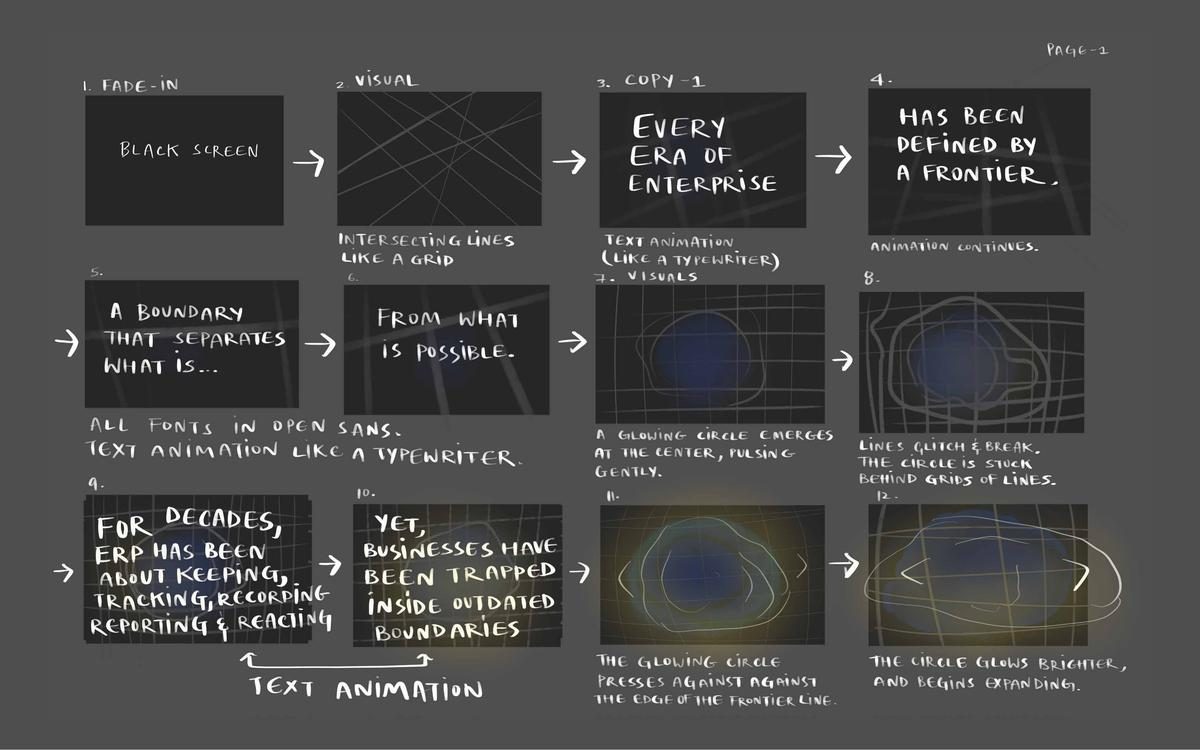
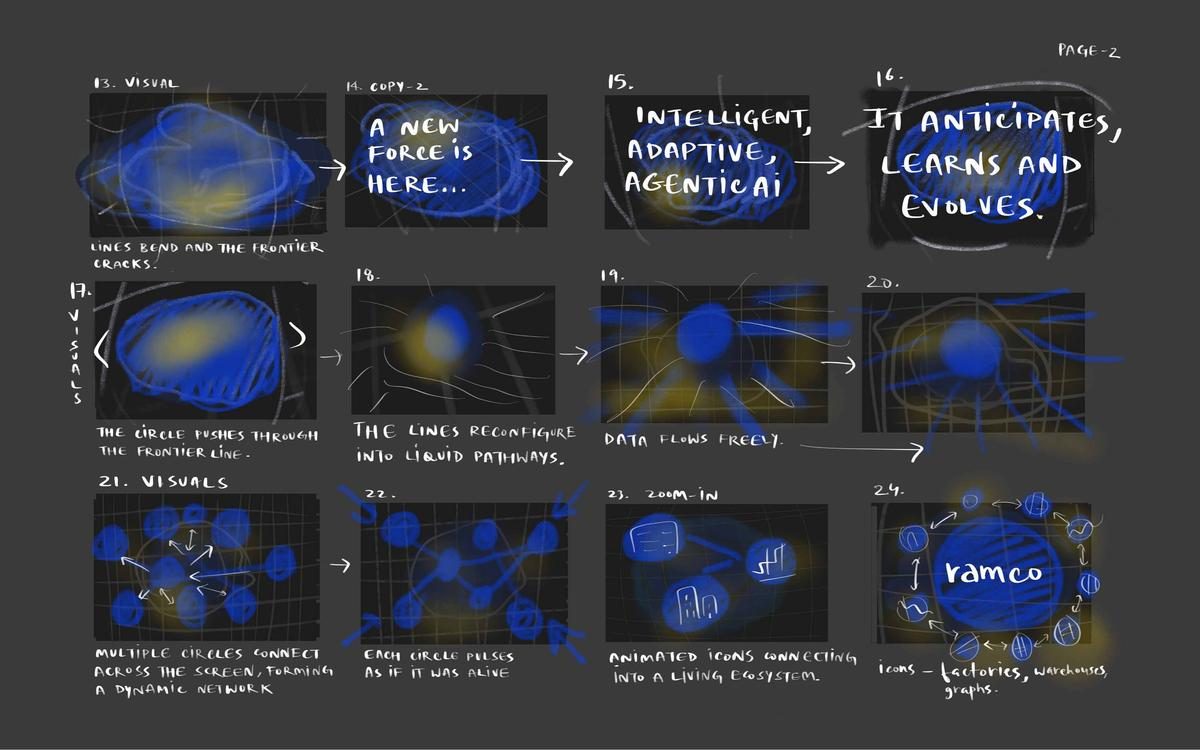
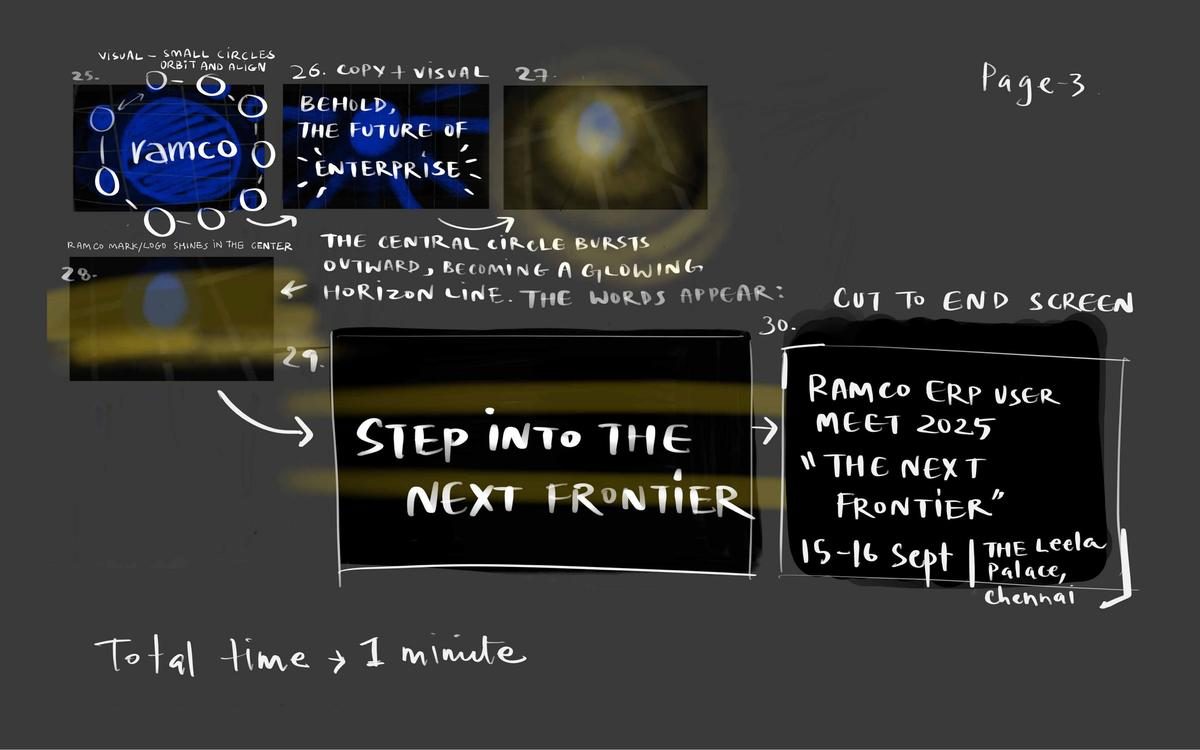
A glowing blue orb pulses behind a rigid grid. Typewriter text: "Every era of enterprise has been defined by a frontier. A boundary that separates what is from what is possible."
The orb pushes through the frontier line. Grid lines reconfigure into liquid pathways. A living network forms. "Intelligent, Adaptive, Agentic AI. It anticipates, learns and evolves."
The circle bursts outward into a glowing horizon. The Ramco mark shines. "Behold, the future of enterprise. Step into the next frontier." End card: 15–16 Sept · The Leela Palace, Chennai.
Before arriving at the final visual language, two distinct directions were explored and ultimately rejected. Showing the discard pile is part of the process: each rejected version clarified what the final needed to be.
Dark vanishing-point grid with neon blue lines. Too cinematic — felt more sci-fi than enterprise. The perspective depth competed with the copy rather than supporting it.
Wavy intersecting white grid on Ramco blue. Closer to the final direction, but the grid felt too decorative — it needed to feel alive and under tension. The breakthrough moment wasn't landing.
Both iterations informed the final: the tension of the dark grid + the brand-aligned blue of Shot 1b = the glowing orb trapped behind lines that defined the final act structure.
4608×768px ultra-wide LED screen · Rendered at 25fps · 90-second runtime including extended loop sections for venue playback
Open Sans throughout · Typewriter animation for all text reveals · Letter-spacing adjusted for wide-format legibility at distance
Ramco brand blue · Intersecting grid lines that glitch, bend, and reconfigure · Glowing organic orbs against geometric grids — tension between constraint and freedom
Full 30-scene storyboard approved before animation began · Hand-drawn narrative boards mapped to timing sheet · Final animation produced to exact storyboard specifications
06 — Iteration Reel
This iteration of the Intersection motion piece wasn't used at the Ramco conference. It was an earlier explorative render — pushing the metaphor further with more aggressive geometric fragmentation and a different rhythm. The conference version pulled back from this intensity.
But this render was the turning point that locked in the visual language: the grid-glitch aesthetic, the orb-meets-geometry tension, the typewriter cadence that made it into the final cut. Every key decision in the approved film traces back here.
Iteration reel — not screened at conference · Guided the approved final output
Persona photos via Pexels — Vishal Kampani, Speak Media Uganda.
More Case Studies
Colour System · UI Design
TripGoGo
→
UX Research · Product Design
Digital Sustainability Benchmark
→
Game Design · UX Research · Media Literacy
Synthetive
→
Product Design · HealthTech
Havells WellTech 🔒
→
Political Design · Media Literacy
Synthetive: Election Edition
→
Internal · Confidential · This project was completed under NDA. Client name, proprietary data, and strategic outputs have been partially redacted. Available in full during interviews upon request.
A comprehensive consumer research and product strategy for Havells — defining a new home healthcare brand, WellTech, to capture India's fast-growing at-home diagnostics and wellness market.
✦ Final Outcome
Led end-to-end strategic research and synthesised it into a classification-level internal brief — covering consumer behavior, physician and patient personas, market sizing, competitive landscape, and a phased go-to-market framework. Presented directly to Havells decision-makers.
Strategic Research Brief
Consumer analysis, market sizing from BCG/FICCI data, persona construction, and competitive scan across Philips, Xiaomi, and Lapka.
Go-to-Market Framework
Phased market entry strategy covering product positioning, distribution channels, and prioritisation logic for Havells's health-tech expansion.
Presented to Stakeholders
Delivered as a board-ready deck to Havells leadership — the output of a research sprint, not a design exercise.
Havells India · Classification-level internal strategy · Presented to senior stakeholders
00 — Falling in Love with the Problem
It was August 2020, the third month of a pandemic that had turned every home into an improvised clinic. I'd watched my mother manage her blood pressure with a device that showed numbers without context, beeping in a language of its own — watched friends photograph their grandmother's test strips and WhatsApp them to doctors three cities away.
Healthcare was moving into the home — but products built for clinical settings were migrating wholesale, without redesign, without reimagination.
When Havells India — one of India's most established consumer electronics brands — began exploring home healthcare, I was part of the product strategy team defining the market, the consumer, and the brand positioning.
What I found, quickly, was that the ₹27,500 crore opportunity wasn't primarily a technology gap. It was an empathy gap.
Existing home health devices were built on the mental model of a clinical encounter: the patient is passive, the reading is a number, the interpretation happens elsewhere.
But the people buying these products — a diabetic husband managing his insulin, a pregnant woman far from her parents' home, an elderly woman whose children live in another city — weren't patients seeking clinical precision. They were people seeking confidence in their own body's story.
I fell in love with this problem because it was a design problem disguised as a market research project. The data told us there were 55 million addressable households — but the real opportunity was only visible when you sat with the people living it.
The brand Havells needed wasn't "medical-grade home diagnostics." It was something warmer: a trusted companion for health at home.
The gap in India's home healthcare market was not a technology gap. It was an empathy gap — the space between clinical data and human confidence.
₹27,500 Cr
addressable market for home healthcare in India
67%
urban consumers expressing interest in at-home diagnostics monitoring
3 weeks
from research brief to board-ready strategy framework — August 2020
0A — Stakeholder Map
Home healthcare is unusual as a product category — the buying decision and the using decision often involve different people, and the moment of use is the most vulnerable moment in a person's day. This complexity made stakeholder mapping not just strategic but ethically necessary.
Primary Consumers
Chronic Condition Patient
Managing diabetes, hypertension, cardiac conditions
Expectant Mother
Tracking vitals through pregnancy at home
Elderly Individual
Managing conditions with family support
Family Caregiver
Monitors, interprets, advocates
Clinical & Channel Stakeholders
Physician / Specialist
Recommends devices, interprets readings remotely
Pharmacist / Retail Chemist
Primary channel for home device purchase
Hospital Channel
Discharge-to-home transition point
Strategic Decision Makers — Havells
Havells Board / Strategy Team
Approves market entry & brand investment
Product R&D
Defines device capabilities and UX
Marketing & Brand
Positions WellTech vs. competitors
Distribution & Sales
Builds retail and e-commerce reach
0B — User Personas
Constructed from primary research with patients and physicians across India — three patient types (diabetic, pregnant, elderly) and two physician profiles (senior GP, young doctor). Each persona came with a full day-in-life journey mapping their health device interactions.
Patient Persona 01 — Diabetic
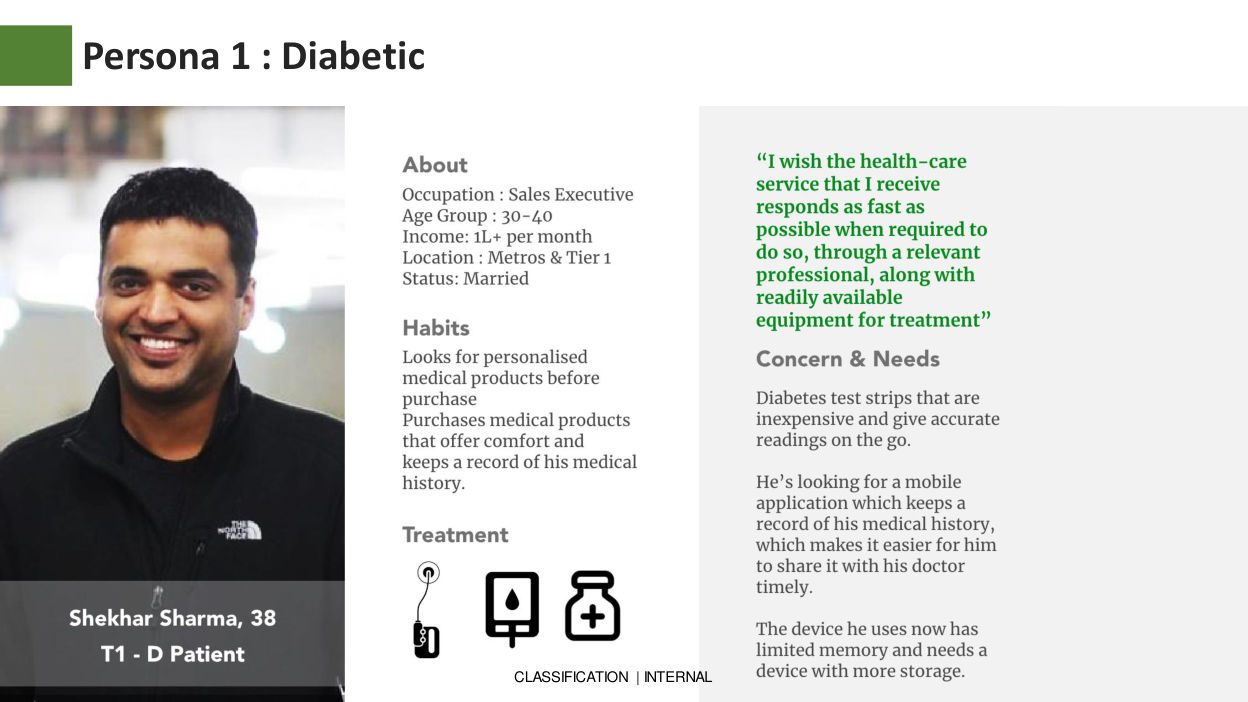
T1-D Patient · Sales Executive · Metros & Tier 1
| Age Group | 30–40 |
| Income | ₹1L+ per month |
| Location | Metros & Tier 1 |
| Status | Married |
Habits
Pain Points / Needs
"I wish the health-care service that I receive responds as fast as possible when required to do so, through a relevant professional, along with readily available equipment for treatment."
A Day in the Life
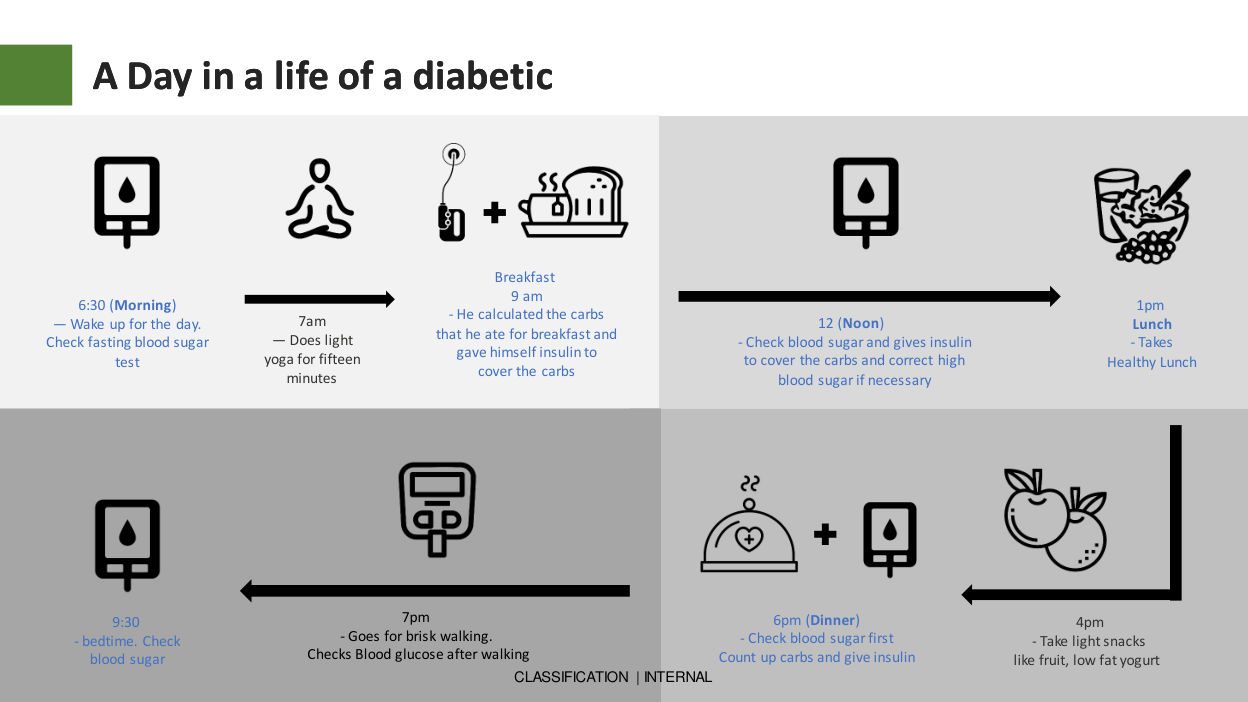
Treatment & Devices: CGM device · Blood glucose monitor · Insulin pen · Medical history app
Patient Persona 02 — Pregnant
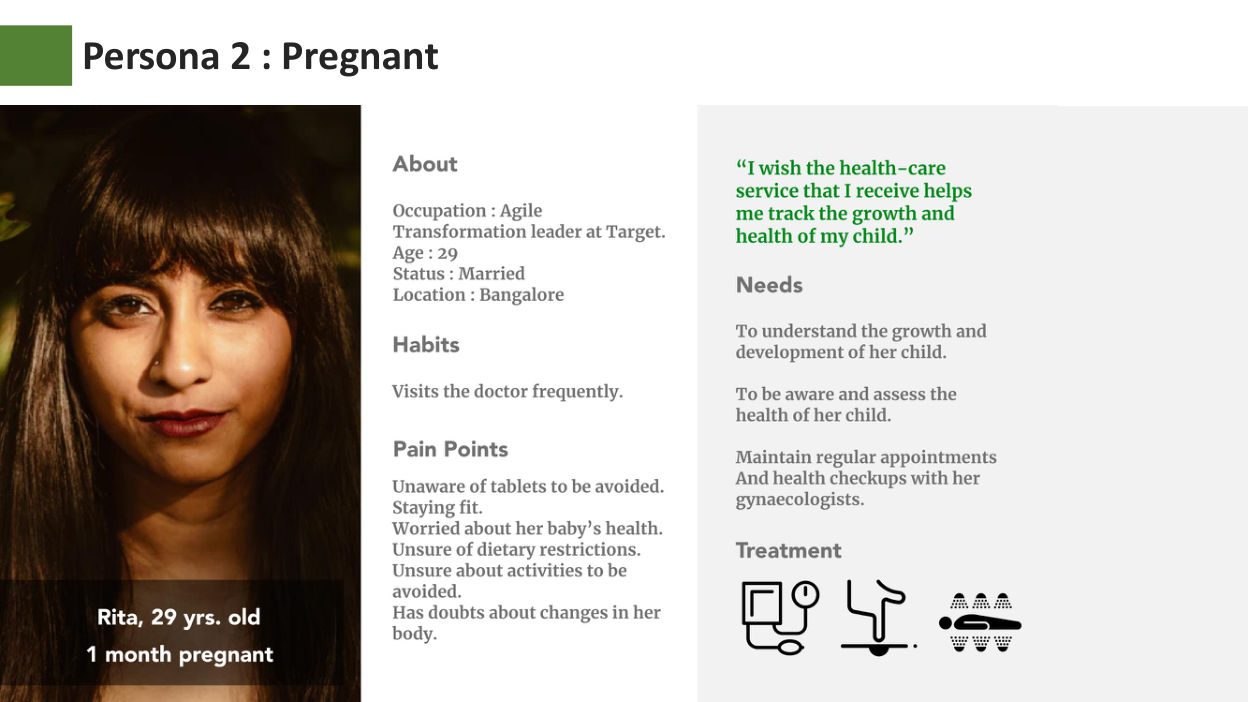
1 Month Pregnant · Agile Transformation Lead · Bangalore
| Occupation | Agile Transformation Leader, Target |
| Age | 29 |
| Location | Bangalore |
| Status | Married |
Habits
Pain Points / Needs
"I wish the health-care service that I receive helps me track the growth and health of my child."
A Day in the Life
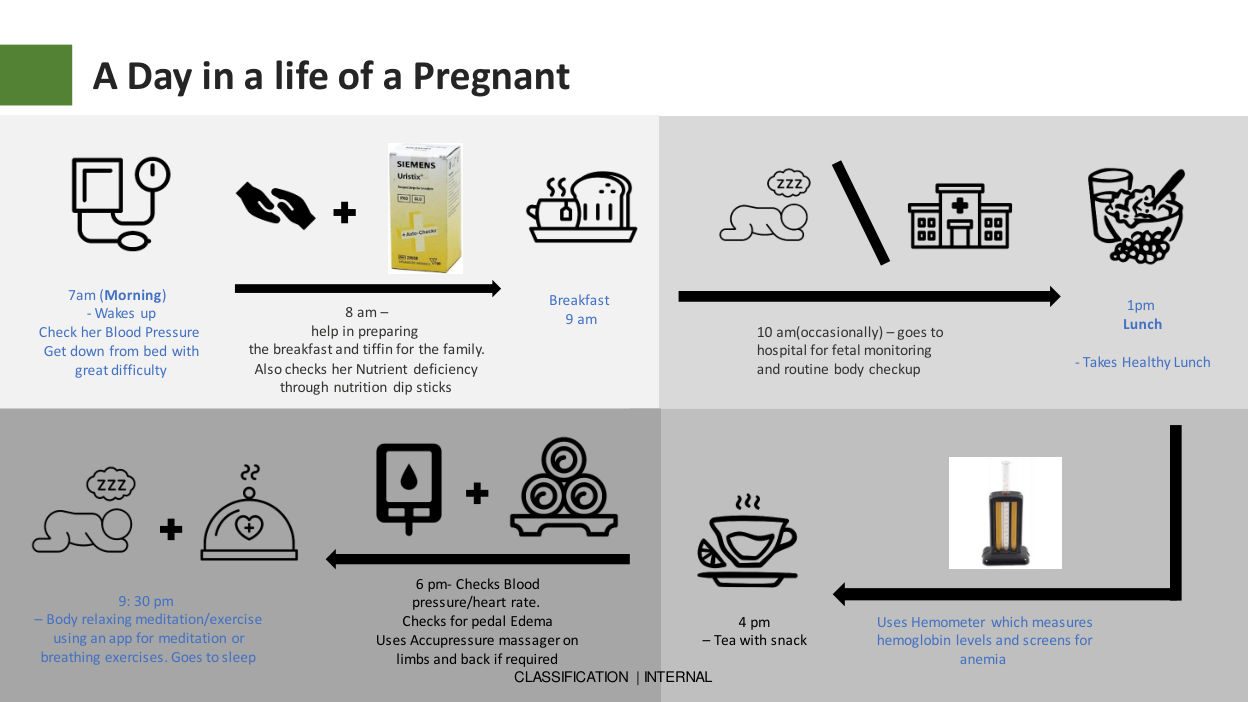
Treatment & Devices: BP monitor · Nutrition dipsticks · Hemometer (hemoglobin screening) · Accupressure massager
Patient Persona 03 — Elderly
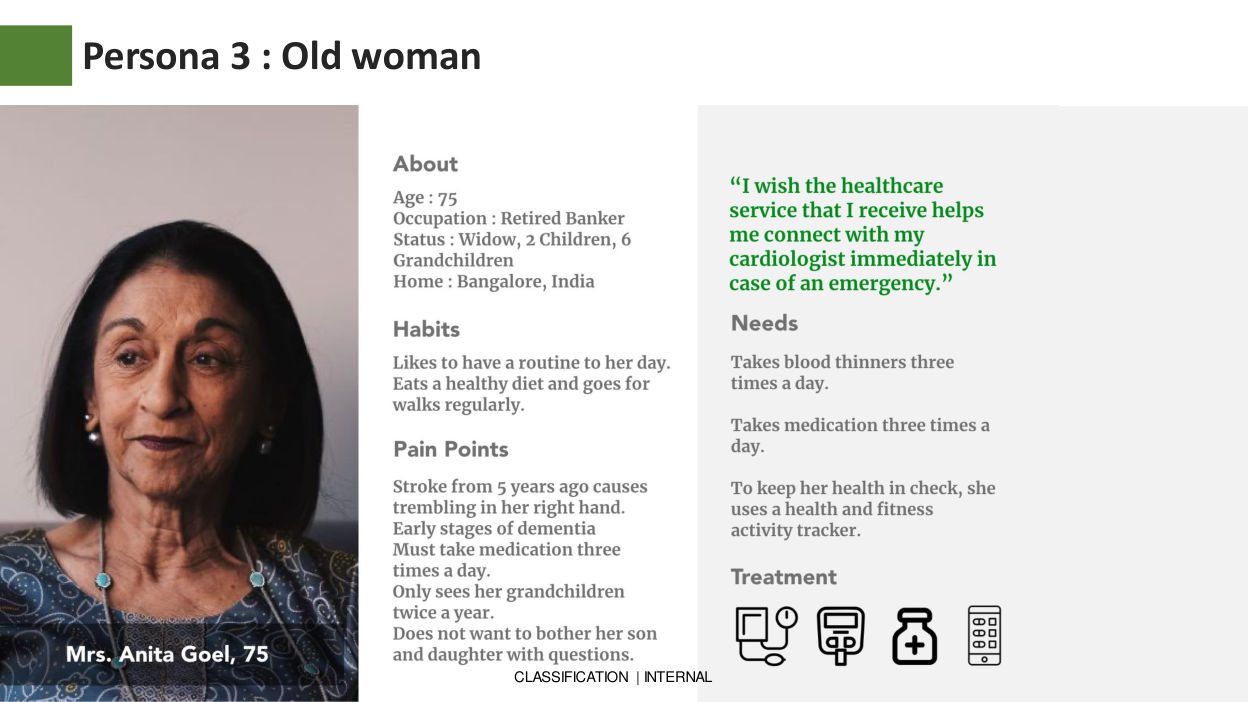
Retired Banker · Widow · Bangalore
| Age | 75 |
| Occupation | Retired Banker |
| Status | Widow, 2 Children, 6 Grandchildren |
| Home | Bangalore, India |
Habits
Pain Points / Needs
"I wish the healthcare service that I receive helps me connect with my cardiologist immediately in case of an emergency."
A Day in the Life
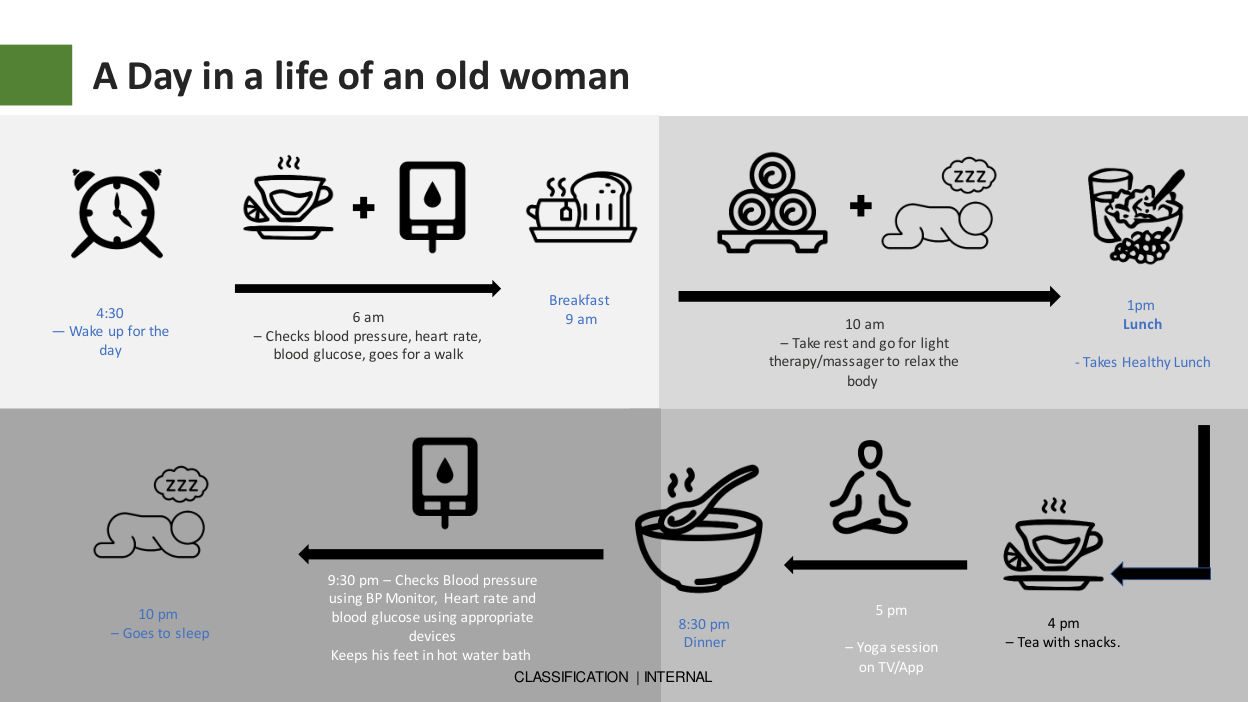
Treatment & Devices: BP monitor · Heart rate monitor · Blood glucose device · Health & fitness tracker · Medication reminder
Physician Personas
Physician Persona — Senior General Practitioner
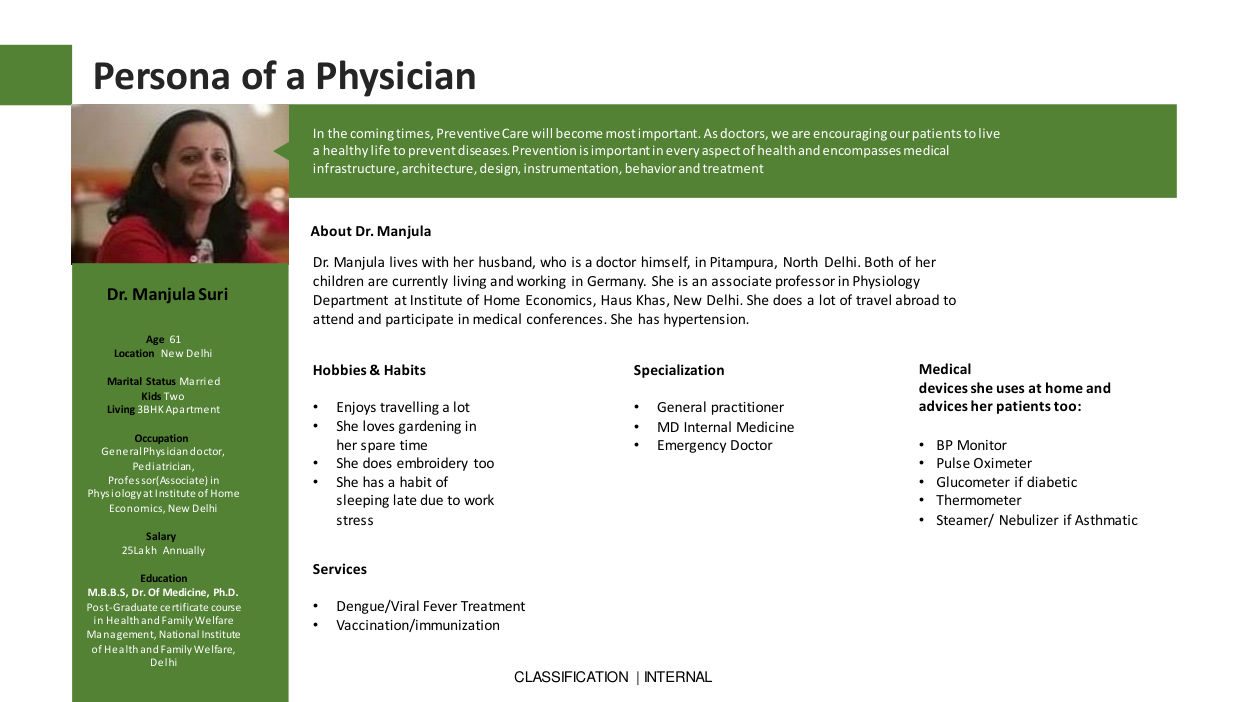
Age 61 · New Delhi · Associate Professor, IHE Haus Khas
"In the coming times, Preventive Care will become most important. As doctors, we are encouraging our patients to live a healthy life to prevent diseases."
Hobbies
Specialisation
Devices Used
Physician Persona — Young Doctor
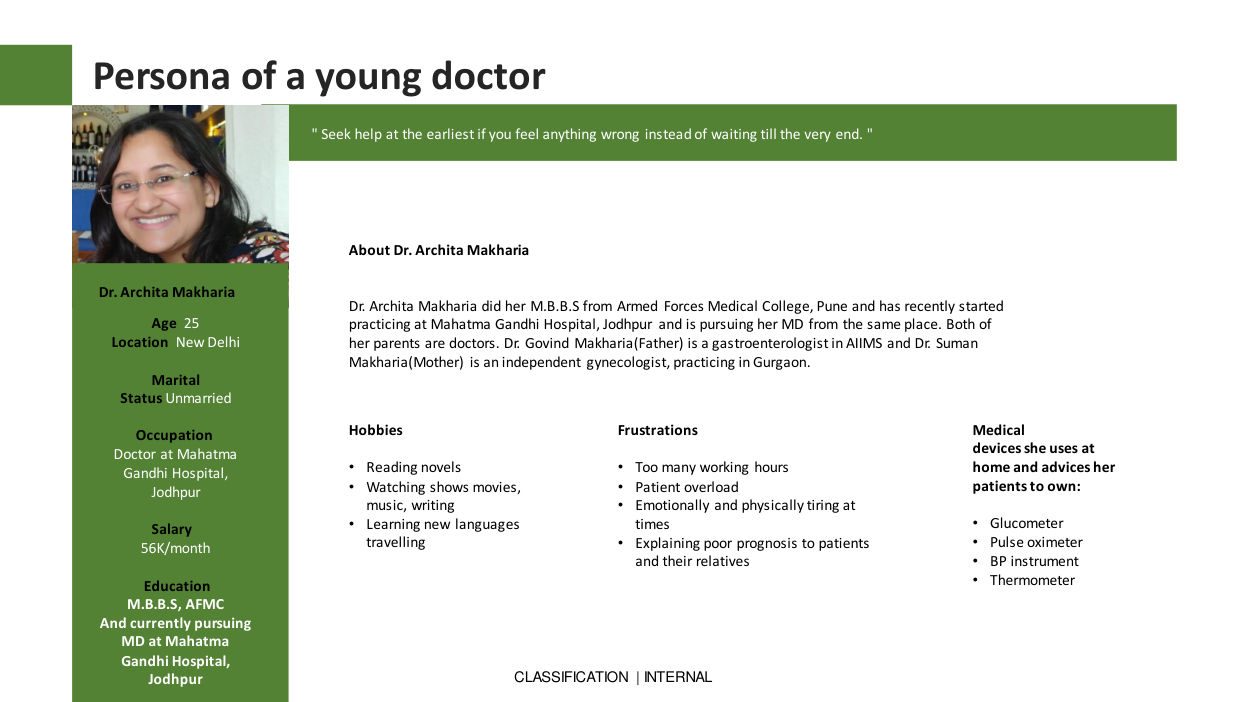
Age 25 · New Delhi · Mahatma Gandhi Hospital, Jodhpur
"Seek help at the earliest if you feel anything wrong instead of waiting till the very end."
Hobbies
Specialisation
Devices Used
Frustrations
★ The Havells Vision
Havells' trajectory from industrial cable to 20 product verticals powering ~70% of India's electric sockets. The brief was to visualise this expansion — artistic, bold, designer-vision-forward. This image was part of the internal strategic orientation I developed for the WellTech opportunity.
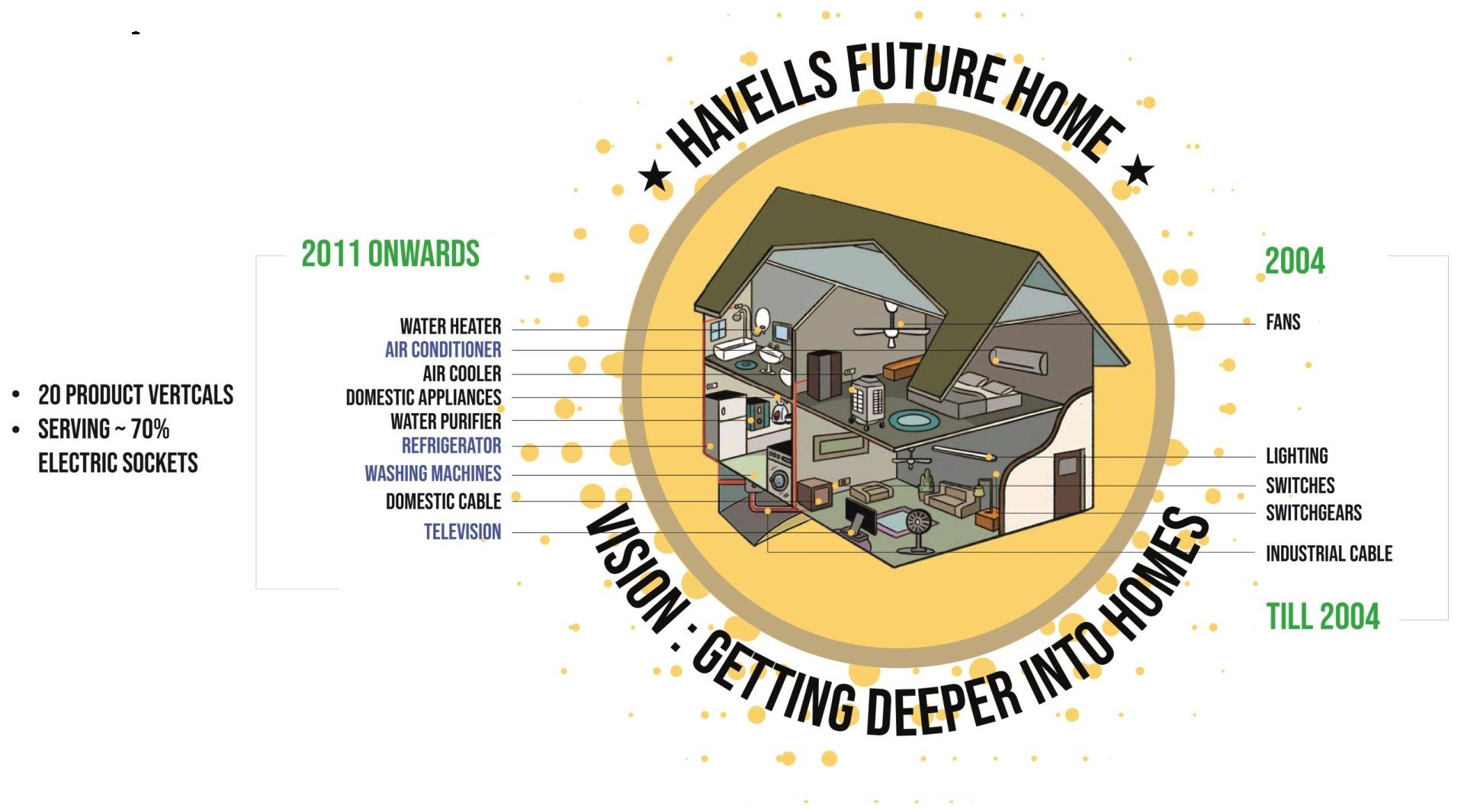
Colour System · UI Design
TripGoGo
→
UX Research · Product Design
Digital Sustainability Benchmark
→
Game Design · UX Research · Media Literacy
Synthetive
→
Motion Design · Storyboard · Brand Film
Ramco ERP
→
Political Design · Media Literacy
Synthetive: Election Edition
→
A follow-up to Synthetive — reimagined for the political arena. An interactive boardgame that places participants inside an AI-powered election campaign, forcing them to confront real tradeoffs between strategy, ethics, and democratic responsibility.


 VPRO Medialab · CoECI · DSS · NPO · HvA · Sustainable Media Lab
Centre Expertise Creative Innovation
VPRO Medialab · CoECI · DSS · NPO · HvA · Sustainable Media Lab
Centre Expertise Creative Innovation
✦ Final Outcome
Election Edition extended Synthetive's core tension into the domain of democratic participation: AI-generated candidates, synthetic manifestos, and a player tasked with distinguishing persuasion from manipulation. Screened and played at three international venues across 2024.
Playable Political Simulation
A complete game loop where players navigate an AI-run election — voting, questioning, and ultimately confronting what's authentic.
Three International Venues
Exhibited at IMPAKT Festival (Utrecht), ZERO Medialab (Society 5.0), and MozFest Workshop — each with live audience play.
AI Literacy Through Play
Designed to leave players with a concrete felt understanding of how AI can shape democratic information environments.
IMPAKT Festival Utrecht · ZERO Medialab Society 5.0 · MozFest Workshop · Oct 2024
00 — Falling in Love with the Problem
In the weeks after the 2023 Dutch elections, I found myself down a research rabbit hole. Post-election analyses kept repeating the same phrase: "AI-generated content influenced voter perception."
But none went deeper — they documented the fact without offering any way to understand it, let alone address it. The problem was framed as inevitable, like weather.
The statistic that stopped me cold: 46% of EU residents lack the basic digital skills needed to make informed political decisions — and the gap cut across demographics, not just older generations.
The 2023 Dutch elections had already surfaced deepfakes and AI-disinformation circulating at scale. I became preoccupied with one question: what does it actually feel like to run an AI-powered political campaign from the inside?
The original Synthetive game had taught me that experiential learning builds a different kind of understanding than information does. If you want someone to develop moral intuition around AI use, you put them in the decision-maker's seat, not the observer's.
The Election Edition emerged from a simple provocation: what if people could experience the seductive pull of AI campaign tools — then be forced to confront what they'd done?
This wasn't about scare tactics or moral lecturing — it was about making democratic responsibility felt. Political AI tools aren't intrinsically malicious; they're tools that amplify choices. The problem is most citizens don't understand what choices are being made.
Building this game felt like an act of civic design: creating a space where the mechanics of AI-enabled campaigns become legible, debatable, and human.
The problem wasn't that people were deceived. The problem was that they had no framework for even knowing when to be suspicious. We built the game to give them one.
46%
EU residents lack digital skills for informed political decisions (AlgorithmWatch)
2023
Dutch elections — documented AI misinformation & deepfake incidents
30
participants per session — each one leaves with a different intuition about AI
0A — Stakeholder Map
The Election Edition operates at the intersection of politics, media, education, and technology. The stakeholder map shaped which ethical dilemmas we wrote into the challenge cards — because each stakeholder experiences AI in elections from a radically different position.
Workshop Participants — Primary Players
Engaged Voter / Citizen
Wants to make informed decisions
Political Campaign Manager
Navigates efficiency vs. ethics
Journalist / Fact-Checker
Defending information integrity
Digital Literacy Educator
Building tools for critical thinking
Commissioning & Partner Organisations
Dutch Parliament / CoECI
Digital governance & responsible IT
VPRO Medialab
Responsible synthetic media exploration
Digital Society School / HvA
Education & civic innovation
MozFest / Global Civil Society
Open internet advocacy
Structural Actors in the System
AI Platform Developers
Build the tools campaigns use
Data Brokers / Analytics
Enable targeted voter profiling
Electoral Oversight Bodies
Regulate campaign behaviour
General Public
Subject to AI-shaped political information
0B — User Personas
After five public workshops from the Dutch Parliament to MozFest, these three players emerge consistently — sometimes in different people, sometimes in the same person across different rounds of the game.

Koen
Campaign Strategist (game role)
38 · Den Haag
"If the other campaign is using AI voter profiling, we don't have a choice. We have to as well."
Needs
Frustrations
Motivation: Wants to win — but also wants to be able to look at the outcome and feel it was earned honestly.

Amara
Digital Literacy Facilitator
29 · Amsterdam
"I can explain what a deepfake is. What I can't do is make students feel why it matters."
Needs
Frustrations
Motivation: Wants her students to leave the room with an intuition they didn't have when they walked in.

Eva
Engaged Voter, First-Time Player
22 · Rotterdam
"I thought I was good at spotting fake news. Then I played and realised I'd been making it."
Needs
Frustrations
Motivation: Wants to be an informed democratic participant in a world that feels increasingly opaque.
Building on the original Synthetive boardgame, this edition places players in the role of an election campaign team deploying AI across every stage — from voter profiling and content ideation to targeted promotion and real-time adaptation. The game asks: what are the tradeoffs? What do we gain, and what do we risk?
The project responds to a documented crisis: 46% of EU residents lack the basic digital skills needed to make informed political decisions, and the 2023 Dutch elections were marked by misinformation and deepfakes.
Developed through Sprint 5 at the Digital Society School with VPRO Medialab and Amsterdam University of Applied Sciences, funded by CoECI, and selected for Society 5.0's Transform track — the game translates this urgency into lived experience.
02 — Key Decisions
Not everything in this project was obvious. These were the calls that had real consequences — for the outcome, the team, and whether the work would actually hold.
Decision 01
Role assignment creates accountability that observation never can. A participant watching an AI run a campaign thinks critically; a participant running one feels the ethical weight personally. The game only generates real learning if you're inside the campaign, making real choices.
Impact: every playthrough produced genuine ethical discomfort — not sympathy, but recognition.
Decision 02
Real synthetic media — generated candidate profiles, fabricated manifestos, AI-produced campaign messages — was used as in-game material. Abstraction would have softened the tension. Authentic AI output created the authentic felt experience the game needed.
Impact: players couldn't separate their response to the game from their response to the real-world phenomenon.
Decision 03
The five ethical principles in the Manifesto are not handed to players as a pre-game briefing. They emerge from the table — from the decisions players make and reflect on. Principles arrived at through experience stick in a way that received rules never do.
Impact: exhibited at three international venues — IMPAKT, VPRO Medialab, MozFest — to audiences beyond academia.
Players take on roles within a fictional political campaign — Researcher, Promoter, Creator, Editor, Strategist — and use AI tokens to augment their work across six campaign stages: Ideating, Doing Research, Planning, Creating, Promoting, and Reviewing. Challenge cards introduce ethical dilemmas mid-game, forcing the team to adapt.
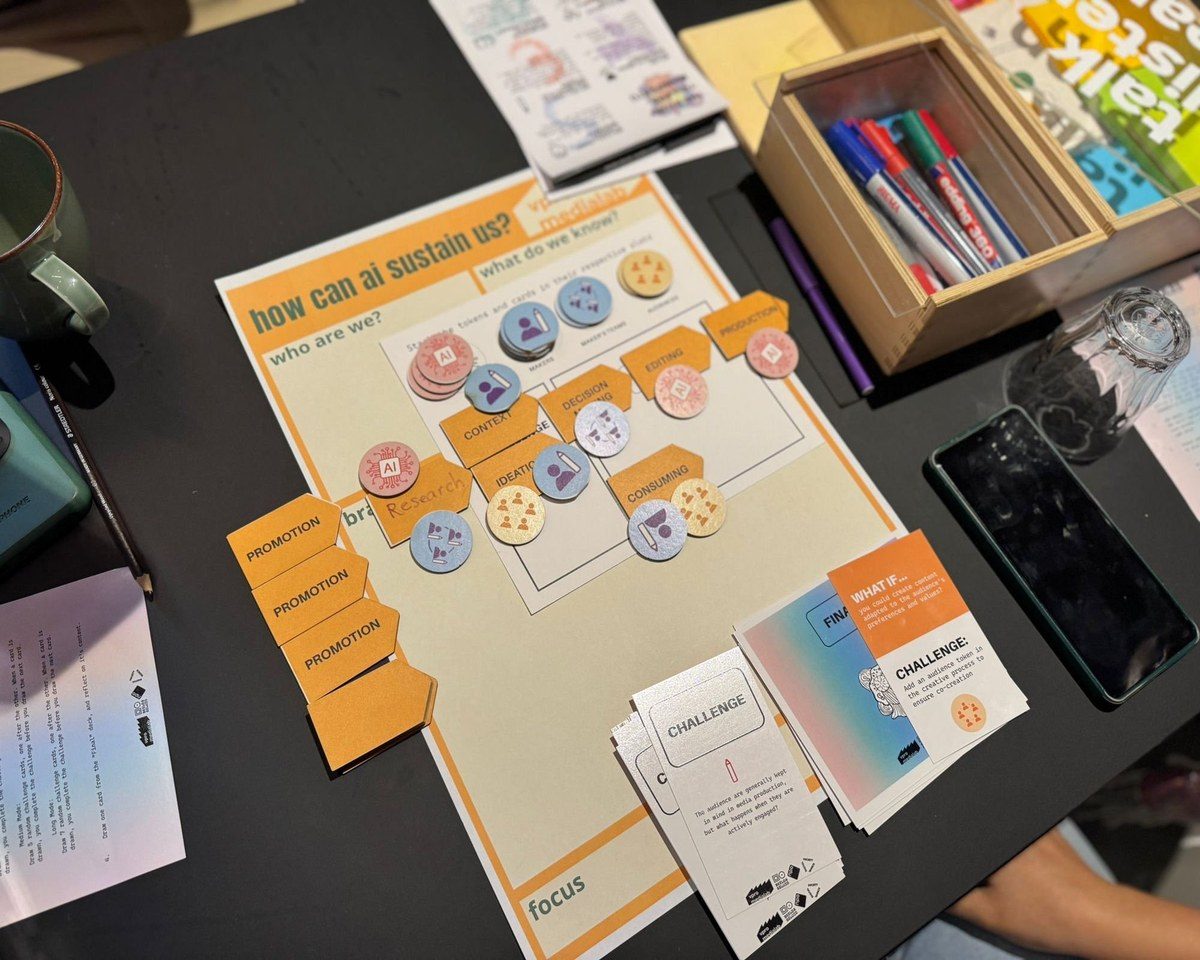
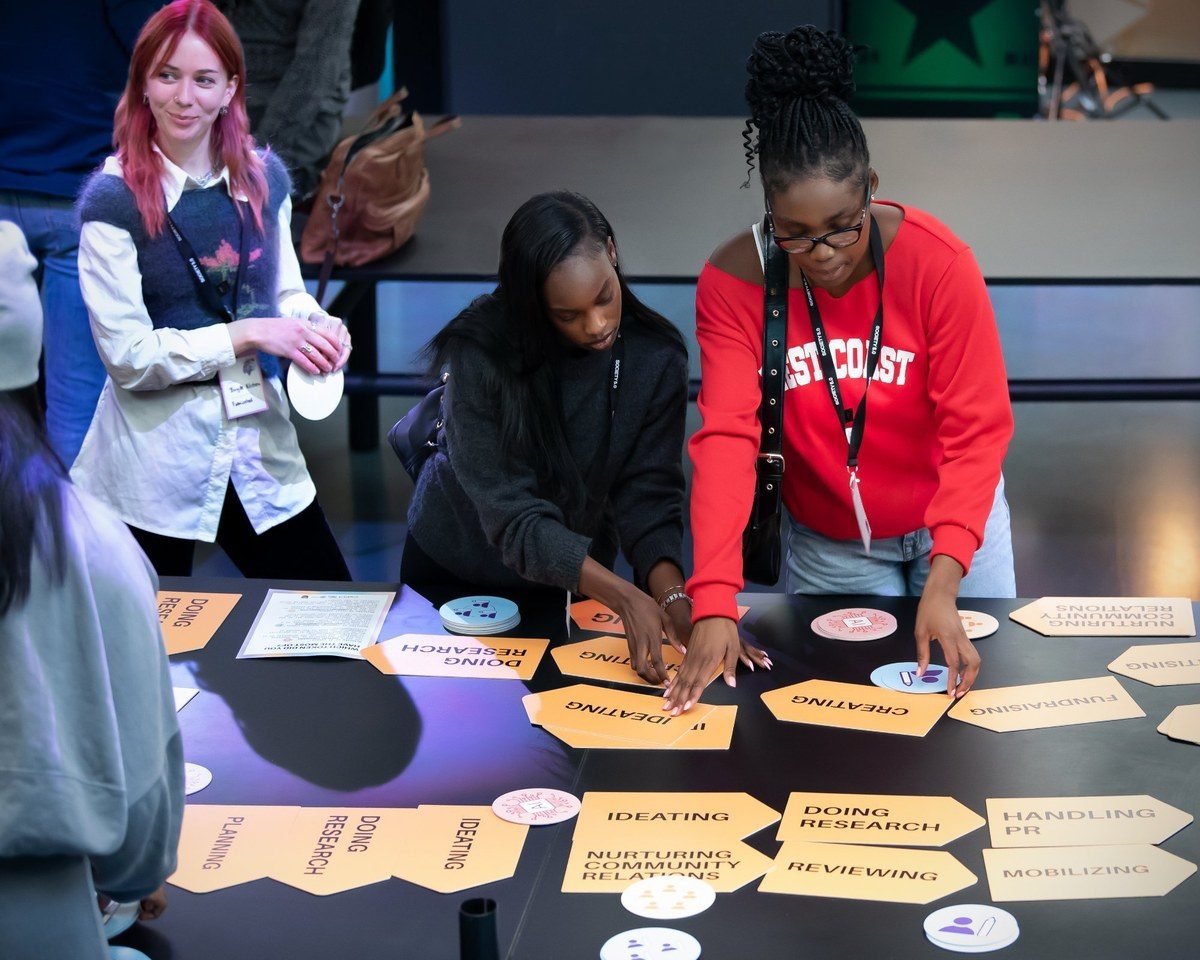
Left: The game board — "How can AI sustain us?" with role tokens and campaign stages · Right: Participants at Society 5.0
Commissioned by Digital Society School, the Election Edition was brought to life across two major events in 2024 — first at MozFest in June, then at Society 5.0 in October. Each session ran as a 60-minute facilitated workshop with live gameplay, reflection, and audience feedback.
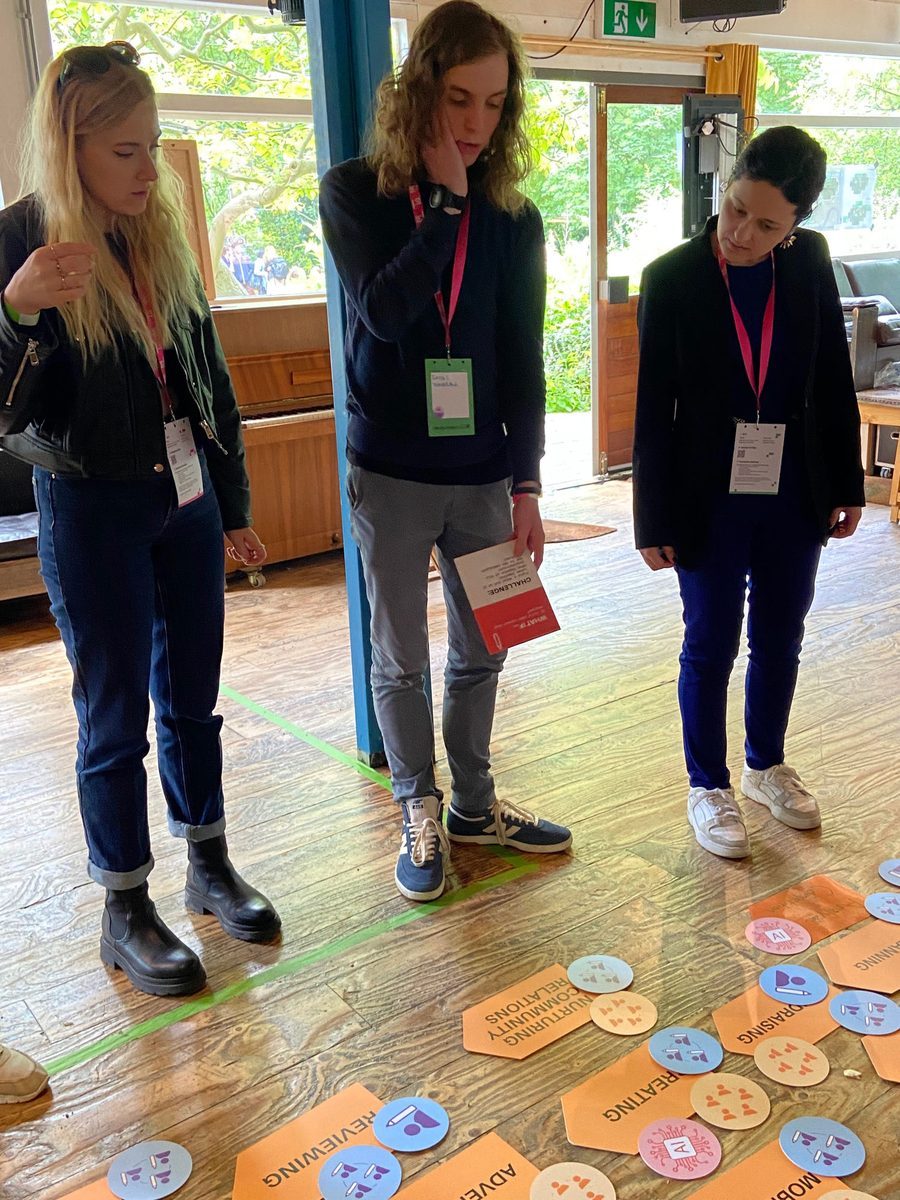
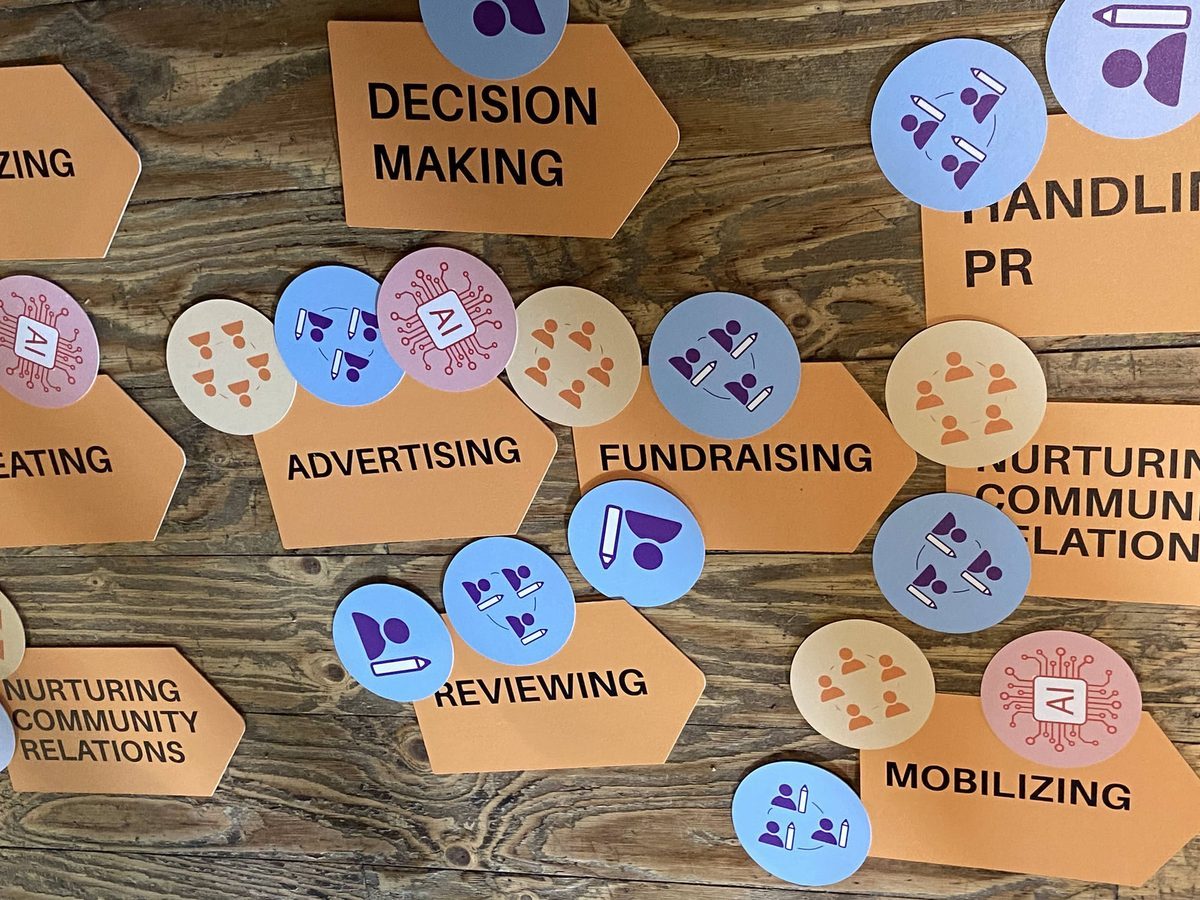
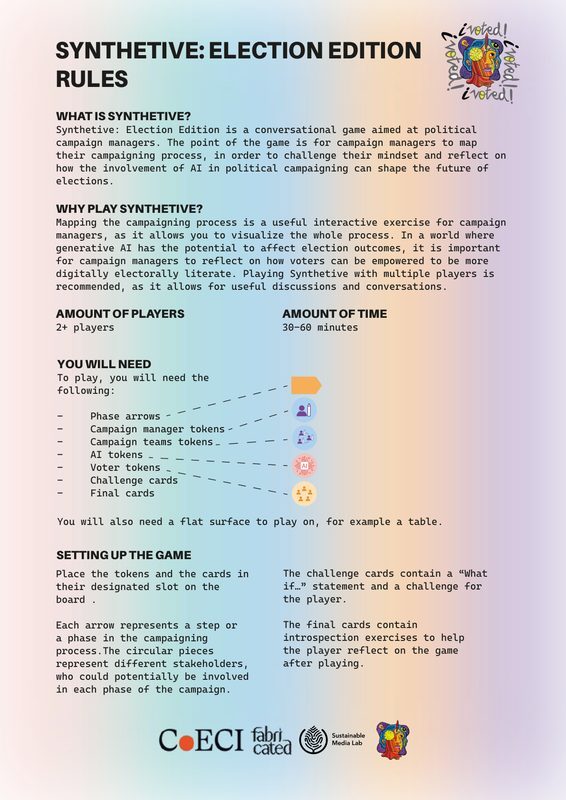
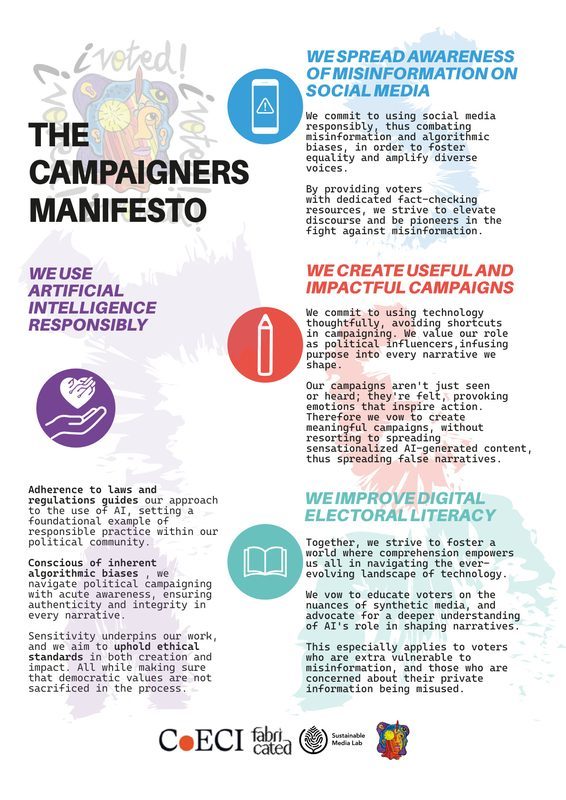
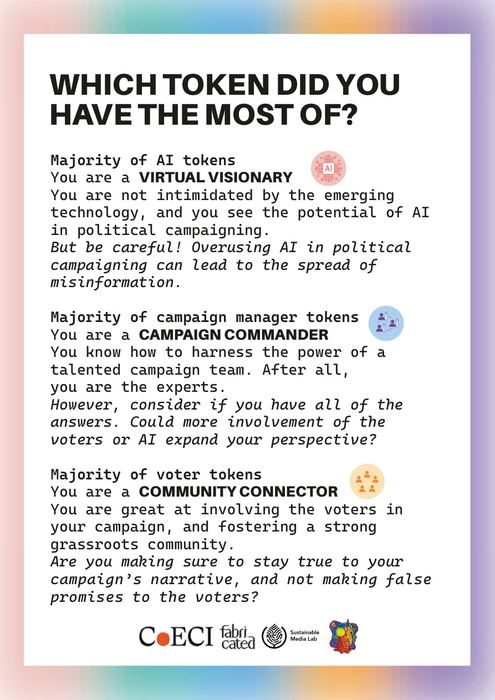
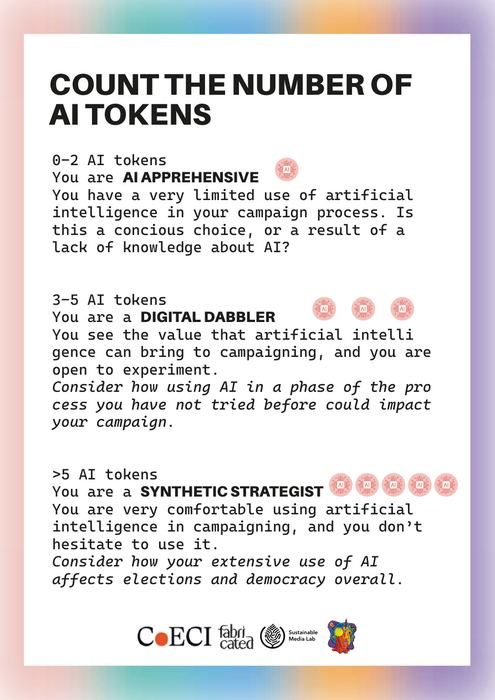
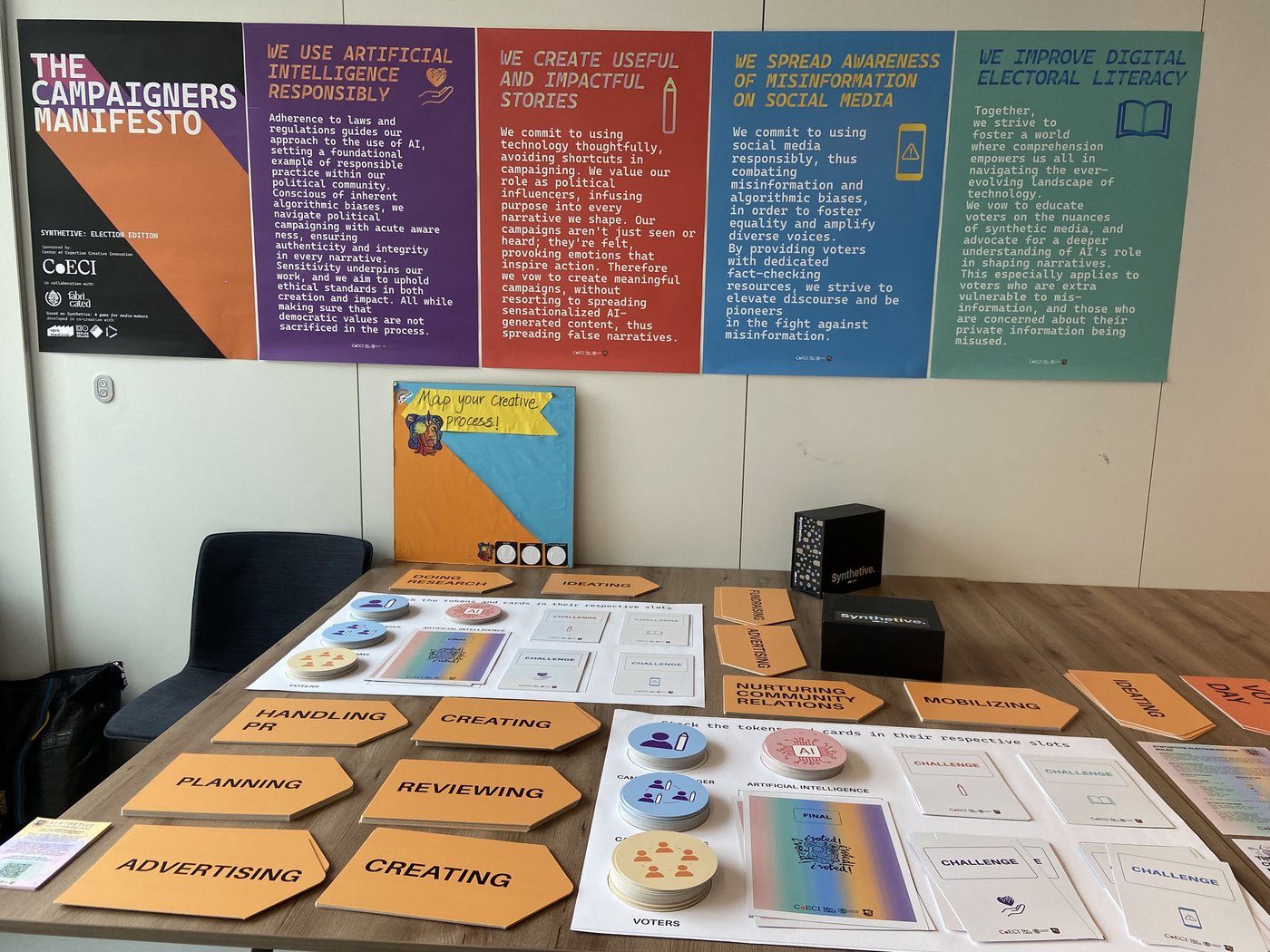
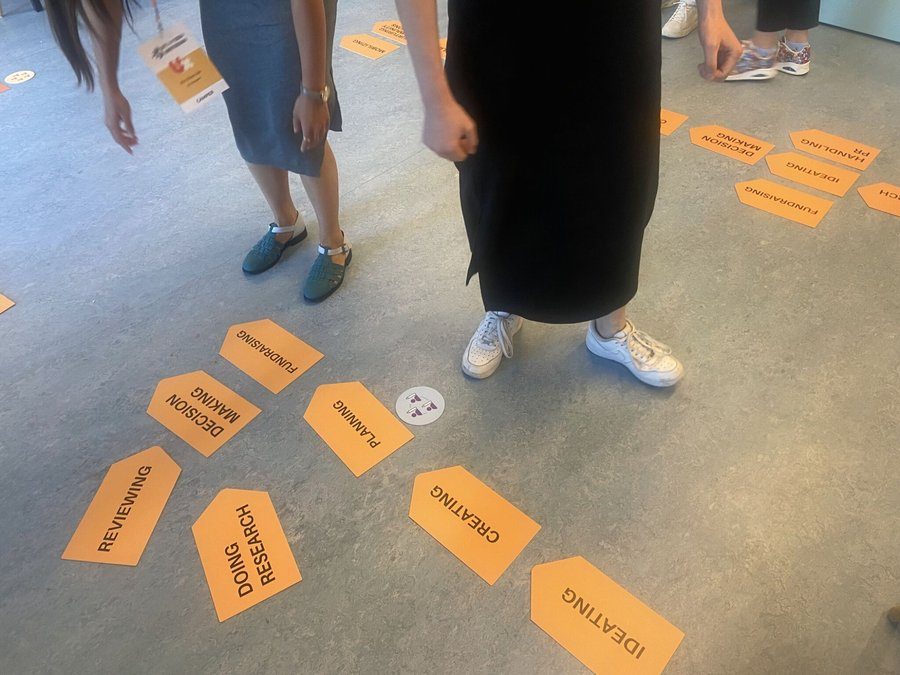
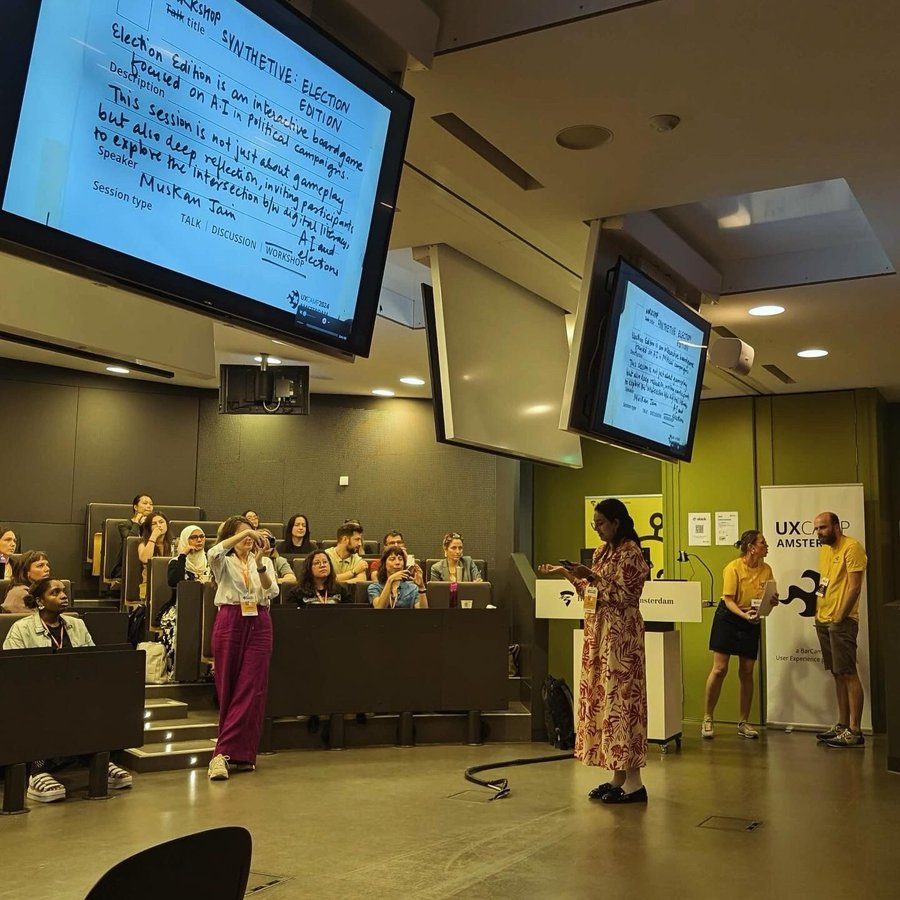
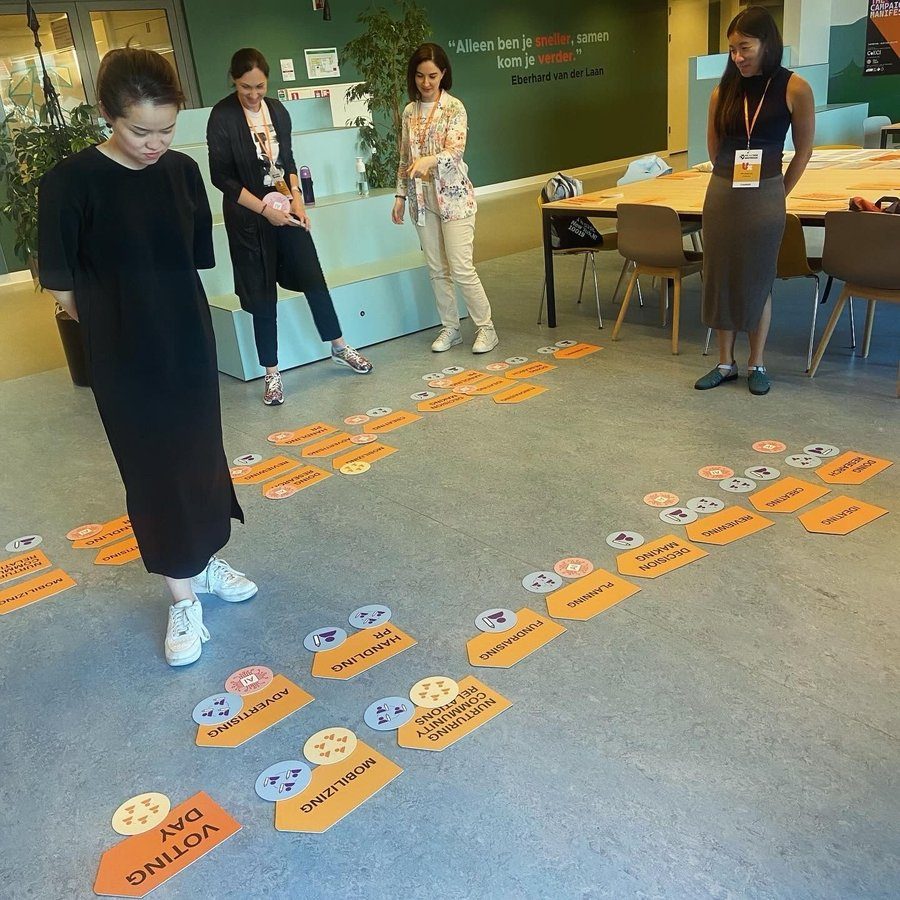
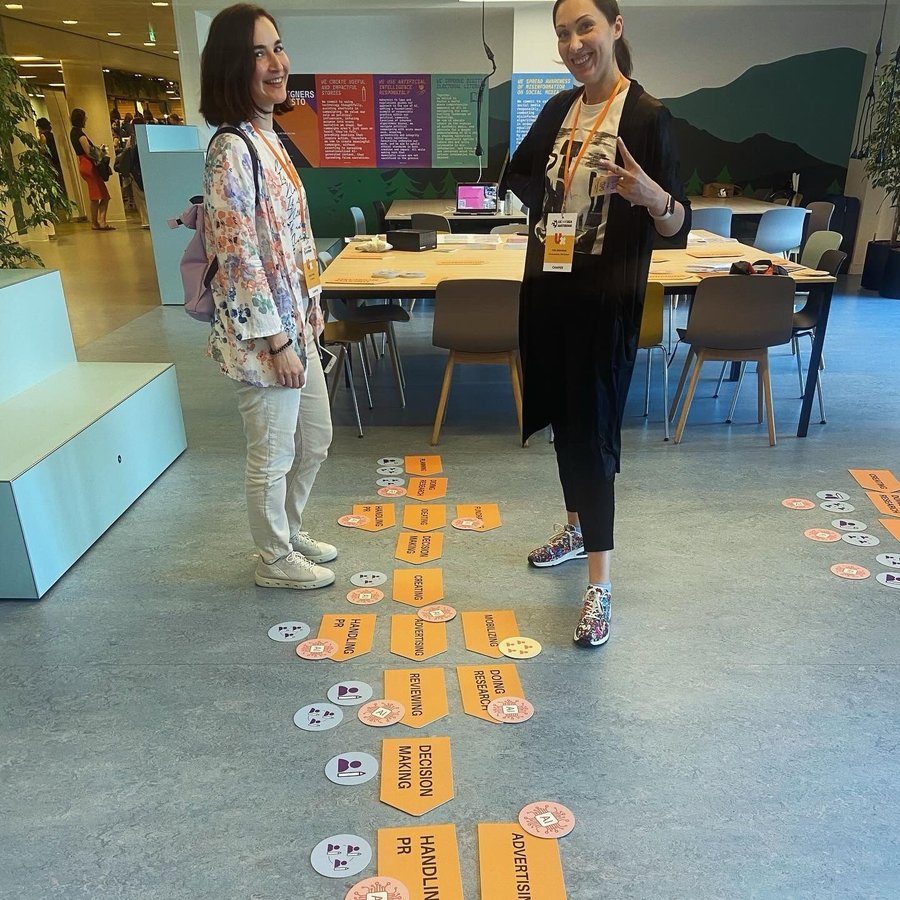
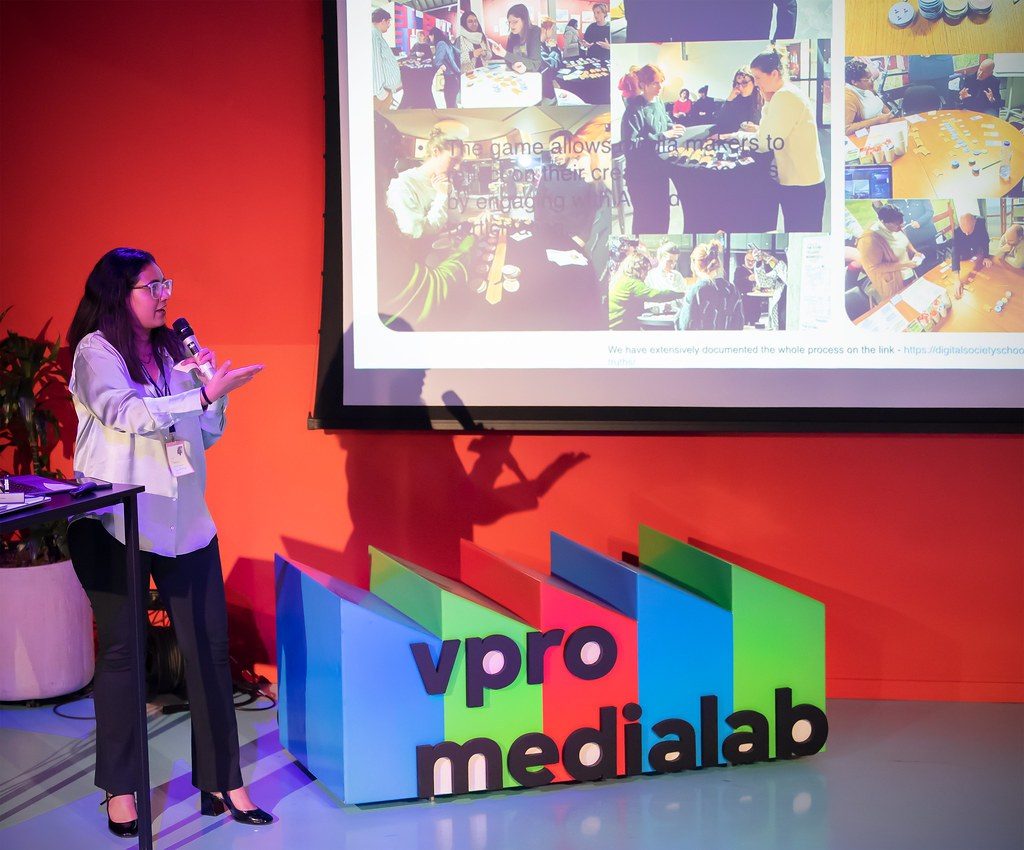
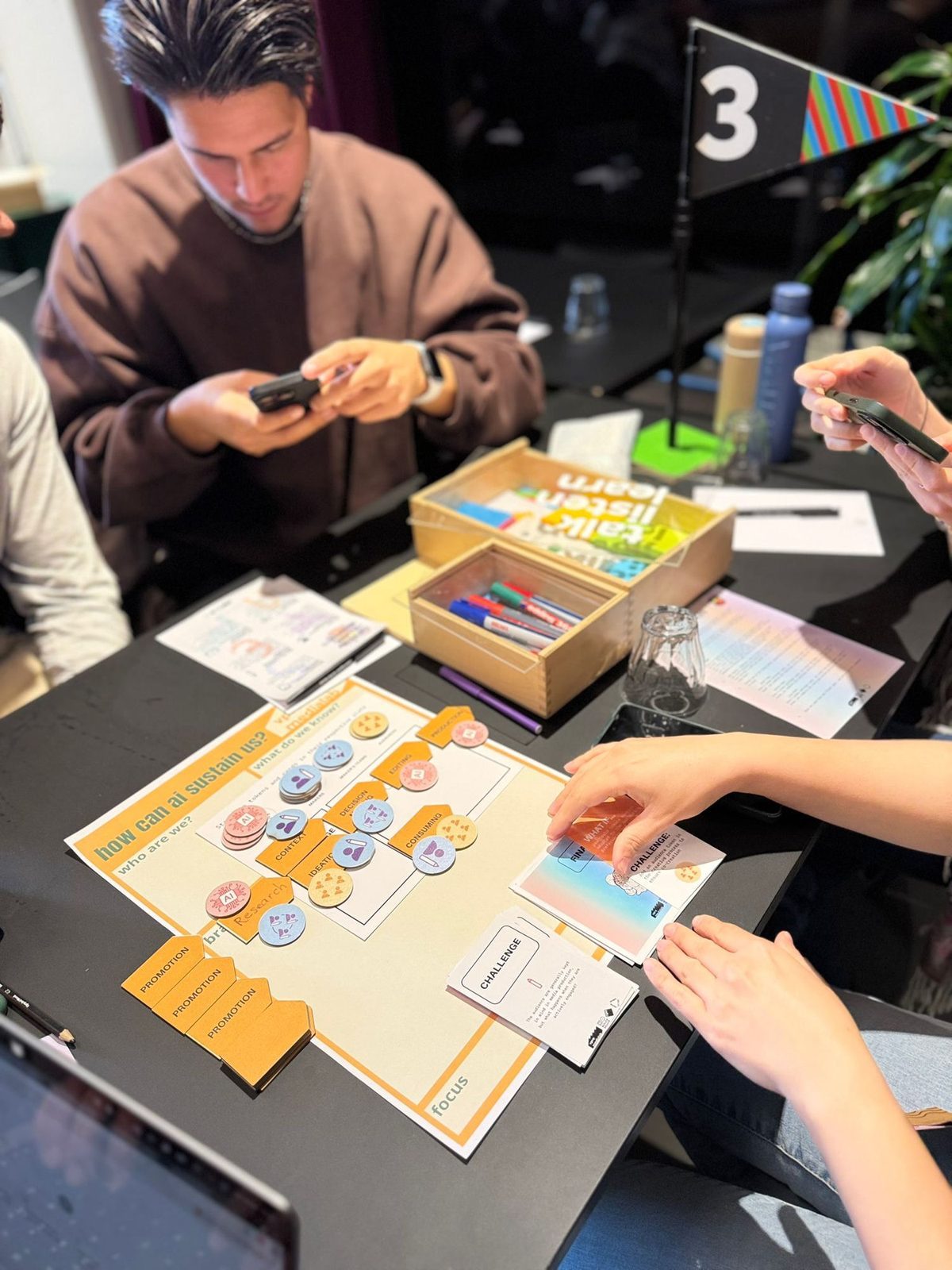
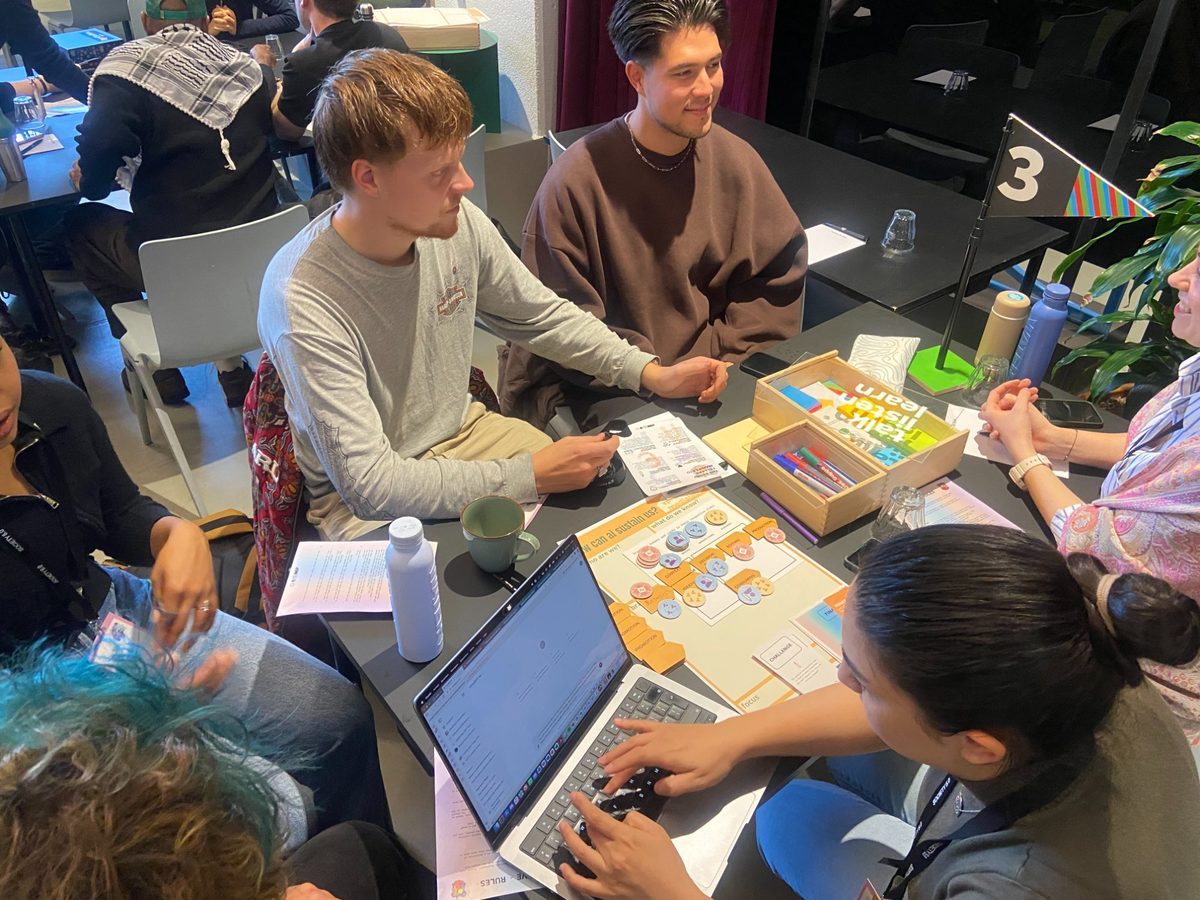
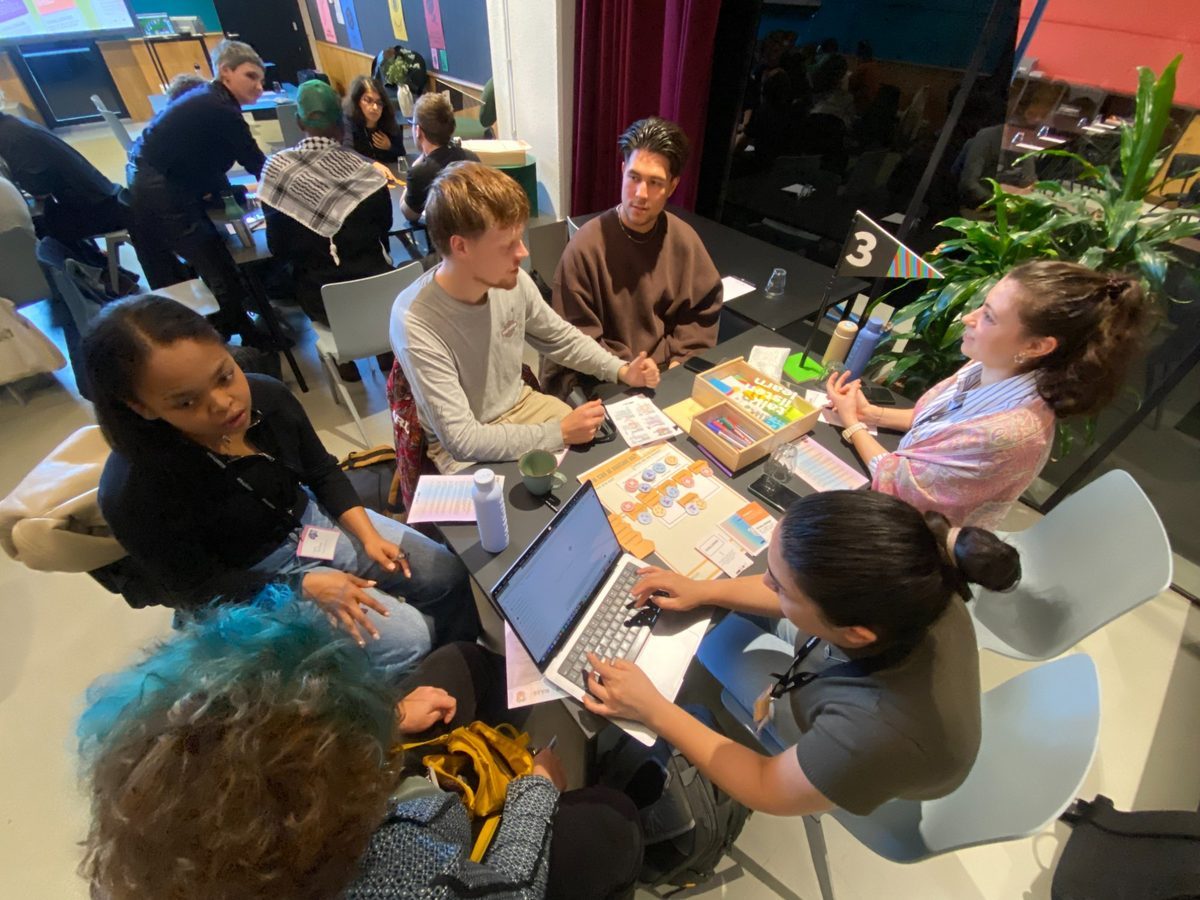
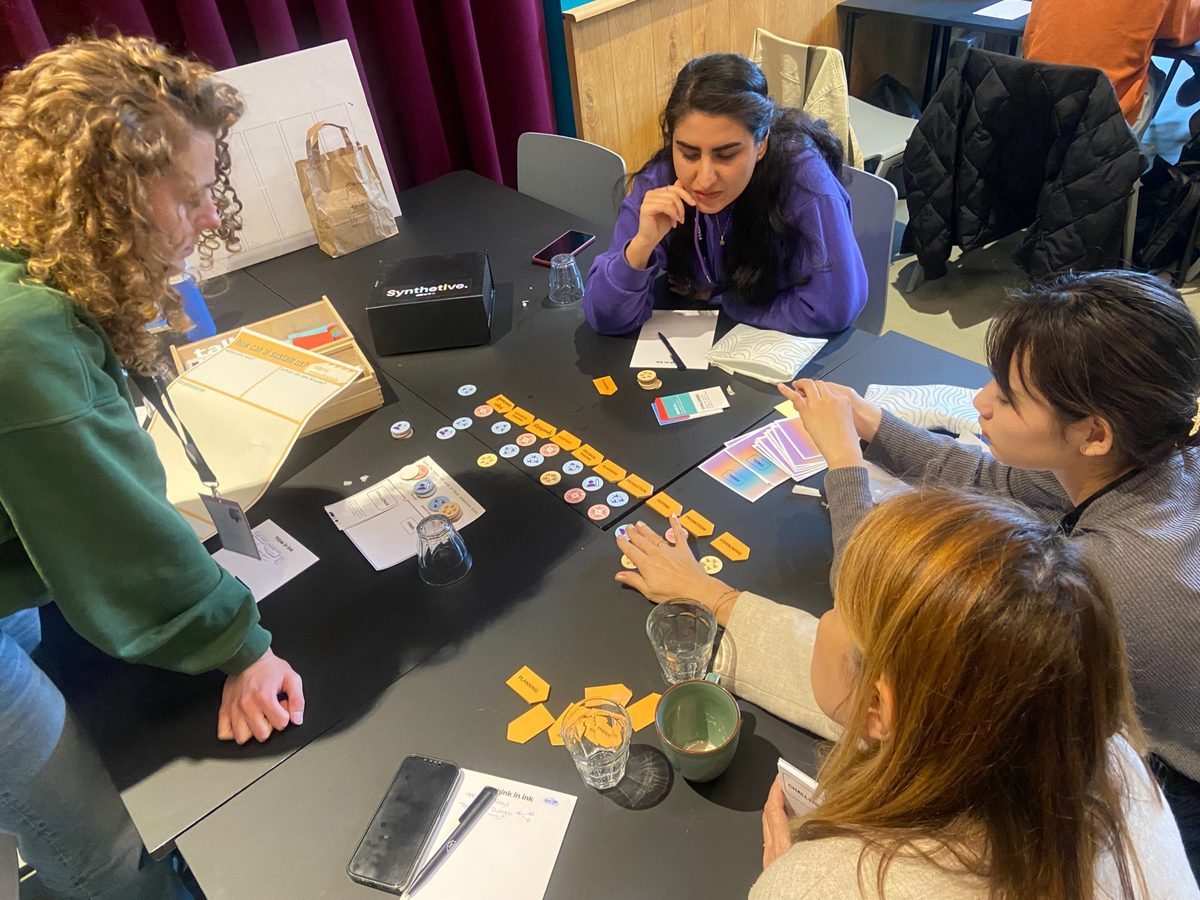
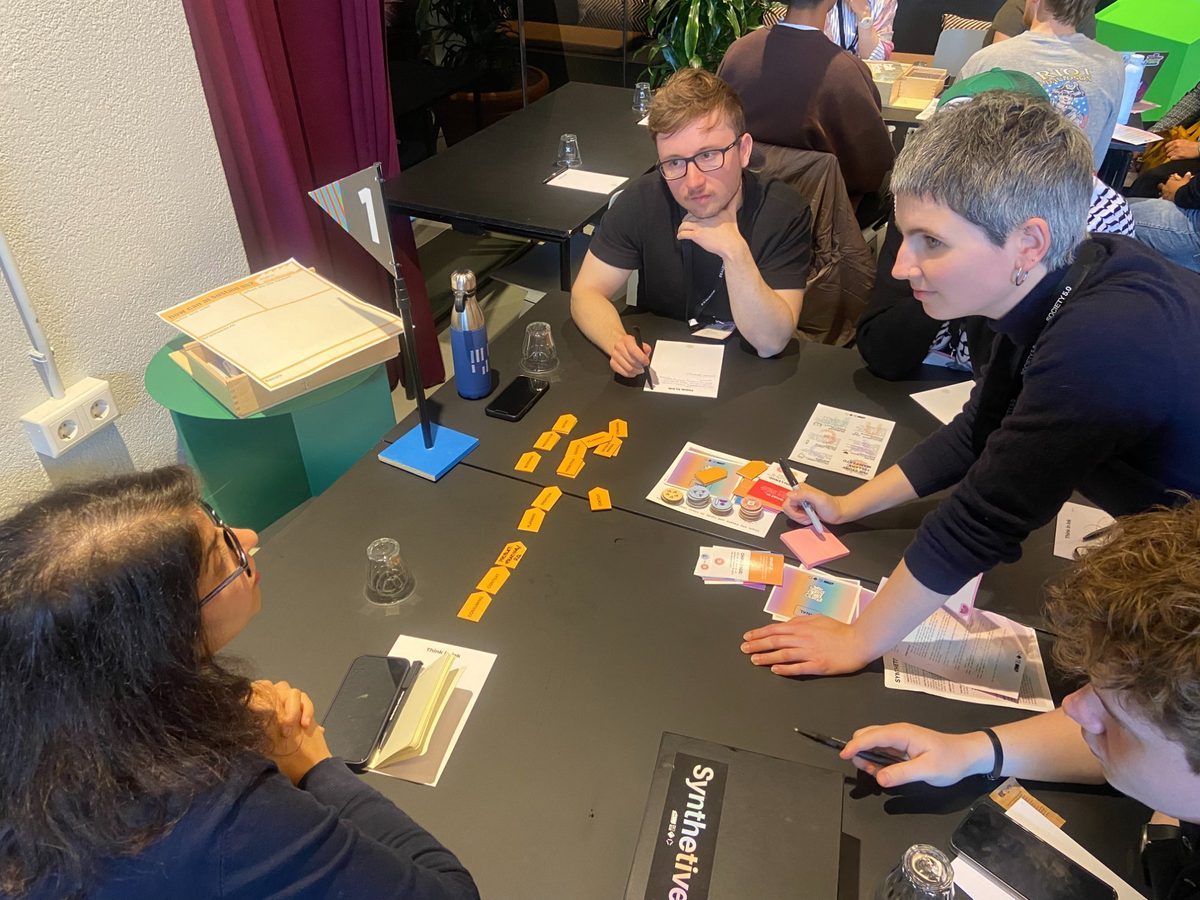
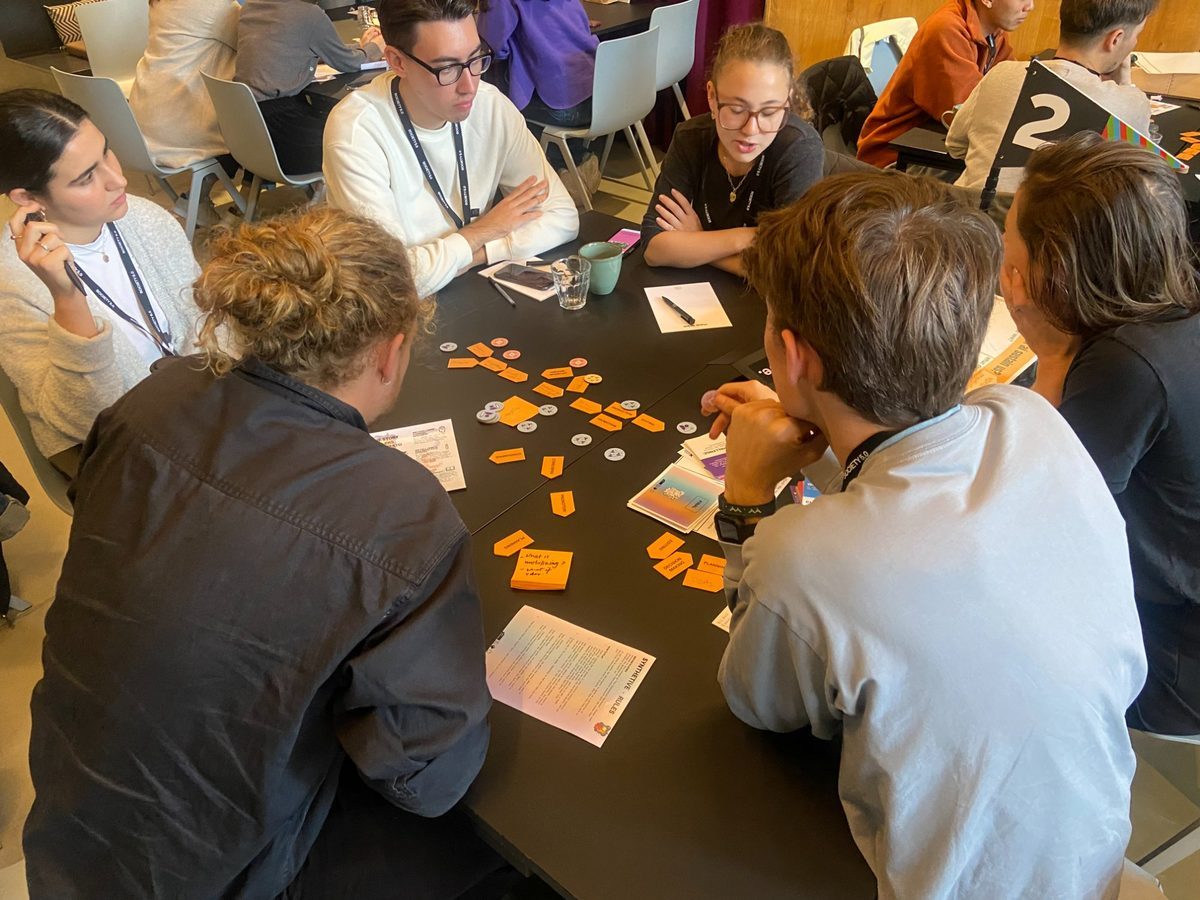
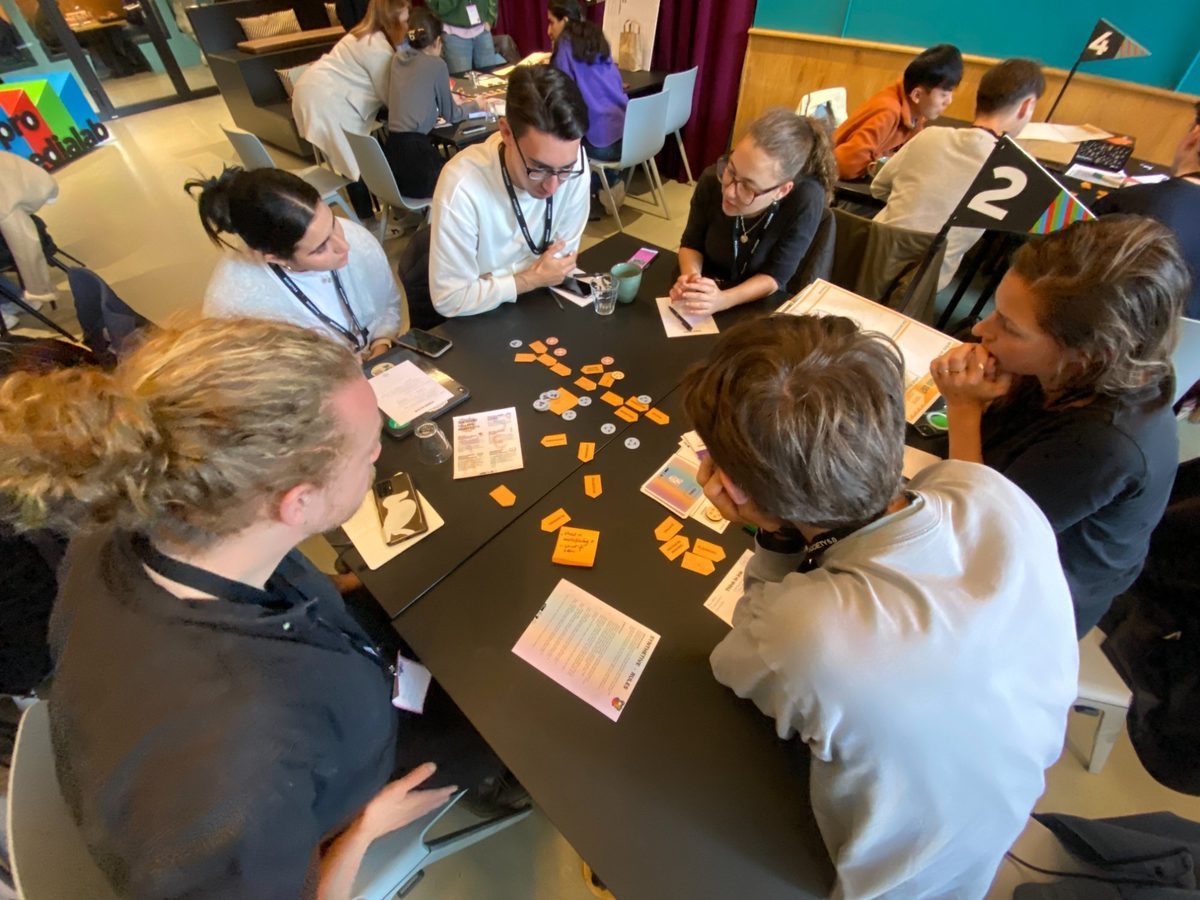
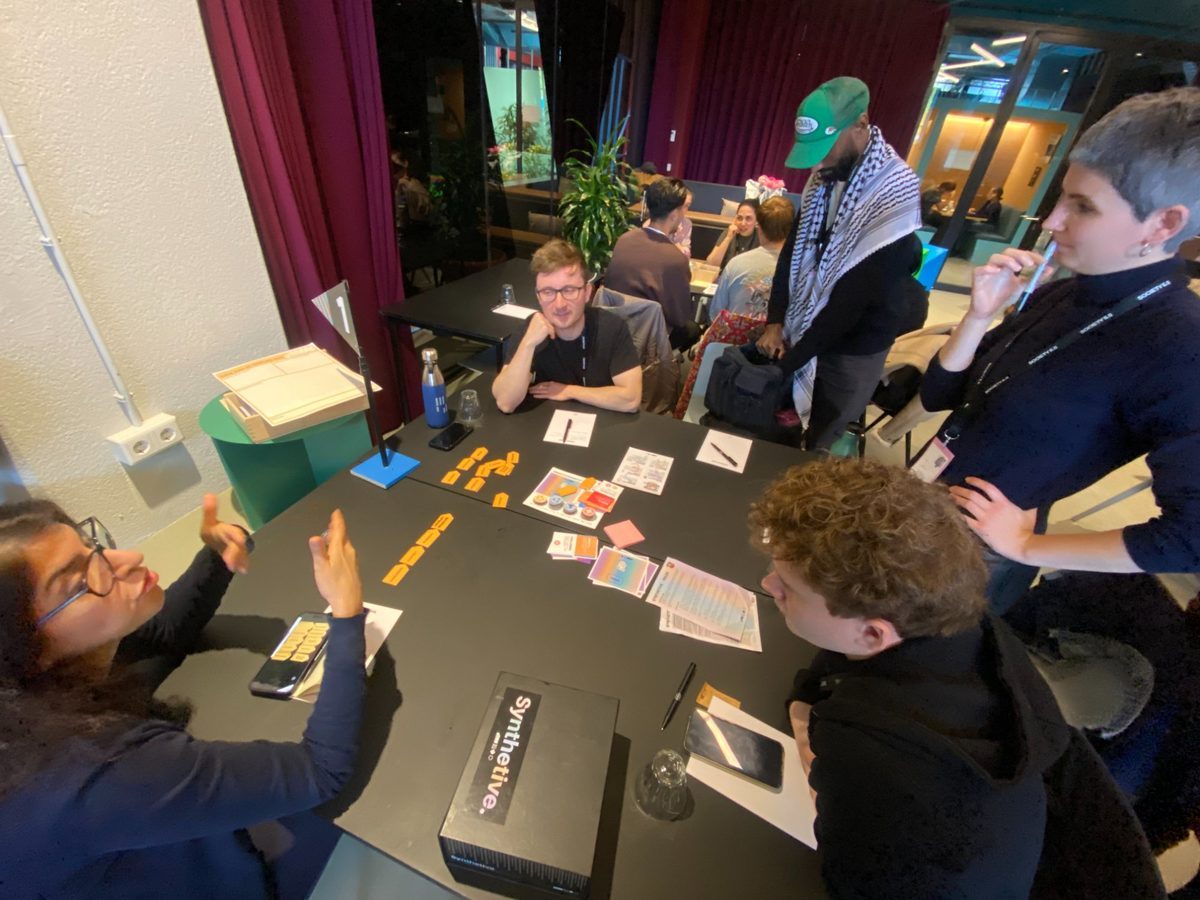
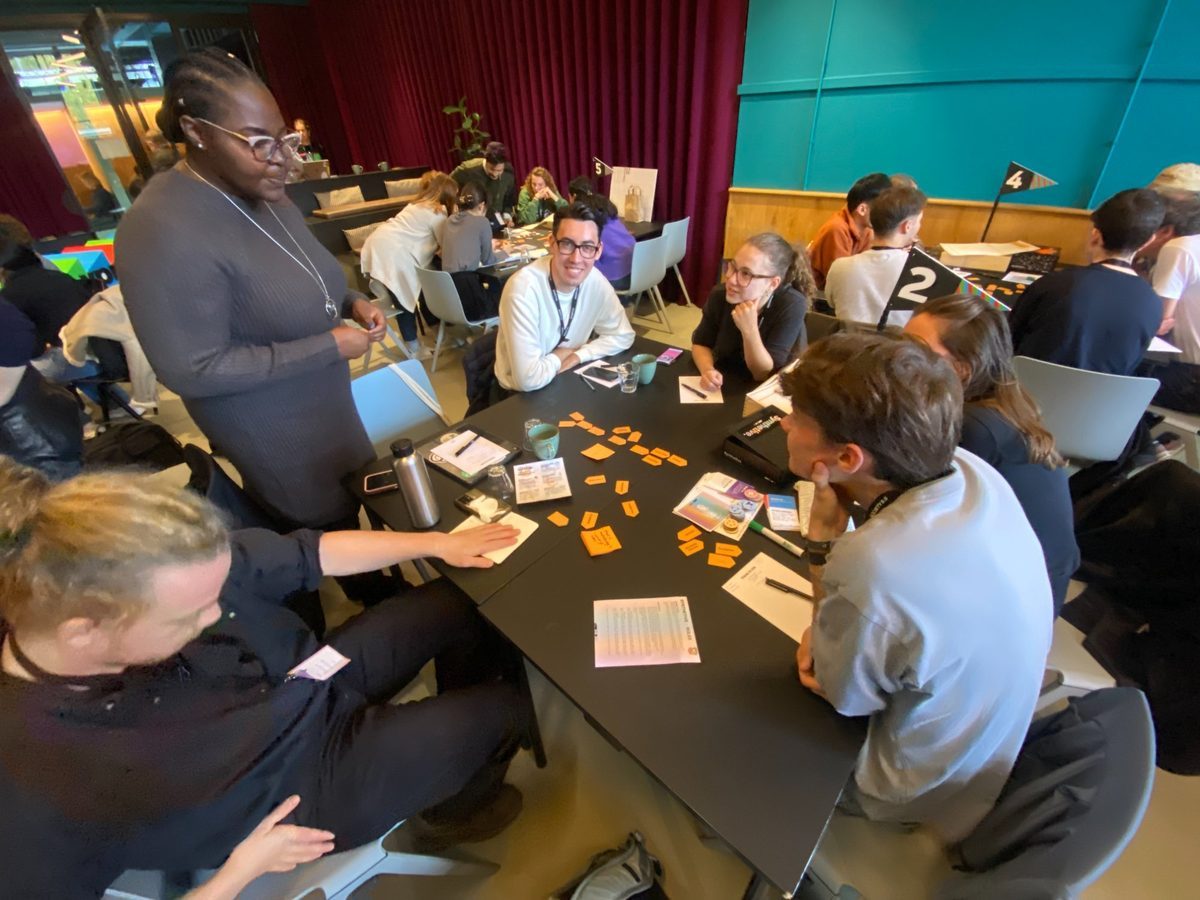
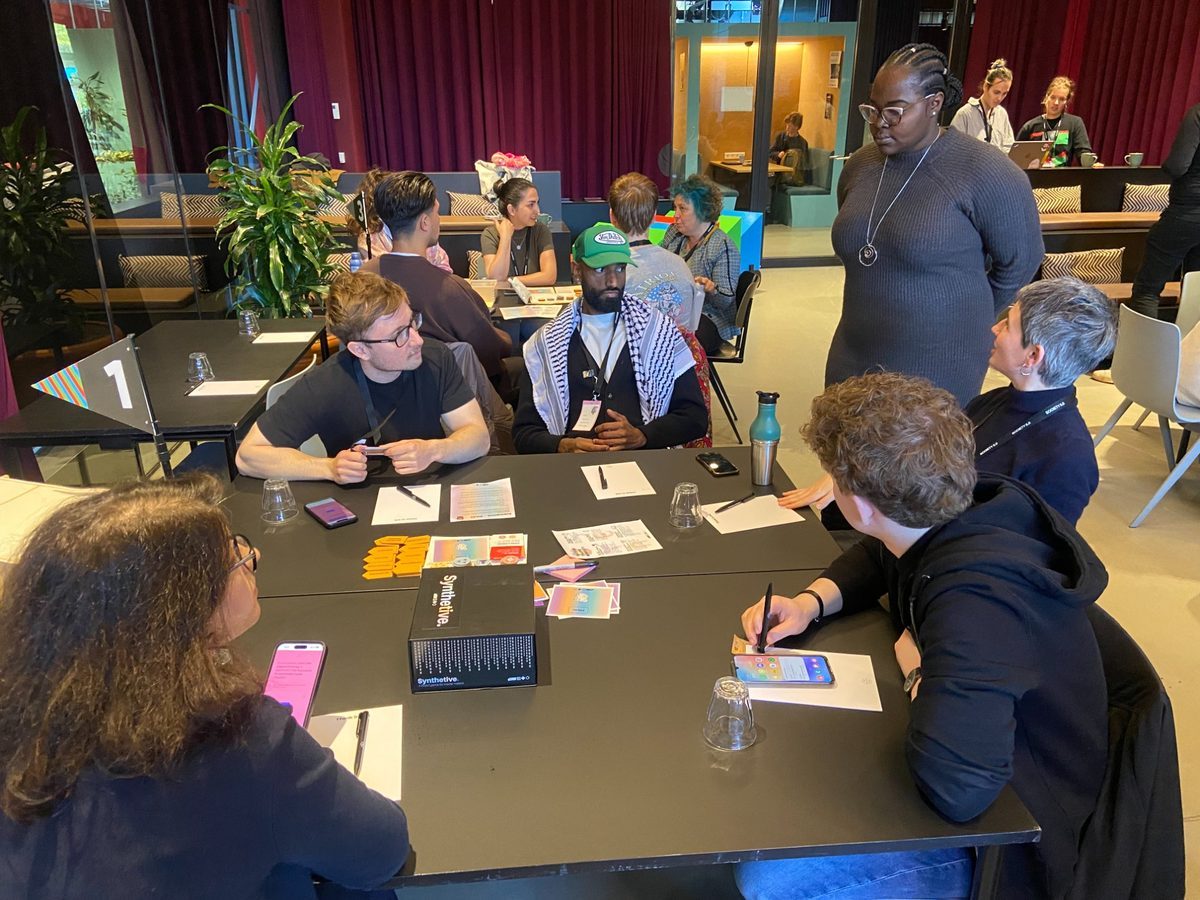
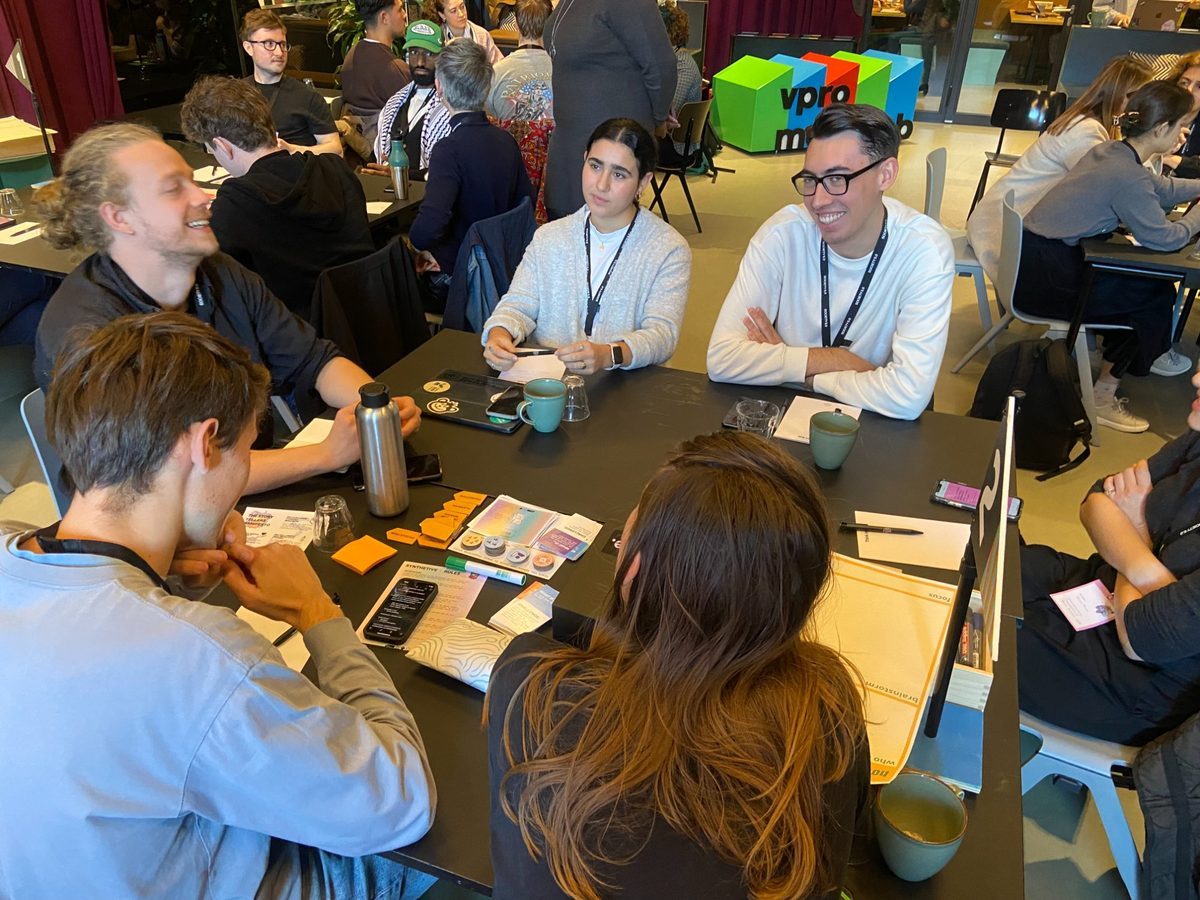
We re-imagine the role of the maker and encourage collaboration with technology, working in ways that transcend individuality and linearity.
Our stories aren't just seen or heard — they're felt, provoking emotions that inspire action, entertain, enlighten, and make meaningful impact.
We embrace awareness of bias in AI-generated content and educate audiences on the nuances of synthetic media.
We navigate content creation with awareness, ensuring authenticity, transparency, and integrity — respecting diverse perspectives and promoting empathy.
Contracted by Digital Society School to design, produce, and facilitate two public workshops (MozFest June 2024 · Society 5.0 October 2024). Responsible for game design, UX research, all physical materials production, and visual design of game components.
Sustainable design researcher focusing on solutions that balance environmental impact and human needs. Co-facilitated the Society 5.0 and MozFest workshops.
46% of EU residents lack the basic digital skills required to make informed political decisions (AlgorithmWatch / European Commission). The 2023 Dutch elections were marked by misinformation and deepfakes — making AI literacy in an election context not just an academic exercise, but an urgent civic need.
Synthetive and its Election Edition have been prototyped, tested publicly, and documented. The roadmap ahead points toward broader reach and deeper impact.
Expand into a digital platform or app with AI-generated scenarios and real-time events. Add AR assistants to blend digital and physical gameplay for immersive learning.
Collaborate with universities for AI, media ethics, and sustainability courses. Develop digital literacy programmes targeting youth on AI's role in elections and responsible media.
Use Synthetive to simulate AI's impact on elections and policy decisions — helping policymakers assess risks like misinformation before they become crises.
Adapt Synthetive for companies and newsrooms to explore AI's role in ethical content production, customer engagement, and sustainability — promoting responsible AI and CSR.
"Synthetive goes beyond being a game — it's a tool for reflection on responsible innovation, creative collaboration, and sustainability."
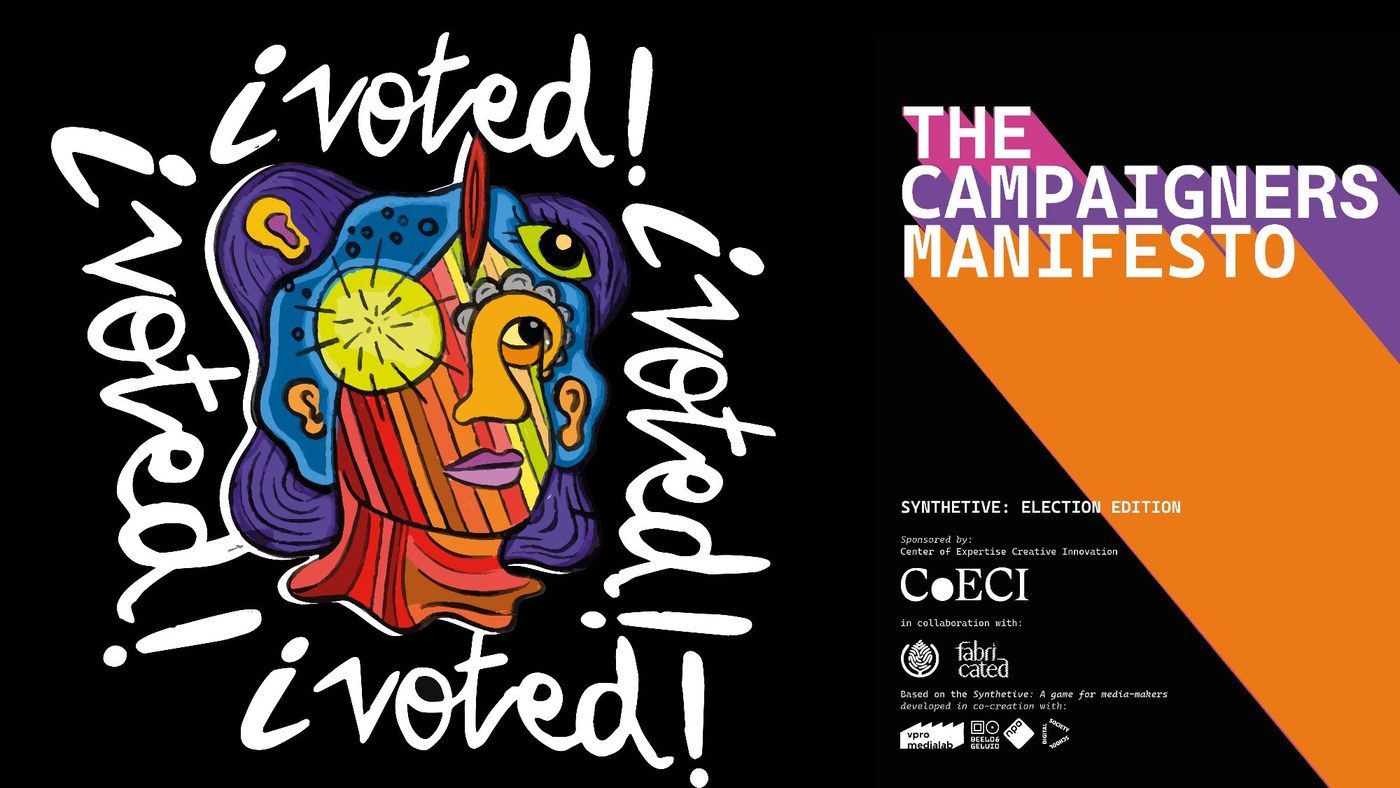
Persona photos via Pexels — Wasin Pirom, Speak Media Uganda, NILU'Z FrameScape.
More Case Studies
Colour System · UI Design
TripGoGo
→
UX Research · Product Design
Digital Sustainability Benchmark
→
Game Design · UX Research · Media Literacy
Synthetive
→
Motion Design · Storyboard · Brand Film
Ramco ERP
→
Product Design · HealthTech
Havells WellTech 🔒
→
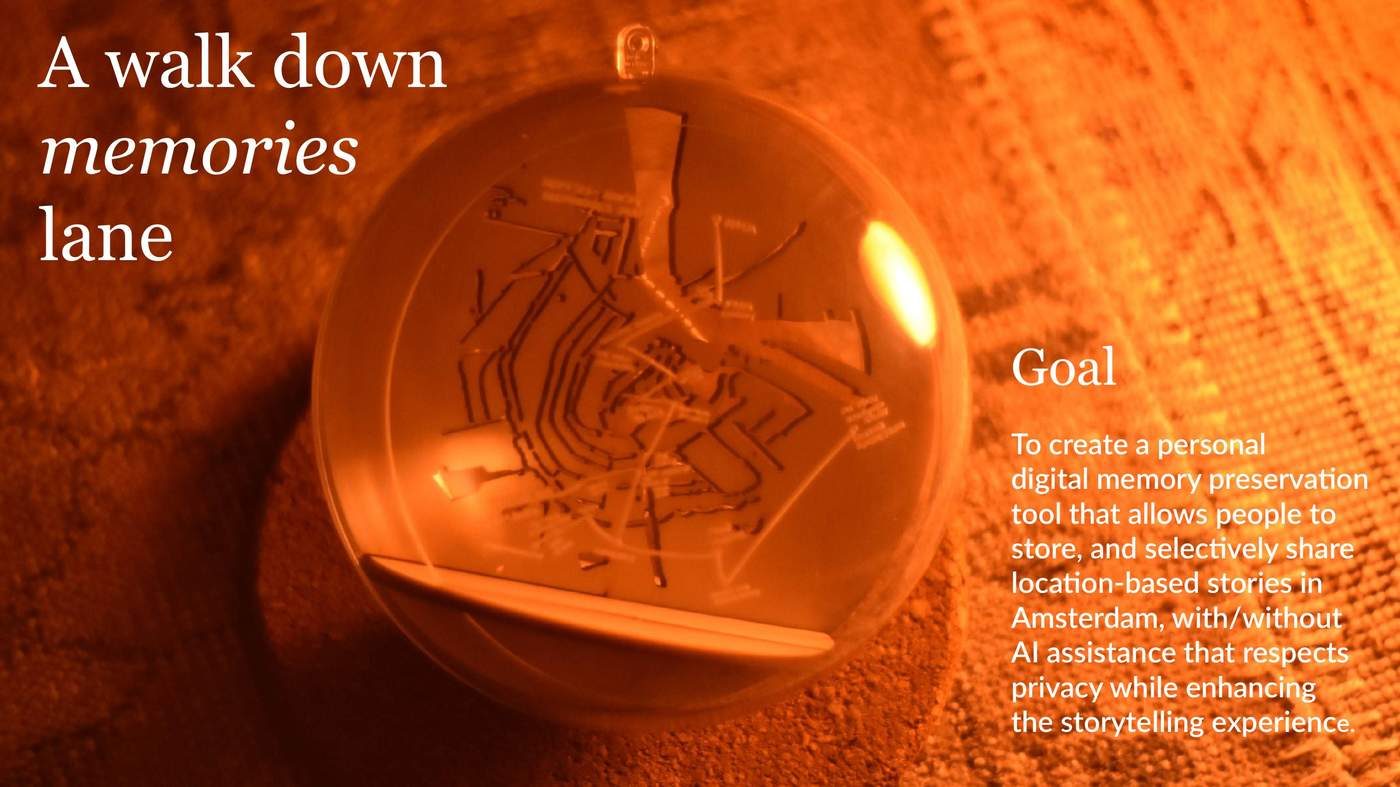
Physical Prototype · UX Design · Speculative Design · MDD Personal Project
Fysiek prototype · UX design · Speculatief ontwerp · MDD Persoonlijk project
Memories embedded in a place disappear when people leave. Memory Ball is a hand-crafted sphere containing Amsterdam's map — and a digital layer that makes those stories visible, shareable, and permanent.
✦ Final Outcome
Memory Ball is a speculative design artefact and digital companion — a palm-sized object that archives the sensory and social memory of HvA's buildings before they are demolished. The physical installation and web layer were shown in exhibition, inviting visitors to leave and retrieve memory fragments.
Physical Artefact
A cast glass-and-resin object embedding archived material — photographs, sounds, personal accounts — from within the building.
Digital Companion
Web application layer allowing visitors to contribute and access memory fragments linked to specific spatial coordinates.
Shown in Exhibition
Installed and exhibited at HvA — engaging students, faculty, and visitors in an act of collective memory-making before demolition.
HvA Speculative Design · Physical installation + Web application · Memory preservation
00 — Falling in Love with the Problem
I walked into the Theo Thijssenhuis on my first day at Amsterdam University of Applied Sciences and felt the weight of it — not physically, but temporally. Students had been designing in it for decades. Protests had happened in its corridors. Breakthroughs. Late nights. First drafts of work that ended up in galleries.
And none of that was visible. The building had no memory.
I started asking around. Do you know who designed this? What happened here in 1992? The story of this particular stairwell? Almost nobody knew anything — yet everyone I asked was visibly moved by the question itself.
The stories existed, somewhere — in the people who'd walked these halls. But there was no mechanism for them to become part of the building's living knowledge.
That's the problem I fell in love with: not the technology of memory, but its geometry. When you leave a place, where do your memories go? Not your digital archive — your relationship with a particular corner, at a particular time of day, in a particular phase of your life.
We're generating more digital traces than any previous generation, yet losing the most situated, most irreplaceable kind of memory: the memory of place.
The Memory Ball emerged from asking: what if the memory could stay? What if a physical object — beautiful, holdable, permanent — could anchor a digital layer of accumulated stories? Not a screen. Not a QR code.
A sphere that holds a city's map, glows when you hold it, and invites you into a world of deposited memories. The prototype became a meditation on legacy — on designing for the people who'll arrive after you.
Every building is full of stories that leave when people leave. Memory Ball was designed to give those stories a place to stay.
750+
years of Amsterdam history accumulating invisibly in its buildings
0
existing mechanisms to access the Theo Thijssenhuis's living history in-situ
∞
stories waiting to be deposited — by anyone who has ever walked through
0A — Stakeholder Map
A memory archive for a place touches an unusually wide set of stakeholders — from current students who deposit memories to future visitors who receive them, from institutional archivists who curate to community members who have never been inside. Mapping this helped define what the system needed to protect as much as what it needed to enable.
Memory Depositors — People who leave stories
Current & Former Students
Have located, personal memories of the space
Faculty & Staff
Carry institutional memory across decades
Alumni Network
Connect present meaning to historical context
Original Architects / Makers
Know the intent behind the design
Memory Receivers — People who discover
Visitor / Curious Passerby
Encounters the object, enters the layer
Researcher / Historian
Uses the archive to understand the building's past
ThingsCon / Design Community
Engages with the speculative design provocation
Institutional & Structural Stakeholders
HvA Institution
Owns the space and its identity
Archives & Special Collections
Custodians of institutional record
AI / Platform Infrastructure
Powers the conversational memory layer
Data & Ethics Board
Protects memory contributors' rights
0B — User Personas
These personas shaped the interaction design of both the physical object and the digital layer — specifically, the balance between discovery and contribution, between receiving stories and leaving them.

Zeynep
Final-Year Design Student
24 · Amsterdam
"I've spent four years here. In a few months I'll be gone and this building won't know I existed."
Needs
Frustrations
Motivation: Wants to contribute to the building's story — and feel that four years of work and growth meant something beyond her own portfolio.

Henk
Visiting Professional, ThingsCon
51 · Utrecht
"I've been in hundreds of interesting spaces. I almost never know what they meant to the people who made them."
Needs
Frustrations
Motivation: Wants to leave a building knowing more about it than when he entered — and to take a story home with him.

Iris
Institutional Archivist, HvA
46 · Amsterdam
"We have records of every building project. We have almost nothing of what happened inside them after they were built."
Needs
Frustrations
Motivation: Wants the HvA's buildings to accumulate not just history but humanity — a record that future students will want to access, not just scholars.
Walking through Amsterdam, I kept thinking: every building, every corner holds countless stories — from the people who designed it, studied in it, worked in it, protested in it.
The Theo Thijssenhuis at Amsterdam University of Applied Sciences is buzzing with design innovation, yet the personal stories of everyone who walked these halls remained completely invisible.
In our hyperconnected world we're creating more digital memories than ever — yet so many slip away into forgotten hard drives and abandoned social media accounts. The central design question: "What if generative AI could transform spaces into interactive memory archives that preserve our digital legacy through conversation?"
The Memory Ball is a handmade object — not a screen or a sensor. A clear acrylic sphere holds laser-cut discs etched with Amsterdam's canal map and the TTH building's footprint. Lit from beneath, it glows like a lantern. It's something you stop and pick up.

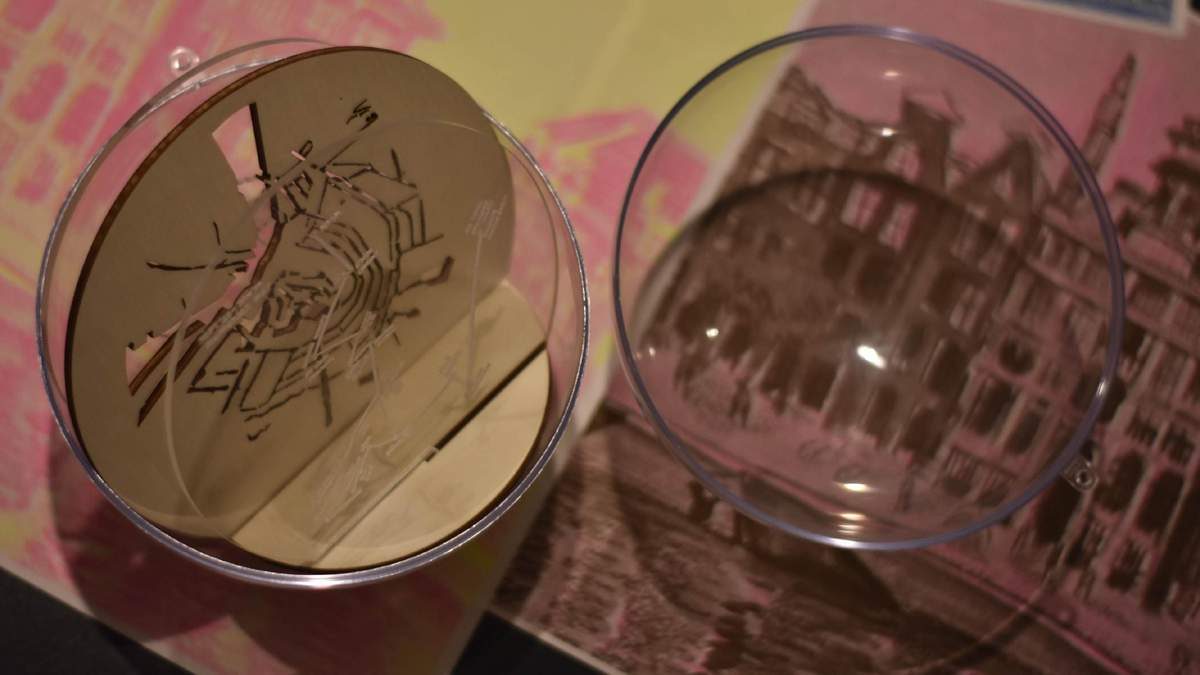
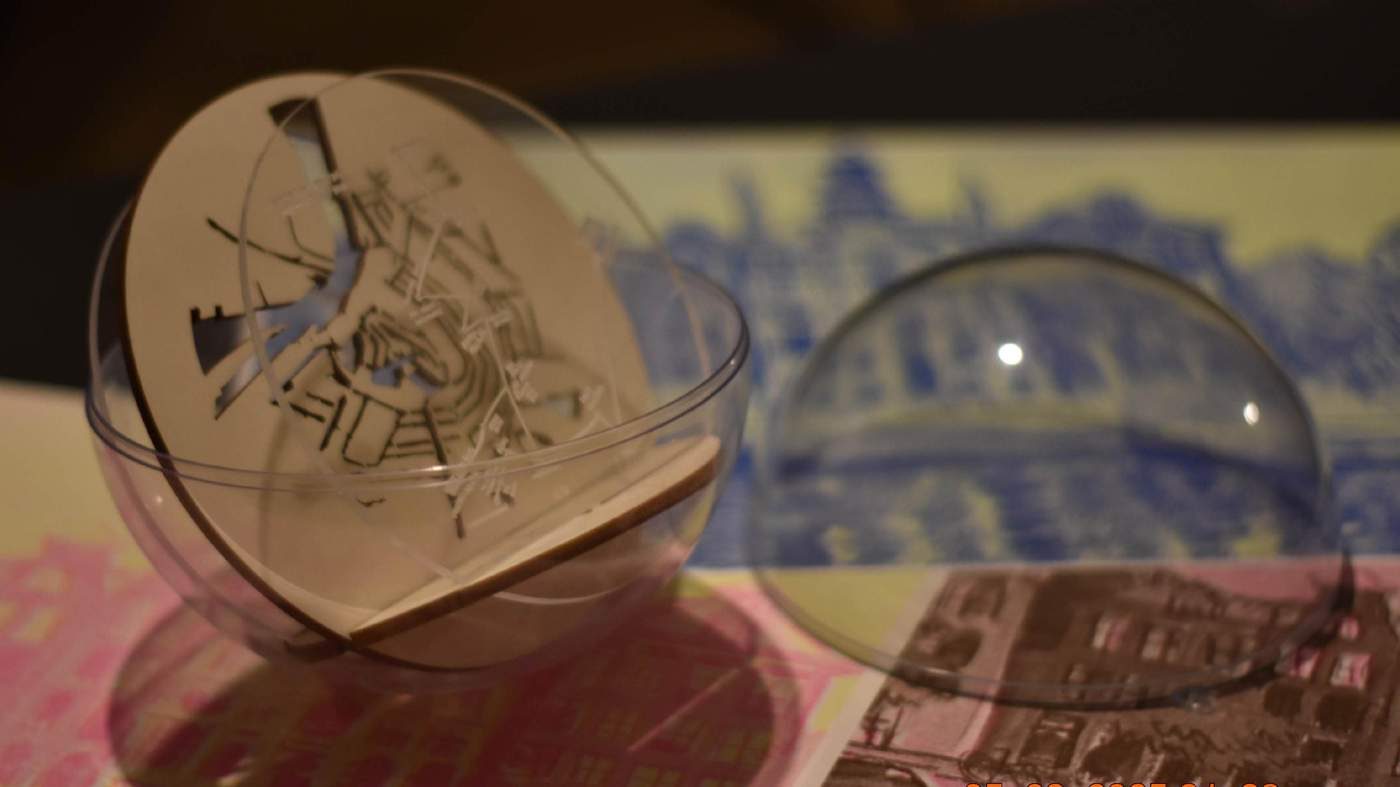
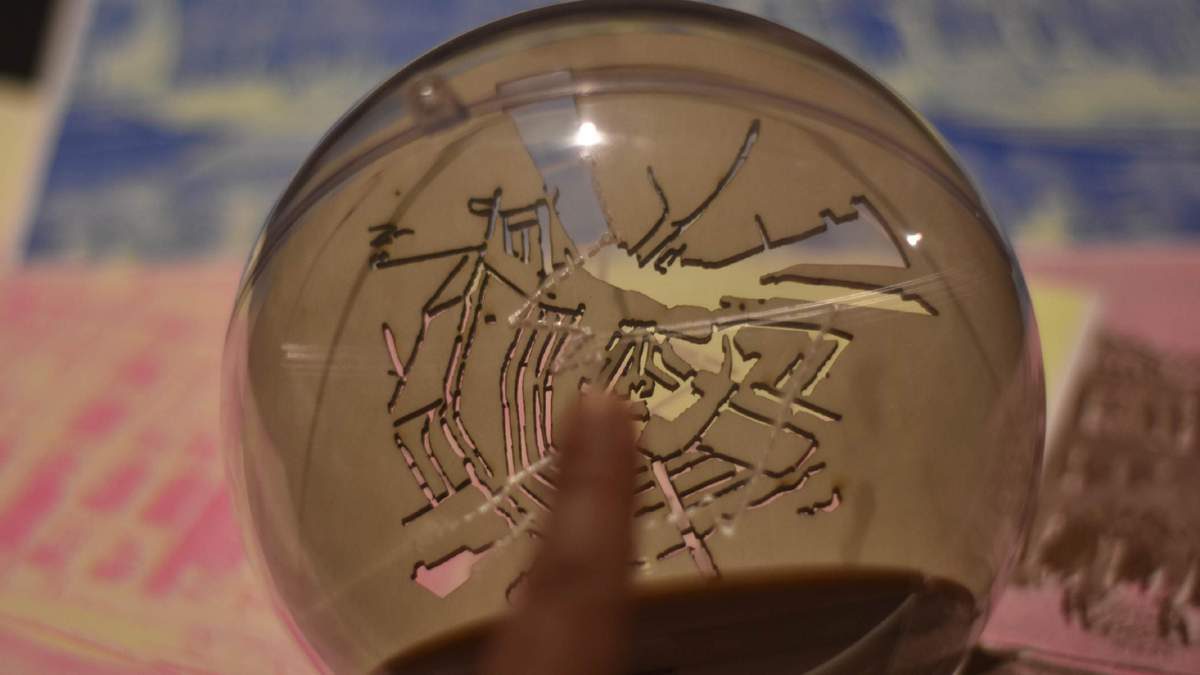
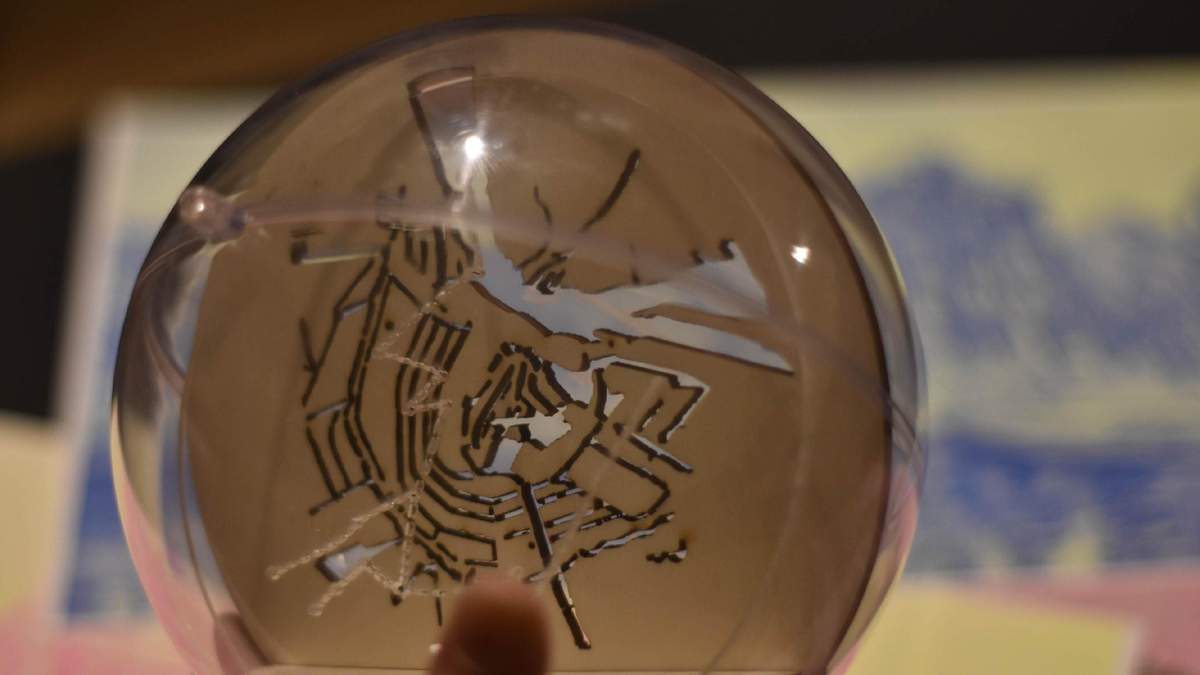
Left to right: Amber-lit prototype · Looking through the sphere · Two iterations · Components disassembled · Etched memory-network disc
Decision 01
Physical object — not a QR sticker.
A pure digital app would be invisible and ignored. The sphere earns attention through its presence alone — it's tactile, warm, and beautiful. The interaction begins before anyone opens their phone.
Decision 02
Amsterdam's map as the inner structure.
The laser-cut discs inside aren't decoration — they're the city's actual street grid and TTH's building footprint, made tangible. The sphere is a lens for the place itself. Different discs can represent different locations or memory layers.
Decision 03
AI assists — it never replaces.
The tool stores and shares stories with or without AI assistance, and always respects privacy. The AI prompts you to articulate what you feel; an anonymity toggle means you decide what's public and what stays yours.
The visual language — cream backgrounds, rust-orange accents, serif headings — was chosen deliberately. It feels like a memory: warm, personal, slightly worn. Not clinical. Not a database.
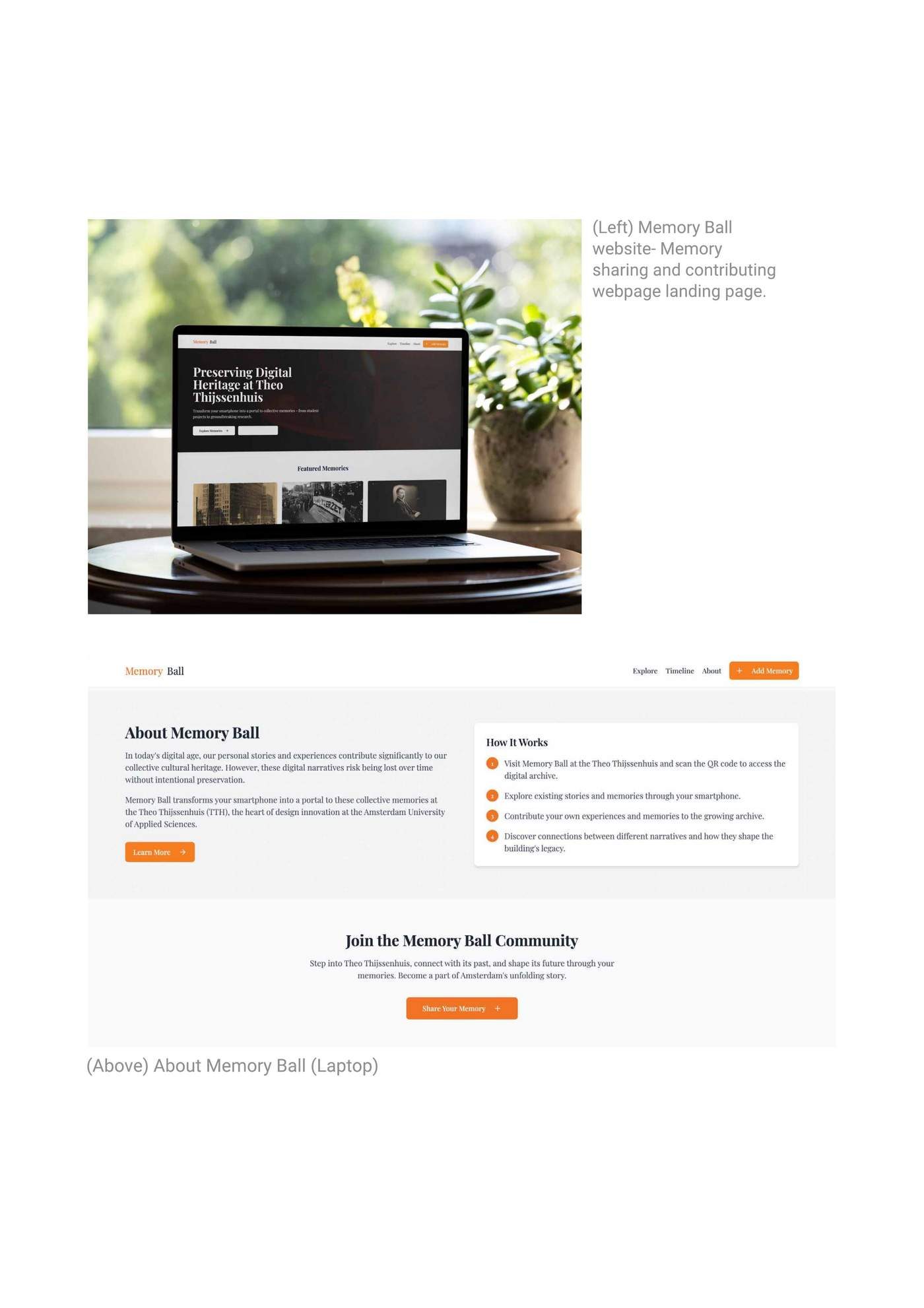
Left: Homepage — "Preserving Digital Heritage at Theo Thijssenhuis" · Right: About Memory Ball — how it works
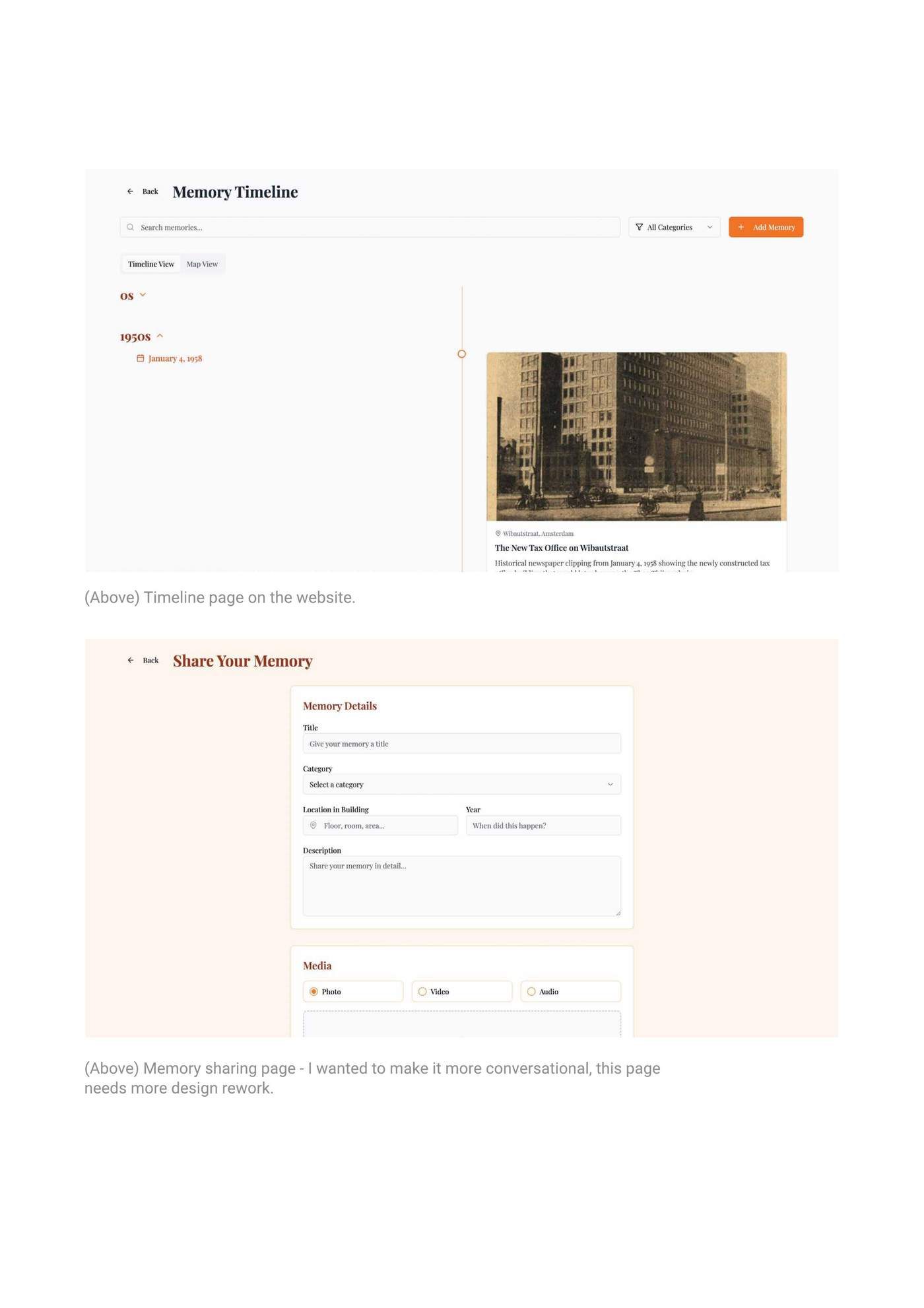
Left: Memory Timeline grouped by decade · Right: Share Your Memory form — needs a more conversational redesign (noted)
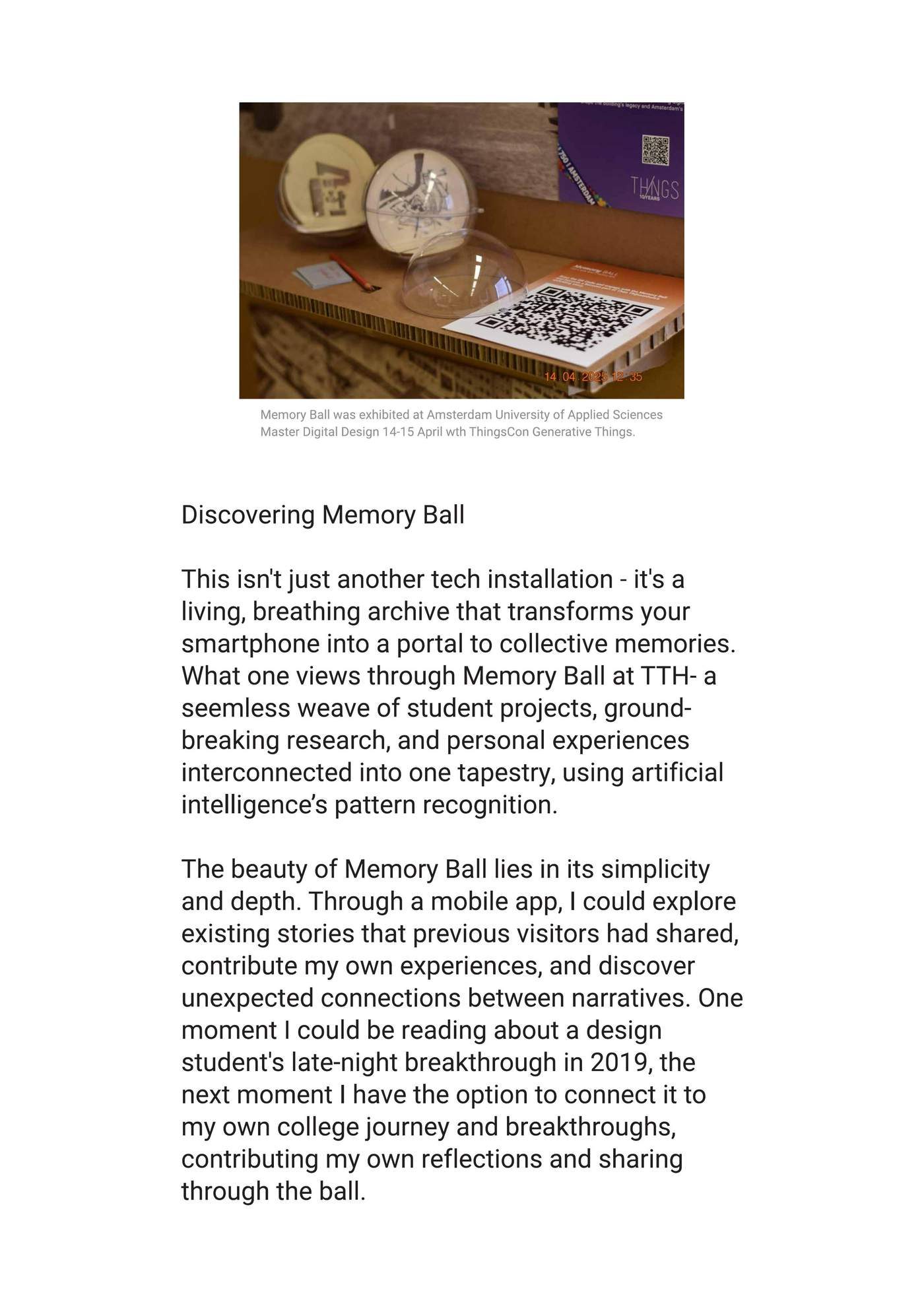
Memory Ball installed at Amsterdam University of Applied Sciences, Master Digital Design · 14–15 April · ThingsCon Generative Things
The working prototype — sphere, plinth with QR code, and web app — was exhibited at ThingsCon Generative Things alongside the MDD Master Digital Design graduation show at HvA. Visitors picked up the sphere, scanned the QR code, explored the Memory Timeline, and contributed their own stories.
The broader vision: wherever a Memory Ball is installed, each location becomes a node in a larger network of human experience. Walking through the Jordaan and hearing stories from residents across decades. Exploring any Amsterdam neighbourhood through the eyes of the people who shaped it.
"Memory Ball merges physical installation with a mobile app to reveal personal stories from the TTH building. Users explore interconnected memories through a map-based interface, fostering connection across time and place."
— Exhibition label, ThingsCon 2025
The current memory submission form is functional but not conversational — it feels like a form, not a dialogue. The next design sprint will redesign this screen starting with "Why does this place matter to you?" rather than a structured title field. The goal: make adding a memory feel as natural as telling a story to a friend.
The city-scale ambition — multiple Memory Balls across Amsterdam's iconic locations for Amsterdam750 — remains the long-term vision. Each new location adds a node. Each node makes the network richer.
Redesign "Share Your Memory" — conversational
Prompt-first, form-second. Start with the question, not the field.
Scale to Amsterdam750
Deploy across iconic city locations — each ball a node in a city-wide memory network.
Build the interactive Memory Web
Turn the etched constellation disc into a live digital layer — tap a node, hear its story.
Persona photos via Pexels — DΛVΞ GΛRCIΛ, Daniel Hoffman Jackson, AI25.Studio AI GENERATIVE.
Role
Visual Designer
Company
Havells, Noida
Period
2019 – 2022
Deliverables
Storyboards · Published article · UX process documentation
01 — The Problem
At Havells' customer experience design studio, I was embedded in product teams building smart home and consumer electronics. Each project brought together engineers, product managers, and business stakeholders — all working from specs, briefs, and jargon-heavy documentation.
The gap? Nobody was visualising the user. Products were being scoped without a shared picture of who they were for, how they'd be discovered, or what the first interaction would feel like.
Over three years and dozens of products, storyboarding became my primary tool for collapsing that gap — turning user stories into frames that any stakeholder could read, challenge, and build on.
"I do all my work by storyboard, so as I draw the storyboard, the world gets more and more complex… it seems like my staff as well as the audience does not quite realise that this has happened. Do not tell them about it."
— Hayao Miyazaki
02 — Key Decisions
Decision 01
Every storyboard started with a person — their context, motivation, and goal — before a single product feature was drawn. This kept product discussions from drifting into feature lists.
↳ Impact: Stakeholders empathised with users faster, shortening alignment sessions.
Decision 02
Polished boards signal "done." Sketchy boards signal "discuss." I deliberately kept storyboards loose — pencil lines, handwritten captions — so cross-functional teams felt safe disagreeing with them.
↳ Impact: Engineering raised use-case gaps earlier, reducing late-stage rework.
Decision 03
Storyboards weren't handed off — they evolved. Updated after each sprint review, they became a shared record of why decisions were made, not just what was built.
↳ Impact: Onboarding new team members took hours instead of weeks.
03 — The Work
Each storyboard answered a different question — from "what does this product do?" to "who is this for?" to "how does it feel to use?"
The Work — 01
For a Havells kitchen appliance, I drew a 9-frame board showing the product sitting idle, a user approaching, filling it, using it, and plugging it in. Product vision and experience defined — before engineering wrote a single line of code.
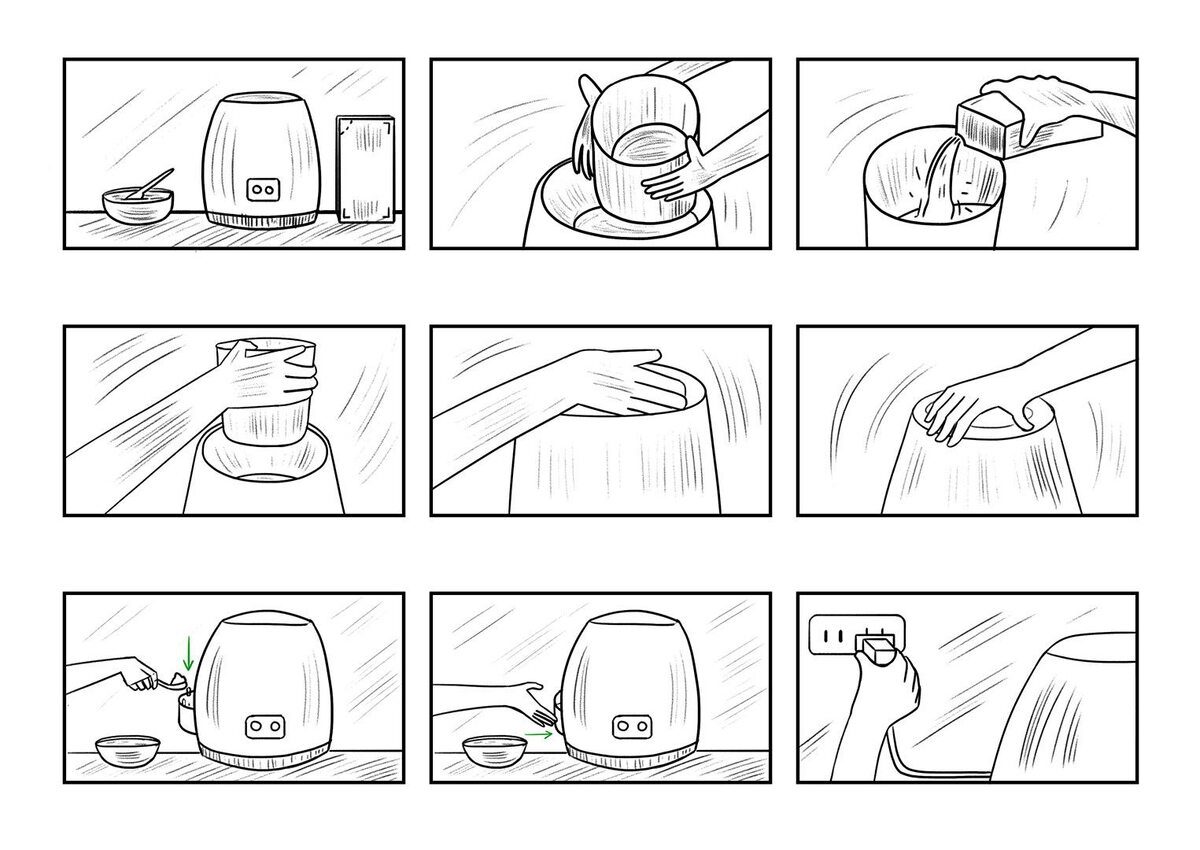
Storyboard for a Havells product concept — 9 frames, pencil on paper
The Work — 02
For a Havells TV app concept, I moved beyond function to feeling. The final frame shows a user elated as his medicine arrives at the door — the product's promise made tangible. That last frame became the team's north star for the entire feature set.
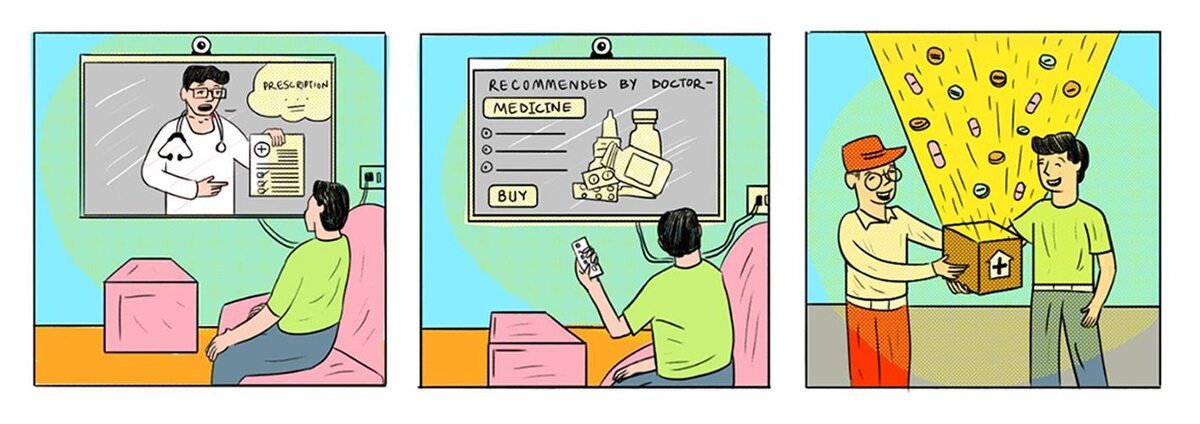
TV App storyboard — user discovers a doctor's recommendation and receives home delivery
The Work — 03
For a smart home product requiring app-guided installation, I showed multiple use scenarios — online purchase, AR placement on a phone, and device monitoring at the office. Each scenario answered a different "how would a real person encounter this?" question for the stakeholder review.
Three scenario frames — purchase, AR setup, and device monitoring
The Work — 04
Storyboards put a face to the user. This frame shows a persona at her office desk, receiving a device malfunction alert — specific enough to spark a conversation about notification design, edge cases, and user state that a written persona sheet never could.
"At Office" persona frame — a specific user moment surfaces real product questions
The Work — 05
Before designing a new product, I storyboarded the existing behaviour it would replace — like office colleagues ordering tea together. And for the Havells Sync App, I mapped how a user discovers the app, explores new product launches, and submits feature suggestions. This grounded the team in real behaviour before designing solutions.
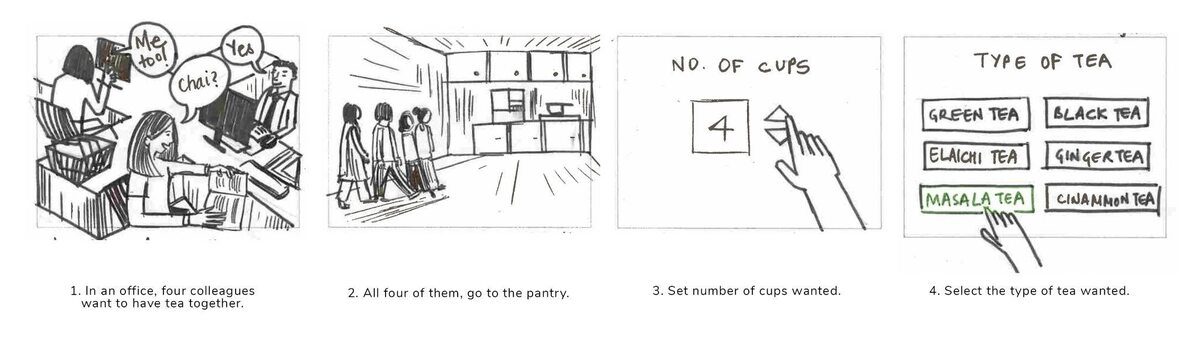
Office tea break — existing user behaviour
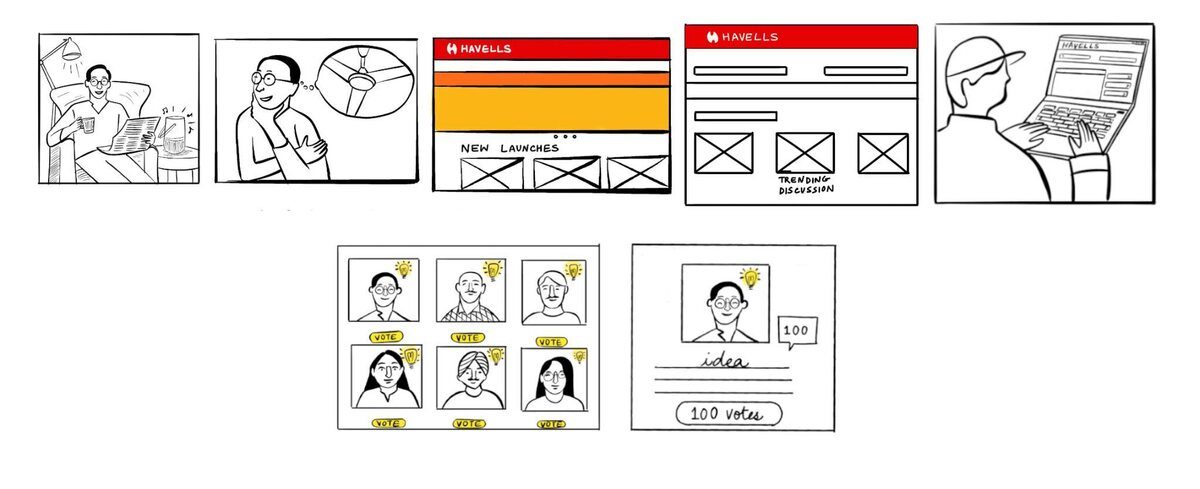
Havells Sync App — discovery to feature submission
04 — Outcome
Storyboarding at Havells wasn't a one-off deliverable — it was the connective tissue between user research, product strategy, and engineering. Over three years, it was applied across smart home devices, mobile apps, and consumer electronics — each time reducing misalignment and surfacing user needs that wouldn't have appeared in a spec document.
I wrote this up as an article to capture what we learned — five reasons why visual storytelling is indispensable in product development. It was published on Medium and references work across multiple Havells product teams.
Read the full article on Medium ↗Illustration · Icon Design · B2C · Havells
Illustratie · Icoondesign · B2C · Havells
Designed the app icon, splash screen illustration, and the full UI icon set for Havells' solar panel registration and monitoring app — from initial pencil sketches to Play Store launch.
✦ 01 — The Problem
Havells was launching Enviro Konnect — a B2C app for homeowners and field technicians to register and monitor solar panels. It needed a visual identity that felt modern and optimistic, not industrial.
The PM brief was clear: Havells brand red, a solar energy theme, and imagery that would look good on the Play Store listing.
I was responsible for the app icon, the splash screen illustration, and the full UI icon set — working directly with the Product Manager to align on user scenarios and visual hierarchy decisions.
02 — Key Decisions
From icon to illustration, these were the calls that gave Enviro Konnect a coherent, launch-ready visual identity.
Decision 01
Three composition sketches before opening Illustrator. Getting the structural logic right — building density, solar panel placement, foreground depth — is faster in pencil than iterating in software. The sketch is where the illustration is actually designed.
Impact: first vector iteration was client-ready — no structural revisions needed.
Decision 02
The icon is unmistakably Havells because the brand mark is the starting point, not an afterthought. Recognition first, solar theme second. An icon that leads with a solar illustration could belong to any energy brand — anchoring to the H made it unmistakably Havells.
Impact: icon shipped to Play Store instantly recognisable on any home screen grid.
Decision 03
Every visual hierarchy decision — what appears on the splash screen, what appears at the top of the listing screens — aligned to user scenarios the PM had already mapped. Design informed by the product flow, not running parallel to it.
Impact: zero revision cycles on information hierarchy — PM and designer shared the same mental model.
✦ 03 — The Work
The brief anchored the icon in the Havells H logoform and the solar energy idea. I explored different backgrounds, sun placements, cityscape elements, and gradient treatments before landing on the version that shipped — clean, bold, and instantly Havells on any home screen.
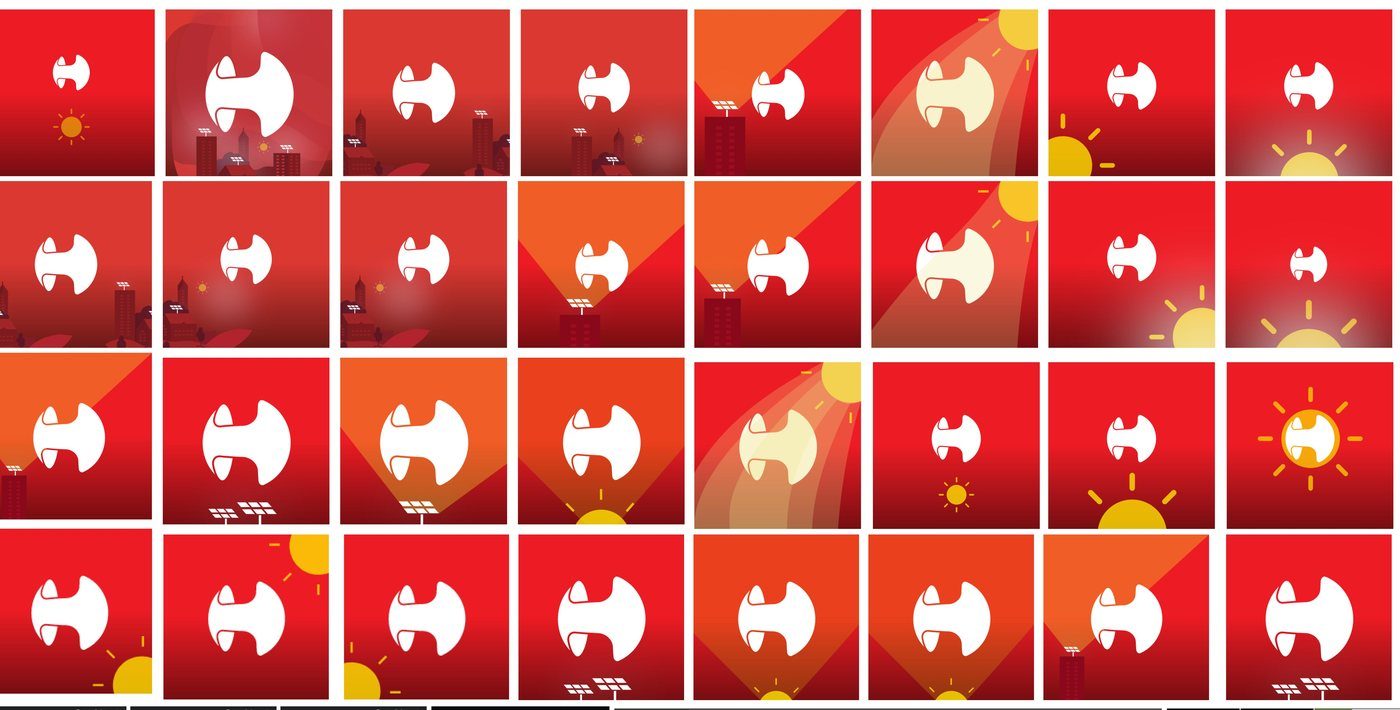
Icon iterations — exploring background treatments, sun compositions, and the H logoform placement.
✦ Illustration process
I always sketch to work out composition before going to vector. The PM brief: optimistic, modern, unmistakably about solar energy — buildings with panels, a visible sun, warm Havells red.
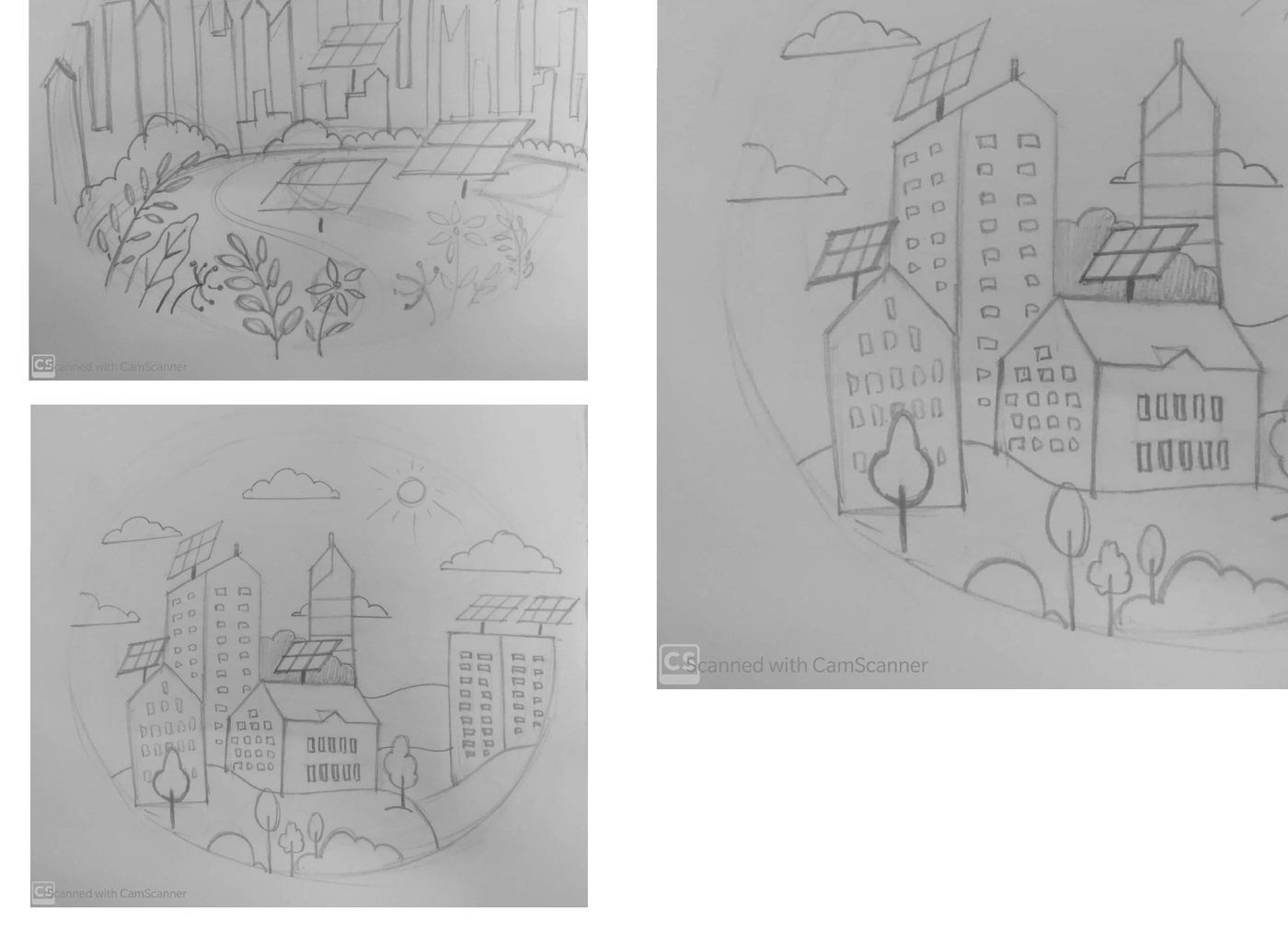
Early pencil sketches — three composition explorations testing building density, foreground depth, and solar panel placement.
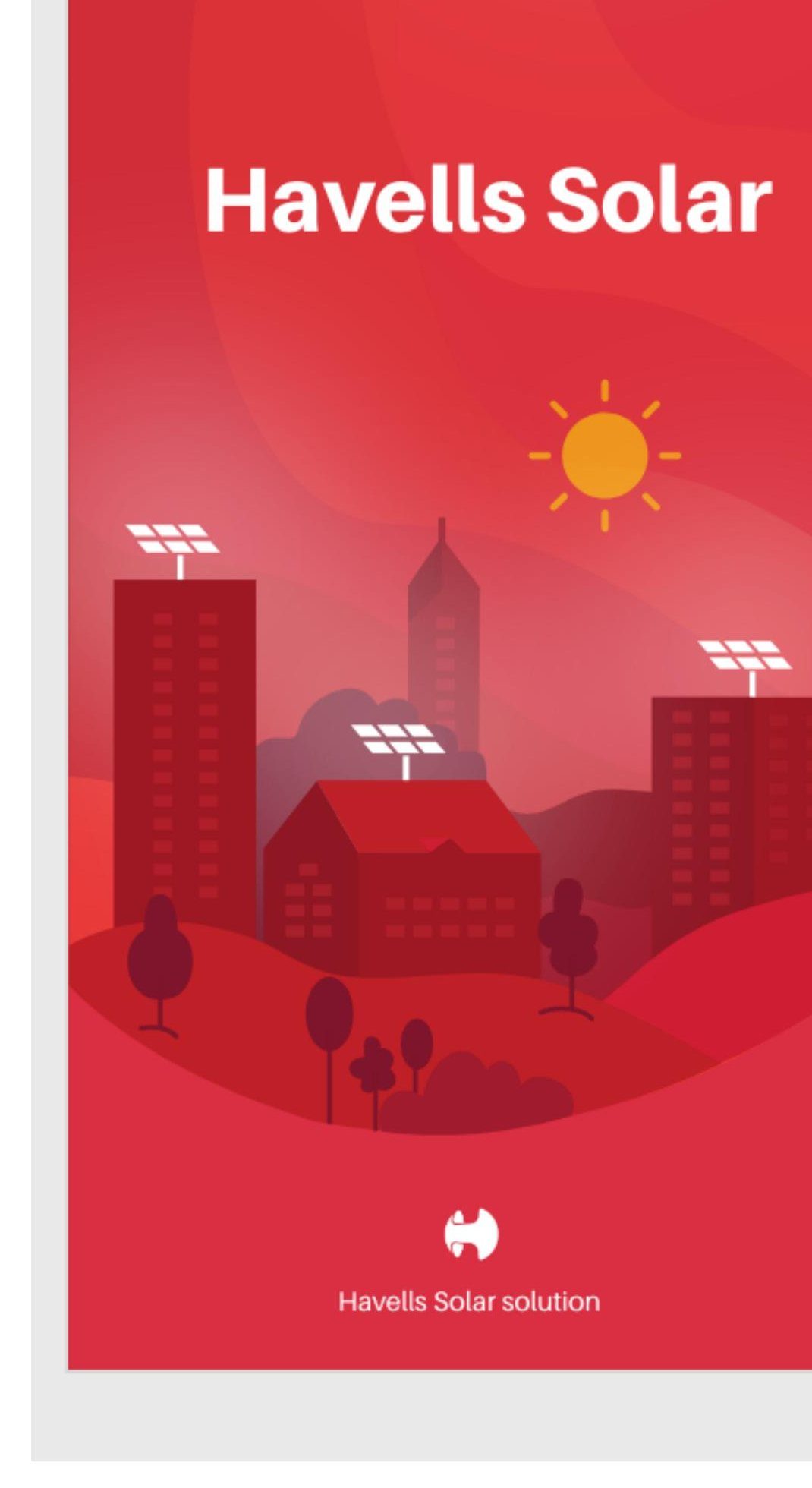
Final splash illustration — the cityscape that shipped with the app.
✦ Splash variants
Four colour variants were explored — deep red dusk, warm golden sunrise, midday blue sky, and sunset amber — before the final version was selected. Each kept the same composition and layer structure; only the colour tokens changed.
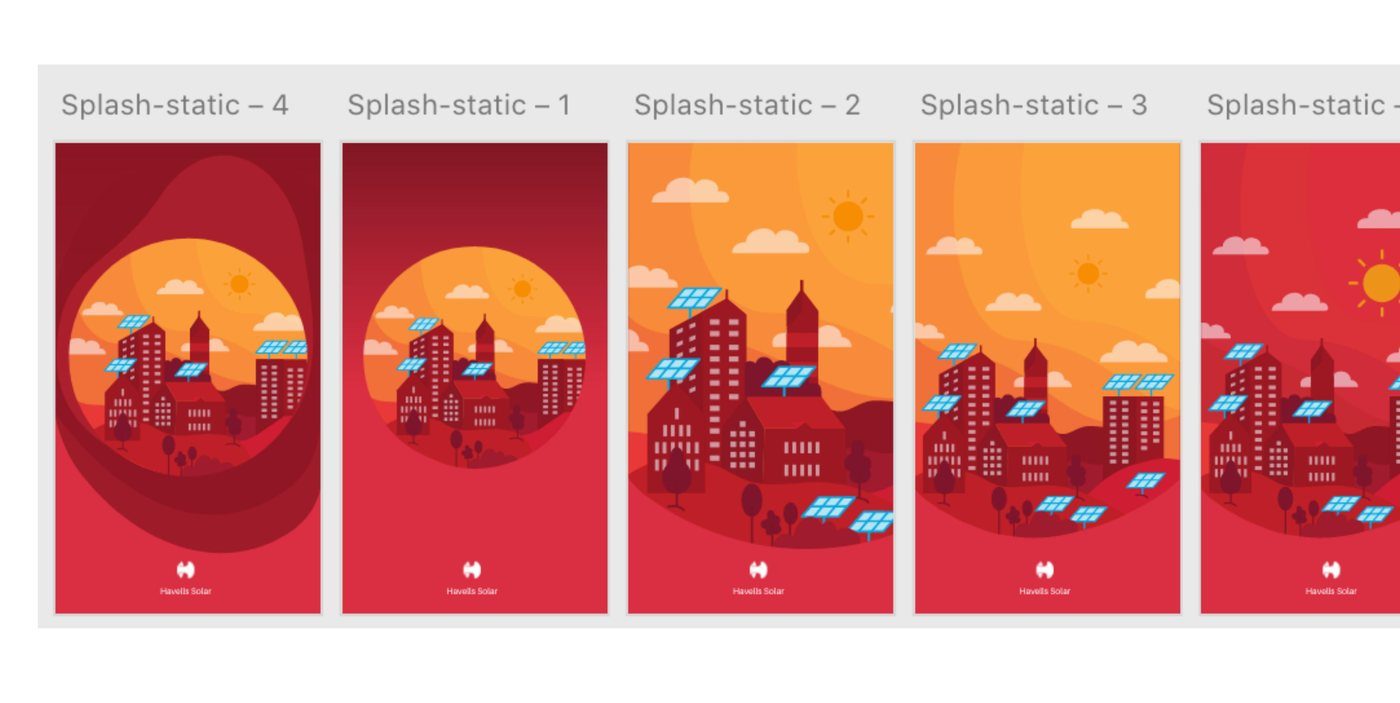
Four splash variants — same composition, different colour tokens.
✦ App in context
The splash illustration carried through into the login screen, giving the app a visual anchor before users reach the functional parts. The UI icons covered product categories, device scanning, and the empty state.
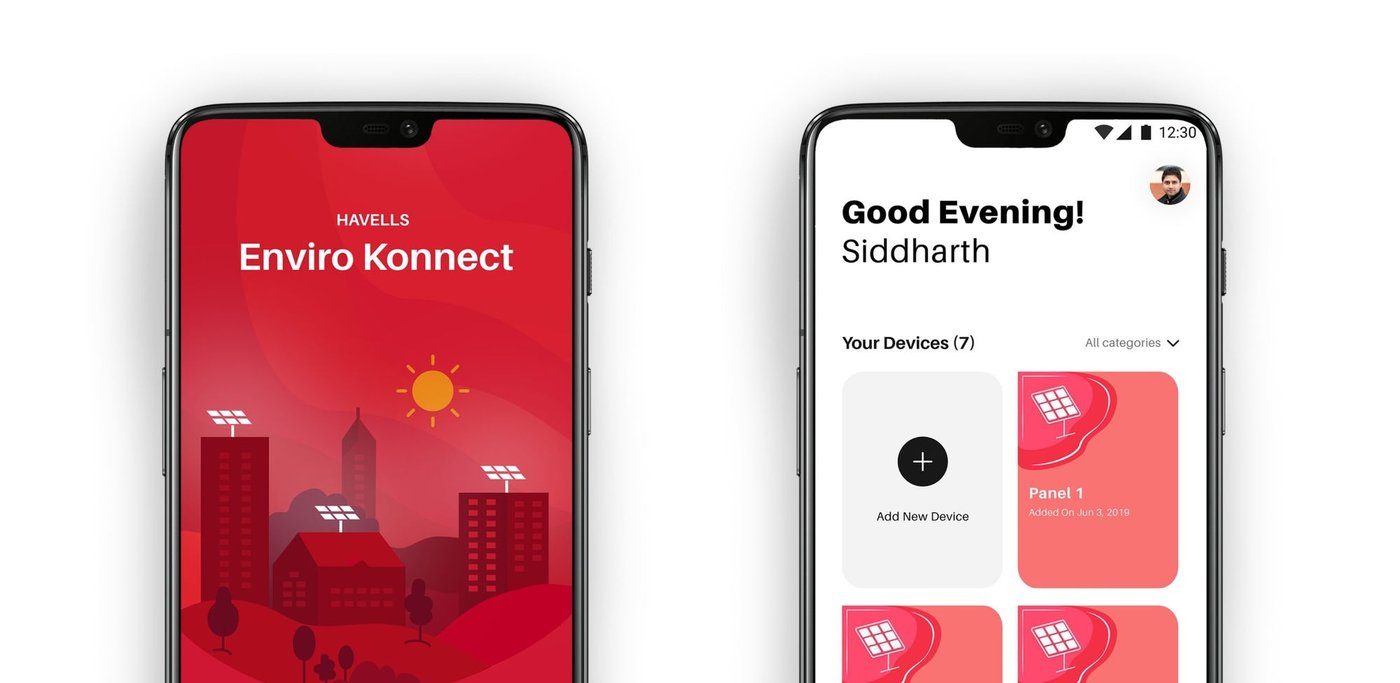
Play Store feature graphic — splash screen and home screen side by side.
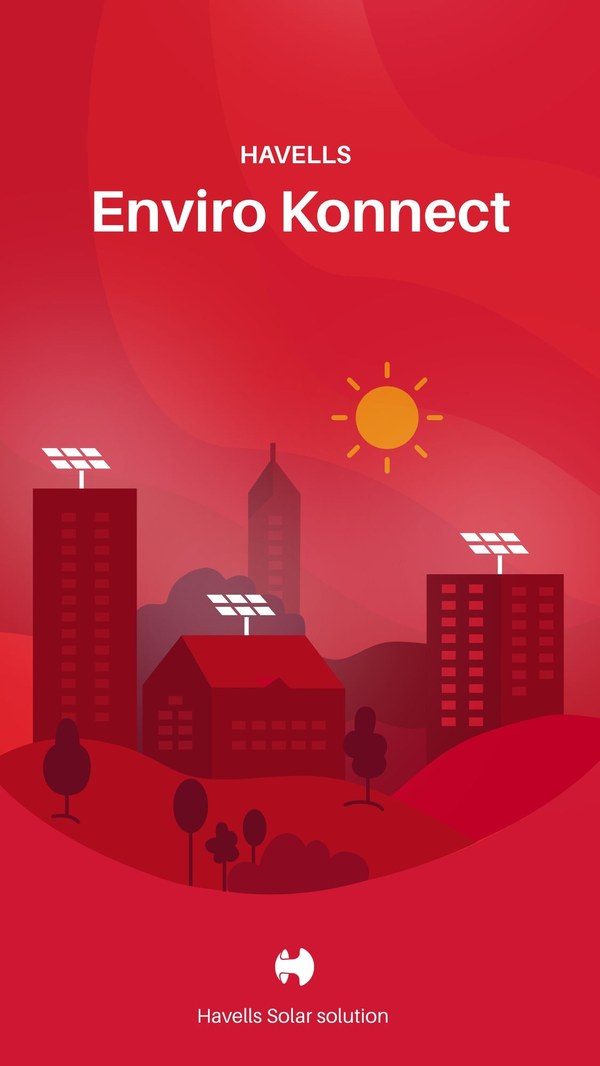
Splash / loading
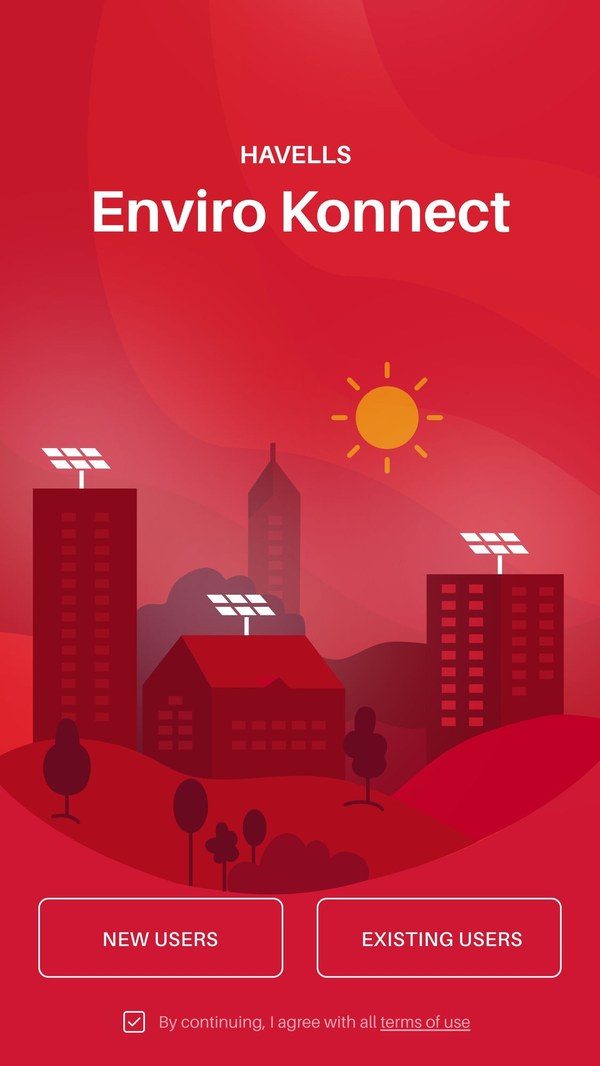
New / existing user
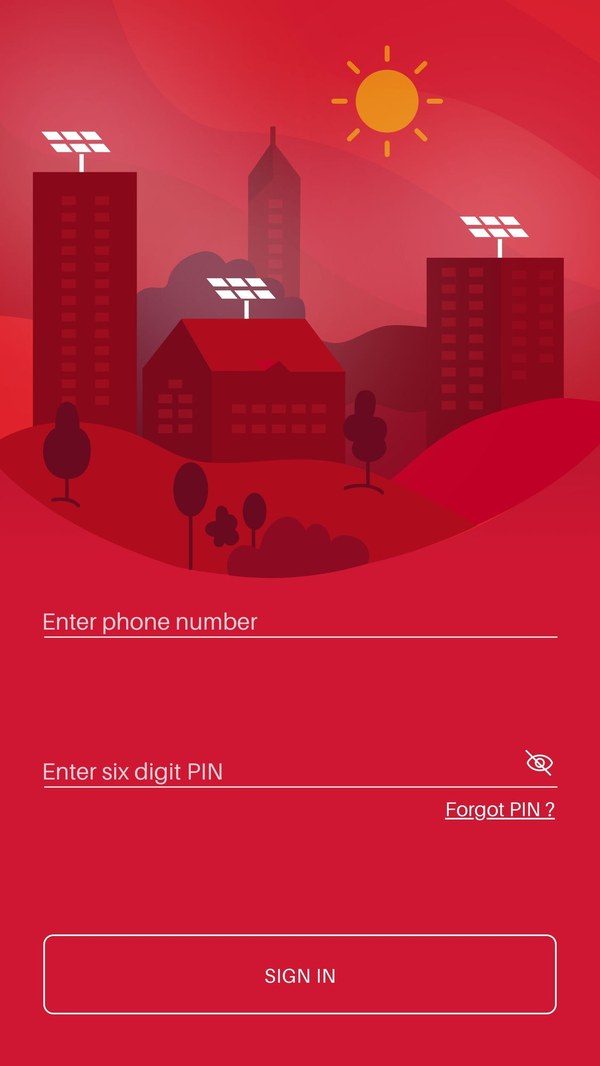
Login / sign in
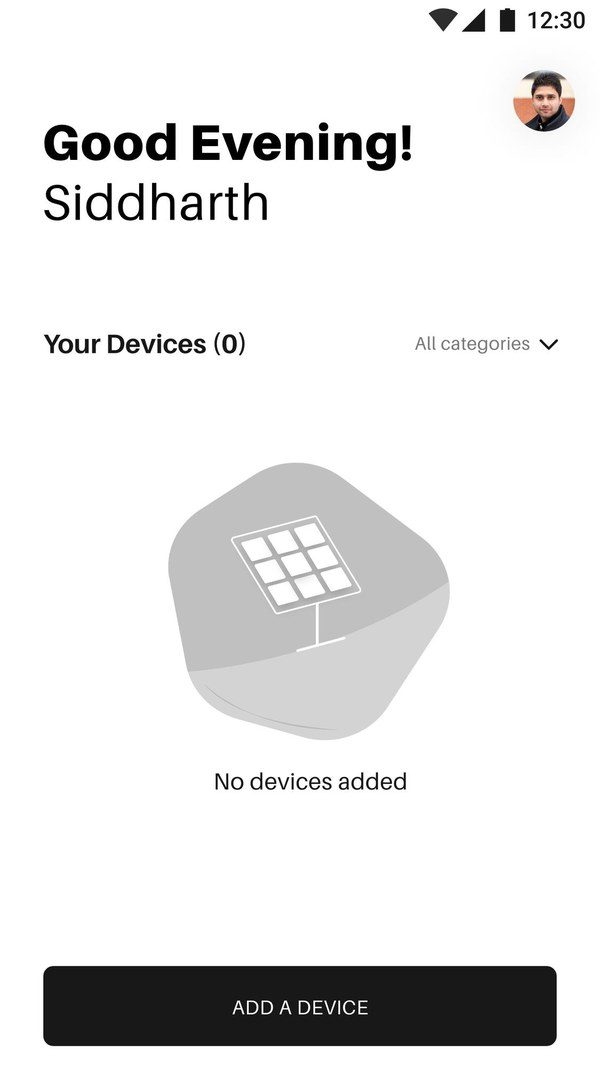
Empty state icon
✦ Illustration in the header
The header illustration carried through into the app's inner screens, peeking behind navigation bars on plant listing and detail views — keeping brand warmth present even in utility-heavy data screens.
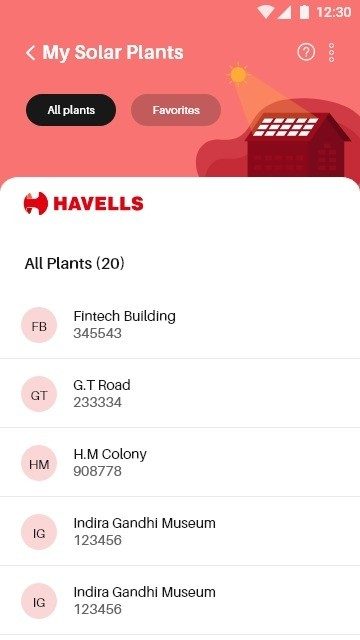
My Solar Plants
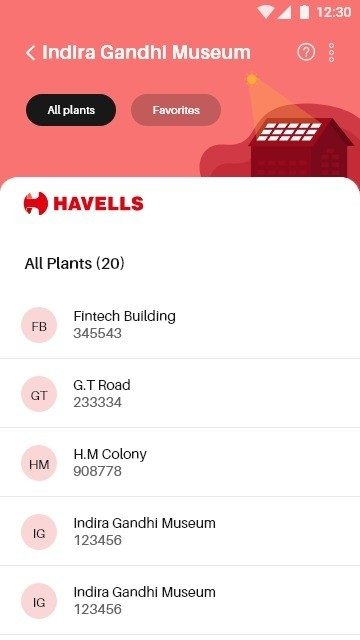
Plant detail view
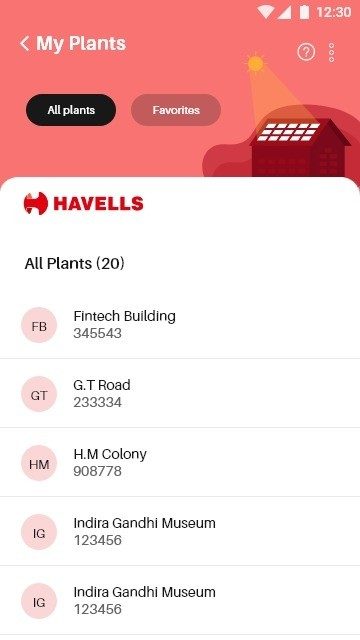
My Plants
✦ 04 — Outcome: Working with the PM
PM collaboration
I worked directly with the Product Manager to align on user scenarios — field technician vs. homeowner — and translated those into visual hierarchy decisions: what appears above the fold, how device categories are iconised, and what the loading and empty states communicate.
Icon set
UI icons covered product categories (solar panels, inverters, batteries), device states, and navigation — all following the same stroke weight and optical sizing as the Havells brand icon language.
The app launched on the Play Store and reached 10,000+ downloads. The illustration system — from splash to header — gave the app a consistent visual identity that extended the Havells brand into a new digital product category.
Hardware Design System · Smart Home · Havells / Crabtree
Hardware-designsystem · Smart home · Havells / Crabtree
A hardware design system for a smart home switch series — icon vocabulary, Pantone colour tokens, physical dimensions, and a full SKU matrix designed to scale without redesign.
Role
Product Designer
Company
Havells / Crabtree
Year
2022
Stakeholders
Business heads · Dealers · Manufacturing
Deliverables
Icon system · Colour spec · SKU drawings · Phase-1 specs
Real-world review of Crabtree iSense Smart Switches
An independent reviewer tests the iSense switches in a live home setup — covering installation, the Havells DigiTap App, voice control, and day-to-day usability of the smart switch system.
Clicking the video will open YouTube in a new tab, outside this portfolio. This is an external review — not affiliated with or produced by this portfolio.
01 — The Problem
Crabtree's iSense range needed to cover every smart home room — from a compact 2-module dimmer to an 8-module command panel with dual fans, dimmers, switches, scenes, and a socket. Eight SKUs across two colourway finishes, all shipping in Phase 1.
Without a shared design language, every new SKU would need its own icon decisions, colour calls, and dimension specs — multiplying effort, introducing inconsistency, and making handover to manufacturing ambiguous. The brief was to design it as a system from day one.
8
SKUs to design,
Phase 1
2
Colourway finishes
each SKU
3
Stakeholder groups
to align
0
Existing design
system to build on
✦ Key Skill — This Project
The iSense project wasn't just about visual design — it required constant coordination across stakeholders with different priorities and languages.
As the sole product designer, a large part of my work was communication: translating design intent into business rationale, and market constraints back into design decisions.
Business Heads
Pitching design decisions upward
Presented the icon system, colour token rationale, and SKU matrix to senior business stakeholders — framing design choices in terms of manufacturing scalability, brand consistency, and Phase-1 launch readiness.
Dealers & Distribution
Ground-level viability checks
Consulted dealers directly on product material viability and cost constraints — ensuring design decisions were grounded in what the supply chain could actually deliver, not just what looked good on paper.
Manufacturing & Engineering
Spec handover without ambiguity
Delivered Pantone-locked colour specs and dimensioned SKU drawings that mechanical engineering and manufacturing could execute directly — no design interpretation required on their end.
The lesson
On a hardware product at this scale, effective communication is a design output. Getting a decision wrong at the business pitch stage, or missing a cost constraint from dealers, would have meant a redesign cycle after tooling was already underway. Stakeholder alignment wasn't a soft skill here — it was load-bearing.
02 — Key Decisions
Not everything in this project was obvious. These were the calls that had real consequences — for manufacturing timelines, stakeholder buy-in, and whether the system would actually hold at scale.
Decision 01
The temptation was to design each SKU individually and find patterns later. I pushed back: define the icon vocabulary, physical grid, and colour tokens first — then derive each product from the system. This meant a slower start but eliminated redesign risk entirely.
Impact: every new SKU mapped onto existing tokens — zero redesign cycles in Phase 1.
Decision 02
Colour tokens could have been delivered as hex values. But after consulting manufacturing and dealers on material feasibility, I specified every colour in Pantone — the language factories and suppliers actually use.
This was non-obvious, and required stakeholder alignment across business heads and the production team.
Impact: handover was unambiguous — manufacturing executed without needing design in the room.
Decision 03
A premium-dark panel with diamond LEDs, and an olive/bronze finish, were both designed at full fidelity and presented to stakeholders.
Eliminating them wasn't just an aesthetic call — I made the case to business heads with specific reasons: the diamond LED was inconsistent with the cross indicator language, and the bronze finish tested poorly in residential smart home settings.
Impact: business heads approved White & Graphite with confidence — no ambiguity about why the others were ruled out.
03 — The Work · Research & Exploration
Icon direction was anchored in two form principles — LOOP (bold, circular, universal shapes) and ELECTRIC (simple, interactive, geometric). The colour palette was explored to feel residential and mood-lifting rather than industrial.
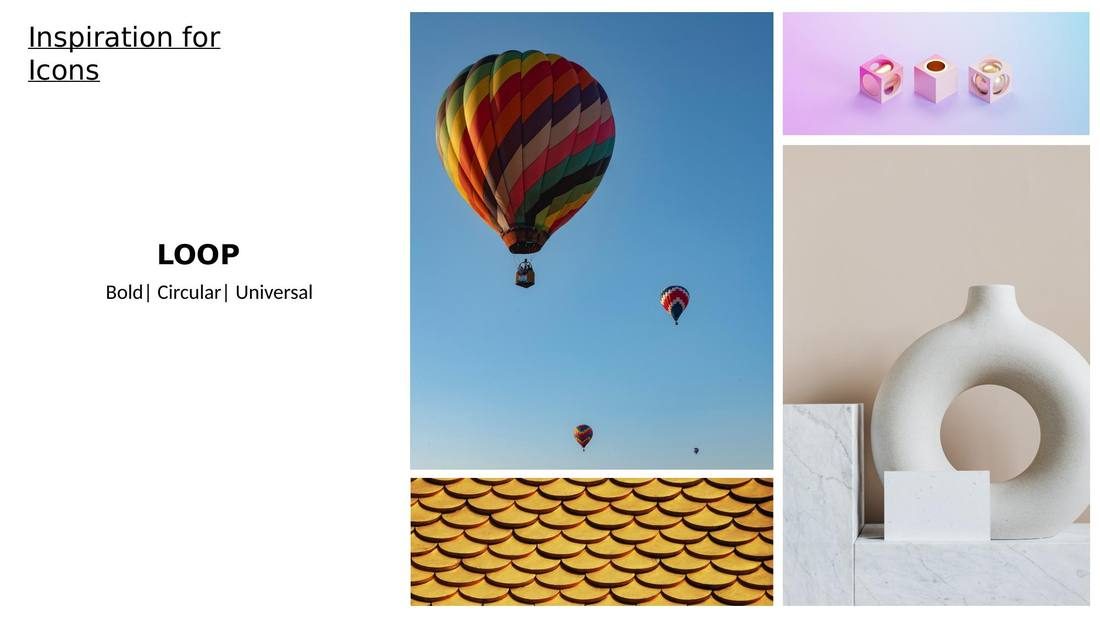
LOOP — Bold · Circular · Universal. Icon forms drawn from continuous, rounded shapes.
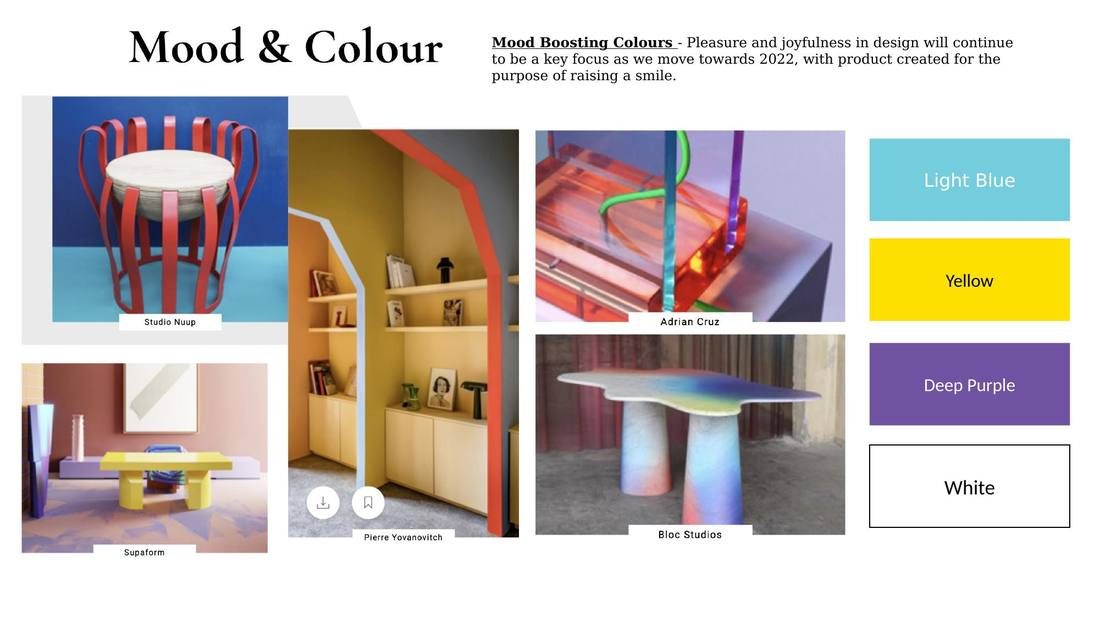
Colour palette exploration — mood-boosting, residential tones evaluated as accent directions.
Colour token specification
Rather than specifying colours as hex values, every colour decision was translated into a named Pantone reference — making it unambiguous for manufacturing across both finishes. The same LED spotlight (PMS 311C) appears on every SKU in both White and Graphite.
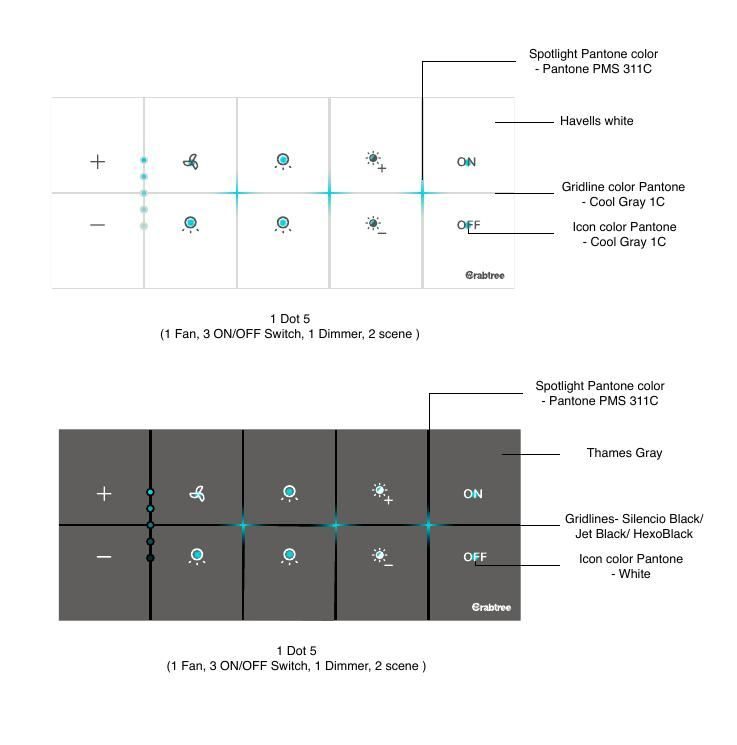
White finish — Havells White
Graphite finish — Thames Gray
Design exploration · Option 3 — ruled out
A dark panel with diamond-shaped LEDs (premium-dark aesthetic) and an olive/bronze finish (warm, architectural tone) were both designed at full fidelity.
The diamond LED was eliminated for inconsistency with the cross indicator language; the bronze finish tested poorly in residential smart home settings.
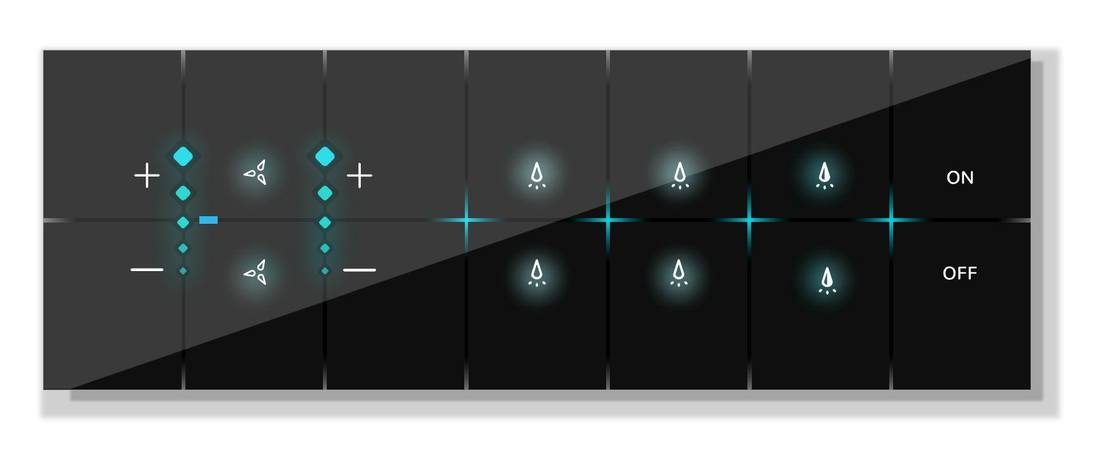
Dark panel · Diamond-shaped LED indicator · Geyser icon set — eliminated.
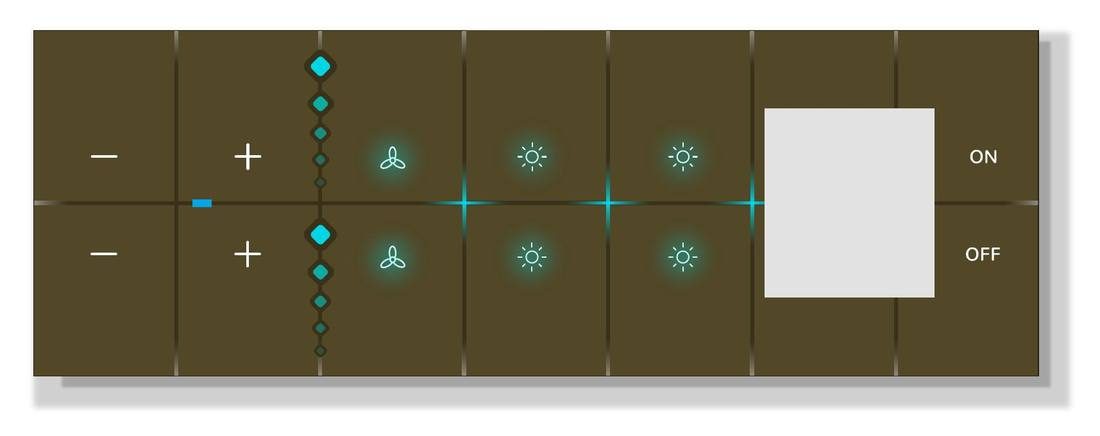
Olive/Bronze finish · Option 3 — ruled out after contextual evaluation.
SKU specification drawings
Every SKU was documented with physical dimensions, both colourway finishes, and the full icon layout — the actual handover artefact passed to mechanical engineering and manufacturing. The 92mm height is constant across all panels; only the width scales with module count.
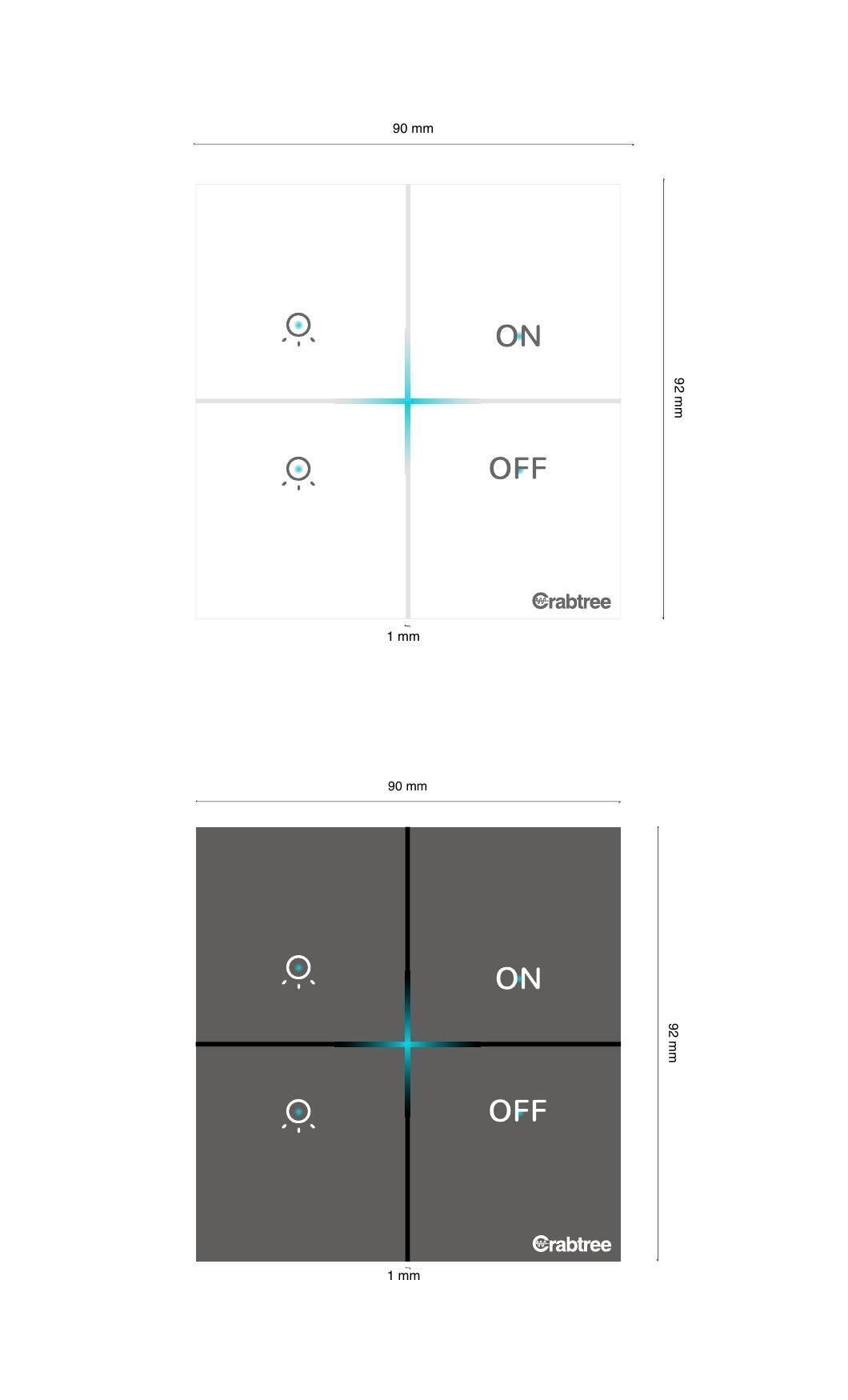
Dot 2 · 2 ON/OFF Switch + 2 scenes · 90mm × 92mm
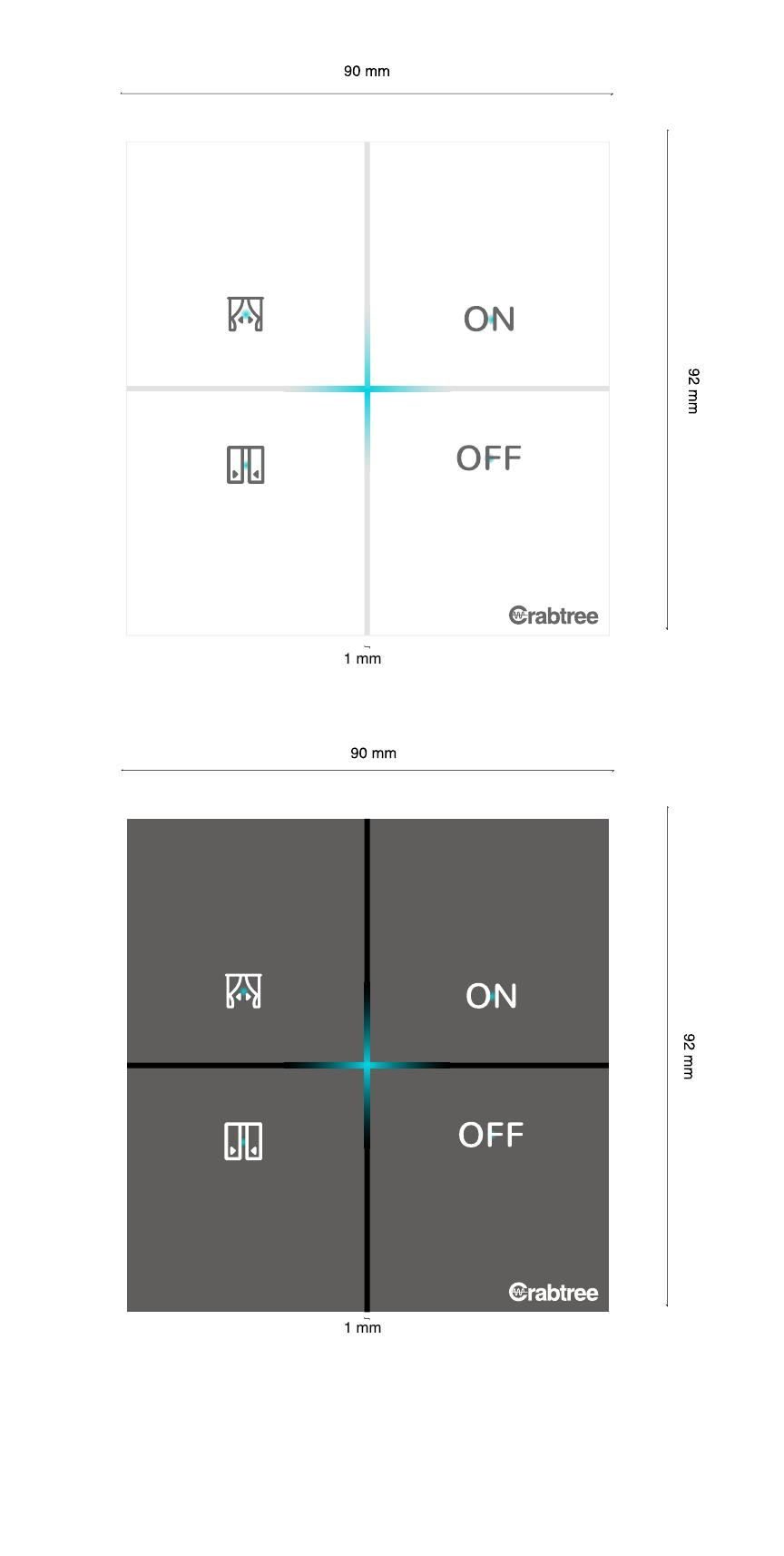
Dot 2 · Curtain · 1 Curtain Controller + 2 scenes · 90mm × 92mm — same module, new icon function
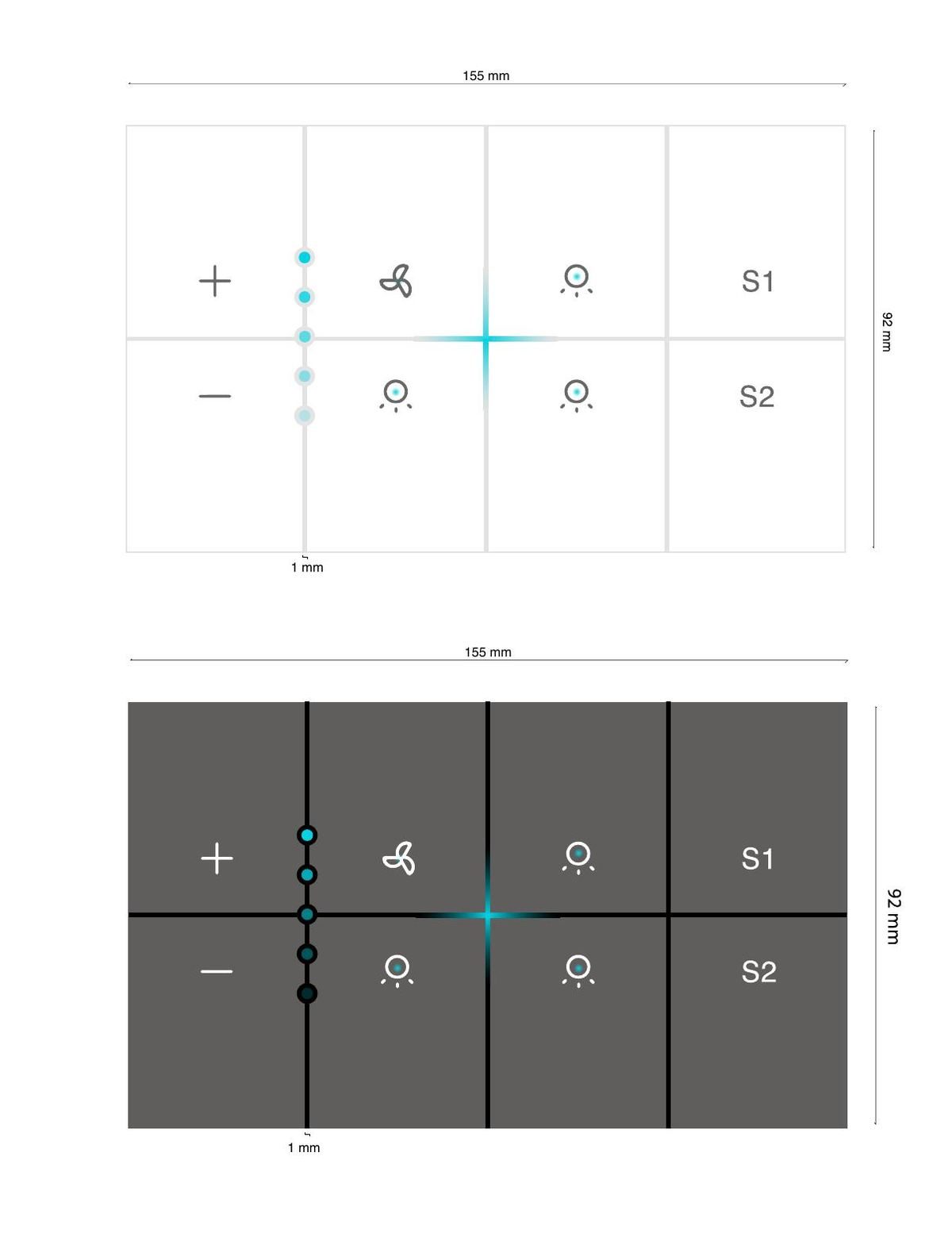
1 Dot 3 · 1 Fan + 3 ON/OFF + 2 scenes · 155mm × 92mm
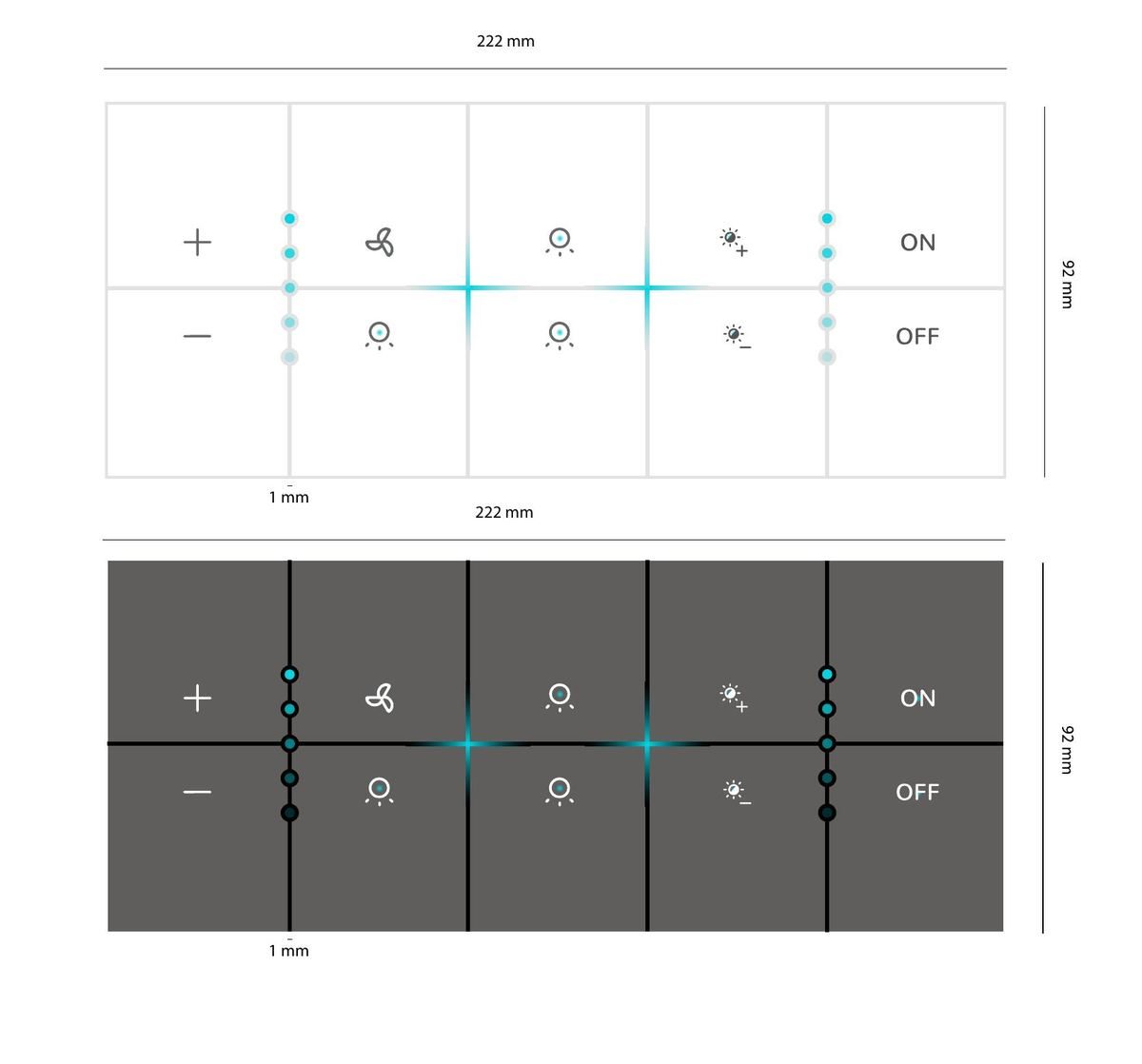
1 Dot 5 · 1 Fan + 3 ON/OFF + 1 Dimmer + 2 scenes · 222mm × 92mm
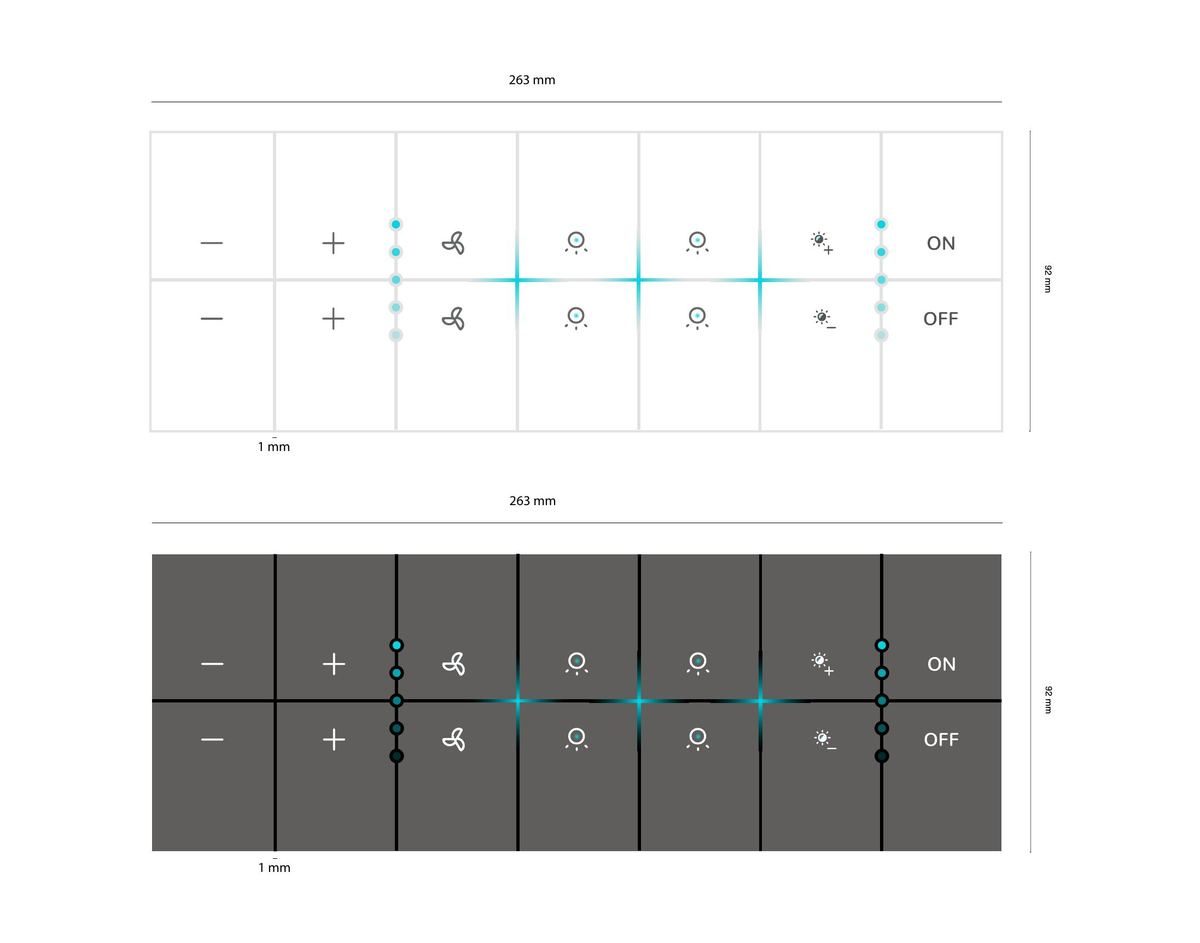
2 Dot 7 · 2 Fan + 4 ON/OFF + 1 Dimmer + 2 scenes · 263mm × 92mm
Systems thinking
Every design decision was made once and inherited across SKUs. The icon set, LED cross, physical grid, and Pantone references were treated as a shared grammar — not per-product choices. Adding a new SKU meant mapping new functions onto existing tokens, not redesigning.
Physical grid
92mm height constant. Width scales: 90mm → 155 → 222 → 263mm. Same module proportions throughout.
LED cross indicator
Pantone PMS 311C cyan cross — consistent across all 8 SKUs, both finishes. One token, never varied.
Icon vocabulary
Fan, light, dimmer, curtain, scene — LOOP-style icons built once in the LOOP direction, mapped across all SKUs.
Pantone colour tokens
Havells White / Thames Gray panels with Pantone-specified icons and gridlines — manufacturing-ready, no ambiguity.
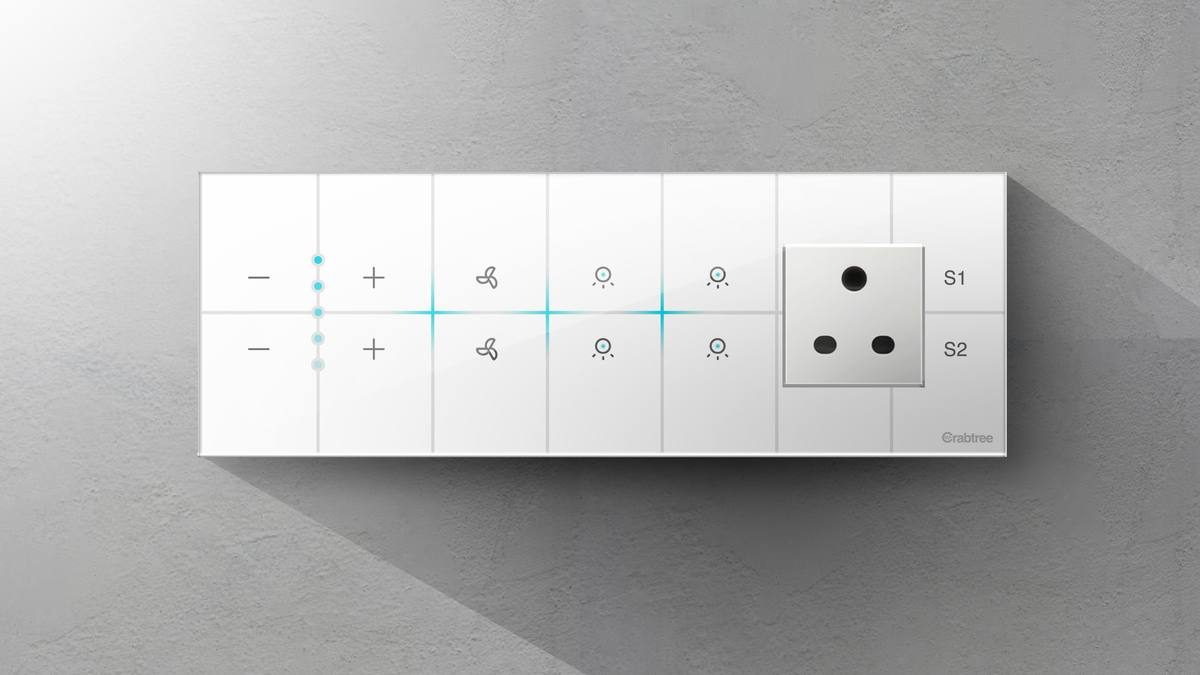
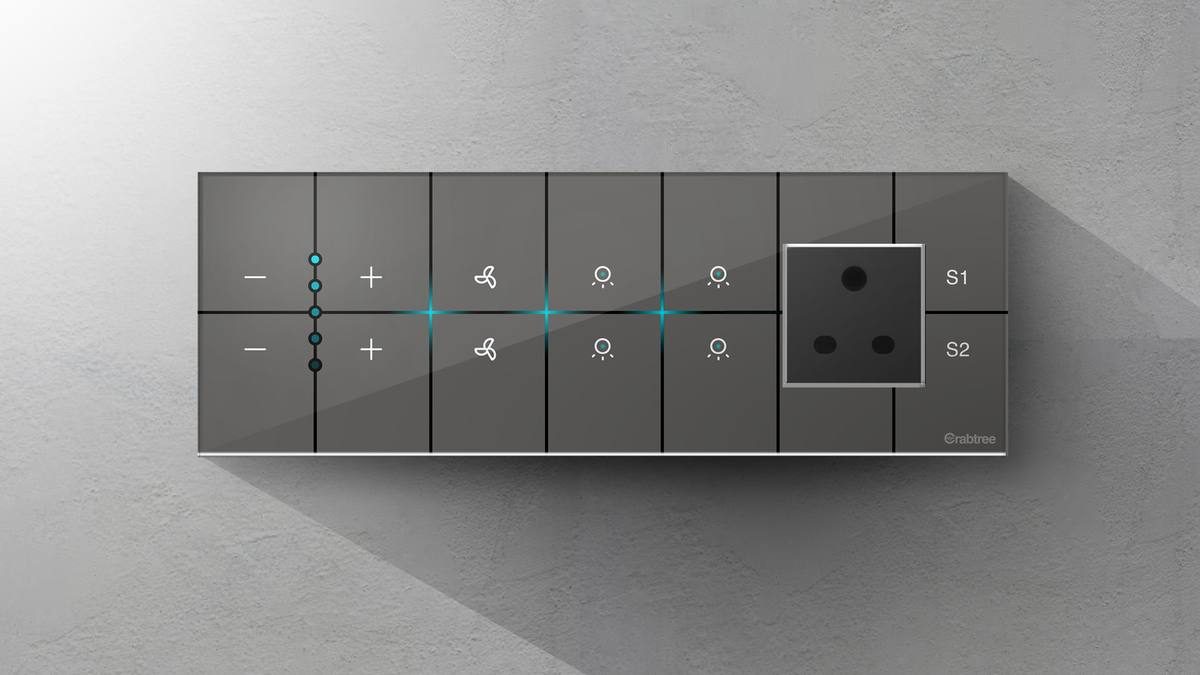
Final product renders
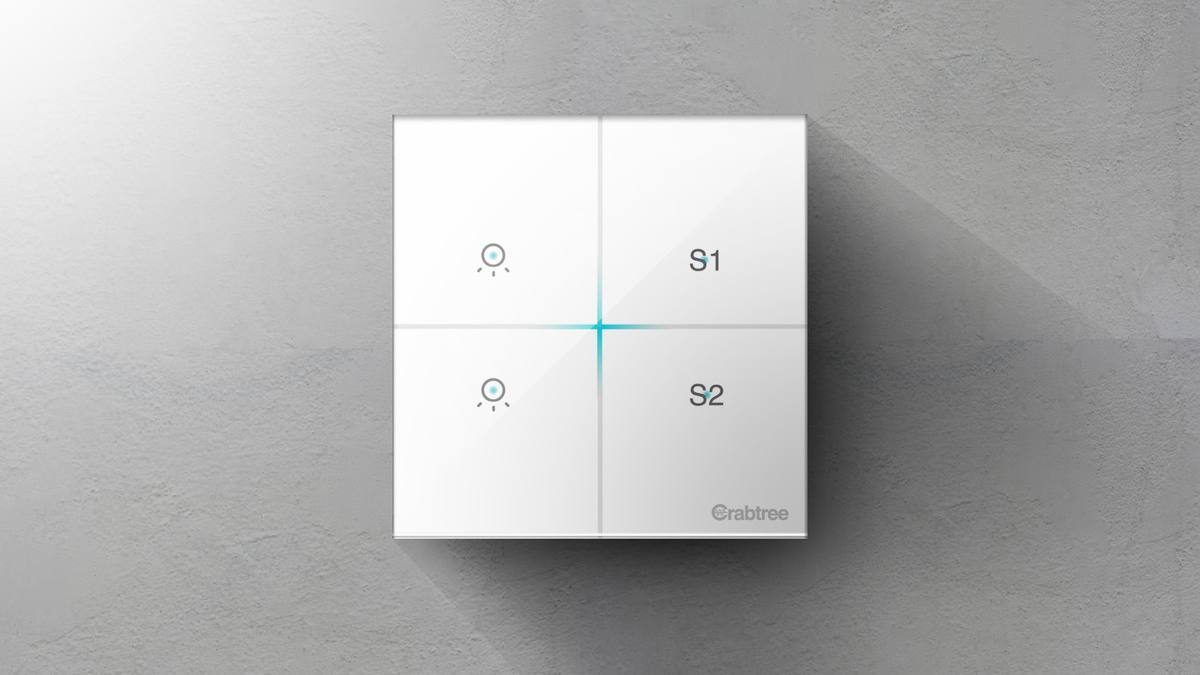
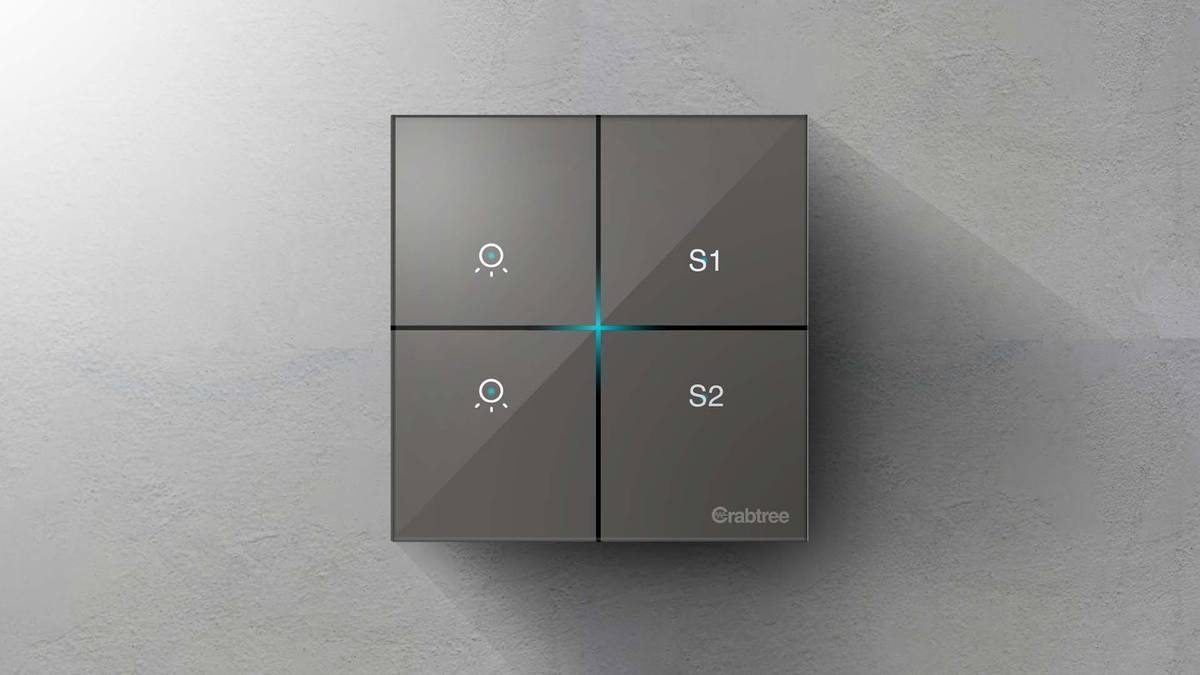
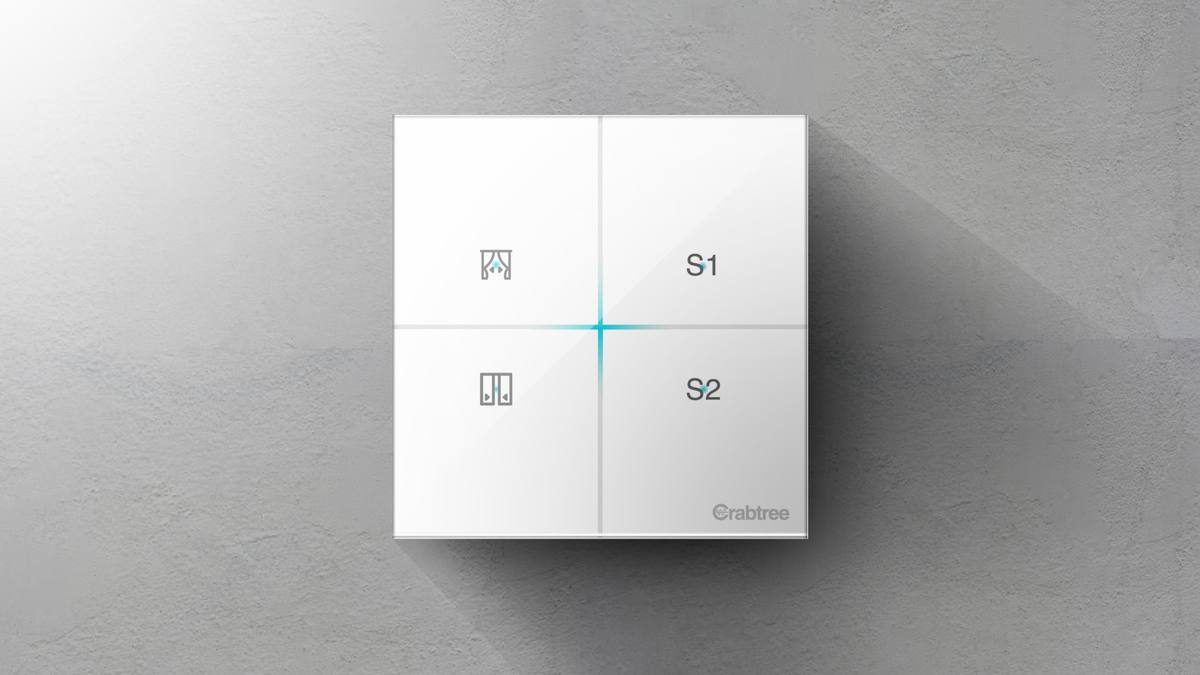
Compact 2×2 White & Graphite · Curtain controller variant
Phase-1 specifications
Phase-1 specifications covered 8 SKU variants across 2–8 module sizes, all rated at 220–240V AC / 50Hz with 180–290VAC operating range. Every SKU designed to fit standard metal box form factors.
| SKU | Configuration | Modules | Width |
|---|---|---|---|
| Dot 2 | 1 Curtain Controller + 2 scenes | 2M | 90mm |
| 1 Dot 3 | 1 Fan + 3 ON/OFF + 2 scenes | 4M | 155mm |
| 1 Dot 5 | 1 Fan + 3 ON/OFF + 1 Dimmer + 2 scenes | 6M | 222mm |
| 1 Dot 5 | 1 Fan + 3 ON/OFF + 1 Socket + 2 scenes | 6M | 222mm |
| 1 Dot 7 | 1 Fan + 5 ON/OFF + 1 Dimmer + 4 scenes | 8M | 263mm |
| 2 Dot 6 | 2 Fan + 6 ON/OFF + 2 scenes | 8M | 263mm |
| 2 Dot 7 | 2 Fan + 4 ON/OFF + 1 Dimmer + 2 scenes | 8M | 263mm |
| 2 Dot 7 | 2 Fan + 4 ON/OFF + 2 scenes + 1 Socket | 8M | 263mm |
All SKUs: 220–240V AC · 50Hz · 180–290VAC operating range · Constant 92mm height
04 — Outcome
By treating icon, LED, grid, and colour as tokens rather than per-product decisions, the entire iSense Phase-1 range shares one vocabulary. Every new configuration inherits the system without a redesign cycle.
Handover was Pantone-specified and dimensioned — manufacturing could execute without design in the room.
8 SKUs, Phase 1
Dot 2 through 2 Dot 7 — all covered by one icon and grid system.
Pantone-locked
Every colour token specified to Pantone — unambiguous for manufacturing.
Dimensioned specs
Each SKU delivered as a production-ready dimensioned drawing in both finishes.
Zero redesign
New functions mapped onto existing tokens — no new visual system for each SKU launch.
✦ Real-World Impact
Crabtree iSense makes whole-home automation accessible without expensive rewiring or a premium price tag. A standard 2BHK apartment — fans, lights, dimmers, scene presets — can be fully automated for around ₹50,000.
That brings Indian homes closer to smart living at a price previously unimaginable. Every switch is compliant with Bureau of Indian Standards (BIS).
~₹50K
Full 2BHK Automation
Fans, lights, dimmers & scene presets — no rewiring, no contractor needed.
BIS ✓
Bureau of Indian Standards
Certified safe for Indian homes — quality and compliance built in from day one.
0 min
Rewiring Required
Retrofits into existing switchboards — no walls broken, no electrician marathon.
3x
Ways to Control
Manual switchboard, Havells DigiTap App, or voice & remote — your home, your way.
Why this matters for India
Smart home technology has historically been priced out of reach for middle-class Indian households. iSense changes that — by building on existing wiring and standardising the hardware design system, Crabtree can offer BIS-certified smart switches at a price where automating your whole apartment costs less than a mid-range smartphone.
Energy-efficient by design and compliant with Indian safety standards, iSense is built for the scale and diversity of Indian homes.